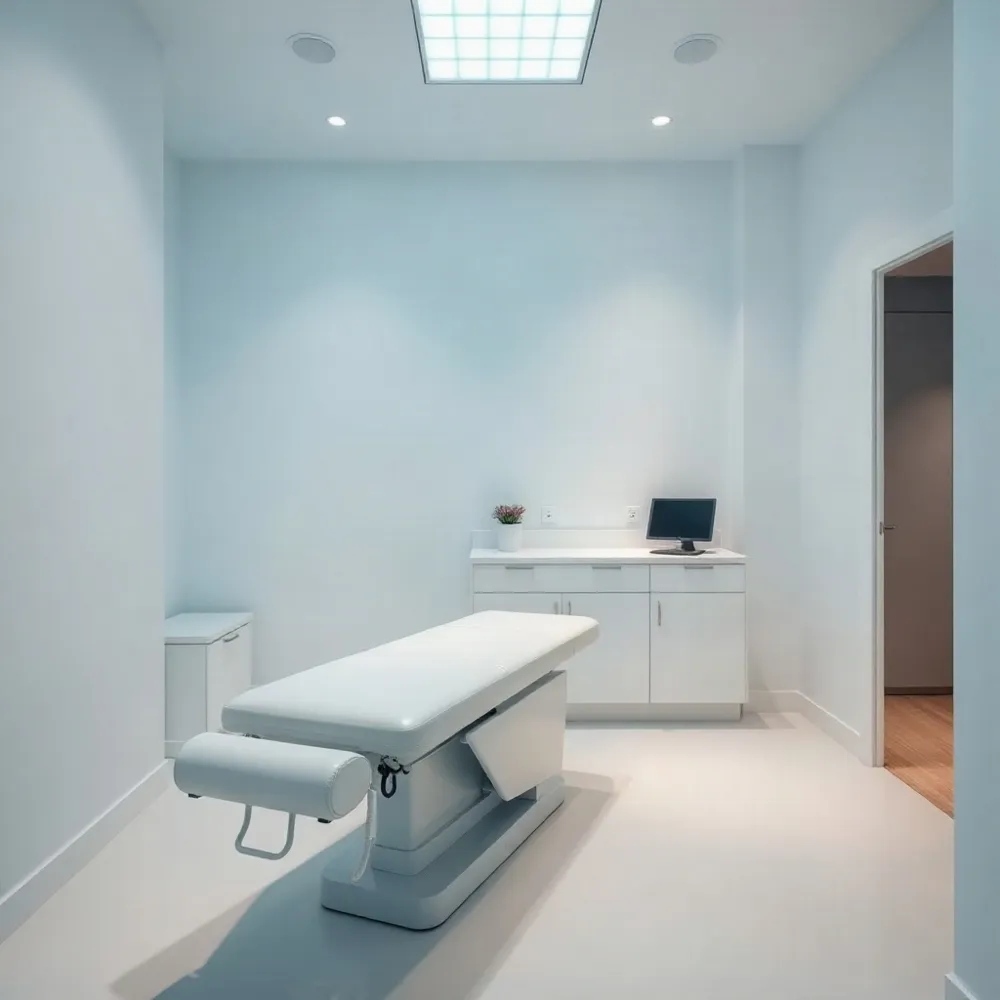
Why a Full-Body Skin Exam Matters
A full-body skin exam is a head-to-toe screening performed by a dermatologist to detect skin cancer and other skin concerns before they become serious. According to the World Health Organization, skin cancer affects more than 2 million people worldwide each year. The goal is to catch irregular moles, spots, or lesions at their earliest, most treatable stage.
Most skin cancers are highly treatable when found early. The exam itself takes about 10 to 15 minutes, is painless, and requires no needles or discomfort. Because skin cancer often develops without obvious symptoms, a quick annual check can be truly life-saving. At otsdermatology.com, patients receive a thorough, professional screening that prioritizes personalized care and early detection.
What Is a Full-Body Skin Exam?
 A full-body skin exam is a thorough visual inspection of your skin from the scalp to the soles of your feet. A dermatologist performs this screening to detect skin cancer, precancerous spots, and other skin concerns at an early stage. During the exam, you will be asked to undress and put on a gown so the doctor can access every area of your skin.
The dermatologist uses a bright light and a hand-held tool called a dermatoscope to examine moles, spots, and lesions in detail. This device magnifies the skin and reveals patterns that are not visible to the naked eye, helping distinguish harmless marks from those that may need further evaluation.
The screening looks for the three main types of skin cancer: basal cell carcinoma, squamous cell carcinoma, and melanoma. According to the World Health Organization, skin cancer affects more than 2 million people around the world every year, and most cases are highly treatable when caught early. The entire exam is painless and typically takes 10 to 15 minutes if no suspicious spots are found.
Annual exams are recommended for all adults, and they are especially important for people with risk factors such as a history of tanning bed use, blistering sunburns, many moles, or a family history of melanoma. At otsdermatology.com, providers combine a detailed head-to-toe inspection with personalized discussion of your skin health and risk profile, ensuring a thorough baseline for future comparisons.
If the doctor notices an unusual spot, a skin biopsy may be performed in the office. A small tissue sample is removed under local anesthesia and sent to a lab; results usually arrive within a few days to a week. Most patients leave with no more than a small bandage and care instructions.
Who Should Get Screened and How Often?
 Annual full-body skin exams are recommended for all adults, even those without obvious risk factors. The exam helps establish a baseline for your skin, making future changes easier to spot. For people with one or more known risk factors, annual screening is especially important.
The World Health Organization reports that skin cancer affects more than 2 million people worldwide every year, but most skin cancers are highly treatable when caught early. There is no single recommended age to begin screening; the right time depends on your skin type, sun exposure history, and personal medical history.
Who Needs More Frequent Screenings?
High-risk individuals may need skin exams more than once a year. Your dermatologist may recommend screenings every six months if you have any of the following risk factors:
- A personal history of melanoma, other skin cancers, or precancerous lesions
- A first-degree relative (parent, sibling, or child) with melanoma
- A large number of moles or a history of atypical (abnormal) moles
- A history of tanning bed use or blistering sunburns
- Significant regular sun exposure from outdoor work, boating, or living in a sunny climate
- Organ transplant history or a weakened immune system
- Fair skin, light-colored eyes, or red or blonde hair
Even if none of these apply, sun damage accumulates over time and skin cancer can affect anyone. Many experts suggest that adults without risk factors begin routine skin checks around age 40, when skin cancer rates begin to rise. However, a new or changing mole, a sore that doesn't heal, or any spot that bleeds or crusts warrants a visit sooner—regardless of age.
At On The Spot Dermatology in Glenview, Illinois, the first visit often takes longer because the provider reviews your medical history in detail, discusses your risk factors, and establishes a follow-up schedule tailored to your needs. For average-risk patients, an annual skin exam is a solid baseline. For those at higher risk, more frequent screening helps catch any changes early, when treatment is simplest and most effective.
How to Prepare for Your Skin Exam
 Preparing for a full-body skin exam is simple but makes a difference in how thoroughly your dermatologist can check your skin. Small steps on your end help the doctor see every spot clearly, which increases the chance of catching skin changes early.
What to Wear and What to Remove
Choose loose, comfortable clothing that is easy to take off, since you will change into a medical gown. Remove nail polish from fingers and toes — skin cancer can develop under the nails, and your dermatologist needs an unobstructed view. Take off any bandages, braces, or jewelry that cover skin, and avoid heavy makeup so the skin on your face can be inspected fully. If you use hairspray or other styling products, arrive with your hair clean and loose so the scalp can be parted easily for examination.
Skip Lotions and Creams
Do not apply lotions, creams, or oils on the day of your exam. These can hide subtle changes in a mole or spot. Deodorant is fine to use.
Note Your Concerns Beforehand
Take a few minutes before your appointment to check your own skin and write down any moles, spots, or areas that have changed, bleed, or feel different. Point these out to the dermatologist at the start of the visit. Patients are often the first to notice irregularities on their own skin.
Check Insurance Coverage and Costs
Call your insurance provider before the visit to confirm whether a full-body skin exam is covered under your plan. Most insurance plans cover an annual skin cancer screening when performed for medical reasons, but you may have a copay or out-of-pocket costs if a biopsy is needed. Without insurance, a full-body skin exam typically costs between $150 and $300, depending on the practice. For those seeking a more affordable option, the American Academy of Dermatology offers free SPOTme skin cancer screening events across the country.
What Happens During the Exam
After changing into a gown in a private room, you will meet with the dermatologist who will first review your medical history. This includes questions about your personal or family history of skin cancer, past sun exposure, and any use of tanning beds. The doctor will also ask if you have noticed any specific spots of concern.
The full-body inspection covers your entire skin surface, from your scalp to the soles of your feet. The dermatologist will examine your face, ears, neck, chest, back, arms, hands (including between your fingers and under your nails), legs, and feet (including the soles and between your toes). Some doctors also check genital areas if you are comfortable with that. The exam is painless and involves no needles unless a suspicious spot is found and a biopsy is needed. At otsdermatology.com, patients find this process familiar and respectful, with the doctor uncovering only one area at a time.
To get a closer view of any moles or spots, the dermatologist uses a dermatoscope, a handheld magnifier with a built-in light. This tool reveals patterns, colors, and structures not visible to the naked eye. The exam typically takes 10 to 15 minutes if no suspicious findings are present, though first visits may take longer due to the medical history discussion. When a spot warrants monitoring, the doctor may photograph it or perform an in-office biopsy the same day.
Addressing Comfort and Modesty Concerns
It is common to feel nervous about a full-body skin exam, especially regarding modesty. The process is designed to be professional and respectful, and you remain in control throughout. You can typically keep your underwear on during the exam. The dermatologist will work around them, examining all visible skin, including the back, legs, and the areas between. If you prefer, some practices may recommend removing all undergarments for the most thorough coverage, but the choice is yours.
Many patients wonder, "Should a dermatologist check your privates?" As part of a complete skin cancer screening, the genital and perineal skin should be examined. Skin cancer can develop anywhere on the body, including areas that rarely see the sun. While some dermatologists will examine this area as part of their routine, others will only do so if you specifically request it or mention a concern. It is important to raise any concerns about spots in these areas with your provider.
If the idea of the exam makes you anxious, there are several strategies that can help. You can practice deep breathing, bring a trusted friend or family member into the room, ask for a blanket if you feel cold, or tell the dermatologist you are nervous so they can go slower and explain each step. Listening to music on headphones may also be allowed. At On The Spot Dermatology, our skilled providers, including female dermatologists, prioritize your comfort and will work with you to make the exam as stress-free as possible while focusing on your skin health.
If the Doctor Finds a Suspicious Spot
If the dermatologist identifies a mole or lesion that looks unusual during your exam, the next step depends on how concerning the spot appears. Many spots can be monitored over time with a photograph placed in your medical record for comparison at future visits. For spots that appear more concerning, the standard next step is a skin biopsy. This quick, in-office procedure involves numbing the area with a local anesthetic, then removing a small tissue sample by scraping, shaving, or using a circular punch biopsy.
The sample is sent to a pathology lab for analysis under a microscope. Results typically come back within a few days to 7–10 days. Most biopsies leave minimal scarring and cause little to no discomfort afterward.
If the biopsy confirms skin cancer, the dermatologist will discuss next steps based on the type and depth of the cancer. Many early-stage skin cancers can be removed completely in the office. For certain types, such as basal cell carcinoma or squamous cell carcinoma on the face, Mohs surgery may be recommended. This precise technique removes the cancer layer by layer while sparing healthy tissue. At On The Spot Dermatology in Glenview, Illinois, the care team walks you through each option, ensuring you understand the treatment plan and feel comfortable moving forward.
It is worth noting that visual inspection alone, even with a dermatoscope, is not enough for a definitive diagnosis. Research shows that visual assessment carries a risk of false-positive and false-negative results. A biopsy remains the gold standard for confirming skin cancer. Regular annual exams make it far more likely that any cancer found is localized and highly treatable, often at stage 0 or stage 1, where cure rates are excellent.
What to Look For: Skin Cancer Warning Signs
The most important warning sign of skin cancer is a change in your skin — a new growth, or a change in an existing mole or spot. Because skin cancers often appear on sun-exposed areas like the face, head, neck, and arms, it pays to know exactly what to look for.
The ABCDE Rule for Moles
Dermatologists use the ABCDE rule to evaluate moles and spots. Any mole that shows one or more of these features should be checked: Asymmetry (one half doesn't match the other), Border irregularity (ragged, notched, or blurred edges), Color variation (multiple shades of brown, black, red, or white in a single spot), Diameter larger than a pencil eraser (about 6 mm), and Evolution (any change in size, shape, color, or sensation over time).
Another useful clue is the "ugly duckling" sign. If one mole or spot looks markedly different from all the others on your body, it deserves a closer look, even if it doesn't fit the ABCDE pattern. During a full-body skin exam, your dermatologist will scan for these warning signs from scalp to soles.
Other Skin Changes Not to Ignore
Beyond moles, skin cancer can appear as a sore that bleeds or fails to heal after several weeks; a rough, scaly red patch that may crust or itch; a wart-like growth; or a spot that persistently itches, burns, or causes irritation. The American Cancer Society notes that these common signs are not the only ways skin cancer can appear, so any spot that feels unusual warrants professional attention.
What Early-Stage Skin Cancer Looks Like on the Face
Because the face gets so much sun exposure, it is a common site for skin cancer. Early-stage basal cell carcinoma often looks like a pearly or waxy bump, or a flat, flesh-colored scar-like lesion. Squamous cell carcinoma may appear as a firm, red nodule or a flat patch with a scaly, crusted surface. Melanoma on the face usually appears as a new mole or an existing mole that changes in size, shape, or color, often with an irregular border.
On The Spot Dermatology recommends keeping a mental note of your moles and scheduling a professional exam if any spot itches, bleeds, or refuses to heal. Early detection dramatically improves treatment outcomes, and what you notice between appointments is a critical part of that process.
The Role of Self-Exams Between Appointments
Regular skin self-exams are a simple yet powerful way to stay aware of changes on your skin between professional visits. The American Cancer Society recommends monthly self-exams for people at higher risk, and many dermatologists advise everyone to check their skin every three to six months.
To perform a thorough self-exam at home, use a full-length mirror and a hand-held mirror in a well-lit room. Check your entire body, including your scalp (part your hair with a comb or use a hair dryer), behind your ears, your back, between your toes, and the soles of your feet. Look for any new spots or growths, and pay close attention to existing moles that have changed in size, shape, or color.
Use the ABCDE rule to evaluate spots you find. Look for Asymmetry (one half doesn’t match the other), irregular Border, uneven Color, a Diameter larger than about 1/4 inch (about the size of a pencil eraser), and Evolution or any change over time. Also watch for spots that bleed, crust, or do not heal after several weeks.
If you notice a spot that looks suspicious and your appointment is several days away, taking close-up photos every few days can help track any changes. Share these images with your dermatologist when you visit.
Self-exams are a valuable supplement to professional screenings, but they are not a replacement. Dermatologists are trained to detect subtle signs of skin cancer that may be invisible to the untrained eye. At On The Spot Dermatology, patients learn how self-exams complement the detailed head-to-toe examination performed during each visit, creating a complete picture of skin health between appointments.
Take the Next Step for Your Skin Health
A full-body skin exam is a quick, painless, and potentially life-saving part of your healthcare routine. Most skin cancers are highly treatable when caught early, and annual exams establish a valuable baseline for your skin health.
At otsdermatology.com, our team in Glenview, Illinois, provides personalized, compassionate care. Schedule your annual exam today and take control of your skin health.