Why PRP Facials Are Gaining Attention
Recent clinical data show that platelet‑rich plasma (PRP) facial treatments improve skin texture, fine lines and elasticity in a majority of patients. Meta‑analyses of 12‑14 RCTs report average reductions of 15‑25 % in wrinkle depth and a 20‑30 % increase in dermal collagen density after three to four sessions, with patient satisfaction exceeding 80 % in 2025 studies. PRP works by delivering autologous growth‑factor cocktails—PDGF, TGF‑β, VEGF, and EGF—that activate fibroblasts, stimulate new collagen and elastin, and promote angiogenesis, leading to thicker, more resilient dermis. Clinical timelines are consistent: subtle glow appears within the first week, texture and fine‑line improvements become noticeable between weeks 2‑4, and peak collagen remodeling occurs around three to six months. Results typically last 6‑18 months, with maintenance boosters every 6‑12 months to sustain benefits. Patients who maintain skincare, sun protection, and hydration experience the longest‑lasting rejuvenation, reinforcing the value of care plans.
Clinical Evidence and Expected Outcomes
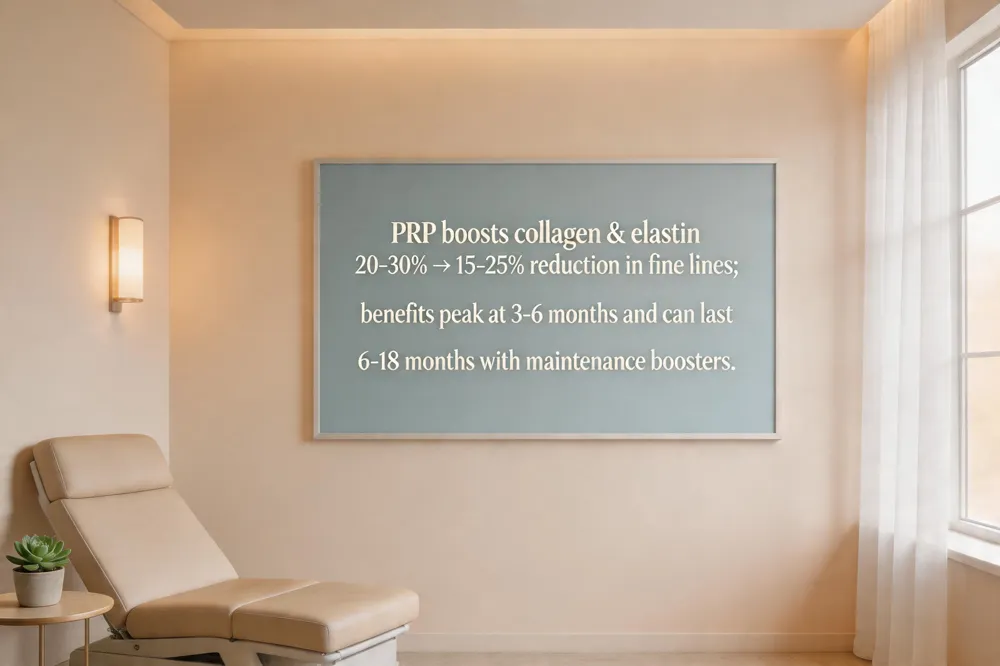 Recent randomized trials and meta‑analyses (2022‑2025) consistently show that autologous PRP injections increase dermal collagen type I/III and elastin by 20‑30 % within 8‑12 weeks, leading to measurable improvements in skin texture, firmness, and wrinkle depth. Objective measures (ultrasound, VISIA®, Cutometer) reveal a 15‑25 % reduction in fine‑line scores and a 10‑15 % rise in skin elasticity after a series of three‑four sessions spaced 4‑6 weeks. Patient‑reported satisfaction exceeds 80 % in most studies, with GAIS improvements of 1.8‑2.0 points and high scores on FACE‑Q and satisfaction surveys. Benefits typically become noticeable after the first week, peak at three‑six months, and can last 6‑18 months; maintenance boosters every 6‑12 months help preserve collagen remodeling.
PRP for skin rejuvenation – PRP concentrates growth‑factor‑rich platelets from a small blood draw; injected or microneedled into the face, it stimulates collagen, elastin, and hydration, smoothing fine lines and improving tone with minimal downtime.
PRP treatment for face benefits – The therapy yields firmer, smoother skin, reduced pore size, and fading of acne scars and hyperpigmentation, while the autologous nature minimizes allergic risk.
Does PRP actually work for skin? – High‑quality evidence shows modest but statistically significant improvements in texture and wrinkle depth, especially when combined with microneedling or laser; however, results vary and PRP remains an adjunct rather than a stand‑alone anti‑aging solution.
PRP treatment for face how long does it last? – After a full series, visible rejuvenation usually persists 6‑12 months, with some patients maintaining benefits up to 18 months; periodic maintenance sessions extend durability.
Safety Profile, Side Effects, and Contraindications
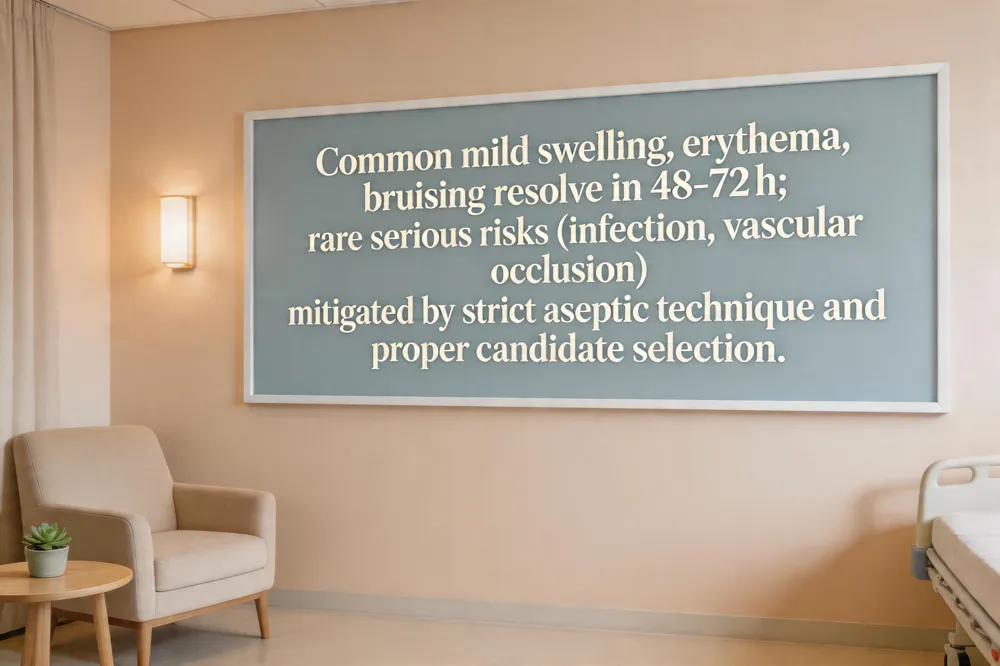 Platelet‑rich plasma (PRP) facial treatments are generally well‑tolerated. Common transient reactions include mild swelling, erythema, bruising, tenderness, and a brief sensation of tightness or itching, typically resolving within 48‑72 hours (AHA/ASDS, 2023‑2025). These are a normal inflammatory response to the injected growth factors and can be managed with ice packs, OTC anti‑inflammatories, and gentle skin care.
Rare but serious complications are uncommon but merit attention: infection, nodule or cyst formation, and, in rare cases, vascular occlusion that can lead to vision loss when injections are performed near the periorbital area (Cleveland Clinic 2024; FDA device classification). Strict aseptic technique, use of small‑gauge needles, and, in high‑risk zones, ultrasound guidance markedly reduce these risks.
Patient selection criteria and contraindications: Ideal candidates are adults with early‑to‑moderate photo‑aging, no active skin infections, and no platelet disorders or hematologic cancers. Contra‑indicated conditions include hepatitis C, HIV/AIDS, active skin cancer in the treatment area, uncontrolled diabetes, and current anticoagulant therapy that cannot be paused (AAD 2023, multiple RCTs). A board‑certified dermatologist should conduct a thorough medical history and skin assessment before proceeding.
Cost, Financing, and Regional Availability
 PRP treatment for face cost
A PRP facial typically costs between $300 and $1,500 per session in the United States. Most clinics charge $500‑$800 for a single visit, and a full series of 2‑4 sessions (spaced 4‑6 weeks apart) often totals $1,200‑$3,000. Prices vary by geographic region, provider expertise, and whether microneedling, dermal fillers, or post‑procedure skincare are bundled.
PRP treatment for face cost
A PRP facial typically costs between $300 and $1,500 per session in the United States. Most clinics charge $500‑$800 for a single visit, and a full series of 2‑4 sessions (spaced 4‑6 weeks apart) often totals $1,200‑$3,000. Prices vary by geographic region, provider expertise, and whether microneedling, dermal fillers, or post‑procedure skincare are bundled.
How much does PRP facial cost? The price reflects the cost of sterile blood draw, centrifugation, autologous processing, and physician time. Larger metropolitan areas and board‑certified dermatology practices may be at the higher end of the range. Insurance does not cover cosmetic PRP, but many offices offer financing plans, interest‑free payment schedules, and multi‑session package discounts to reduce out‑of‑pocket expense.
Platelet‑rich‑plasma skin treatment cost At On The Spot Dermatology in Glenview, Illinois, pricing aligns with national averages—approximately $500‑$800 per session. Packages of three to four treatments are commonly offered at a reduced per‑session rate, and flexible financing options are available for patients seeking long‑term skin rejuvenation.
How PRP Fits With Other Rejuvenation Options
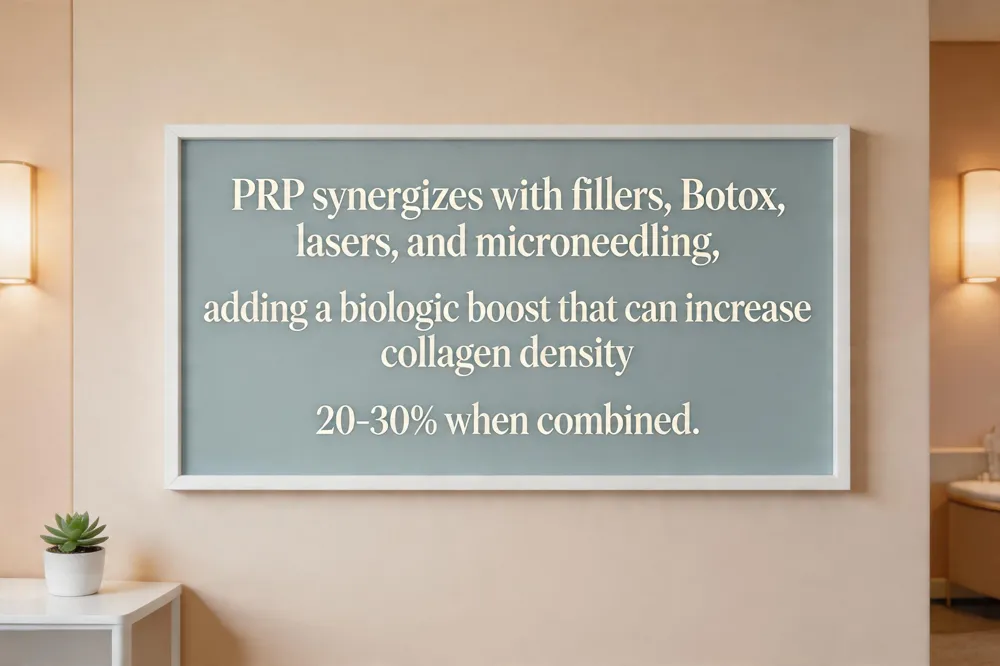 Platelet‑rich plasma (PRP) works alongside classic rejuvenation tools—fillers, Botox, lasers, and microneedling—by supplying autologous growth factors that boost collagen, elastin, and vascular repair. Fillers give instant volume, Botox relaxes dynamic wrinkles, and lasers remodel deeper dermal layers; PRP adds a biologic “reset” that enhances tissue quality and prolongs results, especially when applied after microneedling or fractional laser to improve absorption.
Combination protocols now typically involve 3‑4 PRP sessions spaced 4‑6 weeks, often paired with microneedling, hyaluronic‑acid fillers, or CO₂ laser resurfacing. Studies show a 20‑30 % greater increase in collagen density and patient‑reported satisfaction when PRP is added to microneedling or laser, while the safety profile remains mild (transient erythema, bruising).
Long‑term strategies focus on maintenance: a booster PRP treatment every 6‑12 months sustains neocollagenesis, and integrating periodic laser or RF resurfacing preserves skin elasticity for 12‑18 months.
Skin rejuvenation medicine – On The Spot Dermatology blends PRP, microneedling, NAD⁺ therapy, and exosomes to regenerate collagen and hydration, delivering natural, lasting results.
Skin rejuvenation treatments near me – Our Glenview office offers PRP facials, lasers, peels, and neurotoxin/filler services tailored to each patient.
Skin rejuvenation treatments for face – Options include non‑ablative and ablative lasers, IPL, microneedling, chemical peels, fillers, and Botox, each targeting specific concerns from texture to volume.
What treatment makes you look 10 years younger? – Botox plus hyaluronic‑acid fillers provide rapid, dramatic smoothing and volumizing that can instantly shave years off appearance.
Permanent skin rejuvenation treatments – While no method is truly permanent, fractional lasers, RF microneedling, and deep chemical peels produce durable collagen remodeling that, with diligent after‑care, can last years.
What's the best skin rejuvenation treatment? – For most patients, a combined‑technology laser (e.g., HALO) delivers the most comprehensive, long‑lasting improvement, especially when supplemented with PRP for ongoing collagen support.
At‑Home Care, Emerging Therapies, and Future Directions
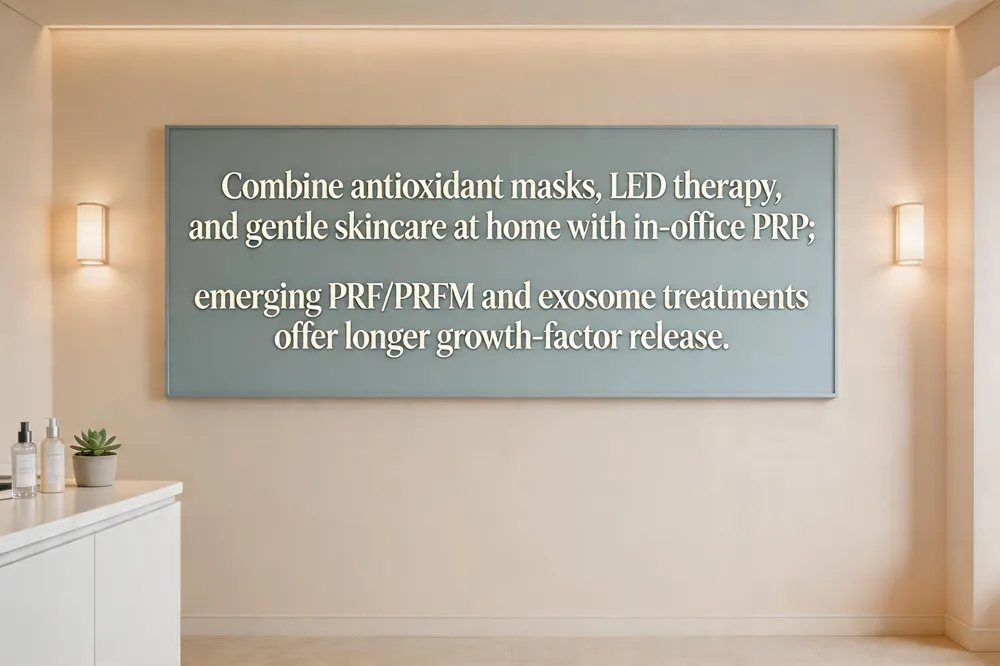 Home skin‑rejuvenation combines simple remedies and dermatologist‑approved devices. Antioxidant‑rich lemon‑honey‑sugar masks provide vitamin C and AHA exfoliation; hydrating cucumber or avocado masks restore barrier function; LED light‑therapy or dermaplaning tools gently promote cellular turnover. These at‑home steps work best when paired with in‑office PRP, which concentrates autologous growth factors to boost collagen, improve texture, and reduce fine lines. The next‑generation platelet products, PRF (Platelet‑Rich Fibrin) and PRFM, create a fibrin scaffold that releases growth factors more slowly, while exosome therapy delivers extracellular vesicles packed with signaling molecules for sustained regeneration. Compared with traditional PRP, PRF/PRFM and exosomes offer longer‑lasting effects and synergistic healing. Patients seeking PRP near them should choose board‑certified dermatologists who follow sterile, FDA‑compliant protocols and can design a personalized regimen—usually 3‑4 sessions spaced 4‑6 weeks with maintenance every 6‑12 months.
Practical Guidance for Your First PRP Facial at On The Spot Dermatology
 When you arrive at On The Spot Dermatology, a brief consultation determines your skin goals, medical history, and any contraindications. A 2‑4 tablespoon blood draw follows, and the sample is centrifuged to isolate platelet‑rich plasma (PRP). The autologous PRP is then injected or applied after microneedling; most patients notice mild redness and a tight feeling that fade within 24‑48 hours.
Post‑procedure care focuses on gentle cleansing, broad‑spectrum sunscreen, and avoiding vigorous exercise or hot tubs for 48‑72 hours. Hydration and a balanced diet support collagen remodeling. A typical maintenance schedule includes 3‑4 sessions spaced 4‑6 weeks apart, with touch‑ups every 6‑12 months to sustain results lasting 6‑12 months.
Frequently asked questions
- PRP injections for face before and after: The treatment starts with a blood draw, centrifugation, and dermal injection. Immediate mild swelling subsides quickly; over 2‑4 weeks skin becomes smoother and brighter, with benefits lasting up to a year.
- PRP facial before and after: Subtle yet visible improvements in tone, texture, and firmness appear 4‑8 weeks post‑treatment, driven by up to an 89 % increase in collagen density. Results typically endure 6‑12 months.
- PRP treatment for face benefits: PRP delivers growth factors that boost collagen and elastin, reducing fine lines, acne scars, hyperpigmentation, and pore size while offering a low‑risk, natural‑looking rejuvenation.
Take the Next Step Toward Radiant Skin
Recent studies confirm that autologous platelet‑rich plasma (PRP) can modestly boost collagen, improve skin texture, and reduce fine lines, especially when combined with microneedling or laser resurfacing. A series of three to four treatments spaced four‑six weeks apart yields the most consistent results, lasting six to eighteen months with proper maintenance. Patient‑reported satisfaction frequently exceeds 80 %, yet outcomes vary by age, skin condition, and lifestyle. At On The Spot Dermatology we tailor PRP protocols to your unique needs, reviewing medical history, expectations, and complementary options such as hyaluronic‑acid fillers. Setting realistic goals and following post‑procedure care—sun protection, gentle cleansing, and hydration—maximizes safety and long‑term benefit for lasting radiance and confidence.