Why Personalized Skin Care Matters
Dermatologists serve as the gatekeepers of skin health, combining medical expertise with cosmetic insight to create safe, effective treatment plans. In Glenview, practices such as The Skin Care Center and On The Spot Dermatology offer board‑certified specialists who assess each patient’s skin type, medical history, and aesthetic goals before recommending a rejuvenation strategy. Non‑invasive options—including the HydraFacial, microneedling, and medical‑grade chemical peels—provide a spectrum of benefits: HydraFacial delivers immediate hydration and antioxidant infusion with zero downtime; microneedling creates controlled micro‑injuries that stimulate collagen and elastin for deeper scar remodeling; and chemical peels accelerate epidermal turnover to improve texture, hyperpigmentation, and acne scarring. Matching the right modality to individual concerns is crucial—HydraFacial excels for quick glow and sensitive skin, microneedling targets deeper structural issues, while peels address surface irregularities and deeper dermal remodeling when needed. Personalized care ensures optimal results, minimizes risks, and supports long‑term skin health, empowering patients to achieve their unique complexion goals.
Spotting Cancer Early: The Dermatologist’s Edge
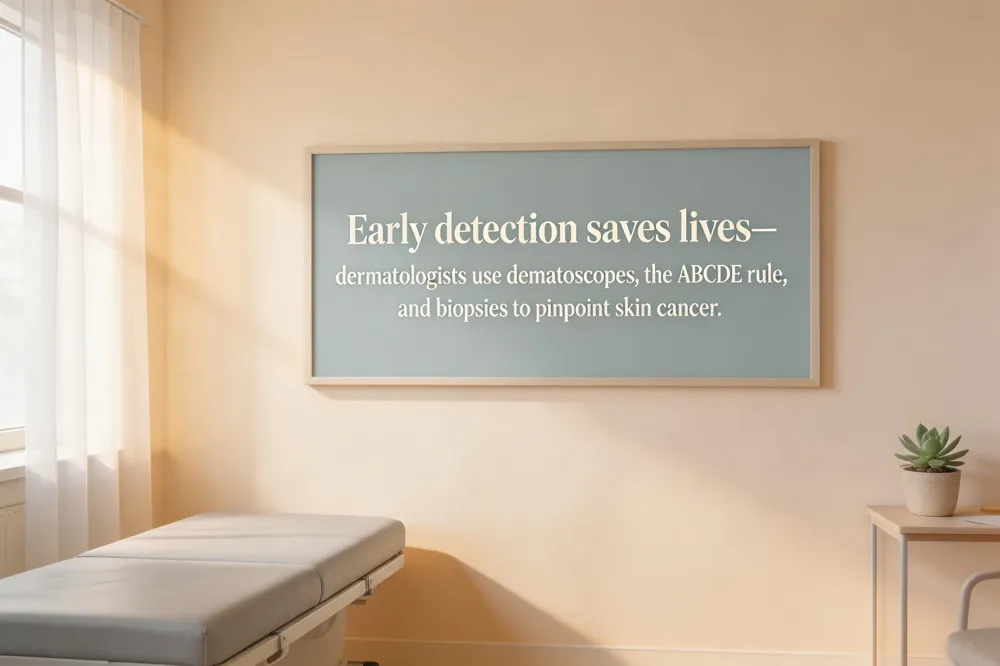 Can a dermatologist tell if a spot is cancerous? Yes—a dermatologist can determine whether a skin spot is cancerous. During a visit they perform a thorough visual inspection, often using a dermatoscope to magnify the lesion and evaluate it against the ABCDE rule (asymmetry, Border irregularity, Color variation, Diameter > 6 mm, Evolution). These tools help identify subtle changes that may signal early melanoma or other skin cancers.
How dermatologists evaluate skin lesions: The assessment starts with a detailed history of the lesion’s appearance, duration, and any changes. The clinician then examines the skin under magnification, noting texture, pattern, and vascular structures. High‑resolution imaging and digital monitoring may be employed for lesions that require close follow‑up.
Tools such as dermatoscopes and the ABCDE rule: A dermatoscope provides polarized light and up to 10× magnification, revealing structures invisible to the naked eye. The ABCDE rule serves as a quick checklist for suspicious features, guiding the decision to biopsy.
Biopsy as the definitive diagnostic step: When a lesion exhibits concerning characteristics, the dermatologist will perform a skin biopsy—punch, shave, or excisional—depending on size and location. The tissue is sent to pathology for microscopic analysis, which confirms or rules out cancer. Early detection through these systematic evaluations enables timely treatment and improves patient outcomes.
HydraFacial: Instant Radiance and Hydration
 HydraFacial uses a patented three‑step Vortex‑Fusion technology that first cleanses and gently exfoliates with salicylic and glycolic acids, then extracts impurities, and finally fuses antioxidant‑rich serums deep into the skin. The treatment can be customized with boosters such as Britenol (alpha‑arbutin + vitamin C) for hyper‑pigmentation or Dermabuilder (peptide blend) to stimulate collagen production, allowing clinicians to target specific concerns while delivering intense hydration. Because the process is non‑invasive and painless, it is safe for all skin types—including sensitive, rosacea‑prone, and acne‑prone skin—making it an ideal quick‑glow option before events or for regular maintenance.
Do HydraFacials really make a difference? Patients typically notice an immediate, visible improvement: smoother texture, a brighter complexion, reduced pore size, and enhanced moisture levels right after a single session.
Hydrafacial near me For Glenview residents, On Spot Dermatology (1995 Glenview Road) and The Skin Care Center (2551 Compass Rd.) both offer board‑certified Hydrafacial treatments with same‑day appointments. Call 847) 901‑0252 or book online to schedule your personalized facial and enjoy instant radiance.
Microneedling: Deep Collagen Induction
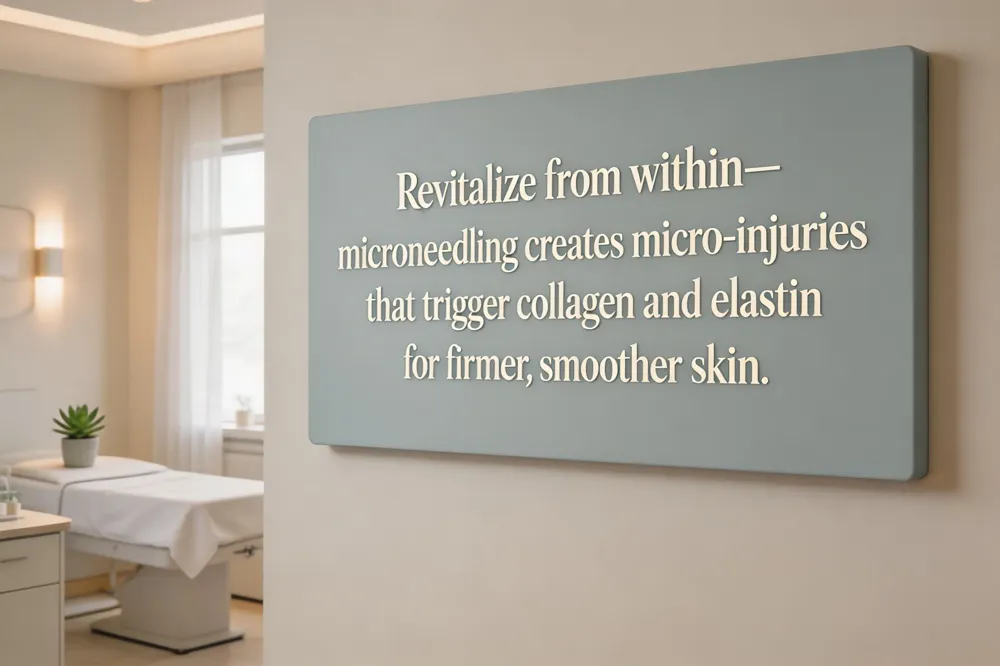 Microneedling, also known as collagen‑induction therapy, uses a handheld device equipped with ultra‑fine needles that create controlled micro‑injuries in the dermis. These tiny channels trigger the skin’s natural wound‑healing cascade, prompting fibroblasts to produce new collagen and elastin fibers. The result is a gradual tightening of lax skin, a smoother texture, and a reduction in the depth of acne‑derived scars.
Because the micro‑channels also enhance transdermal delivery, many clinicians pair Microneedling with platelet‑rich plasma (PRP) or targeted serums. PRP delivers concentrated growth factors that accelerate healing and amplify collagen synthesis, while serums containing peptides, vitamin C, or alpha‑arbutin can further brighten hyperpigmentation and improve overall tone.
Which is more effective, HydraFacial or Microneedling?
Microneedling is generally more effective for deeper skin concerns such as acne‑scar remodeling, improving elasticity, and stimulating long‑term collagen production. HydraFacial excels at surface exfoliation, intense hydration, and immediate brightening, making it ideal for a quick glow and smoothing fine lines. Both procedures are safe for all skin tones and have minimal downtime, but Microneedling typically requires a series of treatments to achieve measurable scar reduction. If your primary goal is to reshape scar tissue, tighten lax skin, and boost firmness, Microneedling is the gold‑standard choice. For a rapid, non‑invasive lift that enhances radiance and moisturization, a HydraFacial is the better option.
Chemical Peels: Targeted Exfoliation for Acne Scars
 Chemical peels work by applying a controlled acid solution that removes the outer epidermal layer, prompting fresh cell turnover and stimulating collagen production.
Superficial vs. medium vs. deep peels – Superficial peels (light) use low‑concentration AHAs or BHAs and affect only the topmost skin cells, making them ideal for mild texture issues and early‑stage acne scarring. Medium‑depth peels penetrate the epidermis and upper dermis, offering more pronounced remodeling of rolling or boxcar scars. Deep peels reach the lower dermis, delivering dramatic resurfacing for severe scarring but requiring longer downtime and medical monitoring.
Common acids – Glycolic acid (AHA) provides gentle exfoliation and is frequently used in superficial to medium peels. Salicylic acid (BHA) excels for oily, acne‑prone skin because it clears pores. Trichloroacetic acid (TCA) is the workhorse of medium‑depth peels, effectively treating moderate acne scars. Jessner’s solution, a blend of salicylic, lactic, and resorcinol acids, offers a balanced medium‑strength option for mixed‑type scarring.
Tailoring peel strength – The optimal peel depends on scar depth, skin type, and tolerance. Light glycolic peels (15‑20 %) are safe for most skin tones and address shallow pits, while 20‑30 % glycolic peels or 15‑25 % TCA peels target deeper atrophic scars. A board‑certified dermatologist in Glenview will assess your skin and customize the acid concentration, exposure time, and post‑care regimen to maximize benefit and minimize irritation.
Best chemical peel for acne scars near me – For Glenview residents, OnSpot Dermatology offers medium‑strength glycolic peels and TCA peels ($350 each) tailored to your scar depth and skin type.
How many chemical peel sessions do I need for acne scars? – Most patients achieve noticeable improvement after 3‑6 treatments spaced 2‑4 weeks apart; superficial AHA peels may need 6‑8 sessions, while medium‑depth TCA peels often require 3‑4 sessions. Your dermatologist will create a personalized schedule based on your individual needs.
Matching Treatment to Goal and Timing
 Choosing the right skin‑rejuvenation modality starts with your primary goal. HydraFacial excels at surface concerns—dryness, mild congestion, fine lines, and uneven tone—and delivers instant radiance with zero downtime, making it ideal for regular maintenance or pre‑event refreshers. Microneedling creates controlled micro‑injuries that trigger collagen and elastin production, so it is best for deeper acne‑scar remodeling, pronounced texture irregularities, and long‑term anti‑aging benefits. Chemical peels (superficial, medium, or deep) chemically remove the outer skin layers, stimulating cellular turnover and collagen; they are suited for sun damage, hyperpigmentation, and moderate‑to‑severe scarring when a more aggressive resurfacing is needed.
Frequency recommendations: HydraFacial can be performed monthly for optimal glow, while microneedling is typically spaced 4‑6 weeks apart, with a series of 3‑6 sessions for durable remodeling. Superficial peels are safe every 2‑5 weeks; medium peels every 3‑4 months; deep peials are limited to one‑to‑two sessions per year due to longer recovery.
Combining treatments: Many dermatologists alternate a monthly HydraFacial with quarterly microneedling or medium‑depth peels to achieve both immediate surface hydration and deeper structural renewal. The skin should be allowed to recover (usually 1‑2 weeks) between microneedling and a peel to minimize irritation.
OnSpot Dermatology logistics: A typical OnSpot visit lasts 5‑15 minutes for a full‑body skin exam, with total appointment time around 30 minutes. New‑patient exams cost $100‑$150; cosmetic services start at $150 and can exceed $400 for advanced treatments. The practice accepts most major insurers (Blue Cross Blue Shield, UnitedHealthcare, Cigna, Aetna, Medicare Part B, Medicaid) and offers CareCredit financing. Patient satisfaction is high, averaging 4.8 out of 5 on Google and Healthgrades. For appointments or inquiries, call (941) 444‑0011. Locations include the Glenview office at 1995 Glenview Road Suite 101, IL 60026, and Florida clinics in Fort Myers, Orlando, and Lady Lake; a mobile unit serves many Central and South Florida communities. Before‑and‑after photos are available on the OnSpot website and social media galleries.
Local Expertise: Glenview Dermatology Options
 Glenview residents have several high‑quality dermatology choices, each offering both medical and cosmetic services tailored to individual skin needs.
OnSpot Dermatology operates a mobile "Derma Drive®" service that brings board‑certified care to homes, workplaces, or community venues. In a quick 15‑minute comprehensive skin exam, patients receive skin‑cancer screening, biopsies, Mohs surgery, and treatment for acne, eczema, and psoriasis. Cosmetic options include Botox®, dermal fillers, chemical peels, and microneedling. The mobile clinic handles scheduling, billing, and follow‑up, accepts most major insurances, and provides a convenient, patient‑first experience.
The Skin Care Center in Glenview (2551 Compass Rd., Suite 105) offers a full suite of medical and aesthetic procedures. Board‑certified dermatologists such as Dr. Lauren Balogh and Dr. Mark Allan Berk provide acne therapy, eczema management, skin‑cancer checks, and cosmetic treatments like chemical peels, microneedling, IPL photofacial, and laser resurfacing. Patients consistently rate the practice 4.7/5 on Yelp for friendly staff and effective results, and before‑and‑after galleries showcase improvements from peels, laser work, and microneedling.
Northwestern Medicine Dermatology Glenview is part of a major academic health system, staffed by board‑certified physicians who deliver comprehensive medical care and advanced aesthetics—including laser resurfacing, injectables, and exosome therapy. Reviews highlight knowledgeable doctors, personalized treatment plans, and a clean, modern facility, earning a 4.6/5 rating on Google.
Together, these providers ensure Glenview residents receive expert, evidence‑based skin health and rejuvenation options close to home.
Your Path to Radiant, Healthy Skin
When choosing between a HydraFacial, microneedling, or a chemical peel, each option brings distinct strengths. A HydraFacial delivers instant hydration, gentle exfoliation with salicylic and glycolic acids, and antioxidant‑rich boosters for a quick, downtime‑free glow—ideal for regular maintenance and sensitive skin. Microneedling creates controlled micro‑injuries that trigger collagen and elastin production, offering deeper remodeling for acne scarring, fine lines, and texture irregularities; it can be enhanced with PRP or depigmenting serums for accelerated healing. Chemical peels, ranging from superficial glycolic or salicylic formulas to medium‑depth TCA treatments, accelerate epidermal turnover, improve hyperpigmentation, and stimulate new collagen growth for longer‑lasting rejuvenation. All three are non‑invasive, customizable, and safe when performed by a board‑certified dermatologist. To determine which regimen best fits your skin type, concerns, and lifestyle, schedule a personalized assessment with a local Glenview dermatologist—such as those at The Skin Care Center or OnSpot Dermatology. Call (847) 901‑0252 or book online, bring a list of your skin goals, and let the specialist design a tailored plan that maximizes results while minimizing downtime.