Why Hydration Shapes Skin’s Appearance
Hyaluronic acid (HA) is a familiar ingredient in serums and moisturizers because it attracts and holds water. The body makes HA naturally, including in the skin, where it helps tissues stay flexible. In a skincare product, its water-binding action can support surface hydration and give skin a temporarily fuller, smoother appearance. Cleveland Clinic explains how hyaluronic acid retains water.
That visible plumping is a hydration effect, not a lasting change to skin structure. A topical product may ease the feel of dryness and soften the look of fine, dry lines, but it does not restore lost collagen or replace care for an ongoing skin concern. Research on HA-based topical formulations also describes plumping as temporary and influenced by the formula and skin barrier. A 2025 review of hyaluronic acid-based hydrogels discusses these distinctions.
At On The Spot Dermatology in Glenview, personalized care from skilled healthcare providers helps put cosmetic concerns in context with overall skin health. Understanding what hydration can and cannot do is a useful starting point for choosing products or discussing persistent dryness, texture changes, or other concerns with a dermatology professional.
How Hyaluronic Acid Holds Water
 Hyaluronic acid, also called hyaluronan, is a substance the body makes naturally. It occurs in the skin, eyes, joints, and other tissues. In skincare, it acts as a humectant, meaning it attracts and holds water to support surface hydration. This can help dry skin feel more comfortable and look temporarily smoother and plumper, though results depend on the product and how it is used. Cleveland Clinic’s overview of hyaluronic acid explains its role in moisture retention.
The molecule has a chain-like structure with many sites where water and other compounds can attach. Cleveland Clinic illustrates its water-binding capacity by noting that about a quarter-teaspoon can hold roughly one and a half gallons of water. That example describes HA’s ability to bind water, not how much a skincare product will deliver to the skin.
What topical HA can do also depends on the skin barrier. The outermost layer helps limit water loss and restricts how ingredients pass into deeper skin layers, so a topical product should not be treated as a guaranteed route to deeper tissue. Research on HA-based topical formulations describes hydration and temporary plumping at the surface, with effects shaped by both the formulation and the barrier. A 2025 review of hyaluronic acid-based hydrogels discusses these factors.
Despite the word “acid,” hyaluronic acid is not an exfoliating acid like glycolic acid. Skincare products may instead list sodium hyaluronate, the salt form of HA. Either ingredient can support hydration, but neither replaces treatments intended for deeper wrinkles or restores lost collagen. Injectable HA fillers are a separate medical treatment used to add volume or soften certain facial lines, and they should only be administered by a qualified medical professional.
At On The Spot Dermatology in Glenview, Illinois, skilled healthcare providers offer personalized medical and cosmetic skin care. If you have sensitive or recently treated skin, a dermatology professional can help you choose an appropriate product and distinguish everyday hydration from concerns that may need a different treatment.
What Plumpness and Hydration Can Mean
When hyaluronic acid binds water at the skin’s surface, it can make skin look temporarily more hydrated and feel softer and suppler. This added moisture may also soften the appearance of fine lines linked to dryness, without changing the underlying structure of the skin. The Cleveland Clinic’s overview of hyaluronic acid describes its role in skin flexibility and elasticity.
These visible effects are cosmetic and temporary. Topical hydration lasts while the product remains in contact with skin; the available evidence does not establish that a serum or cream permanently increases skin hydration. For context on how water retention can contribute to a plumper appearance, see this guide to hyaluronic acid and skin hydration.
Natural hyaluronic acid levels decline with age, and topical products may help address the appearance of some concerns associated with water loss. They do not reverse aging or replace collagen. At On The Spot Dermatology, treatment options are guided by personalized care from skilled healthcare providers, so persistent dryness or other skin concerns can be assessed in context rather than treated as hydration alone.
Hyaluronic acid appears in serums, creams, lotions, gels, masks, and other topical products. Formulas differ in ingredients and texture, and a higher concentration by itself does not show that a product will work better. A 2025 review discusses the role of formulation and molecular weight in topical effects, while noting that results depend on the product and how it is used (review of hyaluronic acid-based hydrogels).
Choosing a Formula for Your Routine
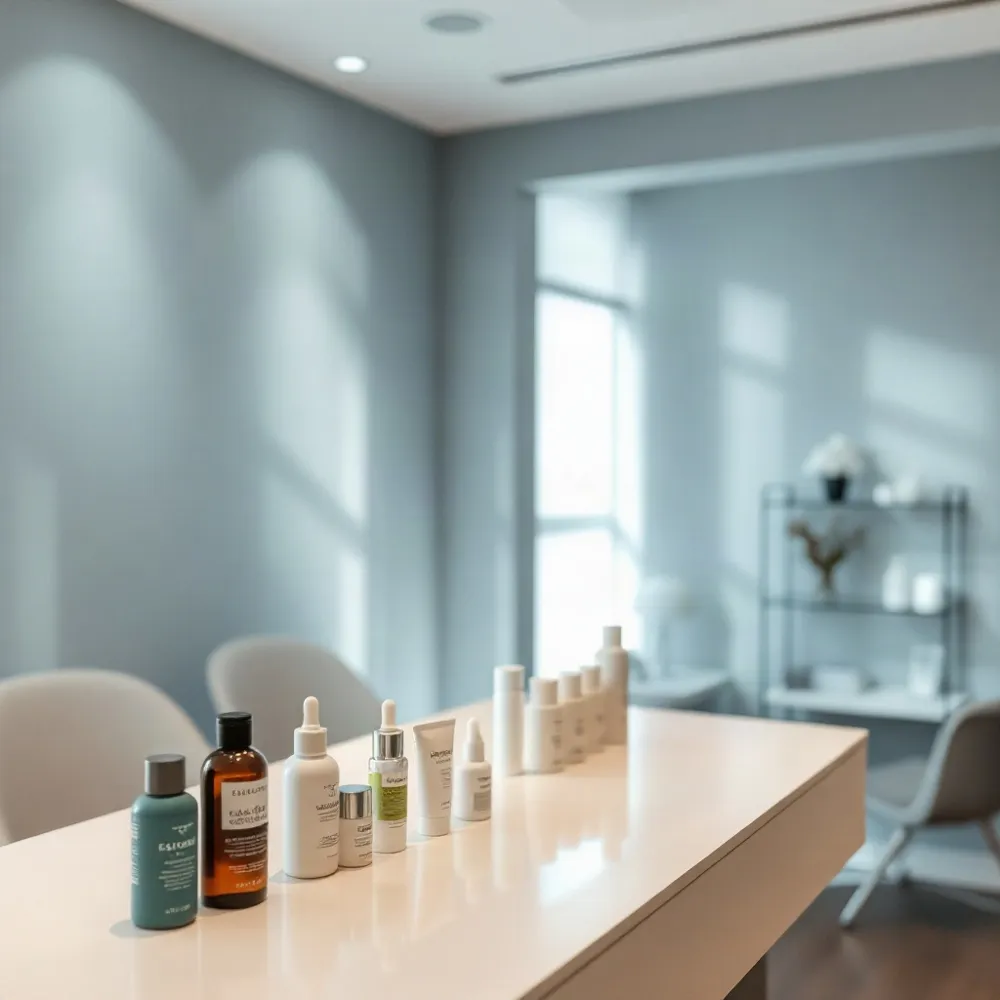 Hyaluronic acid (HA) comes as a standalone serum and as part of moisturizers, creams, and masks. Some formulas pair it with antioxidants or peptides, so the product can address hydration alongside other skin-care goals. At On The Spot Dermatology in Glenview, product choices can be considered in the context of a person’s skin and broader care plan, rather than by ingredient name alone.
The form of HA matters, but it does not tell the whole story. Higher-molecular-weight HA is associated with surface hydration and a light film that helps reduce moisture loss, while lower-molecular-weight forms are described as entering the skin more readily. These differences do not mean that an ordinary cosmetic product will deliver a guaranteed effect in deeper skin layers. The broader behavior of HA-based topical products depends on their formulation and the skin barrier, as discussed in this review of HA-based hydrogels.
HA is generally compatible with ingredients such as vitamin C, retinoids, and alpha-hydroxy acids. Still, the complete formula matters: other active ingredients may affect how often a product should be used and how well sensitive skin tolerates it. Follow the product directions, and introduce new products thoughtfully. The Cleveland Clinic’s guidance on hyaluronic acid notes that topical products are generally considered safe, while advising people to discuss possible interactions with a healthcare provider.
If you have persistent sensitivity, a specific skin concern, or skin that has recently undergone a treatment, ask a dermatology professional before choosing or combining products. At On The Spot Dermatology, personalized care from healthcare providers can help put product choices alongside medical and cosmetic skin needs.
Using Hyaluronic Acid Day to Day
For a simple routine, apply a topical hyaluronic acid product after cleansing, then follow with moisturizer. Applying it to slightly damp skin is a common approach, though product directions should guide your routine. Hyaluronic acid is a humectant that attracts and holds water; Cleveland Clinic’s overview of hyaluronic acid explains why it appears in many moisturizing products.
When a serum and moisturizer both contain hyaluronic acid, use them in their usual order: serum first, moisturizer afterward. A moisturizer helps support the skin barrier and reduce water loss. On the routine guidance published by otsdermatology.com, the advice is to follow the specific product label, since formulas may include other active ingredients that affect how often they should be used.
Hyaluronic acid is generally suitable for daily use and can usually fit into either a morning or evening routine. In the morning, finish with sunscreen as part of daytime skin care. A routine tailored to your skin concerns and the products you already use can also help prevent unnecessary overlap.
Use the amount and frequency stated on the label rather than assuming that more product will produce better results. If significant irritation develops, stop using the product and seek advice from a qualified dermatology professional, especially if symptoms persist. For personalized guidance, the dermatology team at otsdermatology.com can consider your skin and the other ingredients in your routine.
Safety, Reactions, and Common Concerns
 Over-the-counter topical hyaluronic acid (HA) products, including serums and creams, are generally considered safe, and adverse reactions are rare, according to the Cleveland Clinic’s guidance on HA safety. Still, stinging, redness, dryness, or irritation can occur. Another ingredient in a formula, rather than HA itself, may be the cause.
Topical HA is not known to darken skin. Stop using a product if it causes significant irritation. Get urgent medical care for hives, trouble breathing, or swelling of the face or throat, which can signal a serious allergic reaction. If irritation persists or you notice a new change in skin color, consult a dermatologist. At On The Spot Dermatology in Glenview, skilled providers offer personalized medical and cosmetic skin care, which can help patients discuss a reaction in the context of their skin and routine.
Topical HA is not known to cause cancer and is widely used as a moisturizing ingredient. HA also occurs naturally in the body. Researchers study some HA-related molecules and signaling pathways in particular cancer settings, but those findings do not show that applying an HA skincare product causes cancer. If you have a personal history of cancer or concerns about a specific formula, ask your healthcare professional or dermatologist for advice.
Topical products are different from injectable HA fillers. Fillers are medical procedures, not at-home treatments, and should be administered only by a licensed, qualified medical professional. Improper injection can cause severe complications. Learn more about possible reactions and safety considerations.
Before taking HA supplements, or combining products with medications, discuss possible interactions with a healthcare provider. This is especially helpful when considering HA for a skin condition or when you use other medicines or supplements.
What to Know About Oral Supplements
Oral hyaluronic acid (HA) supplements may support skin health, but they are not a guaranteed route to visibly plumper skin. The Cleveland Clinic’s overview of hyaluronic acid notes that long-term use of an HA supplement may improve overall skin health, without specifying a dose, timeframe, or expected benefit for each person.
Small clinical studies have reported possible improvements in skin hydration and, in some cases, elasticity or the appearance of wrinkles. The evidence remains limited, results vary, and some studies were industry-funded. A review of HA research also describes a study combining topical and oral HA, so its findings cannot establish what an oral supplement alone will do.
Products and doses differ, and supplement quality can vary. Supplements should not replace established skin care or evaluation and treatment for a dermatologic concern. For additional context, see this overview of hyaluronic acid and supplementation.
Before starting a supplement, ask a healthcare professional, especially if you are pregnant or breastfeeding, have a health condition or allergies, or take medication. At On The Spot Dermatology in Glenview, personalized care from healthcare providers can help patients discuss skin concerns and consider appropriate care options. A clinician can help weigh whether a supplement makes sense alongside your routine and any dermatologic treatment.
Personalized Care for Healthy Skin
Topical hyaluronic acid (HA) can attract and hold water at the skin’s surface, helping skin feel more comfortable and look temporarily smoother or plumper. These are hydration benefits, not a permanent change in skin structure, and results can vary with the formula and your skin.
If dryness, sensitivity, or a cosmetic concern is affecting your routine, a dermatology professional can help you consider suitable products and other options. At On The Spot Dermatology in Glenview, Illinois, skilled healthcare providers offer personalized care for skin health and aesthetics. A conversation about your goals and how your skin responds can help guide choices that fit your needs, including whether HA belongs in your routine. Stop using a product if it causes persistent irritation, and ask a provider for guidance.