Why Asking the Right Questions Matters
Asking the right questions during your first dermatology visit puts you in control of your skin health. When you actively engage, you empower yourself to understand the underlying causes of concerns such as acne, sun damage, or hair loss, and you can make informed choices about treatments ranging from topical moisturizers to injectable fillers. Clear, purposeful questions also improve communication with your board‑certified dermatologist, ensuring that the provider can explain diagnosis, risk factors, and the rationale behind each recommendation. This dialogue helps the clinician tailor a plan that matches your skin type, lifestyle, and aesthetic goals—whether you need a broad‑spectrum sunscreen for melanoma prevention or a personalized regimen to restore a compromised skin barrier. In short, thoughtful questioning creates a partnership that maximizes safety, effectiveness, and satisfaction with both medical and cosmetic care.
Preparing for Your First Dermatology Appointment
 Getting ready for your initial visit at On The Spot Dermatology in Glenview, Illinois can make the consultation smoother and more productive.
What to bring to your first dermatologist appointment – Pack a concise list of your medical history, current medications, supplements, and any recent skin‑related treatments or surgeries. Bring clear photos (or digital files) of rashes, moles, acne, or other concerns, especially if they have changed over time. Write down any questions you want to discuss, and remember your insurance card, photo ID, and any referral or prior test results. Wear loose, comfortable clothing and arrive without makeup or nail polish so the skin can be examined fully.
Can I wear lotion to the dermatologist? – Yes, for routine exams you can keep your skin moisturized. If you have a scheduled procedure (laser, biopsy, chemical peel), the clinic may ask you to avoid lotions for a few hours beforehand—check the appointment instructions.
Can I wear mascara to the dermatologist? – It’s best to remove mascara and any eye makeup. Pigments can conceal irritation or early skin changes around the eyelids, which are important to assess during a full‑face exam.
How long does a first dermatologist appointment take? – Expect 15‑30 minutes for a straightforward concern, up to 40 minutes for a comprehensive skin exam or treatment discussion. Telehealth visits are usually under 20 minutes.
Dermatologist near me accepting new patients – On The Spot Dermatology is currently accepting new patients. Call (847) 555‑1234 or book online to schedule your personalized consultation.
Do female dermatologists examine the groin area? – Yes. A complete head‑to‑toe exam includes the groin, and female dermatologists are fully trained to assess that area with privacy and comfort.
What not to say to a dermatologist? – Be honest about sunscreen use, skin‑picking habits, prior treatments, and lifestyle factors (smoking, alcohol, medications). Inaccurate information can lead to suboptimal recommendations.
Following this checklist helps ensure a thorough evaluation and a tailored skin‑health plan.
Managing Common Skin Conditions: Eczema, Acne, and Hair Loss
 When you sit down with a board‑certified dermatologist at On The Spot Dermatology in Glenview, Illinois, bring a clear list of questions so you get the most personalized care.
Questions to ask dermatologist about eczema – Inquire about the typical triggers that worsen your eczema (e.g., certain fabrics, soaps, foods, or climate) and how to avoid them. Ask which fragrance‑free moisturizers, cleansers, or laundry products are best for your skin type and whether prescription‑strength barrier‑repair creams are warranted. Discuss the role of stress and lifestyle changes, signs of infection, safe exercise and sweating practices, and a long‑term prevention plan with scheduled follow‑ups.
What to expect at your first dermatologist appointment for acne – The doctor will review your medical and skin‑care history, assess lesions (blackheads, papules, pustules, cysts) without makeup, and diagnose the specific acne type. Together you’ll craft a treatment plan that may include prescription topicals, oral medications, in‑office peels or light therapy, and lifestyle advice, with clear timelines, side‑effect information, and follow‑up schedules.
Questions to ask dermatologist about hair loss – Ask which the most likely cause of your thinning is, what diagnostic tests (blood work, pull test, scalp biopsy) are needed, and which options—topical minoxidil, oral finasteride, PRP, or hair‑transplant—fit your condition. Clarify lifestyle or scalp‑care changes, expected timelines for regrowth, and potential side effects.
What to ask dermatologist about skin care and anti‑aging – Ask how often to exfoliate and which agents suit your skin, the best broad‑spectrum SPF 30+ sunscreen, and which moisturizers (ceramides, hyaluronic acid) or serums (vitamin C, peptides) are optimal. Discuss injectable or laser anti‑aging options, dietary habits, sleep, smoking, and sun‑exposure practices that influence skin health.
Most asked skincare questions – Patients often wonder about daily moisturization, pore‑size reduction, timing for starting SPF, cleansing frequency, exfoliant introduction, skin‑type identification, seasonal routine adjustments, and the efficacy of OTC versus prescription acne treatments.
Skin Cancer Awareness and Red‑Flag Signs
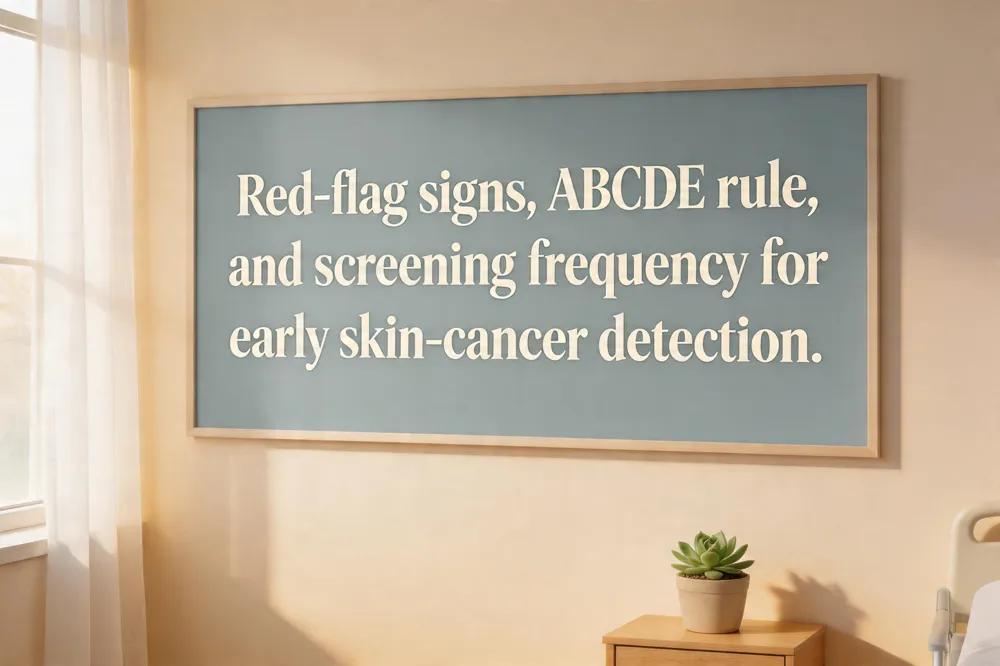 What is a red flag in dermatology? A red flag is any skin change that could signal a serious condition such as melanoma. Watch for new or evolving moles, spots that change color, size, or shape, lesions that bleed, itch, or fail to heal, and persistent redness or scaling. Prompt evaluation can catch cancer early when treatment is simplest and most effective.
ABCDE rule Use the ABCDE mnemonic to assess moles: A – Asymmetry; B – Border irregularity; C – Color variation; D – Diameter > 6 mm; E – Evolution (any change over time). Any lesion meeting one or more criteria warrants a dermatologist’s exam.
Screening frequency The American Academy of Dermatology recommends an annual full‑body skin exam for most adults, with more frequent checks for high‑risk individuals (fair skin, family history of melanoma, numerous atypical moles, or heavy sun exposure). Early detection dramatically improves outcomes, so schedule regular screenings at On The Spot Dermatology in Glenview, Illinois.
Cosmetic, Anti‑Aging, and Patient Education Resources
 Anti‑Aging Treatments
At On The Spot Dermatology in Glenview, IL we combine evidence‑based daily protection with advanced in‑office procedures. Broad‑spectrum sunscreen, prescription‑strength retinoids (tretinoin or adapalene), and antioxidant serums (vitamin C, peptides) form the foundation of anti‑aging care. For deeper wrinkles and volume loss, injectable options such as Botox, dermal fillers, and collagen boosters are offered, while laser resurfacing, fractional CO₂, and IPL target texture, hyperpigmentation, and vascular lesions.
Injectables and Lasers
Our board‑certified dermatologists assess skin type, medical history, and aesthetic goals before recommending any procedure. Botox relaxes dynamic lines; fillers restore lost volume; laser technologies stimulate collagen remodeling with minimal downtime. We discuss risks, contraindications, and post‑procedure care to ensure safe, lasting results.
Patient‑Education PDFs
- Dermatology Questions and Answers PDF: A printable guide covering common and advanced dermatologic topics, including skin cancer, inflammatory disorders, and procedural dermatology. Available for free download from our website.
- Funny Questions to Ask a Dermatologist: Light‑hearted prompts such as “If my skin could talk, would it file a complaint about my daily moisturizer usage?” to ease anxiety during visits.
- What to Ask Dermatologist About Anti‑Aging: Guidance on sunscreen, retinoids, moisturizers, injectables, lasers, and lifestyle factors that affect skin aging.
These resources empower patients to make informed decisions and support personalized, high‑quality skin care.
Practice Resources, Follow‑Up, and Ongoing Care
 At On The Spot Dermatology we provide a suite of patient‑education tools, clear follow‑up schedules, and a philosophy centered on personalized, evidence‑based care.
Our website hosts a downloadable "Dermatology Questions and Answers PDF" that condenses board‑style scenarios, images, and treatment algorithms for common and advanced skin conditions. This resource helps patients understand their diagnosis, prepares staff for certification exams, and underscores our commitment to transparent, science‑driven guidance.
We follow a structured follow‑up protocol: after any medical or cosmetic procedure, patients receive a written plan outlining medication timing, home‑care instructions, and the next appointment date—typically 2–4 weeks for medical therapies and 1–2 weeks for injectables or laser treatments. Ongoing care is reinforced through quarterly skin‑health newsletters, seasonal sunscreen reminders, and access to an online portal for secure messaging.
Our practice philosophy emphasizes partnership; we tailor treatment to each patient’s skin type, lifestyle, and goals while ensuring safety and cost‑effectiveness.
What are the 5 L’s in dermatology? The five L’s—tumid lupus erythematosus, Jessner’s lymphocytic infiltrate, plaque‑type polymorphous light eruption, lymphocytoma cutis, and classic lupus erythematosus—share a lymphocytic infiltrate at the dermo‑epidermal junction but differ in clinical presentation and therapy. Recognizing them narrows the differential diagnosis.
Dermatology Questions and Answers PDF – A concise, printable collection of clinical scenarios, image‑based clues, and detailed explanations covering benign tumors, inflammatory dermatoses, skin cancers, and procedural dermatology. Available for free download from our website.
Most common questions for dermatology interviews – Candidates are asked about common skin allergies and their treatment, biopsy techniques, management of treatment‑resistant acne, and how to communicate complex conditions empathetically.
Most asked skincare questions – Patients wonder about daily moisturisation, pore size reduction, the timing of sunscreen use, cleansing frequency, exfoliant introduction, skin‑type determination, seasonal routine changes, and the efficacy of OTC versus prescription acne products.
Take the Next Step with Confidence
Ready to begin your journey toward healthier, more radiant skin? Schedule your first visit at On The Spot Dermatology in Glenview, Illinois, by calling (847) 555‑1234 or using our online appointment request form at onsdermatology.com. During the consultation, our board‑certified dermatologists will review your medical history, examine your skin, and develop a personalized skin‑health plan that blends medical and cosmetic options—whether you need acne management, skin‑cancer screening, Botox, or a custom moisturizer regimen. We’ll also discuss lifestyle habits, sunscreen use, and any necessary follow‑up visits. Contact us today to secure your slot and take the next step with confidence for you.