Understanding Modern Facial Treatments
Modern resurfacing offers three options that improve hydration, texture, and tone. A HydraFacial uses vortex‑fusion cleansing, a mild acid peel, extraction, and antioxidant serum infusion, delivering results with no downtime. Microneedling creates micro‑injuries that trigger collagen and elastin synthesis, ideal for acne‑scar remodeling, though it involves 1‑3 days of mild erythema. Chemical peels apply glycolic, salicylic, or TCA acids to exfoliate the epidermis; formulas heal quickly, while peels need days of recovery for pigment and wrinkle improvement. Choosing among them depends on skin type, concerns (e.g., oily pores versus scarring), downtime tolerance, and contraindications such as active rosacea or recent isotretinoin use. A dermatologist can tailor the plan after assessment.
HydraFacial: Benefits, Ideal Candidates, and Limitations
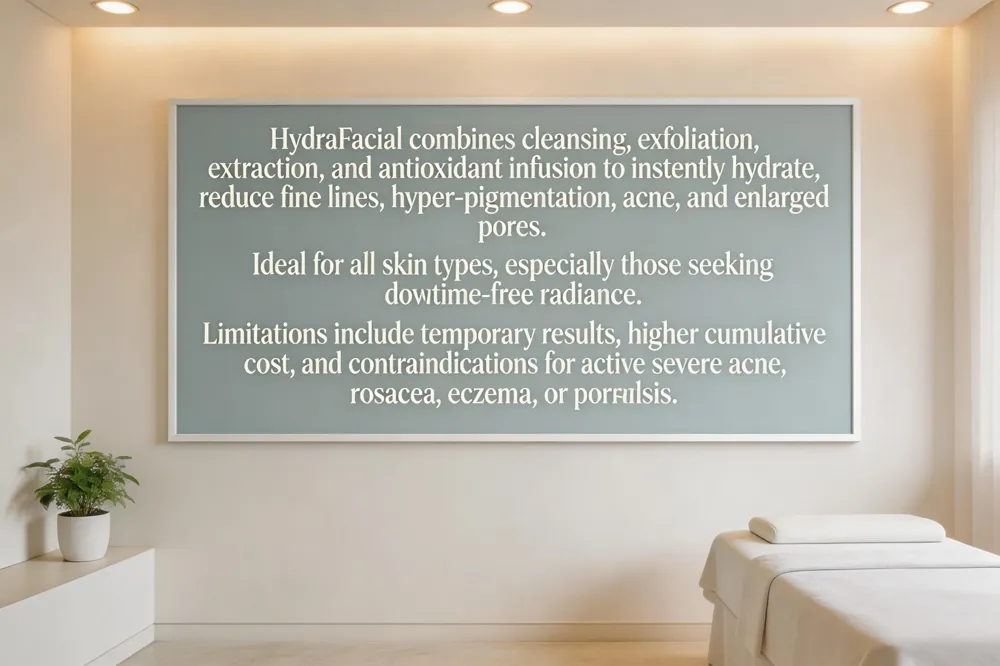 The HydraFacial’s three‑step vortex‑fusion process begins with a gentle cleanse‑exfoliation that uses a low‑pH glycolic‑salicylic peel to dissolve dead cells, followed by painless vacuum suction that extracts blackheads, sebum and debris. The final step fuses antioxidant‑rich serums—hyaluronic acid, vitamins, peptides—deeply into the skin, delivering instant hydration and a dewy glow.
Because the treatment combines cleansing, exfoliation, extraction, hydration and antioxidant protection, patients see visible improvements right after a 30‑ to 60‑minute session. Fine lines, early wrinkles, hyper‑pigmentation, acne lesions, enlarged pores and oily or congested skin appear smoother and more radiant. The infusion of hyaluronic acid and peptides also supports collagen production over time, so regular monthly HydraFacial contribute to long‑term skin health and enhance the efficacy of daily skincare products.
Customization is a key advantage. Boosters such as Britenol (alpha‑arbutin + vitamin C) brighten melasma or dark spots, while Dermabuilder (peptides) targets loss of elasticity. Clinicians can add LED light therapy, lymphatic drainage or dermaplaning to tailor the facial to specific concerns.
What is the HydraFacial good for? It reduces fine lines, fine‑pigmentation, acne, blackheads and enlarged pores, balances oily skin, and provides immediate, downtime‑free radiance for all skin types.
Disadvantages? Active severe acne, rosacea, eczema or psoriasis may flare; results are temporary (a few weeks) requiring regular sessions; cumulative cost can be high; mild redness or irritation may occur in ultra‑sensitive skin; deeper wrinkles or extensive pigmentation often need stronger modalities.
Benefits for face and men? Both benefit from smoother texture, brightened tone, reduced oil and post‑shave irritation, and no downtime—ideal for busy lifestyles.
Cost in Glenview, IL? At On The Spot Dermatology, sessions range from $150 to $250, depending on boosters and upgrades; insurance does not cover cosmetic facials.
Microneedling vs. Chemical Peels: Wrinkles and Hyperpigmentation
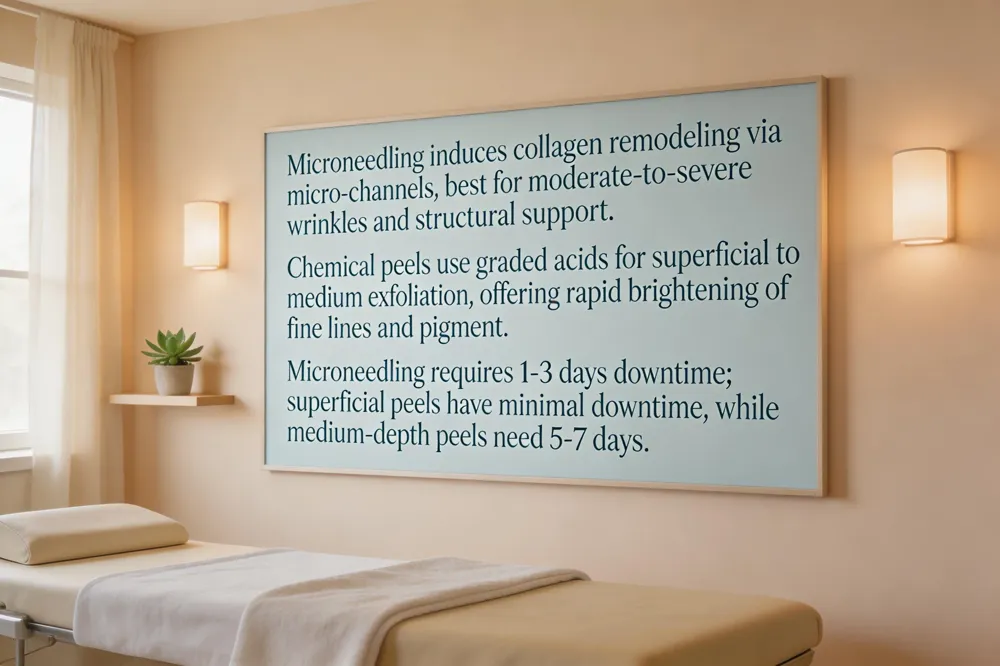 Both microneedling and chemical peels are non‑invasive options that can improve wrinkles and hyperpigmentation, but they work through different mechanisms.
Mechanisms of collagen induction vs. chemical exfoliation
Microneedling creates thousands of micro‑channels in the dermis, activating the body’s wound‑healing cascade and stimulating new collagen and elastin. This deep remodeling is especially beneficial for moderate‑to‑severe wrinkles and for skin that needs structural support. Chemical peels, by contrast, apply a graded acid solution (glycolic, lactic, salicylic, or trichloroacetic acid) that dissolves the bonds between dead epidermal cells, accelerating turnover and revealing fresher skin. Superficial peels smooth fine lines, while medium‑depth peels can address milder wrinkles and surface pigment.
Depth of treatment and expected downtime
Microneedling typically requires 1‑3 days of mild redness and swelling; deeper needle lengths may add a day of erythema. Superficial peels have little to no downtime, but medium‑depth peels can cause flaking and redness for 5‑7 days, and deep peels may need up to two weeks of recovery.
Choosing the right modality for specific concerns
For patients seeking lasting elasticity and deeper wrinkle reduction, microneedling is often the preferred choice, especially when combined with serums such as vitamin C or PRP. For quick brightening of sun spots, post‑inflammatory hyperpigmentation, or early fine lines, a series of light to medium‑depth chemical peels provides rapid results. Many dermatologists, including Dr. Michele Green in Manhattan, recommend a blended protocol—using a chemical peel for immediate surface resurfacing followed by microneedling to reinforce collagen and sustain pigment improvement. This personalized approach maximizes benefit while respecting individual skin type, downtime tolerance, and aesthetic goals.
Acne Scarring Solutions: Microneedling, Chemical Peels, and Laser
 Laser treatment for acne scars
Laser resurfacing, especially fractional CO₂ or Er:YAG, removes damaged epidermal layers and creates micro‑columns of controlled injury to stimulate collagen remodeling. Typical recovery includes swelling, redness, and a peeling phase lasting about a week, with full healing in 10‑21 days. Benefits are a smoother texture and reduced scar depth, but risks such as discoloration, crusting, or infection must be discussed with a board‑certified dermatologist, who will tailor settings to skin type and scar pattern.
Best skin treatment for acne scars and wrinkles
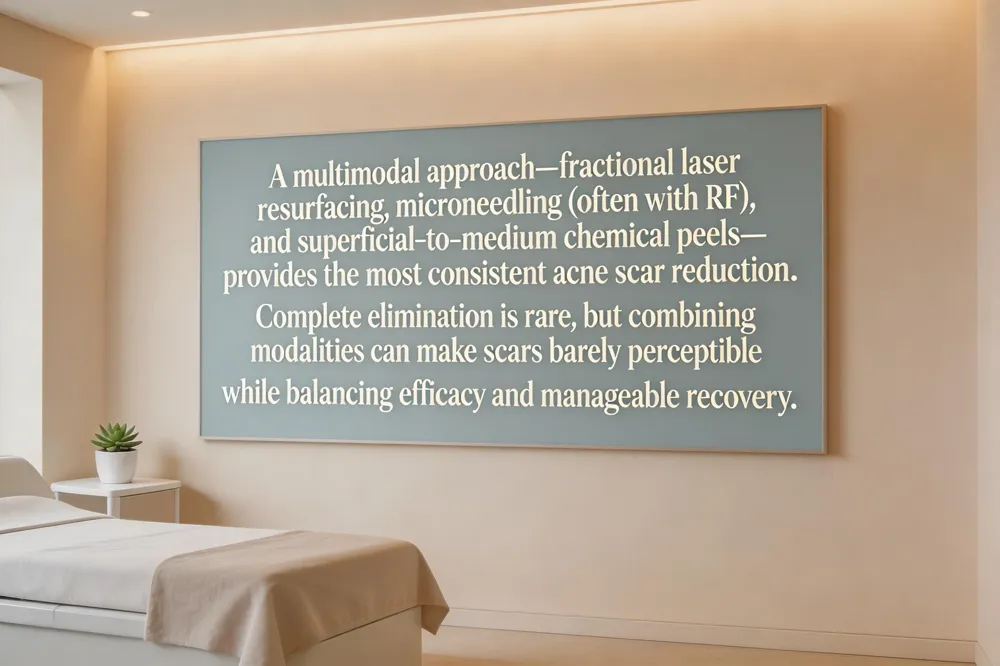
A multimodal approach delivers the most consistent results. Microneedling (often combined with radiofrequency) creates micro‑channels that trigger collagen and elastin production, improving scar texture and elasticity. Fractional laser resurfacing adds deeper dermal remodeling. Superficial‑to‑medium chemical peels (glycolic, salicylic, or TCA) refine tone, fade hyperpigmentation, and complement the collagen‑boosting effects. When performed in a controlled clinical setting, this protocol balances efficacy with manageable downtime.
Is it possible to 100% get rid of acne scars?
Complete elimination is rare; most patients achieve dramatic reduction but not absolute disappearance. Success depends on scar type (ice‑pick, rolling, boxcar), depth, and individual skin characteristics. Combining lasers, Microneedling, chemical peels, radiofrequency, and fillers can maximize fade‑off, making scars barely perceptible. Realistic expectations and a personalized, dermatologist‑guided regimen are essential for the best outcome.
Red Flags, Referrals, and Practice Insights at The Derm Glenview
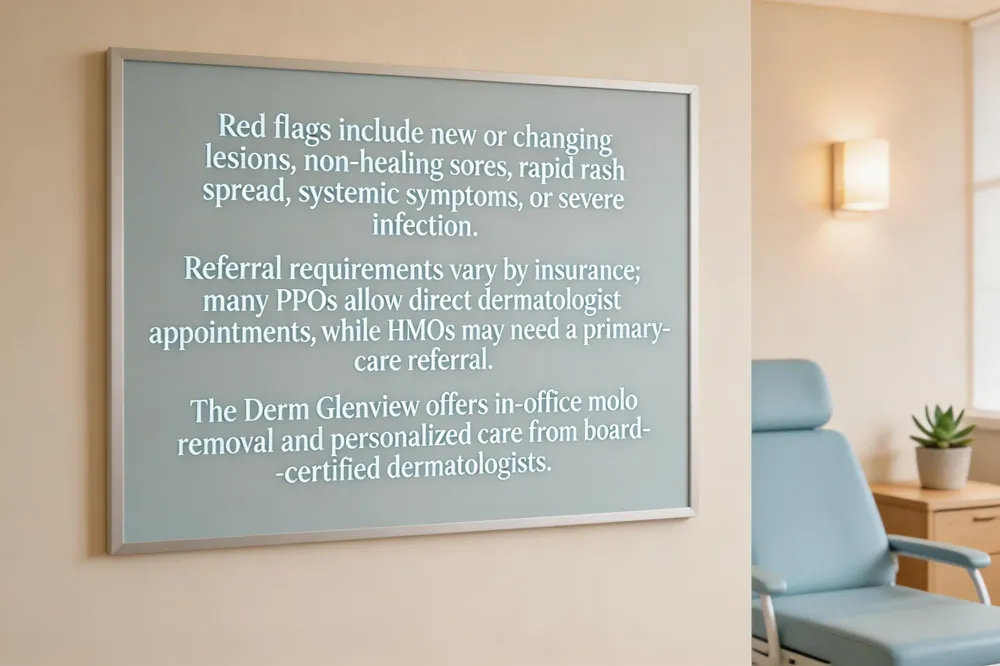 Understanding when to seek urgent dermatologic care is essential. A red flag in dermatology includes any new or changing lesion that becomes asymmetrical, irregular‑bordered, multi‑colored, enlarges, or starts to itch, bleed, or ulcerate. Non‑healing sores, rapidly spreading rashes, painful blisters, systemic symptoms (fever, weight loss, joint pain), or extensive erythema and severe infections also demand prompt evaluation to rule out skin cancer, severe infection, or autoimmune disease.
Patients often wonder if a referral is required. With most PPO plans you can book a dermatologist directly, but many Illinois HMO policies still need a primary‑care referral for insurance coverage. The Derm Glenview staff can verify your plan’s rules before scheduling; without a referral you may pay out‑of‑pocket.
Mole removal is offered at The Derm Glenview. Board‑certified dermatologists perform in‑office excision of benign moles and other lesions, providing both medical and cosmetic options. After a thorough evaluation, the appropriate removal technique is selected and post‑procedure care instructions are given to ensure optimal healing.
The practice’s physician team includes Dr. Jessica Borowicz, D.O., Dr. Renata Trela Brindise, D.O., and Dr. Marianne S. Rosen, M.D., all board‑certified dermatologists dedicated to personalized skin health and aesthetic outcomes.
Patient Experiences: Reviews of Northwestern Dermatology Glenview and The Skin Care Center
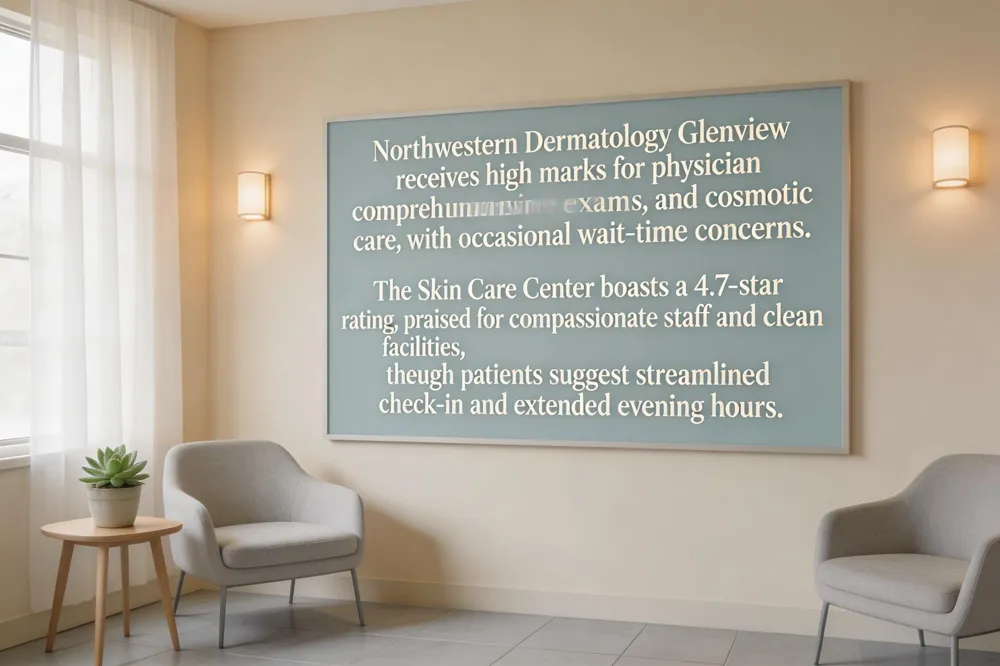 Northwestern Dermatology Glenview earns marks for physicians, exams, and treatment plans that blend cosmetic care. Patients praise Dr. Simon Yoo’s clear communication, friendly nurses, and a clean facility that creates an atmosphere. Compliments note the clinic’s ability to address acne, skin cancer, and procedures such as Mohs surgery. Areas for improvement include occasional long wait times and the need for more flexible scheduling.
The Skin Care Center’s Glenview office holds a 4.7‑star rating. Reviewers highlight compassionate care, a team, and a clean environment. Patients appreciate handling of cosmetic concerns—from acne to microneedling and Botox—and the Compass Road location. Suggested improvements involve reducing paperwork at check‑in and expanding evening hours.
Choosing Your Personalized Treatment Plan
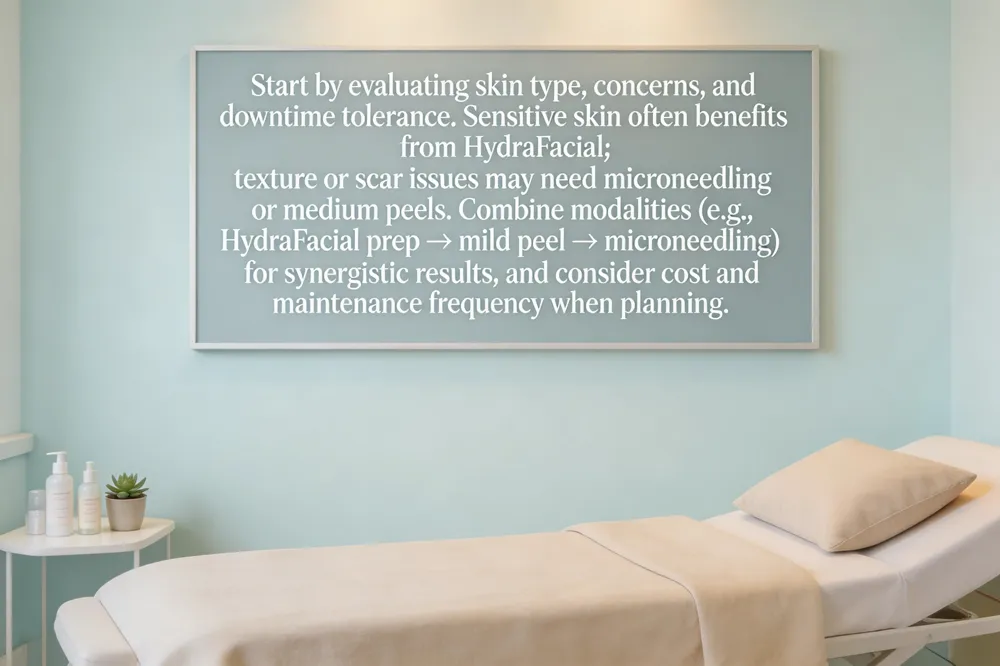 Begin by evaluating your skin type, concerns—fine lines, acne, hyperpigmentation, pore size—and your downtime tolerance. Sensitive skin often benefits from a HydraFacial’s gentle, zero‑downtime approach, while texture issues or scar remodeling may need microneedling or a medium peel with recovery. Combining modalities can boost results: a HydraFacial can prep the skin for a mild peel, and a post‑peel microneedling session can enhance collagen. Consider cost and maintenance; HydraFacials are per visit and ideal for monthly upkeep, whereas microneedling and chemical peels are priced higher but spaced farther apart for improvement.
Finding the Right Fit for Your Skin
Choosing between HydraFacial, microneedling, and chemical peels depends on skin type, concerns, and downtime tolerance. HydraFacial offers immediate hydration and glow with no recovery, making it ideal for sensitive or busy patients. Microneedling stimulates deeper collagen remodeling and excels at acne‑scar reduction, but requires a short erythema period. Chemical peels provide graduated exfoliation—from superficial to medium depth—to target hyperpigmentation, fine lines, and sun damage, with recovery ranging from days to weeks. Because each modality has distinct benefits and contraindications, a personalized skin assessment by a board‑certified dermatologist ensures the safest, most effective plan. Schedule a consultation to discuss goals, medical history, and the treatment sequence.