Why Personalized Consultations Matter
Professional skin assessments provide a detailed, evidence‑based view of each patient’s unique biology, far surpassing generic online tips. A dermatologist evaluates skin type, texture, existing conditions, genetics, environmental exposure, lifestyle, diet, and sensitivity markers to create a targeted plan. Over‑the‑counter products often claim universal benefits, but they ignore individual barrier function, hormonal fluctuations, and microbiome diversity, leading to ineffective or irritating results. Personalized consultations ensure safe, effective treatment pathways tailored to real needs and long‑term skin health for all patients.
Understanding the Consultation Process
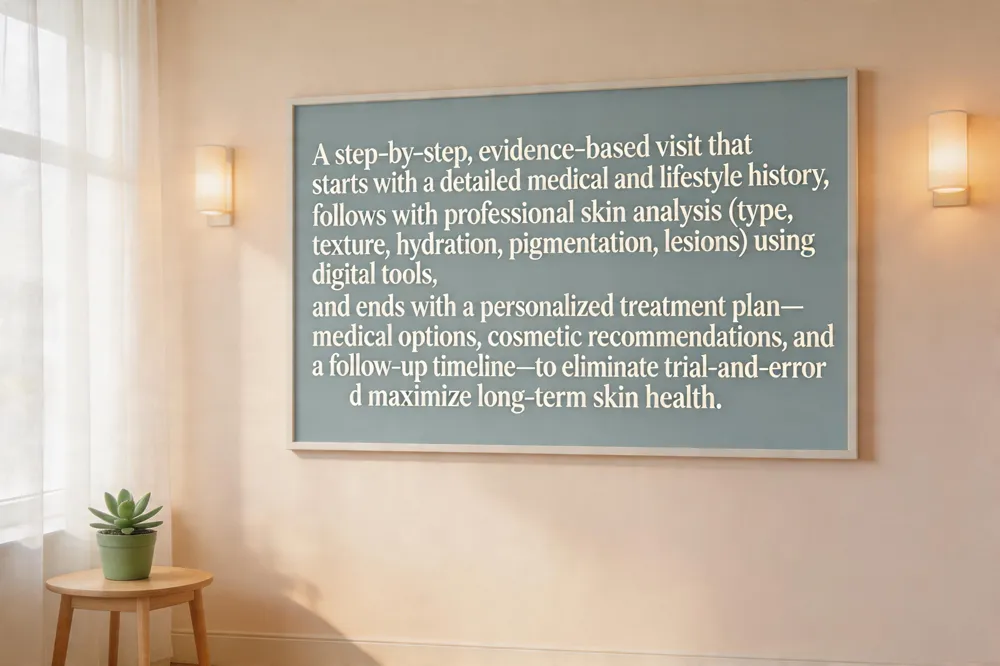 A dermatology consultation is a structured, evidence‑based assessment that begins with a detailed medical‑history and lifestyle review. The clinician asks about general health, medications, sun‑exposure habits, diet, stress levels, and current skincare routines to spot factors that may influence skin condition. Next, a professional skin analysis evaluates skin type, texture, hydration, oiliness, pigmentation, pore size, and any visible lesions using tools such as digital texture mapping, moisture meters, or AI‑assisted facial imaging. This step‑by‑step visit also includes a visual examination of the face, neck, and any problem areas, and may involve dermoscopy or high‑resolution imaging for suspicious spots. Based on the gathered data, the dermatologist creates a free personalized treatment plan that outlines medical options (prescription topicals, oral medications, laser or microneedling procedures) and cosmetic recommendations (custom‑formulated serums, moisturizers, SPF). The plan is tailored to the patient’s unique skin biology, aesthetic goals, and lifestyle, and includes a timeline for follow‑up visits to monitor progress and adjust therapy as needed. This individualized approach is worth the investment because it eliminates trial‑and‑error, reduces the risk of adverse reactions, and maximizes long‑term skin health and appearance.
Choosing the Right Technologies and Tools
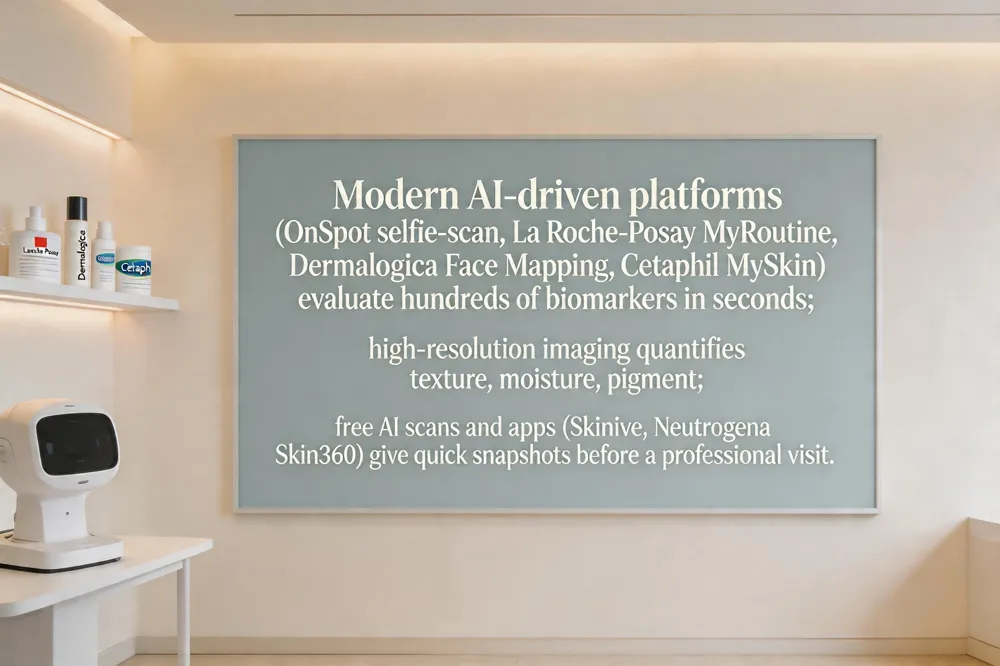 Modern dermatology blends clinical expertise with sophisticated technology to deliver truly personalized care. AI‑driven skin analysis platforms such as OnSpot’s free selfie‑scan, La Roche‑Posay’s MyRoutine AI , Dermalogica’s Face Mapping and Cetaphil’s MySkin evaluate hundreds of skin biomarkers in seconds, generating a quick health snapshot before a professional visit. These tools are complemented by high‑resolution digital imaging that maps texture, pigmentation, moisture and barrier function, allowing clinicians to quantify concerns like fine lines, oiliness or sun damage across the entire face.
Face mapping skin analysis: Face mapping is a detailed skin‑analysis method that examines each zone of the face—forehead, nose, cheeks, chin and jawline—to uncover specific concerns such as congestion, pigmentation, dryness or fine lines. At On The Spot Dermatology we combine this traditional zoning approach with high‑resolution digital imaging and AI‑driven assessment to create a precise skin profile for every patient. The analysis pinpoints underlying factors, from hormonal imbalances to lifestyle influences, that may be driving the visible issues. With that data we can tailor both medical and cosmetic treatment plans, selecting the most effective ingredients and procedures for each facial region. The result is a personalized, science‑backed roadmap that improves skin health and aesthetic outcomes faster and more efficiently.
AI skin analysis free: OnSpot’s website provides a free AI‑powered skin analysis that lets you upload a selfie and receive a quick assessment of your skin type, hydration level and common concerns. The tool is similar to other free services such as La Roche‑Posay’s MyRoutine AI, Dermalogica’s Face Mapping and Cetaphil’s MySkin, which all use machine‑learning algorithms to evaluate a photo and generate personalized recommendations. You typically complete the analysis in a few minutes, and the results include a brief report and suggested skincare routine. No app download or payment is required, although some platforms may ask for an email address to send the findings. These free AI analyses are a convenient way to get an initial snapshot of your skin health before scheduling a professional dermatology consultation.
Dermalogica Face Mapping pdf: The Dermalogica Face Mapping PDF is a printable training manual that outlines the five‑step face‑mapping process, including zone analysis, skin‑fitness‑plan, and product prescription. It walks clinicians through greeting the client, assessing skin type versus condition, mapping each facial zone, recording findings, and recommending tailored treatments. The guide can be downloaded for free from Dermalogica’s education website (e.g., the UK training manual PDF). At On The Spot Dermatology we apply the same principles to create personalized skin‑health and cosmetic plans for our Glenview patients. The PDF serves as a handy reference for both professionals and consumers who want a structured, evidence‑based skin analysis.
Skin analysis app free: OnSpot’s patient portal includes a free skin‑analysis tool that lets you upload photos, answer a few targeted questions, and receive an initial assessment before your appointment. For those who prefer a standalone app, Skinive offers a free version that provides AI‑powered checks of moles, spots, redness and other visible features, with the option to upgrade for unlimited analyses and detailed reports. Neutrogena Skin360 also provides a completely free, web‑based skin‑scan that evaluates six skin attributes and suggests product ideas without storing any facial images. These free tools are designed for educational and awareness purposes only and should not replace a professional dermatology evaluation. If you need a more in‑depth or medically‑validated assessment, a consultation at On The Spot Dermatology will give you personalized, expert care.
Custom Skincare Brands and Prescription Options
 A truly personalized skin‑care regimen begins with a comprehensive, in‑office or virtual dermatology consultation that evaluates skin type, texture, genetics, lifestyle, and environmental exposures. From this assessment, board‑certified dermatologists can prescribe prescription‑strength formulas—such as azelaic acid, niacinamide, tretinoin, ivermectin, or adapalene—delivered directly to the patient’s door every 4–8 weeks, ensuring consistent dosing and optimal results.
AI‑driven, quiz‑based brands have expanded access to customized care. Platforms like Proven Skincare, Curology, Agency by Curology, Ro Custom Rx, and Prose use multi‑factor questionnaires and machine‑learning algorithms to match actives to concerns such as acne, hyperpigmentation, aging, and rosacea. These brands typically offer three‑step regimens (cleanser, SPF moisturizer, night cream) or targeted serums, with ingredient selections that include salicylic acid, tranexamic acid, vitamin C, peptides, and hyaluronic acid.
Most services operate on a subscription model, automatically shipping refills on a 56‑day schedule (Dermatica) or a monthly basis (Curology, Proven). This ensures patients never run out of their custom formulas while allowing dermatologists to adjust concentrations during regular follow‑ups every 4–6 weeks.
For those who prefer fully remote care, practices such as On The Spot Dermatology provide virtual consultations, prescribe prescription‑strength actives, and ship personalized products to the home, combining the convenience of tele‑dermatology with the safety of professional oversight.
Integrating In‑Office Procedures with Home Care
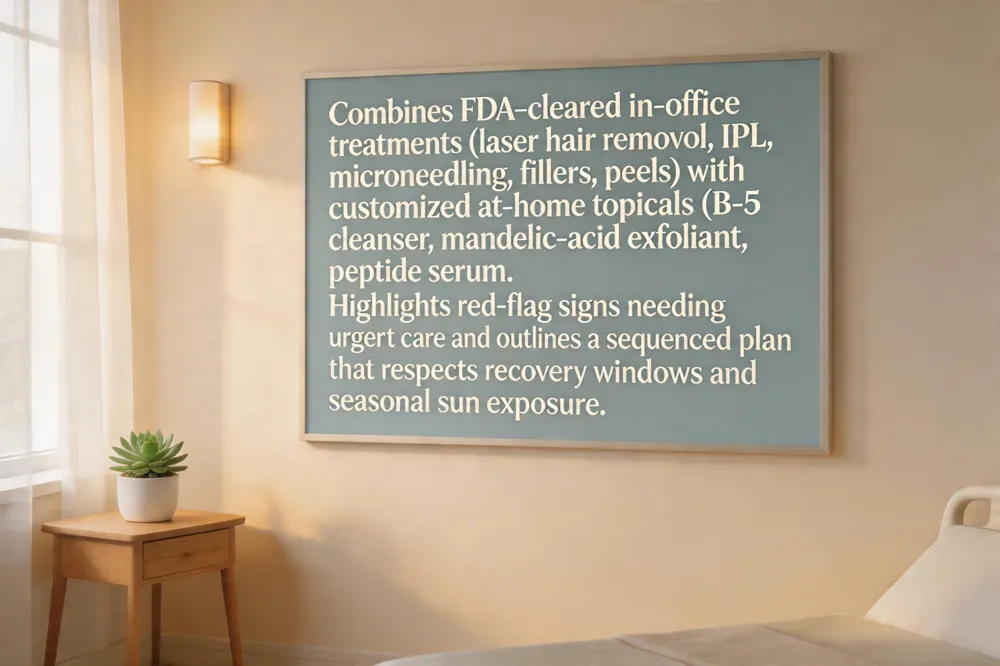 A comprehensive skin‑health strategy blends high‑tech in‑office treatments with a custom at‑home regimen. Laser hair removal, IPL photofacials, microneedling, and body‑sculpting are delivered in a clinical setting using FDA‑cleared devices and strict safety protocols—practitioners must hold board certification, complete device‑specific training, and follow real‑time physiological monitoring to prevent burns, pigmentary changes, or infection.
To maximize results, many clinics combine injectables ( Botox® or dermal fillers ) with chemical peels and laser therapy in a sequenced plan that respects skin recovery windows and seasonal sun exposure. For example, a patient with acne‑scarring may receive microneedling, followed by a targeted retinoid cream and a peptide‑rich night serum, while a separate session focuses on vascular lesions with IPL.
Red‑flag signs that demand immediate professional attention include new or changing moles, persistent ulcerated lesions, uncontrolled bleeding, sudden swelling, or a rash accompanied by fever, joint pain, or weight loss. Prompt evaluation can rule out skin cancer, severe infection, or systemic disease.
Personalized skin solutions – At On The Spot Dermatology we begin with a thorough in‑office assessment, then prescribe medical‑grade topicals (e.g., B‑5 cleanser, mandelic‑acid exfoliant, peptide serum) and schedule targeted procedures such as laser or microneedling. Ongoing monitoring ensures the home‑care products evolve with your skin, delivering lasting health and a refreshed appearance.
Best personalized skin‑care routine – Start with a gentle cleanser matched to your skin type, add an antioxidant serum (vitamin C), apply targeted actives (retinol, salicylic acid, barrier‑repair moisturizers), finish with a hydrating night cream and a broad‑spectrum SPF 30‑50 sunscreen. Each step is customized based on age, lifestyle, and specific concerns to achieve optimal health and aesthetic results.
Practical Resources for Patients
 Cost considerations and insurance coverage – Self‑pay rates at OnSpot begin at $150 for a new‑patient visit and $100 for follow‑ups, with procedure fees (e.g., biopsy $200, cryotherapy $50) listed individually. Most major insurance plans are accepted, reducing out‑of‑pocket costs for covered services. In Illinois, cash consultations typically range from $89‑$139, but insurance benefits should be verified beforehand.
Patient reviews and satisfaction – Reviewers consistently commend OnSpot’s custom treatment plans, noting faster resolution of acne, rosacea, and pigment issues compared with over‑the‑counter options. The ability to adjust formulas over time, combined with prescription‑strength actives and targeted laser sessions, yields smoother texture, fewer fine lines, and brighter complexion within months.
Tools for tracking and adjusting routines – The practice encourages regular follow‑ups and offers digital tools such as AI‑driven face mapping (Dermalogica) or Neutrogena Skin360 to monitor progress. Patients can log changes, receive updated product recommendations, and tweak treatment parameters based on seasonal shifts, hormonal fluctuations, or lifestyle factors, ensuring sustained, personalized skin health.
Your Next Steps Toward Healthier Skin
Start by scheduling a professional consultation—either in‑person or via tele‑dermatology—to get a thorough skin exam, medical history review, and personalized treatment plan. While waiting, use free AI tools like Dermalogica Face Mapping or Neutrogena Skin360 for an early insight into texture, hydration, and pigment concerns. Based on the clinician’s recommendations, explore personalized skincare brands (e.g., Proven, Dermatica) and in‑office procedures such as laser resurfacing, microneedling, or IPL. Finally, keep a skin journal, capture photos, and revisit your plan each 3‑6 months to track progress and adjust as needed.