Why Autumn Is the Perfect Time for a Skin Reset
After months of intense sun, many patients notice darker spots, melasma, and post‑inflammatory hyperpigmentation that become more visible as skin turnover slows in cooler weather. Fall’s lower UV index reduces new melanin stimulation, making corrective procedures such as laser toning, chemical peels, and microneedling safer with less risk of rebound pigmentation. The season’s drier air also compromises the barrier, offering a clear cue to introduce richer moisturizers, ceramides, and hyaluronic‑acid serums that restore hydration and enhance treatment absorption. Together, these factors create an optimal window for a comprehensive skin‑reset plan.
Comprehensive Fall Skin Care Basics
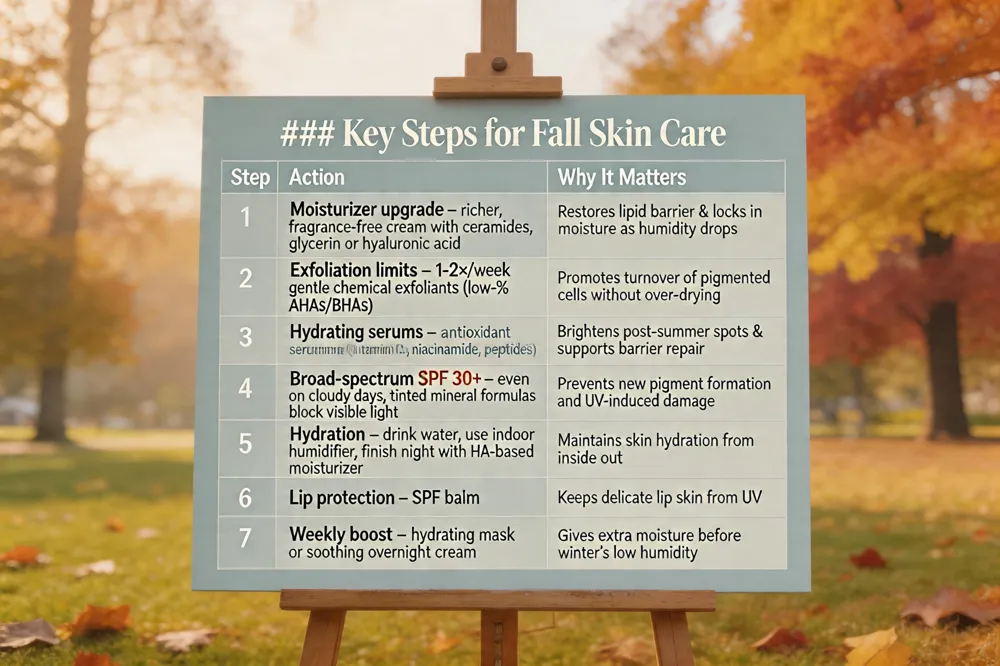
Key Steps for Fall Skin Care
| Step | Action | Why It Matters |
|---|---|---|
| 1 | Moisturizer upgrade – richer, fragrance‑free cream with ceramides, glycerin or hyaluronic acid | Restores lipid barrier & locks in moisture as humidity drops |
| 2 | Exfoliation limits – 1‑2×/week gentle chemical exfoliants (low‑% AHAs/BHAs) | Promotes turnover of pigmented cells without over‑drying |
| 3 | Hydrating serums – antioxidant serums (vitamin C, niacinamide, peptides) | Brightens post‑summer spots & supports barrier repair |
| 4 | Broad‑spectrum SPF 30+ – even on cloudy days, tinted mineral formulas block visible light | Prevents new pigment formation and UV‑induced damage |
| 5 | Hydration – drink water, use indoor humidifier, finish night with HA‑based moisturizer | Maintains skin hydration from inside out |
| 6 | Lip protection – SPF balm | Keeps delicate lip skin from UV damage |
| 7 | Weekly boost – hydrating mask or soothing overnight cream | Gives extra moisture before winter’s low humidity |
 How to take care of your skin in the fall?
- Moisturizer upgrade – Switch to a richer, fragrance‑free cream that contains ceramides, glycerin or hyaluronic acid to restore the lipid barrier and lock in moisture as humidity drops.
- Exfoliation limits – Reduce harsh scrubs to 1‑2 times per week; prefer gentle chemical exfoliants (low‑percentage AHAs or BHAs) to promote turnover of pigmented cells without over‑drying the skin.
- Hydrating serums – Apply antioxidant serums such as vitamin C, niacinamide or peptide‑rich formulas to brighten post‑summer dark spots and support barrier repair.
- Broad‑spectrum SPF 30+ sunscreen remains essential even on cloudy days; consider tinted mineral formulas that also block visible light
- Hydration – Drink ample water, use a humidifier indoors, and finish the night with a hyaluronic‑acid‑based moisturizer.
Fall skincare tips
Replace your lightweight summer lotion with a ceramide‑rich moisturizer, add a vitamin C or niacinamide serum for antioxidant defense, and limit chemical exfoliation to once a week. Continue daily SPF 30+ application and protect your lips with an SPF balm. Finish the week with a hydrating mask or soothing overnight cream to give skin an extra boost before winter’s low humidity arrives.
Choosing the Right Fall Skincare Products
Recommended Product Types & Key Ingredients
| Product | Example(s) | Core Ingredients | Usage Frequency |
|---|---|---|---|
| Rich moisturizer | CeraVe Moisturizing Cream, La Roche‑Posay Cicaplast Baume B5 | Ceramides, Hyaluronic Acid, Squalane, Panthenol, Madecassoside | Twice daily on damp skin |
| Antioxidant serum | The Ordinary Vitamin C Suspension, Niacinamide 10% + Zinc 1% | Vitamin C, Niacinamide, Green‑Tea Extract | Morning after cleanse |
| Gentle exfoliant | Paula’s Choice 2% BHA Liquid, The Ordinary Glycolic Acid 7% | Low‑% AHA/BHA | 1‑2×/week, evening |
| Facial oil / occlusive night cream | The Ordinary 100% Plant‑Based Squalane, Avène Cicalfate | Squalane, Jojoba, Rosehip | Nightly after serum |
| Broad‑spectrum sunscreen | EltaMD UV Daily SPF 40, La Roche‑Posay Anthelios Mineral SPF 50 | Zinc Oxide, Titanium Dioxide, tinted pigments | Every morning, reapply every 2 h |
| Gentle cleanser | CeraVe Hydrating Cleanser, Vanicream Gentle Facial Cleanser | Non‑soap surfactants, pH‑balanced | Morning & night |
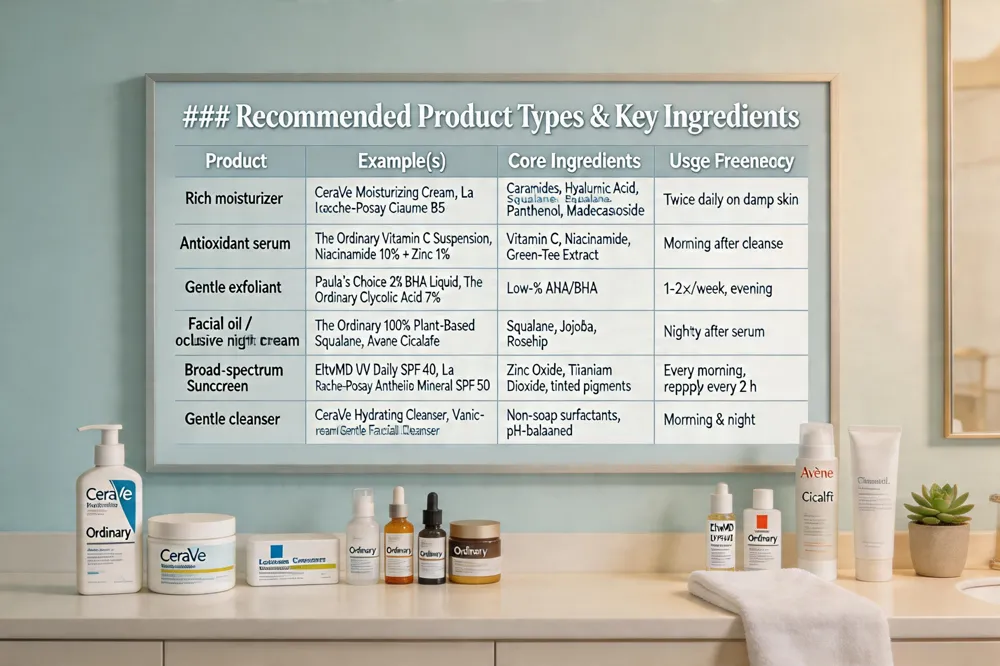 As cooler temperatures and lower humidity strip moisture from the skin, a hydration‑focused routine becomes essential. Choose a richer, fragrance‑free moisturizer that contains ceramides, hyaluronic acid, or squalane to reinforce the skin barrier and lock in moisture. Antioxidant serums—vitamin C, niacinamide, green‑tea extract—brighten, soothe inflammation, and support barrier repair. Use gentle, non‑scrubbing exfoliants (low‑percentage AHA/BHA) 2–3 times weekly to accelerate turnover of pigmented keratinocytes without irritation. A lightweight facial oil or occlusive night cream (squalane, jojoba, or rosehip) provides extra nourishment and seals in hydration. Finally, never skip broad‑spectrum sunscreen with at least SPF 30, as UVA/UVB and visible light remain active year‑round and can worsen age spots.
Key barrier‑repair ingredients include ceramides, hyaluronic acid, niacinamide, panthenol, madecassoside, and squalane. Effective products feature CeraVe Moisturizing Cream (ceramide‑3 + HA), La Roche‑Posay Cicaplast Baume B5 (panthenol, madecassoside, ceramides), and The Ordinary Natural Moisturizing Factors + HA. Apply to clean, slightly damp skin twice daily, and pair with a gentle, fragrance‑free cleanser to avoid further stripping.
Dermatologist‑Guided Fall Skin Reset
In‑Office & At‑Home Reset Protocol
| Phase | Action | Details |
|---|---|---|
| Cleanse | pH‑balanced barrier‑repair cleanser | Removes residues without stripping lipids |
| Serum | Niacinamide (5‑10%) | Calms redness, inhibits melanin transfer, strengthens barrier |
| Humidify | Bedroom humidifier (30‑40% RH) | Reduces transepidermal water loss from indoor heating |
| Professional treatment | Chemical peel (5‑10% glycolic/lactic) or Microneedling or Moxi/BBL laser | Scheduled early autumn; accelerates pigment fading & collagen synthesis |
| Post‑procedure care | Broad‑spectrum SPF 30‑50, reapply q2 h | Protects newly treated skin from UV and visible light |
| Night routine | Ceramide‑rich night cream | Locks in moisture, supports repair while sleeping |
| Optional | Low‑strength retinol (0.2‑0.5%) 2‑3×/week | Encourages turnover, enhances pigment clearance |
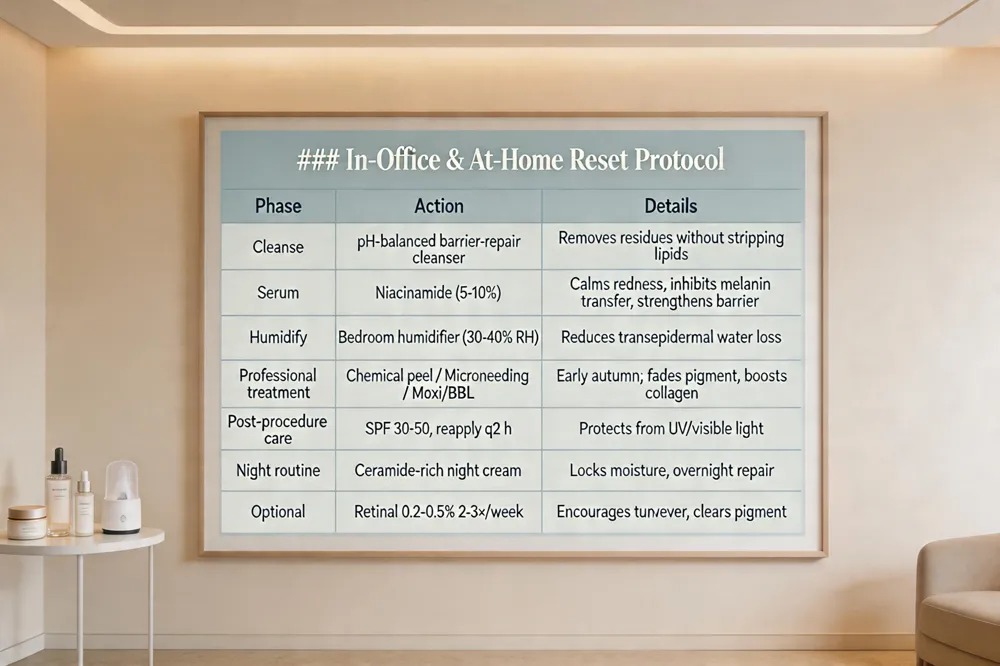 A successful fall skin reset begins with a barrier‑repair cleanser that respects the skin’s natural pH and removes lingering summer residues without stripping moisture. Follow with a niacinamide serum to calm post‑sun redness, inhibit melanin transfer, and reinforce the barrier. Because indoor heating and lower humidity increase transepidermal water loss, place a humidifier in your bedroom to restore ambient moisture and support the ceramide‑rich night cream you’ll apply before bed.
In‑office treatments amplify these at‑home steps. A gentle chemical peel, microneedling, or Moxi/BBL laser session in early autumn leverages the lower UV index to accelerate turnover, fade sun‑induced spots, and stimulate collagen with minimal downtime. After any procedure, protect the renewed skin with daily broad‑spectrum sunscreen (SPF 30‑50), reapplying every two hours outdoors and even on cloudy days, since UVA penetrates windows and clouds.
Fall skin reset tips dermatologist: start with a pH‑balanced cleanser, add niacinamide, use a humidifier, schedule a professional peel or laser, and finish with diligent sunscreen use.
Best skin care routine for fall: morning – gentle cleanse → vitamin C serum → SPF moisturizer; evening – cleanse → 2‑3 × week AHA/BHA exfoliation → niacinamide → ceramide night cream; weekly hydrating mask; optional low‑strength retinol a few nights a week; humidifier and internal hydration throughout.
Targeted Treatments for Post‑Summer Pigmentation
Pigmentation‑Focused Treatments & Products
| Treatment | Modality | Typical Frequency | Expected Outcome |
|---|---|---|---|
| Chemical peel | 5‑10% glycolic or lactic acid (light) or mid‑depth TCA | Every 4‑6 weeks | Exfoliates pigmented keratinocytes, smooths tone |
| Laser therapy | Q‑switched Nd:YAG, IPL, BBL | 3‑6 sessions, 4‑6 weeks apart | Fragment melanin, fades sun spots, melasma, lentigines |
| Microneedling | 0.25‑0.5 mm needles | 4‑6 sessions, 4‑6 weeks apart | Boosts collagen, improves penetration of brightening actives |
| HydraFacial | Brightening boosters (vitamin C, peptide) | Monthly | Gentle exfoliation + antioxidant infusion, hydration |
| Topical actives | Vitamin C, Niacinamide, Hydroquinone/Azelaic Acid, Tranexamic Acid | Daily (as tolerated) | Inhibits melanin synthesis, speeds turnover |
| Barrier repair | Ceramide‑rich moisturizers (CeraVe, La Roche‑Posay, Avène) | Twice daily | Restores lipid barrier, reduces irritancy |
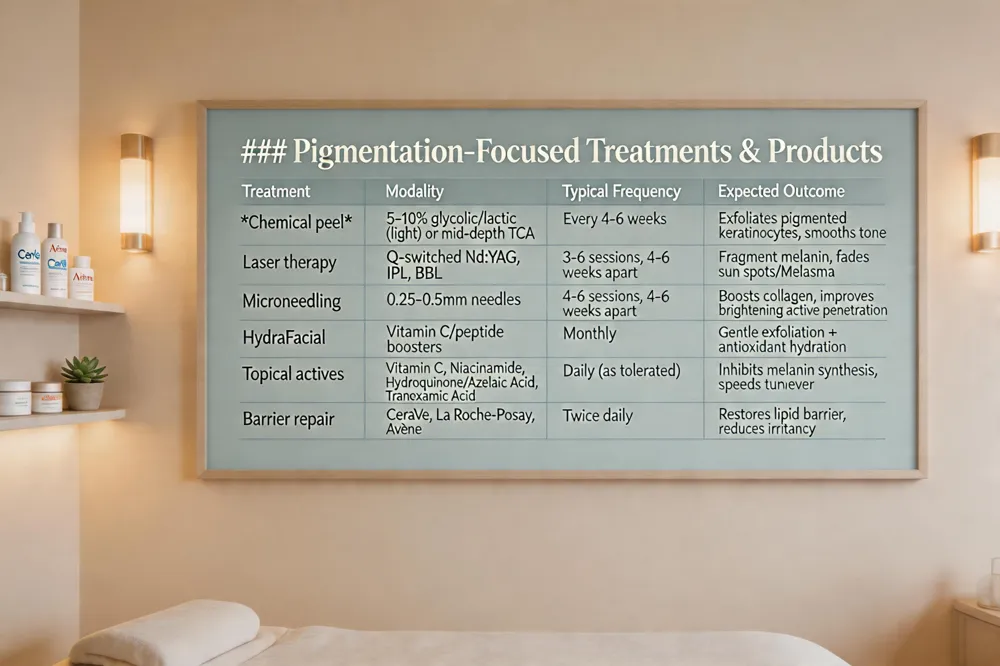 Fall provides the ideal time to reset summer‑induced discoloration, as lower UV levels reduce the risk of new pigment formation while the skin can tolerate more intensive procedures. Chemical peels—ranging from 5‑10 % glycolic or lactic acids to medium‑depth TCA—safely exfoliate pigmented keratinocytes and stimulate fresh cell turnover with minimal downtime. Laser therapy, including Q‑switched Nd:YAG, IPL, and broadband‑light (BBL) systems, delivers precise wavelengths that fragment melanin deposits, accelerating fading of sun spots, melasma, and lentigines. Microneedling creates controlled micro‑injuries that boost collagen and enhance penetration of brightening actives such as hydroquinone, azelaic acid, or tranexamic acid. A HydraFacial with brightening boosters adds gentle exfoliation, antioxidant infusion, and deep hydration, supporting overall pigment reduction and barrier repair.
How to get skin back to its normal color after post‑hyper‑pigmentation from hot water? Stop heat exposure, then shield the area with broad‑spectrum SPF 30+ sunscreen applied every morning and reapplied throughout the day. Use a stable vitamin C serum, niacinamide, and a gentle retinoid (or prescription hydroquinone/azelaic acid) to inhibit melanin synthesis and increase turnover. Add mild chemical exfoliation (5‑10 % glycolic or lactic acid) 2–3 times weekly and keep the skin moisturized with a ceramide‑rich, non‑comedogenic cream. If discoloration persists after 8–12 weeks, consult a board‑certified dermatologist for in‑office laser or peel options.
Best products to repair skin barrier Choose moisturizers containing ceramides, cholesterol, and fatty acids—such as CeraVe Moisturizing Cream, La Roche‑Posay Cicaplast Baume B5, or Avène Cicalfate—to rebuild the lipid barrier. The Ordinary Natural Moisturizing Factors + HA offers affordable amino‑acid and hyaluronic acid hydration. For occlusive protection, apply Aquaphor Healing Ointment or Vaseline to damp skin twice daily, paired with a gentle, fragrance‑free cleanser to avoid further stripping.
Lifestyle and Nutrition for Radiant Skin
Daily Habits & Nutrition for Glowing Fall Skin
| Habit | Practice | Benefit |
|---|---|---|
| Diet | Mediterranean diet: tomatoes, leafy greens, olive oil, nuts, fatty fish, modest red wine | Supplies vitamin C, polyphenols, omega‑3s → antioxidant protection & anti‑inflammatory effects |
| Hydration | 2‑3 L water + herbal teas daily | Maintains skin moisture from within |
| Sun protection | Broad‑spectrum SPF 30+ every morning, reapply outdoors; wear wide‑brimmed hat | Prevents UV‑induced pigment and collagen breakdown |
| Exercise | Moderate cardio & strength 3‑5×/week | Improves circulation, supports skin cell turnover |
| Stress management | Meditation, yoga, adequate sleep (7‑9 h) | Reduces cortisol‑related inflammation & barrier disruption |
| Avoid smoking | No tobacco products | Preserves collagen & elastin integrity |
| Skincare routine | Antioxidant serum + SPF daily; gentle cleanser; regular exfoliation (2‑3×/week) | Complements diet & protects against environmental stressors |
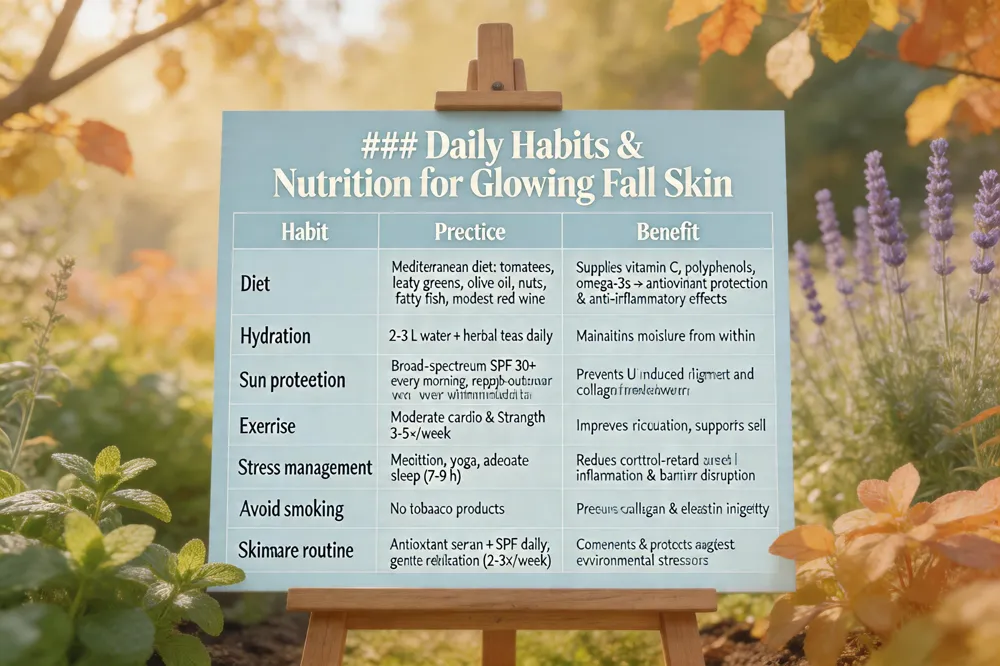 Italians enjoy clear skin thanks to a Mediterranean diet rich in antioxidant‑packed tomatoes, fresh vegetables, olive oil, nuts, whole grains, fish and modest red wine. These foods supply vitamin C, polyphenols and omega‑3 fatty acids that calm inflammation, protect collagen and reduce free‑radical damage. Daily habits such as generous sunscreen use, wide‑brimmed hats and regular hydration with water or herbal teas preserve barrier function. Lifestyle choices—including regular exercise, stress‑reduction techniques and avoiding smoking—further support a radiant complexion. Consistent use of antioxidant serums complements diet and shields UV stress.
Maintaining Your Autumn Glow Year‑Round
Even as temperatures drop, protecting your skin from UV radiation remains essential. Apply a broad‑spectrum SPF 30 + sunscreen each morning and reapply after sweating or wiping, choosing mineral‑based formulas that also filter visible light. Keep the skin barrier strong by drinking plenty of water, using hyaluronic‑acid serums, and layering cream‑rich moisturizers with ceramides or glycerin. Schedule follow‑up appointments with a board‑certified dermatologist to monitor treatment progress, adjust topical regimens, and ensure any laser or peel procedures are timed for healing. Consistency in these habits preserves a radiant complexion throughout the season.