Why Blending Home and Office Care Matters
Combining at‑home skincare with in‑office procedures creates a synergistic effect that maximizes results. Daily at‑home steps—gentle cleansing, targeted serums, moisturizer, and broad‑spectrum SPF—maintain barrier health, provide antioxidant protection, and prevent new UV‑induced damage. When a professional treatment such as a laser resurfacing, chemical peel, or microneedling removes damaged layers, the skin is primed to absorb active ingredients more efficiently, accelerating collagen production and brightening tone. Consistency is key; regular use of the same foundational products reinforces the benefits of periodic office visits and reduces downtime. Finally, personalized consulting with a board‑certified dermatologist tailors product choices, timing, and treatment intensity to each patient’s skin type, concerns, and lifestyle, ensuring safe, optimal, and long‑lasting outcomes for overall skin health and patient satisfaction.
Foundations of a Daily Skincare Routine
Foundations of a Daily Skincare Routine
| Step | Product Type | Key Ingredients / Notes | Frequency |
|---|---|---|---|
| 1 | Cleanser | Gentle, pH‑balanced foaming or gel cleanser | Twice daily (morning & night) |
| 2 | Antioxidant / Active Serum | Vitamin C, Niacinamide, or similar | Morning after cleansing |
| 3 | Moisturizer | Hyaluronic‑acid or ceramide‑rich formula | Morning & night |
| 4 | Sun Protection | Broad‑spectrum SPF 30‑50 (tinted optional) | Morning, reapply every 2 h outdoors |
| 5 | Optional Night Treatment | Retinol, peptide, or richer night cream | Evening, 2‑3 × /week for retinol |
| 6 | Hydration Boost | Cooling gel moisturizer (store in fridge) or mist | As needed during day |
| 7 | Light Exfoliation | Enzyme or mild acid (AHA/BHA) | 1‑2 × weekly |
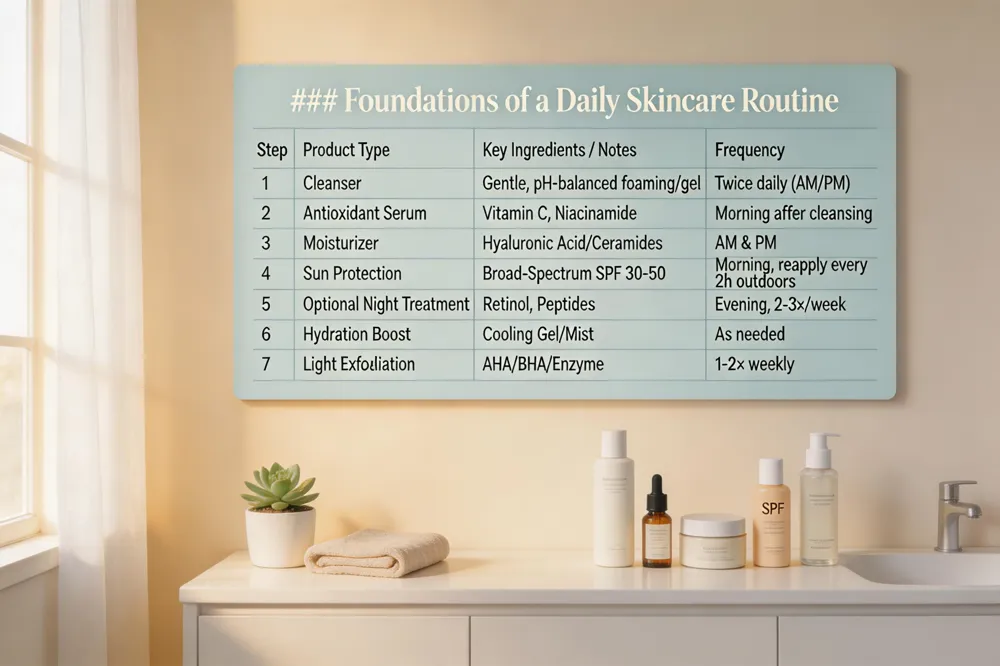 A solid daily regimen begins with cleansing – use a gentle, pH‑balanced foaming or gel cleanser twice a day to remove oil, makeup, and pollutants without stripping the barrier. Follow with a light hydration step: a hyaluronic‑acid or ceramide‑rich moisturizer that locks in moisture and supports barrier repair. In the morning, always finish with sun protection – a broad‑spectrum SPF 30‑50 sunscreen (or a tinted SPF moisturizer) to guard against UVA/UVB‑induced damage and pigment darkening. The proper layering order is cleanser → antioxidant/active serum (e.g., vitamin C, niacinamide) → moisturizer → sunscreen; this maximizes absorption and efficacy of each product.
Skin care hacks for glowing skin – keep the routine light, store your gel moisturizer in the fridge for a refreshing boost, and use a hydrating mist throughout the day. Light exfoliation 1‑2 times weekly clears dead cells without irritating the barrier.
Skin routine for women – start with a gentle cleanser, apply a brightening serum (vitamin C) or oil‑control niacinamide, moisturize with hyaluronic acid, protect with SPF, and at night consider a retinol or peptide treatment for collagen renewal.
Daily skin care routine at home – cleanse, tone or essence, target‑specific serum, moisturize, and finish with SPF in the morning; repeat cleanse‑serum‑moisturizer at night, adding a richer night cream. Exfoliate gently weekly.
Daily skin care routine at home naturally – use natural cleansers (aloe‑vera, oat), plant‑oil moisturizers, enzyme exfoliants, antioxidant‑rich fruit serums, and SPF. Stay hydrated and support skin from within with a nutrient‑dense diet.
Skin care tips at home – apply SPF daily, seek shade during peak UV hours, wear protective clothing, drink water, eat antioxidant‑rich foods, avoid smoking and excess sugar, and keep products fragrance‑free.
Daily skin care routine for glowing skin – cleanse, apply vitamin C serum, lightweight moisturizer, and SPF in the morning; night routine includes toner, targeted serum (niacinamide or hyaluronic acid), richer night cream, and eye cream. Exfoliate 1‑2 times weekly and use soothing masks as needed.
Strategic Layering and Treatment Sequencing
Strategic Layering & Treatment Sequencing
| Layer | Example Product | Primary Purpose | Application Tip |
|---|---|---|---|
| 1 | Cleanser | Remove debris, prep skin | Apply to damp skin, rinse thoroughly |
| 2 | Toner / Essence | Restore pH, add humectant | Pat 7 times ("rule of 7") while skin is damp |
| 3 | Serum (lightest) | Antioxidant or brightening | Allow 30‑60 s for absorption before next step |
| 4 | Serum (heavier) | Targeted actives (retinol, peptides) | Apply after previous serum fully absorbed |
| 5 | Moisturizer | Lock in hydration, barrier repair | Apply while skin still slightly damp |
| 6 | Eye Cream (optional) | Fine line & puffiness care | Pat gently, avoid pulling skin |
| 7 | Sunscreen (morning) | UV protection | Finish routine; reapply as needed |
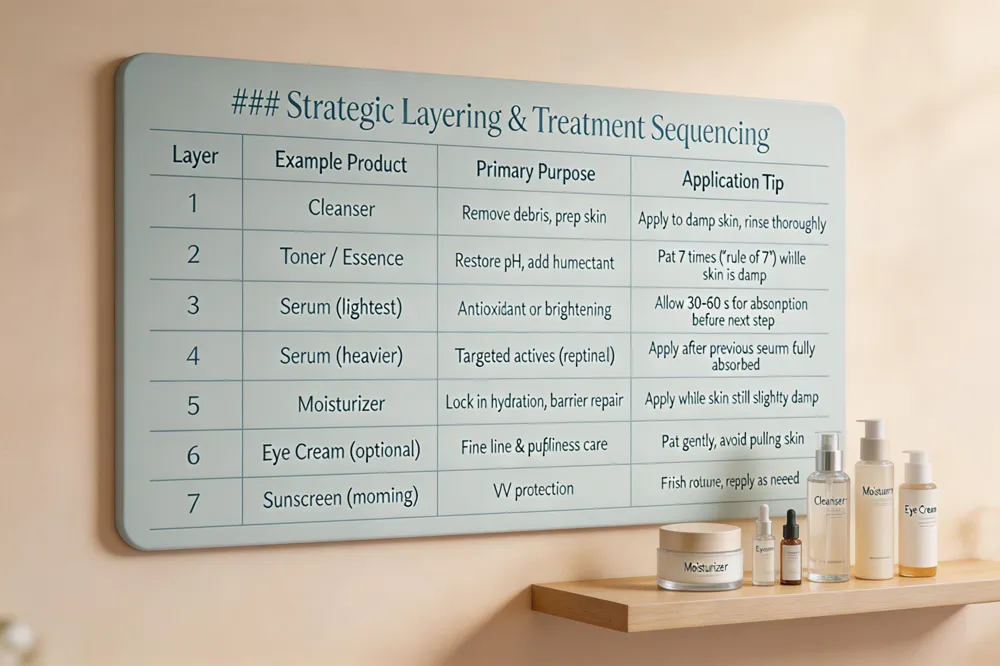 Layering skincare means applying products from the lightest, water‑based formulas to the heaviest to maximize absorption and efficacy. Begin with a gentle, pH‑balanced cleanser to remove debris, then (while the skin is still damp) apply a toner or essence to restore pH and add a thin humectant layer. Next, use targeted serums—such as vitamin C, niacinamide, or exosome‑rich formulas—allowing each to fully absorb before moving on. Follow with a moisturizer to lock in hydration, an eye cream if desired, and finish the morning routine with a broad‑spectrum SPF 30‑44 sunscreen. This light‑to‑heavy sequence ensures that actives penetrate the skin barrier without dilution or irritation.
The “rule of 7” involves patting a hydrating toner or essence onto the face seven times in a row, building multiple ultra‑thin moisture films that plump the epidermis and boost barrier function. It is especially useful when paired with antioxidant serums before laser or peel procedures, as it primes the skin for better product uptake.
The “1 % rule” refers to the point on an ingredient list after which all subsequent components are present at 1 % concentration or less. Recognizing this line helps you identify the true potency of key actives—like vitamin C or peptides—and ensures you select products that deliver effective, clinically relevant doses.
Targeted At‑Home Actives for Different Ages
Targeted At‑Home Actives by Age Group
| Age Group | Morning Routine | Evening Routine | Key Actives |
|---|---|---|---|
| 40s | Cleanser → Vitamin C serum → Hyaluronic‑acid moisturizer → SPF 30+ | Cleanser → Retinol (2‑3 × /week) → Rich night cream | Vitamin C, Hyaluronic acid, Retinol, Glycolic/Lactic peel (weekly) |
| 50s | Cleanser → Vitamin C serum → Ceramide‑rich moisturizer → SPF 30+ | Cleanser → Retinol (3‑4 × /week) → Night cream + Peptide eye cream | Ceramides, Retinol, Low‑percentage chemical exfoliant, Peptides |
| 60s‑70s | Gentle fragrance‑free cleanser → Hyaluronic‑acid moisturizer → SPF 30+ (or higher) | Cleanser → Hydrating ointment for very dry areas → Night cream | Hyaluronic‑acid, Glycerin, Lanolin, High‑SPF, UPF clothing |
| Sensitive Mature | Sulfate‑free cleanser → Hyaluronic‑acid serum → Ceramide‑rich cream → SPF | Low‑concentration Retinol (0.3‑0.5 %) 2‑3 × /week → Moisturizer | Low‑dose Retinol, Ceramides, Shea butter, Gentle exfoliant (lactic) |
| Overall Mature (any age) | Cleanser → Toner/Essence → Vitamin C → Moisturizer → SPF | Cleanser → Toner/Essence → Retinoid → Moisturizer | Vitamin C, Retinoids, Ceramides, Daily SPF |
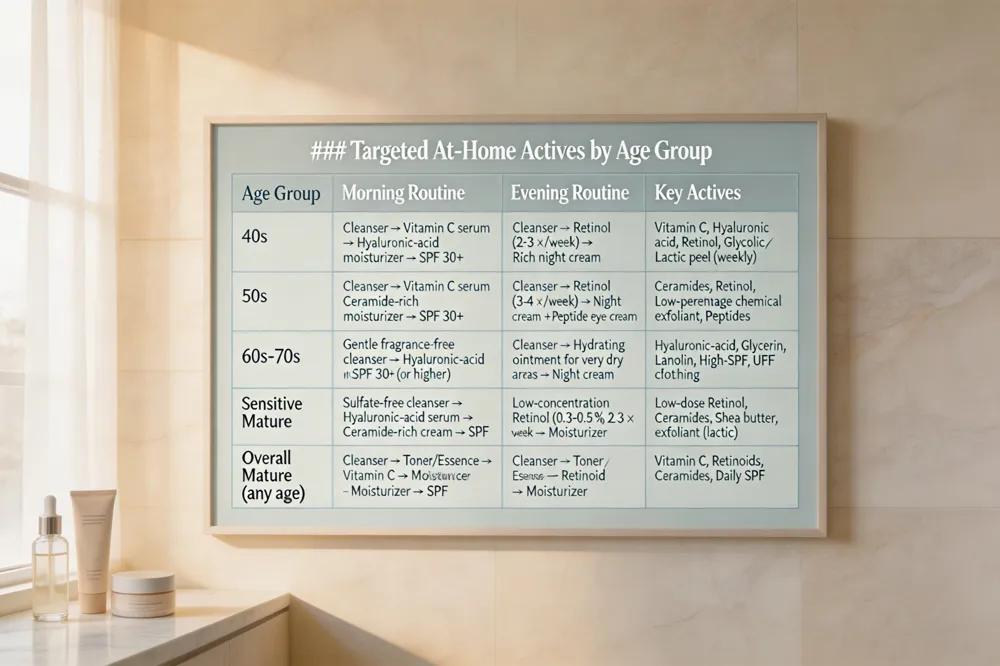 A personalized at‑home routine is the backbone of long‑term skin health, and the active ingredients you choose should evolve with your age and skin needs.
40s skin care – Start each morning with a gentle, non‑foaming cleanser, then layer a vitamin C serum to neutralize free radicals and brighten tone. Follow with a hyaluronic acid moisturizer and broad‑spectrum SPF 30+. At night, cleanse again and apply a prescription‑strength or OTC retinol (or other retinoid) 2–3 times weekly to boost collagen, finishing with a richer night cream. Add a weekly glycolic or lactic acid peel for texture without over‑irritating.
50s skin care – Continue the antioxidant‑first approach, but incorporate a ceramide‑rich moisturizer for barrier repair. Evening retinol use can be increased to 3–4 times per week, and a low‑percentage chemical exfoliant (glycolic/lactic acid) once or twice weekly helps maintain cell turnover. Eye creams with peptides or antioxidants and weekly hydrating masks add firmness and radiance.
60s‑70s skin care – Gentle cleansing with a fragrance‑free, moisturizing cleanser is essential. Apply a hydrating moisturizer containing hyaluronic acid, glycerin, or lanolin while skin is still damp, and reapply ointments for very dry patches. Broad‑spectrum SPF 30+ (or higher) and UPF‑rated clothing protect against photo‑aging. Perform regular self‑checks and schedule annual dermatologist exams for early skin‑cancer detection.
Sensitive mature skin – Choose sulfate‑free, fragrance‑free cleansers and a hyaluronic‑acid serum for plumping. If tolerated, introduce a low‑concentration retinol (0.3‑0.5%) a few nights per week, and seal hydration with a ceramide‑rich cream containing shea butter and glycerin. Finish daytime with daily sunscreen and keep exfoliation mild (lactic or salicylic pads).
Overall mature skin routine – Consistency is key: gentle cleansing, pH‑balancing toners or essences, vitamin C in the AM, retinoids in the PM, ceramide‑rich moisturizers, and daily sunscreen. This layered approach maximizes ingredient absorption, supports collagen, and maintains barrier integrity across decades.
Special Considerations: Skin Health, Red Flags, and Lifestyle
Special Considerations: Skin Health, Red Flags & Lifestyle
| Aspect | Recommendation | Details |
|---|---|---|
| UV Protection | Broad‑spectrum SPF 30+ every morning; reapply every 2 h outdoors | Wear hats, sunglasses, seek shade during peak UV |
| Hydration & Nutrition | 8 glasses water/day; antioxidant‑rich diet (berries, leafy greens) + omega‑3s | Supports collagen synthesis & barrier repair |
| Sleep | 7‑9 hours quality sleep nightly | Reduces cortisol‑driven inflammation, promotes cellular turnover |
| Red‑Flag Detection | Watch for changing lesions, bleeding moles, non‑healing sores, systemic rash symptoms | Prompt dermatologist referral if any appear |
| Lifestyle | Avoid smoking, limit added sugar, exercise regularly | Improves overall skin vitality |
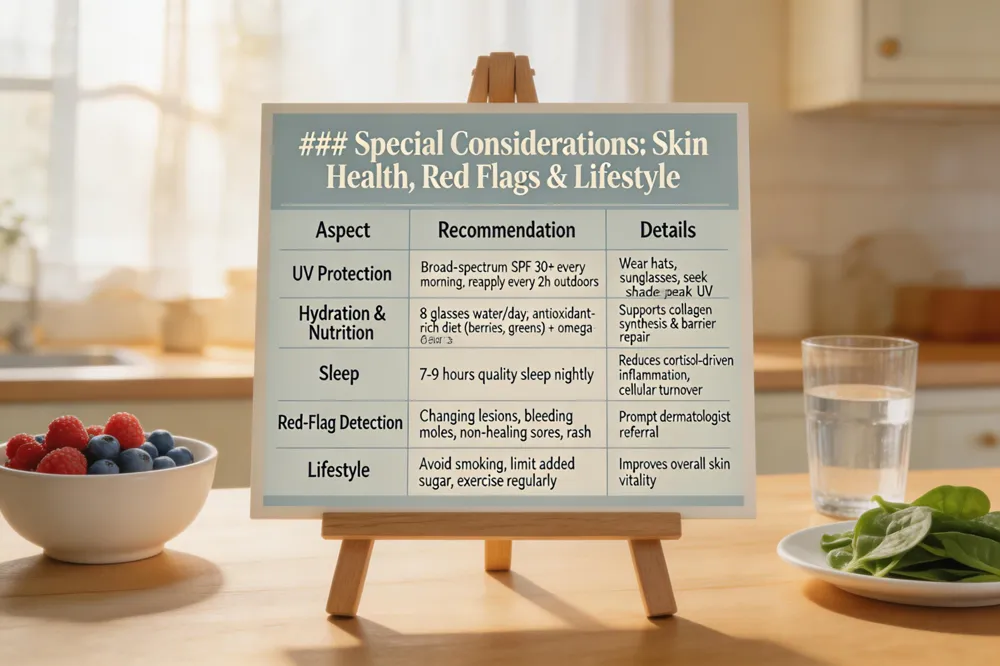 Maintaining radiant skin goes beyond daily cleansing and sunscreen; it requires a holistic approach that includes hydration, sleep, nutrition, and vigilant monitoring for warning signs.
UV protection – Apply a broad‑spectrum SPF 30 (or higher) every morning, reapply every two hours outdoors, and wear protective hats and sunglasses during peak sun.
Hydration & nutrition – Drink at least eight glasses of water daily, and choose a balanced diet rich in antioxidants (berries, leafy greens), omega‑3 fatty acids (salmon, walnuts), and lean protein to support collagen synthesis and barrier repair.
Sleep – Aim for 7–9 hours of quality sleep each night; deep rest promotes cellular turnover and reduces cortisol‑driven inflammation that can accelerate aging.
Red flag detection – Any lesion that changes in size, shape, color, or texture, moles that itch, bleed, or ulcerate, non‑healing sores, painful blisters, or rashes with systemic symptoms (fever, weight loss, joint pain) should prompt an immediate dermatologist appointment. Early identification of potential skin cancers or severe inflammatory conditions safeguards long‑term skin health.
By integrating these lifestyle habits with a personalized at‑home regimen and periodic in‑office treatments, patients achieve lasting radiance while minimizing risk.
Personalized Planning and Professional Support
Personalized Planning & Professional Support
| Phase | Action | Professional Involvement | Seasonal Adjustment |
|---|---|---|---|
| Consultation | Skin‑type & history assessment | Board‑certified dermatologist | N/A |
| Morning Routine | Cleanse → Vitamin C/peptide serum → Moisturizer → SPF 30‑44 | Dermatologist may recommend prescription serums | Winter: richer barrier‑repair moisturizer; Summer: oil‑control + frequent SPF re‑application |
| Evening Routine | Remove makeup → Cleanse → Targeted treatment (retinoid 2‑3 × /week) → Hydrating moisturizer | In‑office procedures (BBL, microneedling, peels) scheduled quarterly | Adjust exfoliation frequency (less in dry winter) |
| Ongoing | Consistent daily use, monitor for red flags, schedule annual skin exam | Follow‑up visits to tweak actives & address concerns | Update product textures (lighter in summer, richer in winter) |
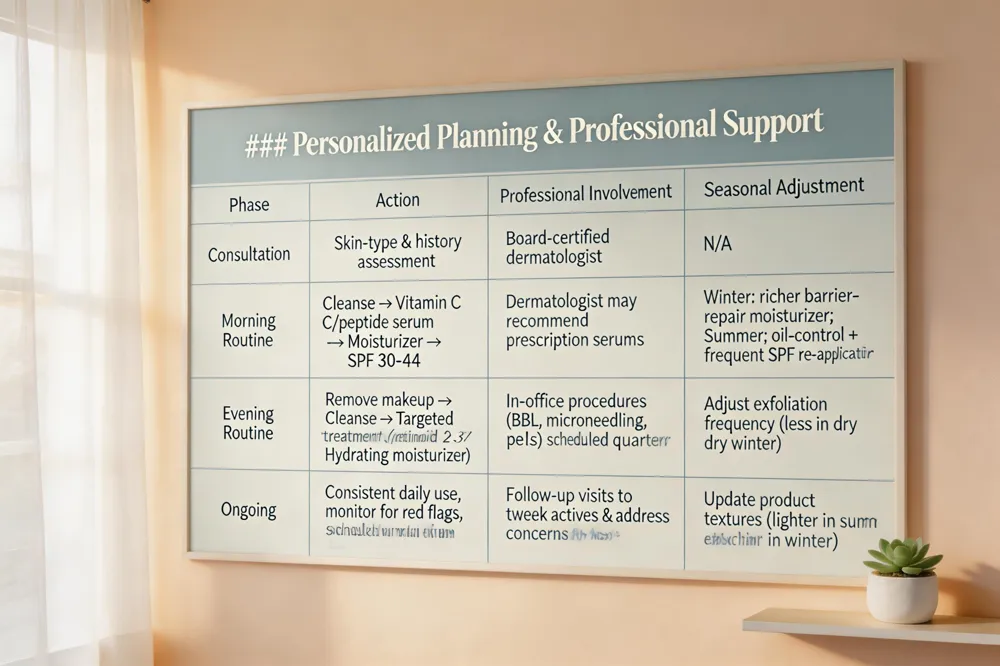 A successful skin‑care journey begins with a thorough consultation. A board‑certified dermatologist evaluates your skin type, concerns, and medical history, then tailors a regimen that pairs at‑home products with in‑office procedures such as BBL FotoFacial, microneedling, or chemical peels. Seasonal adjustments are essential: during winter, barrier‑repair moisturizers rich in ceramides and hyaluronic acid are emphasized, while summer calls for oil‑control formulas and diligent sunscreen reapplication. Consistency is the cornerstone of results; daily use of a gentle cleanser, antioxidant serum (e.g., vitamin C), moisturizer, and broad‑spectrum SPF 30+ protects the barrier and maximizes the benefits of periodic professional treatments. Patients who follow this structured plan report higher satisfaction, smoother texture, and brighter tone.
Dermatologist‑recommended skin‑care routine: Morning – cleanse with a pH‑balanced gentle cleanser, apply a vitamin C or peptide serum, moisturize, then apply SPF 30‑44 sunscreen. Evening – remove makeup, cleanse again, use a targeted treatment (retinoid 2‑3 times/week or a prescription‑strength antioxidant), and finish with a hydrating moisturizer. Adjust exfoliation frequency and add specific serums (e.g., niacinamide for pigment) as needed, but keep the routine simple enough to maintain daily.
Skin‑care routine steps: 1️⃣ Cleanse to eliminate debris without stripping the barrier. 2️⃣ Tone or gentle exfoliate to balance pH and prime for actives. 3️⃣ Apply a targeted treatment—serum, eye cream, or prescription medication—addressing your primary concern. 4️⃣ Moisturize to lock in hydration and support barrier repair. 5️⃣ Finish every morning with broad‑spectrum sunscreen; reapply as needed. Following these steps consistently, alongside scheduled in‑office procedures, yields long‑term radiance and optimal skin health.
Putting It All Together for Lifelong Radiance
Key takeaways: Consistent daily basics—gentle cleanser, antioxidant serum (vitamin C or exosomes), moisturizer, and SPF—protect the barrier and amplify results of any in‑office treatment. Antioxidants before laser or BBL reduce free‑radical damage; exosome serums support healing after microneedling or CoolPeel; strong exfoliants such as retinol should be paused around invasive procedures.
Next steps: Choose a medical‑grade at‑home line (e.g., AlumierMD, SkinScience) that matches your skin type, schedule a consultation to map a treatment calendar (BBL, RF microneedling, chemical peel, etc.), and follow the recommended pre‑ and post‑procedure product schedule.
Professional partnership: Work with a board‑certified dermatologist or licensed aesthetician to personalize product ratios, adjust timing, and monitor progress, ensuring long‑term radiance and safety for your unique skin journey and confidence every day.