Why Lifestyle Matters in Eczema Control
Eczema stems from a weakened skin barrier that lets irritants trigger a type‑2 inflammatory response, producing cytokines like IL‑4, IL‑5 and IL‑13. Daily habits—consistent moisturizing within minutes of a lukewarm shower, using fragrance‑free cleansers, keeping indoor humidity 40‑60 % and wearing breathable cotton—directly protect the barrier and curb flare‑ups. Evidence‑based strategies include omega‑3‑rich foods, probiotic‑rich fermented foods, regular moderate exercise, adequate sleep, stress‑reduction techniques and avoiding tobacco, alcohol and harsh detergents, and also limit exposure to extreme temperatures and indoor pollutants.
Quick‑Relief Strategies for an Acute Flare‑Up
 How to reduce eczema inflammation fast?
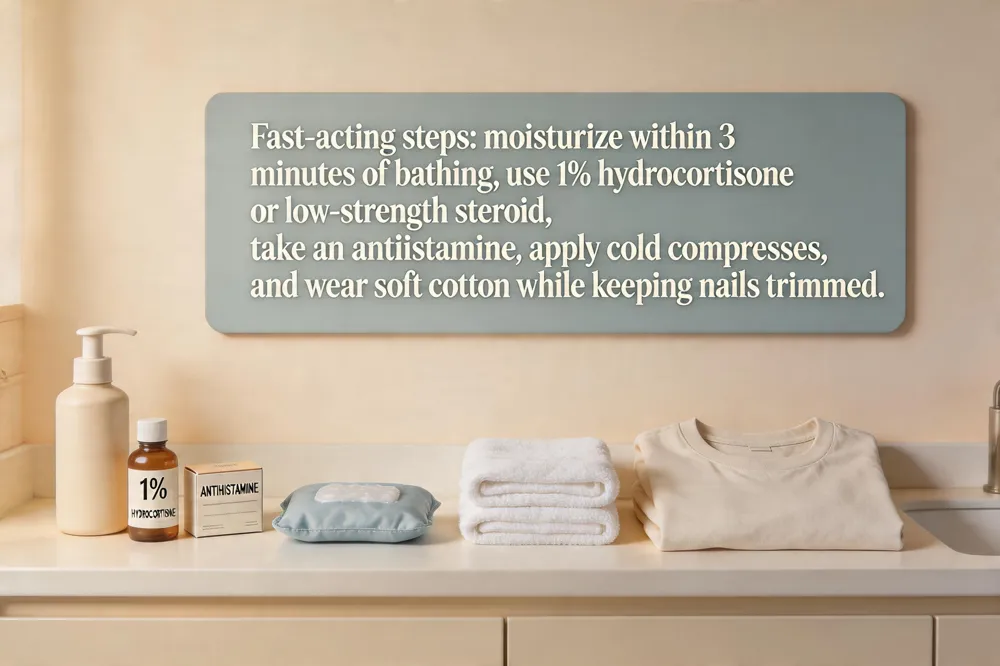
- Apply a fragrance‑free, thick moisturizer (ointment or cream) within three minutes of bathing to lock in moisture and restore the barrier.
- Use an over‑the‑counter 1% hydrocortisone cream or a prescribed low‑strength topical steroid twice daily for immediate itch relief.
- Take an oral antihistamine (e.g., cetirizine) at night to reduce scratching.
- Cool the skin with a cold compress or a lukewarm bath (10‑15 min) to constrict vessels and lessen swelling.
- Wear soft, breathable cotton garments and keep nails trimmed to avoid trauma.
How do you reverse skin inflammation?
Cold therapy is the quickest method—apply a cold compress or a cool damp cloth for 5‑10 min, then seal the skin with a fragrance‑free moisturizer. Aloe vera gel or a colloidal oatmeal paste can provide anti‑inflammatory polysaccharides without drying. A diluted apple‑cider‑vinegar rinse (1:3) helps rebalance pH and deter bacterial overgrowth.
How to calm inflamed skin on face naturally?
Splash the face with cool water or use a chilled compress, then apply a thin layer of pure aloe vera gel or a soothing oatmeal mask. Follow with a lightweight, fragrance‑free moisturizer containing hyaluronic acid, chamomile, or green‑tea extract. Avoid alcohol‑based toners and harsh exfoliants.
How to reduce skin inflammation and redness naturally?
Cold compresses or a brief cold shower shrink dilated vessels. Apply soothing botanicals such as 5 % colloidal oatmeal paste or chamomile‑calendula mask. Strengthen the barrier with niacinamide (2‑5 %) or barrier‑restoring oils (jojoba, rosehip). Support systemic health with omega‑3 supplements (~1 g EPA/DHA daily) and practice stress‑reduction techniques like meditation or gentle yoga.
Anti‑Inflammatory Eating Plans to Support Skin Health
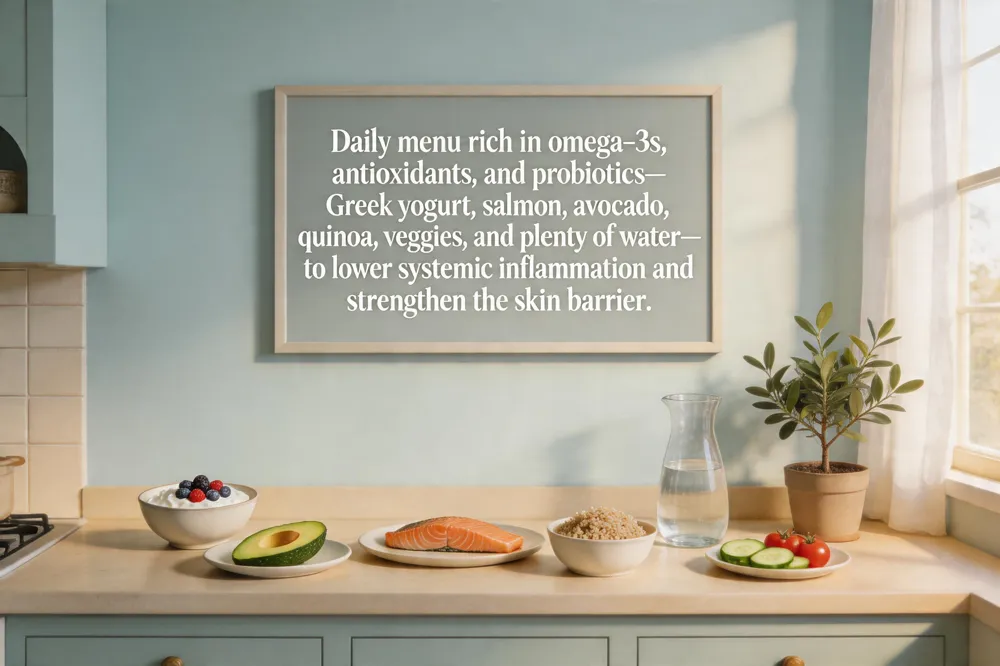 An anti‑inflammatory eating plan helps calm the type‑2 cytokine storm that drives atopic dermatitis. A practical daily schedule looks like:
- Breakfast: Greek yogurt (if tolerated) with blueberries, chia seeds, and a drizzle of honey.
- Lunch: Mixed greens, grilled salmon, avocado, olive‑oil vinaigrette.
- Snack: Apple slices with almond butter.
- Dinner: Quinoa, roasted sweet potatoes, steamed broccoli.
- Hydration: ≥8 cups water; green tea optional.
A 30‑day schedule repeats this pattern, swapping protein (chicken, tofu) and vegetables (Brussels sprouts, kale) while avoiding processed foods, added sugars, and dairy if it triggers flares. Track symptoms in a diary to pinpoint personal triggers.
Key nutrients: omega‑3 fatty acids (salmon, walnuts, flaxseed), vitamin D, vitamin C, zinc, and probiotic cultures (yogurt, kefir, kimchi). Supplement with vitamin D 1000‑2000 IU and omega‑3s if diet is low.
Common aggravators: dairy, eggs, peanuts/tree nuts, gluten‑containing grains, processed sugars, nightshades, and alcohol. Eliminate suspected foods under professional guidance to reduce inflammation and support skin barrier repair.
Personalizing the plan with a dietitian ensures nutrient adequacy and aligns with any medication interactions.
Traditional Chinese Medicine and Global Perspectives
 Traditional Chinese Medicine (TCM) views eczema as a manifestation of wind, heat, and dampness disrupting the skin’s barrier and Qi flow. Practitioners often prescribe herbal formulas such as Xiao Feng San (Clear Wind Powder) to dispel wind, clear heat, and resolve dampness, sometimes adding ingredients like Huang Qi or Bai Xian Pi for skin repair. Topical washes and balms made from herbs (e.g., Ophiopogonis, Angelica, licorice) are applied to soothe itching and reduce inflammation. Acupuncture or acupressure points (LI 11, SP 10, LU 7) are selected to calm pruritus, improve micro‑circulation, and support immune balance. Lifestyle integration includes dietary guidance—avoiding spicy, fried, and dairy foods that aggravate heat‑damp patterns, favoring cooling, moistening foods such as pears, mung beans, and leafy greens—and stress‑reduction practices like tai chi, meditation, and adequate sleep.
Regarding genetics, MTHFR gene variants can impair folate metabolism and methylation, potentially influencing skin‑barrier integrity and inflammatory pathways. Although some clinicians suggest that reduced methylation may raise histamine levels, which can trigger eczema, the evidence remains limited. MTHFR polymorphisms are not a direct cause of eczema, but for patients with both the variant and persistent dermatitis, methyl‑B‑vitamin supplementation (methylfolate, methylcobalamin) may be considered alongside standard skin‑care and TCM therapies.
Sugar, Hyperglycemia, and Personal Triggers
 Can sugar cause eczema flare‑ups?
Yes. High‑glycemic foods and added sugars raise systemic inflammation and alter the gut microbiome, aggravating atopic dermatitis. Many patients notice calmer skin after cutting back on sugary drinks, desserts, and processed snacks, especially with rapid blood‑sugar spikes. A small double‑blind study of 30 adults with eczema showed no uniform worsening after a sugar challenge, indicating sugar is not a universal trigger. Because responses differ, a 2‑4 week elimination trial of added sugars, paired with a low‑glycemic diet of whole grains, vegetables, and legumes, can help determine sensitivity.
Can the MTHFR gene cause eczema?
MTHFR variants may impair folate metabolism and methylation, affecting skin‑barrier integrity and inflammation. Some clinicians suggest reduced methylation can raise histamine, an itch trigger, but evidence is limited and most carriers do not develop eczema solely because of the gene. For patients with an MTHFR variant and eczema, doctors add methyl‑B‑vitamin supplements (methylfolate, methylcobalamin) to therapy. MTHFR is not a direct cause but may be a contributing factor for a subset of individuals.
Steroid‑Free Flare Management and the Rule of 3
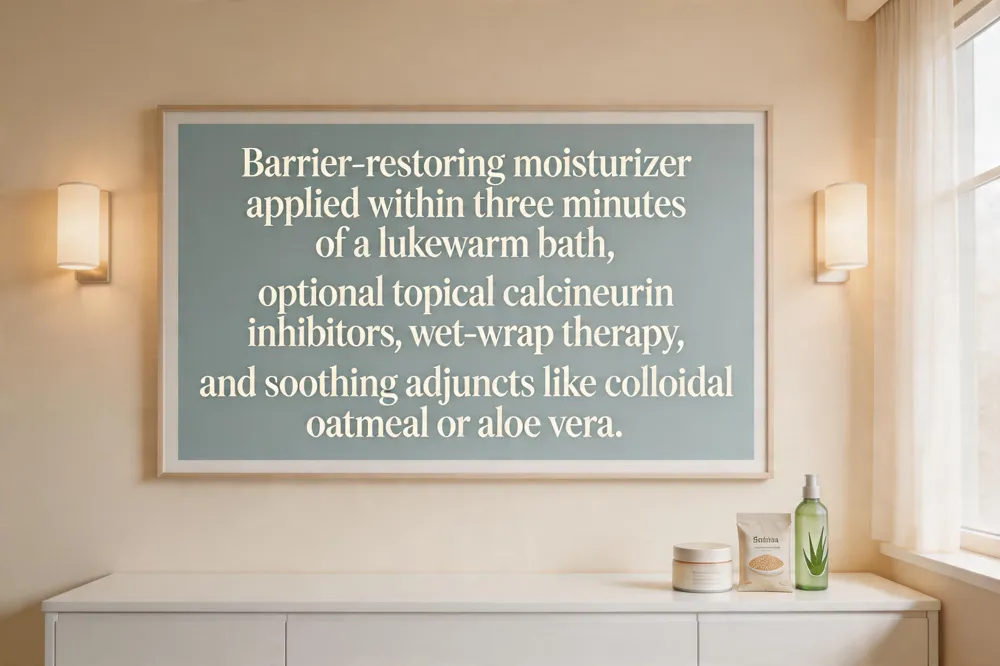 A steroid‑free approach starts with barrier‑restoring moisturizers. Apply a thick, fragrance‑free ointment or cream that contains ceramides, colloidal oatmeal, or hyaluronic acid within three minutes of a lukewarm bath while the skin is still damp—the "Rule of 3" timing that locks in moisture and curtails transepidermal water loss. For inflamed patches on the face, neck, or flexural areas, topical calcineurin inhibitors such as 1 % tacrolimus or 1 % pimecrolimus can be prescribed; they suppress type‑2 cytokines without the thinning risk of steroids. When a flare is extensive, wet‑wrap therapy offers intensive hydration: after a layer of moisturizer, cover the area with a damp gauze or cotton garment, then add a dry layer for 6–12 hours to soothe itch and reduce inflammation. Oral antihistamines may aid nighttime sleep, and soothing adjuncts—colloidal oatmeal baths, aloe vera gel, or a diluted tea‑tree oil rinse—can provide extra comfort. If symptoms persist, a dermatologist may consider phototherapy or short‑term non‑steroidal systemic agents under supervision.
Everyday Lifestyle Tweaks for Long‑Term Calm
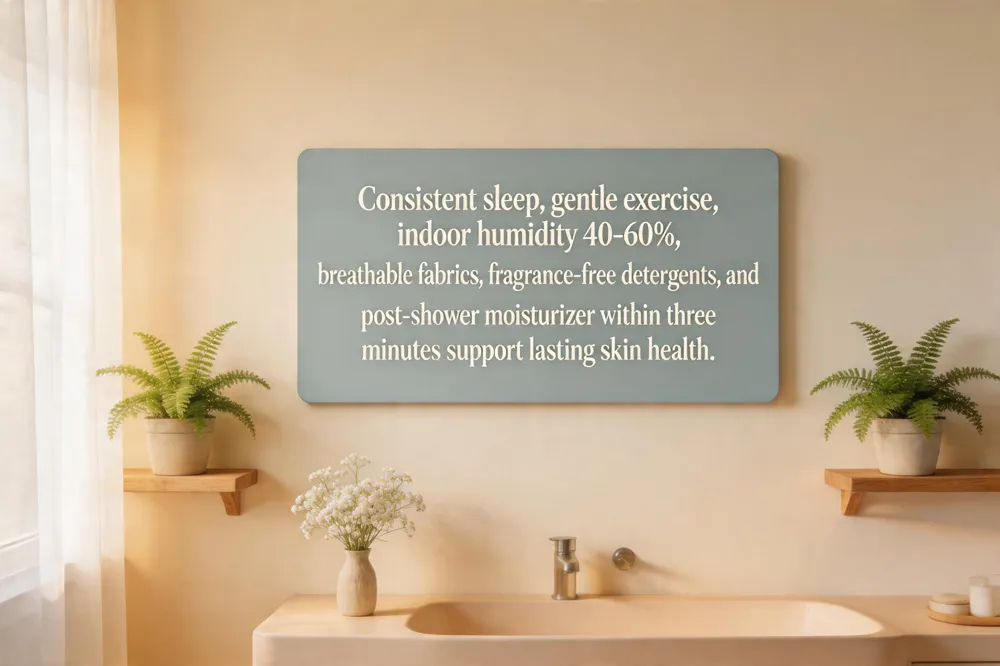 Good sleep hygiene is a foundation for eczema control. Aim for consistent bedtime and wake‑time, limit evening screen exposure, and get a short dose of morning sunlight to reinforce the circadian rhythm; adequate rest lowers pro‑inflammatory cytokines and improves skin barrier repair. Regular low‑impact exercise such as walking, yoga, or gentle cycling reduces systemic inflammation and cortisol spikes while supporting circulation to the skin. Indoor humidity should be kept between 40 %‑60 % with a humidifier, especially in heated winter rooms, and indoor temperature maintained at a comfortable 68‑72 °F to prevent excess drying or sweating that can aggravate flare‑ups. Stress‑reduction practices—including mindfulness meditation, deep‑breathing exercises, and maintaining strong social connections—have been shown to dampen inflammatory pathways linked to eczema. Choose soft, breathable fabrics (100 % cotton or bamboo), wash new clothes before wearing them, and use fragrance‑free, dye‑free detergents and non‑soap, pH‑balanced cleansers. After a lukewarm shower, pat skin dry and lock in moisture with a fragrance‑free, ceramide‑rich moisturizer within three minutes to seal the barrier and keep inflammation at bay.
Putting It All Together for Sustainable Relief
Consistent daily habits—moisturizing within minutes of a lukewarm shower, using fragrance‑free cleansers, and keeping nails trimmed—create the foundation for lasting relief. Partnering with a dermatologist ensures prescription‑strength topical or biologic options are matched to disease severity, while a dietitian can tailor an anti‑inflammatory eating plan rich in omega‑3s, antioxidants, and probiotic foods. Regularly recording flare triggers, environmental exposures, and symptom patterns lets you adjust treatment and lifestyle adjustments promptly, maintaining skin barrier health and preventing future outbreaks efficiently for you.