Why a Thoughtful Skin Routine Matters
Healthy skin starts with three basics: a gentle cleanser, a barrier‑supporting moisturizer, and broad‑spectrum sunscreen of at least SPF 30. These steps protect the barrier, keep hydration balanced, and block UV rays that cause premature aging and skin‑cancer risk. Daily habits such as consistent cleansing, limiting hot water, staying hydrated, and avoiding smoking reinforce the barrier and reduce inflammation, which improves texture and reduces breakouts. Yet over‑the‑counter products can’t address deeper concerns like persistent acne, hyperpigmentation, or early signs of photo‑damage. A dermatologist or licensed aesthetic professional can assess skin type, identify hidden conditions, and prescribe prescription‑strength actives or medical‑grade procedures—chemical peels, laser therapy, microneedling—that safely penetrate deeper layers. Combining a simple at‑home routine with periodic professional guidance yields the most durable, radiant results. Regular follow‑up ensures ongoing skin health and optimal outcomes.
Understanding the Core Steps of a Skincare Routine
| Step | Product Type | Key Benefits |
|---|---|---|
| Cleanser | Gentle, fragrance‑free | Removes oil, makeup, pollutants; preserves barrier |
| Serum | Vitamin C, niacinamide, hyaluronic acid, retinoid | Targeted concerns: brightening, hydration, anti‑aging |
| Moisturizer | Ceramide‑rich cream or lightweight gel | Repairs barrier, hydrates |
| Sunscreen | Broad‑spectrum SPF 30+ | UV protection, prevents photo‑aging |
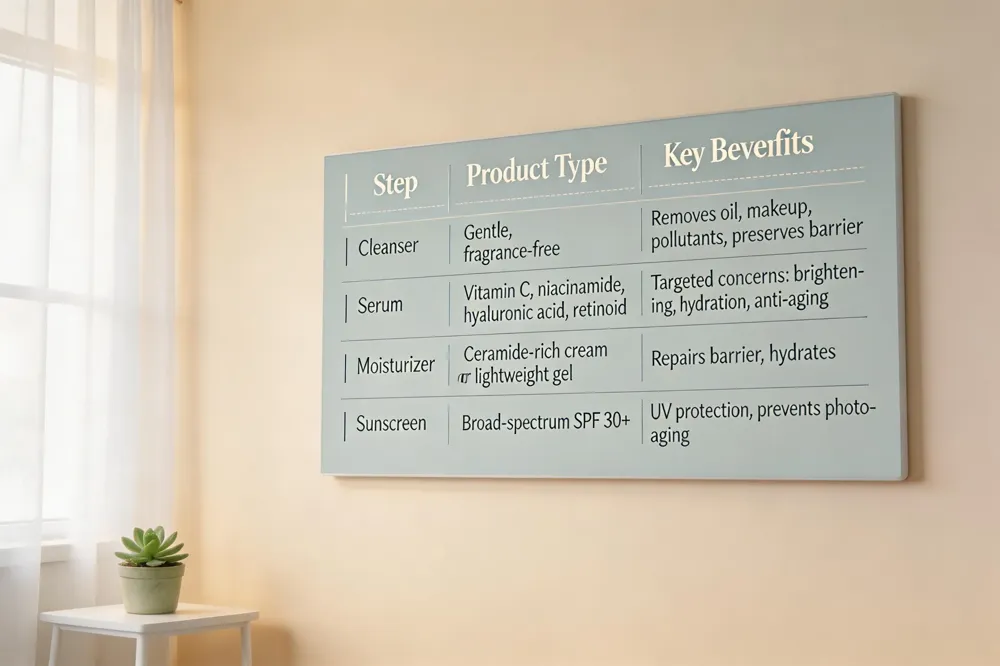 A solid routine begins with cleansing: use a gentle, fragrance‑free cleanser morning morning and night to remove oil, makeup, and pollutants while preserving the skin barrier. Follow with treatment serums that target your specific concerns—vitamin C or niacinamide for brightening, hyaluronic acid for hydration, or prescription‑strength retinoids for anti‑aging when advised by a dermatologist. Next, moisturize using a formula suited to your skin type; ceramide‑rich creams repair the barrier for dry skin, while lightweight, non‑comedogenic gels work for oily or acne‑prone skin. Finally, sun protection is non‑negotiable: apply a broad‑spectrum SPF 30+ sunscreen every morning and reapply every two hours outdoors. For beginners, keep it simple: cleanser → serum → moisturizer → sunscreen, repeating twice daily and adding night‑time actives (e.g., retinol) only after your skin has adjusted. Consistency, proper sequencing, and Professional guidance when needed ensure long‑term skin health and optimal results.
Tailoring Your Routine for Specific Goals
| Goal | Morning Routine | Evening Routine |
|---|---|---|
| Glowing skin | Cleanser → Vitamin C serum → Hyaluronic acid moisturizer → SPF 30+ | Double‑cleanse → Mild chemical exfoliant (2‑3×/wk) → Night cream or retinol |
| At‑home care | Cleanser → Targeted serum (Vit C/niacinamide) → Lightweight moisturizer → SPF 30+ | Cleanser → Serum → Moisturizer → Night cream |
| 30s skin | Cleanser → Hydrating toner → Antioxidant serum → Moisturizer → SPF 30+ | Cleanser → Chemical exfoliant (weekly) → Retinol/peptide → Rich moisturizer |
 Daily skin care routine for glowing skin
Begin the morning with a gentle, hydrating cleanser to preserve the barrier, followed by a vitamin C antioxidant serum for brightening and free‑radical protection. Apply a lightweight hyaluronic‑acid moisturizer and seal with broad‑spectrum SPF 30+ sunscreen. In the evening, double‑cleanse (oil‑based then water‑based), use a mild chemical exfoliant 2–3 times weekly, and finish with a richer night cream or retinol to boost cell turnover. Stay hydrated and maintain a balanced diet for lasting radiance.
Best at‑home skin care routine
Cleanse twice daily with a pH‑balanced, fragrance‑free cleanser. After cleansing, apply a targeted serum—vitamin C for brightness or niacinamide for oil control—then lock in moisture with a lightweight, non‑comedogenic moisturizer. Exfoliate 2–3 times per week using a gentle chemical or enzyme exfoliant. Finish each morning with broad‑spectrum SPF 30+ sunscreen and, if needed, a richer night cream. Consistency, adequate water intake, and a diet rich in fruits and vegetables support a healthy, resilient complexion.
Best skin care routine products
Use a sulfate‑free cleanser such as La Roche‑Posay Toleriane Gentle Cleanser. Follow with a vitamin C serum (e.g., SkinCeuticals CE Ferulic) for brightening or a hyaluronic‑acid serum for hydration. Apply a fragrance‑free moisturizer like Rhode Barrier Restore Cream, then protect with a mineral sunscreen such as EltaMD UV Daily (SPF 30+). At night, incorporate a retinol or niacinamide serum and a weekly gentle exfoliator to maintain smooth, radiant skin.
Professional Care: When DIY Isn’t Enough
| Professional Service | Frequency | Main Advantage |
|---|---|---|
| Chemical peel | Quarterly | Deep exfoliation, hyperpigmentation improvement |
| Laser / IPL | As advised (often 3‑6 mo) | Vascular lesion removal, collagen boost |
| Microneedling | 4‑6 weeks interval | Skin texture, scar reduction |
| Follow‑up visits | Every 3‑6 months | Monitor response, adjust actives |
 Professional skin‑care clinics provide expertise DIY routines lack. Advanced treatments such as chemical peels, laser therapy, microneedling, and injectables deliver deeper exfoliation, collagen boost and pigment correction unavailable OTC. Clinical settings enforce strict hygiene—sterile tools, FDA‑cleared devices, controlled environment—reducing infection risk. Personalized skin analysis identifies type, sensitivity, lifestyle and early disease signs, enabling custom plans with prescription actives or procedures.
Dermatologist‑recommended skin care routine
Gentle fragrance‑free cleanser → broad‑spectrum SPF 30+ each morning → ceramide moisturizer at night. Add prescription retinoid 2‑3 times weekly and targeted serums (vitamin C, benzoyl peroxide) as advised.
What is the 1 % rule in skincare?
Ingredients are listed by descending concentration; only those >1 % appear individually. The first few ingredients are the actives, guiding potency assessment.
What is a red flag in dermatology?
Changing, bleeding, itchy or non‑healing lesions, rapid ulceration, or systemic symptoms (fever, weight loss) require prompt professional evaluation.
Combining At‑Home Maintenance with Clinical Procedures
| At‑home Step | Clinical Complement |
|---|---|
| Daily SPF + antioxidant serums | Laser/PEl treatments for enhanced collagen |
| Regular moisturization | Post‑peel barrier repair creams |
| Night retinol | In‑office microneedling for deeper penetration |
 Quarterly chemical peels
Professional chemical peels use higher concentrations of AHAs or BHAs than over‑the‑counter products, delivering deeper exfoliation and faster improvement of hyperpigmentation and texture. Scheduling a peel every three months allows the skin to renew while maintaining barrier health.
Laser and light‑based therapies
Laser and light‑based therapies In‑office laser and intense pulsed light treatments reduce vascular lesions, remove pigmented spots, and stimulate collagen production—outcomes unattainable with at‑home devices. These procedures complement daily sun protection and antioxidant serums for lasting results.
Follow‑up appointments
Regular follow‑up visits let dermatologists monitor treatment response, adjust prescription strength, and prevent side effects such as irritation or post‑procedure hyperpigmentation. Typically, appointments every 3–6 months keep the plan on track.
Top 10 skin care tips
Start with a gentle, skin‑type‑appropriate cleanser, avoid harsh soaps, keep showers short and warm, and pat your skin dry instead of rubbing. Follow with a moisturizer containing hyaluronic acid or ceramides to lock in hydration, then apply a broad‑spectrum SPF 30+ sunscreen every morning and reapply every two hours when outdoors. Shield your skin from UV rays by seeking shade, wearing tightly woven long‑sleeve shirts, wide‑brimmed hats and UV‑blocking sunglasses, especially between 10 a.m. and 4 p.m. Maintain a healthy lifestyle by quitting smoking, eating a diet rich in fruits, vegetables, omega‑3s and antioxidants, and drinking plenty of water while limiting sugary and processed foods. Finally, adjust your routine seasonally—use richer creams in winter and lightweight, oil‑free formulas in summer—and consider professional dermatology treatments for personalized care.
Skin care tips at home
Keep your skin clean by washing the face and body twice daily with a gentle, pH‑balanced cleanser, and follow up with a lightweight moisturizer while the skin is still slightly damp. Apply a broad‑spectrum SPF 30+ sunscreen every morning, reapplying every two hours, and wear protective clothing during peak sun hours (10 a.m.–4 p.m.). Stay hydrated by drinking at least six glasses of water a day, and support your skin from the inside with a diet rich in fruits, vegetables, lean protein, and healthy fats while limiting sugary and processed foods. Exfoliate gently two to three times a week to remove dead cells, using a mild chemical or physical exfoliant that won’t irritate the skin. Finally, avoid harsh fragrances or irritants in skincare products and be consistent with your routine, as regular care yields the best long‑term results.
Healthy skin tips for face
- Shield your face from UV rays every day by applying a broad‑spectrum SPF 30+ sunscreen at least 15 minutes before heading outside and re‑applying every two hours, especially after swimming or sweating.
- Cleanse gently twice daily using a mild, sulfate‑free cleanser, pat the skin dry, and follow with a suitable moisturizer to keep the barrier hydrated without stripping natural oils.
- Remove makeup completely each night and keep anything that touches your face—pillowcases, phone screens, makeup brushes—clean to prevent bacterial buildup and breakouts.
- Eat a balanced diet rich in fruits, vegetables, lean protein, and whole grains while staying well‑hydrated; antioxidants and adequate water support collagen production and skin elasticity.
- Prioritize 7–9 hours of quality sleep each night and avoid smoking, as both help reduce inflammation, improve circulation, and slow the formation of fine lines and dullness.
Seasonal Adjustments and Lifestyle Factors
| Season | Product Adjustments |
|---|---|
| Winter | Rich ceramide moisturizers, gentle cleansers |
| Summer | Lightweight antioxidant serums, oil‑free moisturizers |
| All year | SPF 30+ sunscreen, hydration, balanced diet |
 Seasonal adjustments match products to climate: richer ceramide moisturizers in dry winter, lightweight antioxidant serums in humid summer, and higher SPF when sun is strongest. Adequate hydration (8 cups water daily) and antioxidant‑rich foods support barrier health; limiting sugar reduces inflammation. Good sleep, exercise, mindfulness, and regular skin checks with a dermatologist lower cortisol‑driven skin stress.
Daily skin care routine at home naturally: Cleanse with a gentle, fragrance‑free pH‑balanced cleanser, apply a light natural moisturizer (e.g., aloe or coconut oil), exfoliate 2‑3 times weekly with a mild DIY scrub, protect with SPF 30+ sunscreen, and finish night with a soothing mask.
Best at home skin care routine: Double cleanse, add a targeted serum (vitamin C or niacinamide), moisturize with a fragrance‑free formula, exfoliate 2‑3 times weekly, and finish each morning with SPF 30+ sunscreen. Consistency and hydration boost resilience.
At home skin care routine for 30s: Gentle cleanser morning/evening, weekly chemical exfoliant, hydrating toner, antioxidant serum, low‑dose retinol or peptide at night, rich moisturizer, and daily SPF 30+.
Practical Guidance for Building Your Personal Routine
| Routine Layer | Example Product |
|---|---|
| Cleanser | La Roche‑Posay Toleriane Gentle Cleanser |
| Toner/Essence | pH‑balancing toner (rose water) |
| Serum | SkinCeuticals CE Ferulic (Vitamin C) |
| Moisturizer | CeraVe Moisturizing Cream (ceramides) |
| Sunscreen | EltaMD UV Clear SPF 30+ |
| Night Active | Prescription retinoid (2‑3×/wk) |
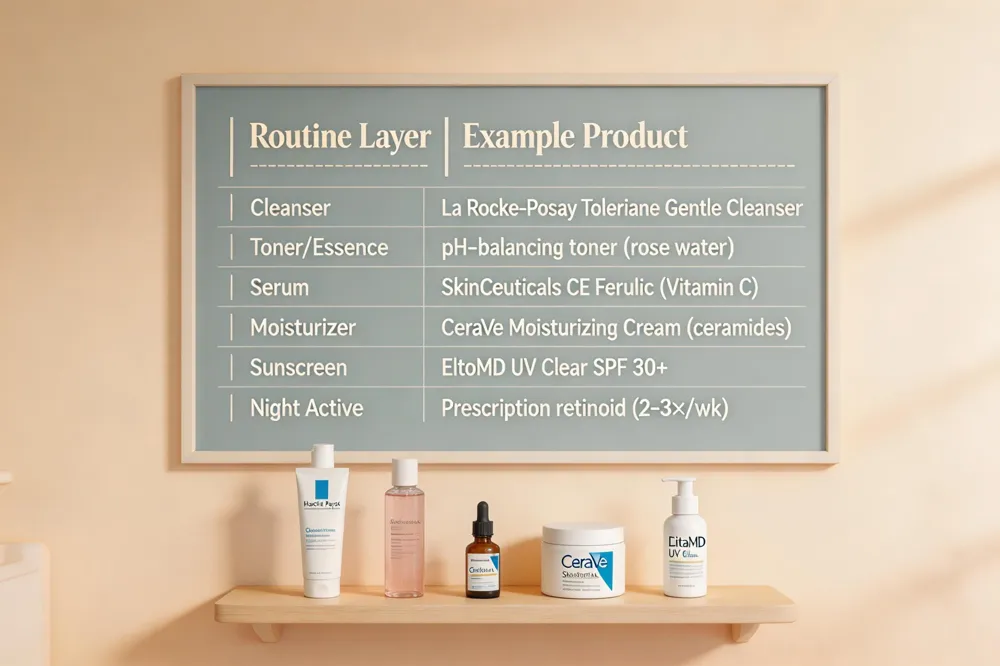 Building a skincare routine that works for you begins with a gentle, fragrance‑free cleanser matched to your skin type—gel‑based for oily skin, cream or balm for dry skin—to cleanse without stripping the barrier. Follow with a pH‑balancing toner or essence, then layer targeted serums from thinnest to thickest (e.g., vitamin C for brightening, niacinamide for oil control, hyaluronic acid for hydration. Choose a moisturizer that contains ceramides, niacinamide, or hyaluronic acid to reinforce the barrier, and finish the morning with a broad‑spectrum SPF 30+ sunscreen to prevent UV‑induced aging. At night, introduce treatment actives such as retinol or gentle exfoliating acids, spacing them to avoid irritation; always patch‑test new products on a small skin area for 48 hours before full‑face use.
Dermatologist‑recommended products typically include CeraVe Hydrating Cleanser, La Roche‑Posay Toleriane Gentle Cleanser, ceramide‑rich moisturizers (CeraVe Moisturizing Cream, Neutrogena Hydro Boost Gel‑Cream), vitamin C serums (SkinCeuticals CE Ferulic), and prescription‑strength retinoids when needed. Daily sunscreen options like EltaMD UV Clear or Supergoop! Unseen provide essential protection.
For a simple at‑home routine, start with a gentle cleanser (e.g., raw milk and honey), a natural toner (rose water or green‑tea spray), a weekly oatmeal‑yogurt scrub, an aloe‑vera‑glycerin moisturizer, and a mineral SPF. This basic regimen can be customized under professional guidance for optimal long‑term skin health.
Putting It All Together
Consistent daily care—gentle cleansing, targeted serums, moisturization, and broad‑spectrum SPF—creates a solid foundation for skin health. Regular professional check‑ups let dermatologists assess skin type, detect early changes, and adjust prescription‑strength actives or in‑office procedures such as chemical peels or laser therapy. This ongoing partnership ensures that active ingredients remain effective, irritation is minimized, and treatment plans evolve with age, climate, and lifestyle. Over time, the combined approach yields smoother texture, reduced hyperpigmentation, stronger barrier function, and a lower risk of skin cancer, delivering lasting aesthetic and medical benefits and a brighter, more youthful appearance.