Unlock Your Skin's Best Defense: A Dermatologist's Guide to Sunscreen Selection
Sunscreen is not merely a summertime accessory; it is the most critical pillar of any skin health regimen. Ultraviolet (UV) radiation from the sun is a constant threat, capable of penetrating clouds, car windows, and even indoor environments on overcast days. This means protection is a daily necessity for everyone, regardless of skin tone, age, or the season.
Daily, consistent sunscreen application is one of the most powerful preventive health measures you can take for your skin. Research shows that regular use of a broad-spectrum sunscreen with SPF 15 or higher can reduce your risk of developing melanoma—the deadliest form of skin cancer—by 50% and squamous cell carcinoma by 40%. Furthermore, dermatologists estimate that up to 90% of visible signs of skin aging, such as wrinkles, dark spots, and loss of firmness, are caused by unprotected sun exposure.
Navigate the Sunscreen Aisle with Confidence
This guide cuts through the marketing noise and provides expert-backed, actionable tips from leading dermatological authorities like the American Academy of Dermatology and The Skin Cancer Foundation. The goal is simple: to help you select a sunscreen you will love and use consistently, making it an effortless part of your daily routine. This advice is particularly relevant for our community in Glenview, IL, where our skin contends with dry, harsh winters and humid summers, making a skin-type-specific sunscreen choice even more important for maintaining a healthy barrier year-round.
The Three Non-Negotiable Label Checks
Before considering anything else, ensure any sunscreen you select meets these three foundational criteria on its label:
- Broad-Spectrum Protection: This means the sunscreen shields your skin from both UVA and UVB rays. UVB rays are the primary cause of sunburn, while UVA rays penetrate deeper, contributing to premature aging and skin cancer. Both types cause damage.
- SPF 30 or Higher: SPF, or Sun Protection Factor, primarily measures protection against UVB rays. An SPF of 30 blocks about 97% of UVB rays, which is the dermatologist-recommended minimum for effective daily protection.
- Water Resistance: Look for a "water-resistant" label, which will specify either 40 or 80 minutes. This indicates the sunscreen is formulated to stay effective during sweating or swimming. No sunscreen is waterproof, so reapplication after this time period or immediately after towel-drying is essential.
Choose Your Shield: Understanding Mineral vs. Chemical Sunscreens
The active ingredients in sunscreens work in two primary ways, and the choice often comes down to skin type and personal preference.
| Type | How It Works | Common Active Ingredients | Ideal For | Potential Considerations |
|---|---|---|---|---|
| Mineral (Physical) | Sits on skin's surface, physically blocking and scattering UV rays. | Zinc Oxide, Titanium Dioxide | Sensitive skin (including rosacea/eczema), children, pregnancy, acne-prone skin (non-comedogenic formulas). | Can leave a white cast; thicker texture. New tinted formulas help blend. |
| Chemical | Absorbs into skin, converts UV rays into heat, which is then released. | Avobenzone, Octinoxate, Octisalate, Oxybenzone | Daily wear; easy application without white residue; broader range of lightweight textures. | May cause irritation for some; needs 15-30 mins to become effective before sun. |
| The U.S. FDA considers zinc oxide and titanium dioxide (mineral filters) as "Generally Recognized As Safe and Effective" (GRASE). While ongoing research examines the systemic absorption of some chemical filters, expert consensus holds that the proven dangers of UV exposure far outweigh any potential risks from sunscreen ingredients. |
Match Your Sunscreen to Your Skin Type
The right formula feels comfortable, encouraging daily use. Use this guide to find your best match.
| Skin Type & Concern | Key Selection Criteria | Ingredients to Look For | Ingredients to Consider Avoiding |
|---|---|---|---|
| Oily or Acne-Prone | Oil-free, non-comedogenic, "won't clog pores." Matte or gel formulations. | Niacinamide, Zinc Oxide (oil-free mineral), mattifying powders. | Heavy oils, silicones like dimethicone, greasy creams. |
| Dry | "Moisturizing," cream-based formulas. Hydrating and barrier-supporting. | Hyaluronic Acid, Ceramides, Glycerin, Shea Butter, Colloidal Oatmeal. | Alcohol-based, overly drying gels or sprays. |
| Sensitive | "For Sensitive Skin," fragrance-free, hypoallergenic. Mineral formulas are often best. | Zinc Oxide, Titanium Dioxide (mineral). Soothing antioxidants. | Fragrance, parabens, oxybenzone, chemical filters if known irritants. |
| Mature or Aging | Broad-spectrum SPF 30+; formulas with added anti-aging benefits. | Antioxidants (Vitamin C, E), Peptides, Niacinamide. Tinted options block visible light. | None specifically, but ensure it feels good for consistent use. |
| Darker Skin Tones | Tinted, broad-spectrum formulas to avoid white/gray cast. | Iron Oxide (in tints blocks visible light to help prevent hyperpigmentation). | Untinted mineral formulas if they leave an ashy residue. |
Master the Art of Application
Choosing a great sunscreen is only half the battle; you must apply it correctly to get the stated protection.
- Amount: Use about 1 ounce (a shot glass full) to cover an adult's entire body. For just the face and neck, use about a teaspoon or a nickel-sized dollop.
- Timing: Apply sunscreen 15 to 30 minutes before going outdoors to allow it to bind to skin or absorb properly.
- Reapplication: Reapply at least every two hours, and immediately after swimming, sweating heavily, or towel-drying. Even water-resistant formulas lose effectiveness.
- Missed Spots: Pay special attention to often-missed areas: ears, back of the neck, hairline, tops of the feet, and the lips (use a lip balm with SPF).
Build a Comprehensive Sun Safety Strategy
Sunscreen is your first line of defense, but it should be part of a multi-faceted approach to sun safety.
- Seek Shade, especially during peak UV intensity hours from 10 a.m. to 4 p.m.
- Wear Protective Clothing, including wide-brimmed hats, UV-blocking sunglasses, and long sleeves when possible.
- Be Format-Smart: Use lotions or creams for your initial, even application. Reserve convenient sprays, sticks, and powders for reapplication over makeup or on-the-go. Avoid inhaling sprays.
- Check Dates: Sunscreen expires. Discard any product past its expiration date or older than three years, as its active ingredients degrade.
- Don't Mix: Avoid combination sunscreen/insect repellent products. Sunscreen needs frequent reapplication, while repellent does not.
Key Facts on Sunscreen Selection and Use
- The three non-negotiable sunscreen features are broad-spectrum protection, SPF 30 or higher, and water resistance.
- SPF 30 blocks about 97% of UVB rays; higher SPFs offer only marginal gains, and proper application matters more than a higher number.
- Sunscreen must be applied 15 to 30 minutes before sun exposure, especially chemical formulas, to allow for proper absorption.
- Apply the correct amount: a shot glass full (one ounce) for the body and a nickel-sized dollop (1/2 tsp) for the face and neck using the 3-finger rule.
- Strict reapplication every two hours and immediately after swimming, sweating, or towel-drying is mandatory, even for water-resistant products.
- Mineral sunscreens (zinc oxide/titanium dioxide) are best for sensitive skin, work immediately, and are GRASE (Generally Recognized As Safe and Effective).
- Chemical sunscreens (e.g., avobenzone, oxybenzone) absorb UV and convert it to heat, requiring absorption time and may irritate sensitive skin.
- Match the formula to your skin type: use oil-free, non-comedogenic for oily skin; hydrating creams for dry skin; and fragrance-free minerals for sensitive skin.
- The best sunscreen is one you will use daily; prioritize cosmetic elegance (texture, finish, no white cast) for consistent wear.
- High-risk individuals (skin cancer history) should use broad-spectrum mineral SPF 30-50 daily, wear protective clothing, and get annual skin checks.
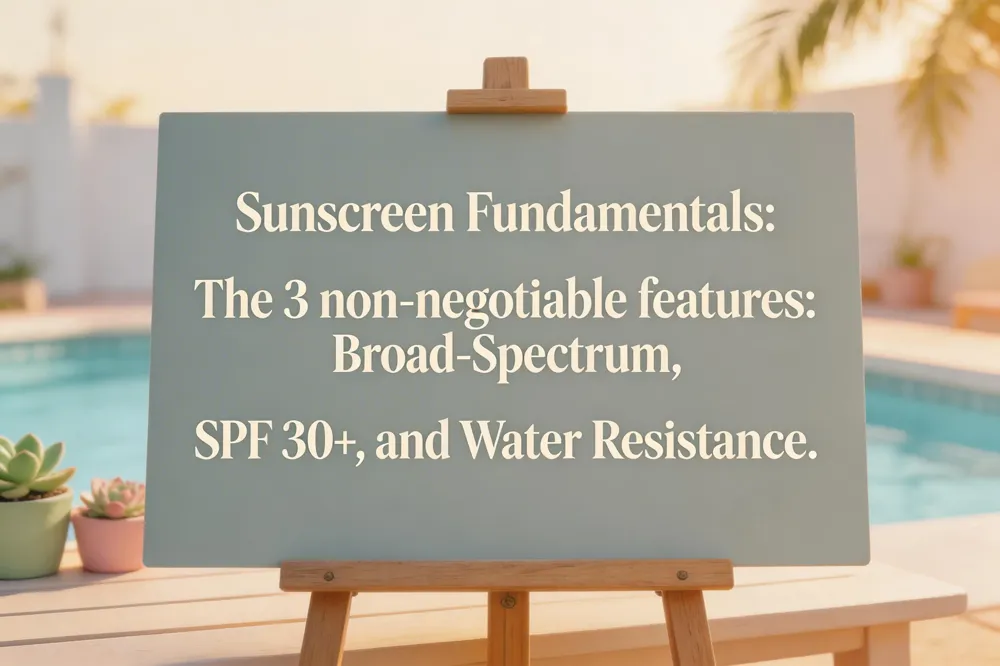
1. Start with the Non-Negotiables: Broad-Spectrum, SPF 30+, and Water Resistance
What are the most important features to look for in a sunscreen?
The most important features form a non-negotiable foundation for any effective sunscreen, regardless of your skin type. Expert organizations, including the American Academy of Dermatology and The Skin Cancer Foundation, universally recommend starting with three specific label claims.
First, the sunscreen must be labeled 'Broad-Spectrum.' This means it protects against both types of harmful ultraviolet radiation: UVA and UVB rays. UVA rays penetrate deeply, contributing to premature skin aging, wrinkles, and skin cancer. UVB rays are primarily responsible for sunburn and also play a major role in developing skin cancer. A product without this designation does not offer complete protection.
Second, choose a sunscreen with a Sun Protection Factor (SPF) of 30 or higher. SPF measures protection against UVB rays. An SPF 30 sunscreen blocks about 97% of UVB radiation, which is considered the effective minimum for daily use. Higher SPFs, like 50, block marginally more—about 98%—but no sunscreen blocks 100% of rays.
Third, look for 'Water Resistant' labeling. This indicates the sunscreen will maintain its stated SPF level for either 40 or 80 minutes while swimming or sweating. It is crucial to note that no sunscreen is 'waterproof' or 'sweatproof'—these terms are no longer allowed by the U.S. Food and Drug Administration (FDA). Reapplication is mandatory after the specified time or immediately after towel-drying.
| Foundational Feature | What It Means | Why It's Essential |
|---|---|---|
| Broad-Spectrum | Protects against skin-aging UVA and burning UVB rays. | Prevents sunburn, reduces skin cancer risk, and helps prevent premature aging. |
| SPF 30 or Higher | Blocks ~97% of UVB rays. SPF measures protection time before burning. | Provides effective baseline protection for daily and extended outdoor activities. |
| Water Resistant | Effective for 40 or 80 minutes during swimming/sweating. Not waterproof. | Maintains protection during water activities, exercise, or in humid conditions. |
These three criteria are the expert-backed minimums. Once you have selected a product that meets all three, you can further refine your choice based on your specific skin type, concerns, and preferred formulation to ensure you will use it consistently.
2. Understand SPF Realities: Why 30 is the Sweet Spot and Application is King

What SPF should I use for daily protection?
For daily protection, dermatologists and organizations like the American Academy of Dermatology (AAD) recommend using a broad-spectrum sunscreen with an SPF of 30 or higher. SPF 30 blocks about 97% of the sun's UVB rays, which are primarily responsible for sunburn. While higher SPFs, like 50, block about 98% of UVB rays, the increase in protection is marginal. Consistent and proper application is more crucial for your safety than choosing a very high SPF number.
Always apply a generous amount—about one ounce (a shot glass full) for your body—15 minutes before going outside. Reapply every two hours, or immediately after swimming, sweating, or towel-drying. Remember, sunscreen is one component of a complete sun protection strategy, which should also include seeking shade, wearing protective clothing, and avoiding peak sun hours from 10 a.m. to 4 p.m.
Understanding SPF: What the Number Really Means
SPF, or Sun Protection Factor, is a measure of protection against UVB radiation. It indicates how long it would take for your skin to redden with sunscreen compared to without it. For example, SPF 30 means it would take 30 times longer to burn than with no protection.
However, SPF ratings correspond to specific percentages of UVB ray filtration. Here is a comparison of common SPF levels:
| SPF Rating | Percentage of UVB Rays Blocked | UVB Rays That Reach Skin |
|---|---|---|
| SPF 15 | Approximately 93% | About 7% |
| SPF 30 | Approximately 97% | About 3% |
| SPF 50 | Approximately 98% | About 2% |
| SPF 100 | Approximately 99% | About 1% |
As the table shows, the difference between SPF 30 and SPF 50 is only about 1% more UVB blockage. Gains beyond SPF 50 are minimal. The U.S. Food and Drug Administration (FDA) notes that increased protection is generally true only up to SPF 50.
The Pitfall of High SPF: A False Sense of Security
Selecting a sunscreen with a very high SPF, such as 70 or 100, can create a misleading sense of security. This may lead individuals to stay in the sun longer or reapply less frequently, believing they are fully protected.
No sunscreen blocks 100% of UV rays. Furthermore, sunscreen's effectiveness diminishes over time due to sweat, water, rubbing, and natural breakdown from sun exposure. Relying solely on a high SPF number without proper, timely reapplication increases your risk of sun damage.
Application is King: Why Amount Matters Most
The protective level stated on a sunscreen bottle is based on a specific application thickness during laboratory testing. Most people apply only 25% to 50% of the recommended amount, drastically reducing the effective SPF they receive.
To achieve the labeled SPF protection, follow these application guidelines:
- For the body: Use about one ounce, which is enough to fill a standard shot glass.
- For the face and neck: Use a nickel-sized dollop, roughly equivalent to 1/4 teaspoon.
- Cover all exposed skin, including often-missed areas like the ears, back of the neck, tops of feet, and along the hairline.
Proper technique is also important. Apply sunscreen 15 to 30 minutes before sun exposure to allow it to bind to the skin. Reapplication is non-negotiable: do so at least every two hours, and immediately after swimming, sweating heavily, or towel-drying.
SPF and UVA Protection: Why 'Broad-Spectrum' is Essential
A critical limitation of the SPF number is that it only measures protection against UVB rays. It does not indicate any defense against UVA rays.
UVA rays penetrate deeper into the skin. They contribute to premature aging (wrinkles, dark spots) and play a significant role in the development of skin cancer. UVA rays can pass through window glass and clouds.
This is why the 'broad-spectrum' label is non-negotiable. A broad-spectrum sunscreen has been tested and proven to provide protection against both UVA and UVB radiation. Always ensure your chosen sunscreen is labeled as broad-spectrum to ensure comprehensive protection.
Quick Reference: SPF and Application Essentials
| Topic | Key Point | Why It Matters |
|---|---|---|
| Recommended SPF | SPF 30 or higher for daily use. | Provides a high level (97%) of UVB protection without over-reliance on high numbers. |
| SPF 30 vs. SPF 50 | Difference is only ~1% more UVB blockage. | Highlights that proper habits are more important than a marginally higher number. |
| High SPF Risk | Can create a false sense of security. | May lead to less frequent reapplication, increasing sun damage risk. |
| Application Amount | 1 oz for body, nickel-size for face/neck. | Underapplying can reduce effective SPF by half or more. |
| Reapplication | Every 2 hours, and after water/sweat. | Sunscreen wears off; consistent reapplication maintains protection. |
| Broad-Spectrum | Must be on the label. | Ensures protection against both aging UVA and burning UVB rays. |
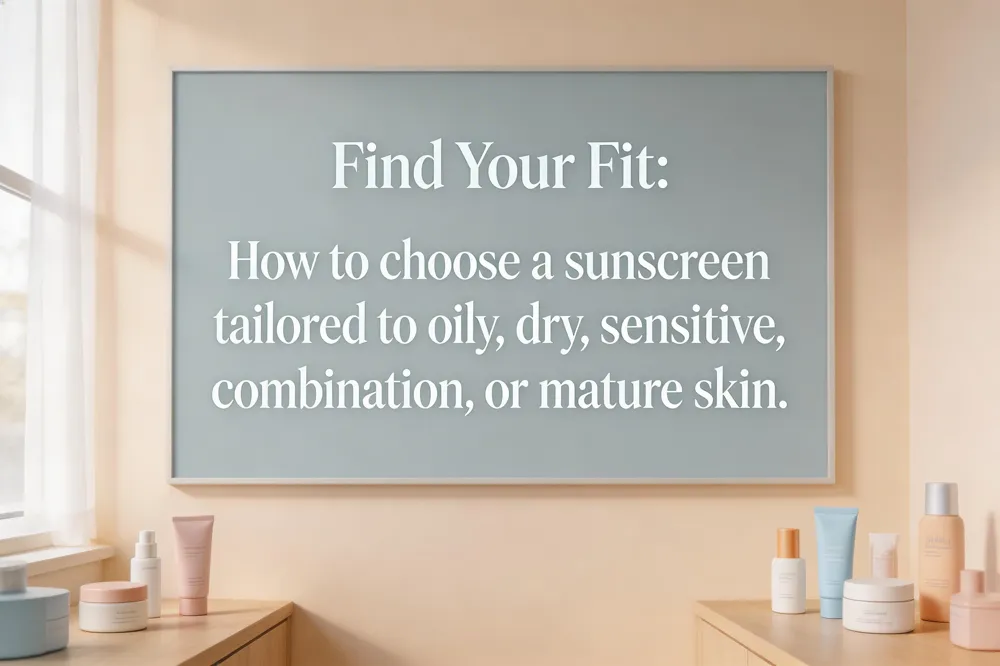
3. Match the Formula to Your Skin Type: A Personalized Guide
How do I choose the right sunscreen for my skin type?
Selecting the right sunscreen starts with two universal non-negotiables: choose a broad-spectrum formula to protect against both aging UVA and burning UVB rays, and select SPF 30 or higher. For your specific skin type, opt for oil-free, non-comedogenic gels or matte finishes if you have oily or acne-prone skin to avoid clogging pores. If you have dry or sensitive skin, seek out hydrating, cream-based mineral sunscreens containing zinc oxide or titanium dioxide, and ensure they are fragrance-free. For combination skin, lightweight lotions or water-based formulas provide balanced hydration. Remember to apply generously 30 minutes before sun exposure and reapply every two hours for continuous protection.
Building on that foundation, here is how to personalize your choice to address specific concerns and achieve the best comfort and protection.
For Oily or Acne-Prone Skin
Look for formulas labeled 'oil-free' and 'non-comedogenic'. These are specifically formulated not to clog pores, which is essential for preventing breakouts. Gels, fluids, or lightweight lotions with a matte finish are excellent choices as they absorb quickly and control shine without feeling heavy.
Ingredients like niacinamide can be a valuable bonus. Niacinamide, also known as Vitamin B3, helps regulate oil production, soothe inflammation, and can reduce the appearance of post-acne discoloration. Avoid sunscreens with heavy oils, silicones like dimethicone, or coconut oil, which can exacerbate oiliness and lead to clogged pores.
For Dry Skin
Hydration is key. Seek out cream-based sunscreens that contain moisturizing ingredients such as ceramides, hyaluronic acid, glycerin, or shea butter. These ingredients help repair and support the skin's natural barrier, which is often compromised in dry skin, making it more vulnerable to UV damage.
This advice is particularly relevant for Glenview's cold, dry winters, which can strip moisture from the skin. You can also layer your sunscreen over your regular moisturizer, waiting about five minutes between applications for the skin to dry. Sunscreens with a dewy finish will provide extra hydration throughout the day.
For Sensitive Skin (including rosacea/eczema)
Mineral (physical) sunscreens are strongly recommended. Their active ingredients, zinc oxide and titanium dioxide, sit on top of the skin to physically block UV rays. They are inert and much less likely to cause irritation or allergic reactions compared to chemical filters.
Always choose fragrance-free formulas, as added fragrance is a common irritant. Also, consider avoiding specific chemical filters like oxybenzone and avobenzone if you know your skin is prone to reactions. Zinc oxide, in particular, has natural anti-inflammatory properties that can be soothing for conditions like rosacea and eczema.
For Combination or Normal Skin
You have flexibility to choose based on texture preference. Lightweight lotions, gels, or serums with broad-spectrum SPF 30 or higher will typically offer balanced performance without over-drying oily zones or under-moisturizing dry areas. The goal is to find a formula that feels comfortable and non-greasy on all areas of your face.
For Mature Skin
In addition to broad-spectrum SPF 30+, look for sunscreens that offer added anti-aging benefits. Antioxidants like Vitamin C and Vitamin E help neutralize free radicals caused by UV exposure, providing an extra layer of defense against wrinkles and dark spots.
Hydrating ingredients such as hyaluronic acid and peptides help plump the skin and support collagen production. Tinted sunscreens are an excellent option, as they not only help avoid a white cast but also provide protection against visible light, which can worsen hyperpigmentation and melasma. Iron oxide in tinted sunscreens offers protection against visible light and hyperpigmentation.
| Skin Type | Key Formula Attributes | Recommended Ingredients to Look For | Ingredients/Features to Avoid |
|---|---|---|---|
| Oily/Acne-Prone | Oil-free, non-comedogenic, matte finish, gel/fluid texture | Niacinamide, zinc oxide | Heavy oils, silicones (e.g., dimethicone), coconut oil |
| Dry Skin | Cream-based, hydrating, dewy finish | Ceramides, hyaluronic acid, glycerin, shea butter | Alcohol-based, overly mattifying formulas |
| Sensitive Skin (Rosacea/Eczema) | Mineral (physical), fragrance-free | Zinc oxide, titanium dioxide | Fragrance, oxybenzone, avobenzone |
| Combination/Normal Skin | Lightweight lotion, gel, or serum, balanced hydration | Broad-spectrum filters, lightweight textures | Heavy, greasy creams; overly drying gels |
| Mature Skin | Hydrating, antioxidant-rich, possibly tinted | Vitamin C, Vitamin E, hyaluronic acid, peptides, iron oxide (in tints) | Drying alcohols, inadequate UVA protection |
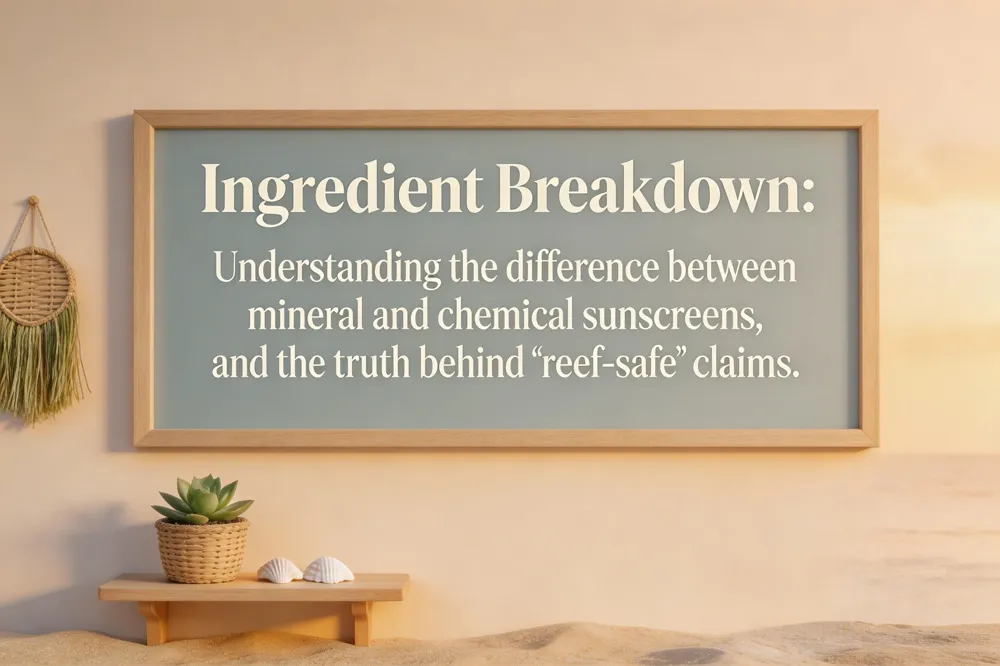
4. Decode the Ingredients: Mineral vs. Chemical & What 'Reef-Safe' Really Means
Is mineral or chemical sunscreen better for sensitive skin?
For sensitive skin, mineral sunscreen is generally the better choice. Its active ingredients, zinc oxide and titanium dioxide, sit on the skin's surface to physically block UV rays, which is less likely to cause stinging or irritation. Chemical sunscreens absorb UV rays and convert them to heat, a process that can trigger redness or allergic reactions in reactive skin types. Mineral formulas also work immediately upon application and are often recommended for conditions like rosacea, eczema, or post-procedure care. When selecting a mineral sunscreen, look for non-comedogenic, broad-spectrum options to ensure gentle, effective protection.
How Mineral and Chemical Sunscreens Work Differently
Understanding the mechanism of action helps clarify the choice. Mineral sunscreens, also called physical sunscreens, contain active ingredients like zinc oxide and titanium dioxide. They form a protective layer on the skin that reflects and scatters harmful UVA and UVB rays away from the skin's surface. This physical barrier provides protection as soon as it is applied. In contrast, chemical sunscreens use ingredients such as avobenzone, octinoxate, octisalate, and oxybenzone. These compounds absorb into the skin, where they capture UV radiation and convert it into a small amount of heat, which is then released. This chemical reaction requires about 15 to 20 minutes to become fully effective after application.
Navigating Safety and Regulatory Perspectives
Patient concerns about ingredient safety are common. The U.S. Food and Drug Administration (FDA) has classified zinc oxide and titanium dioxide as Generally Recognized As Safe and Effective (GRASE). These mineral filters are inert, meaning they are unlikely to cause skin reactions or be absorbed into the bloodstream in significant amounts. For chemical filters, the FDA has requested additional safety data from manufacturers. It is important to note that leading dermatological organizations, including the American Academy of Dermatology, emphasize that the proven benefits of sunscreen in preventing skin cancer and premature aging far outweigh any potential risks from absorption. No strong evidence links the approved use of these chemical filters to adverse health effects in humans.
The Reality Behind 'Reef-Safe' and Other Marketing Terms
You may see sunscreens labeled as 'reef-safe' or 'reef-friendly.' This is primarily a marketing term, not a regulated standard. It typically indicates the formula avoids specific chemical filters—namely oxybenzone and octinoxate—which some research suggests may contribute to coral bleaching when washed off in ocean water. Mineral sunscreens with non-nanotized zinc oxide or titanium dioxide are generally considered a more environmentally conscious choice for aquatic activities. Be cautious of other unregulated claims on labels. Terms like 'natural,' 'organic,' 'clean,' and 'non-toxic' are not defined or enforced by the FDA for sunscreens. A product labeled 'natural' might still contain synthetic ingredients, and 'organic' refers to carbon-based chemistry, not necessarily superior safety or efficacy.
Choosing Based on Skin Type and Lifestyle
Your skin type and daily activities should guide your final selection. Beyond sensitive skin, mineral sunscreens are often recommended for children, during pregnancy, and for those with acne-prone skin using strong treatments like retinoids, which increase photosensitivity. A common drawback of traditional mineral formulas is a visible white cast, which can be unappealing on deeper skin tones. Modern options include tinted mineral sunscreens that blend better and provide additional protection against visible light, which can worsen hyperpigmentation. Chemical sunscreens tend to have lighter, more cosmetically elegant textures that absorb quickly without a residue, making them a preferred choice for daily wear under makeup or for active use. However, those with oily skin should seek oil-free, non-comedogenic chemical formulas to avoid clogged pores.
| Feature | Mineral (Physical) Sunscreen | Chemical Sunscreen |
|---|---|---|
| Active Ingredients | Zinc Oxide, Titanium Dioxide | Avobenzone, Oxybenzone, Octinoxate, etc. |
| Mechanism | Sits on skin, reflects/scatters UV rays | Absorbs into skin, converts UV rays to heat |
| Time to Effectiveness | Immediate upon application | Requires 15-20 minutes after application |
| Best For | Sensitive skin, children, pregnancy, reactive conditions | Daily wear, active lifestyles, seeking invisible finish |
| Potential Drawbacks | Can leave a white cast, may feel heavier | May cause irritation, requires absorption time |
| FDA Safety Status | GRASE (Generally Recognized As Safe and Effective) | Under ongoing review for additional safety data |
| Common in 'Reef-Safe' Claims | Typically yes, especially non-nanotized formulas | Only if free of oxybenzone & octinoxate |
Key Ingredient and Label Insights at a Glance
| Ingredient / Term | What It Means | What to Consider |
|---|---|---|
| Zinc Oxide | Mineral filter; offers broad-spectrum UVA/UVB protection. | Ideal for sensitive skin; look for non-nano for reef concerns. |
| Titanium Dioxide | Mineral filter; strong UVB, some UVA protection. | Often paired with zinc; may leave less white cast. |
| Avobenzone | Chemical filter; stabilizes UVA protection. | Can be unstable alone; often combined with other filters. |
| Oxybenzone | Chemical filter; offers broad-spectrum protection. | Common irritant; often avoided in 'reef-safe' formulas. |
| Broad-Spectrum | Protects against both UVA (aging) & UVB (burning) rays. | A non-negotiable label claim for complete protection. |
| Non-Comedogenic | Formulated not to clog pores. | Crucial for acne-prone or oily skin types. |
| Fragrance-Free | No added scent or masking fragrance. | Important for sensitive skin to minimize irritation risk. |
5. Prioritize 'Cosmetic Elegance': Find a Formula You'll Love to Wear Daily
The Golden Rule of Sun Protection
The single most important factor in choosing an effective sunscreen isn't the SPF number or even the ingredient list—it's your willingness to wear it daily. Dermatologists universally agree: The best sunscreen is the one you will use consistently. Skin cancer prevention and protection against premature aging rely entirely on daily application, regardless of the weather. Choosing a product that feels comfortable, fits your budget, and integrates smoothly into your lifestyle is the most crucial step. A perfect ingredient profile is meaningless if the sunscreen sits unused in your cabinet.
What Does 'Cosmetic Elegance' Really Mean?
Cosmetic elegance refers to the sensory and aesthetic qualities that make a sunscreen enjoyable and easy to wear every day. A product with good cosmetic elegance doesn't feel greasy, heavy, or sticky. Key features to look for include a pleasant texture that absorbs well, a finish (matte, dewy, or natural) that suits your skin type, and a formula that doesn't leave a noticeable white or gray cast, which is especially important for individuals with darker skin tones. A sunscreen that wears beautifully under makeup encourages daily use, as you don't have to choose between protection and your regular beauty routine.
Explore Different Formats for Different Needs
Modern sunscreens come in a variety of formats, each offering unique benefits for daily life.
- Lotions and Creams: Ideal for the initial, full-coverage application. Lotions often provide easier spreadability, while creams can offer extra hydration for dry skin.
- Sticks: Excellent for easy, portable reapplication, especially on small areas like the ears, around the eyes, and the back of the neck. They are also travel-friendly.
- Tinted Mineral Sunscreens: A game-changer for those who find that pure mineral formulas (zinc oxide, titanium dioxide) leave an unflashing white cast. The tint helps the product blend seamlessly into the skin. Additionally, the [iron oxide in many tinted sunscreens provides protection against visible light, which can worsen hyperpigmentation conditions like melasma](. /choosing-sunscreens-how-to-match-spf-with-your-skins-needs#choosing-the-right-sunscreen-for-your-skin-type).
- Gels and Lightweight Fluids: Often preferred for oily or acne-prone skin types, as they tend to be non-greasy and absorb quickly.
Seek Out Added Skin Benefits
Many modern sunscreens are multi-tasking powerhouses, making it easier to combine sun protection with your other skincare goals. Look for formulas enriched with beneficial ingredients that address your specific concerns.
- For Acne-Prone or Oily Skin: Niacinamide (Vitamin B3) can help soothe inflammation, reduce excess oil, and improve the appearance of pores.
- For Dry or Mature Skin: Hyaluronic acid draws in moisture, while ceramides help reinforce the skin's natural barrier, locking in hydration and improving skin resilience.
- For Anti-Aging: Antioxidants like Vitamin C and peptides can help neutralize free radicals and support collagen production, boosting the product's anti-aging properties.
Test Before You Commit
If you have sensitive, reactive, or allergy-prone skin, it's wise to test a new sunscreen on a small, discreet patch of skin (like the inside of your forearm or behind your ear) for a few days before applying it to your entire face. This can help you identify any potential for irritation or allergic reaction before it becomes a widespread issue. This step is particularly important if you are trying a new brand or switching between chemical and mineral formulas.
What Sunscreen Products Do Dermatologists Commonly Recommend?
Dermatologists commonly recommend sunscreens that offer broad-spectrum protection (guarding against both UVA and UVB rays) with an SPF of 30 or higher, and they emphasize choosing a product that suits your skin type and lifestyle for consistent use. For daily facial wear, brands like EltaMD (especially UV Clear for acne or rosacea-prone skin, which contains niacinamide), La Roche-Posay Anthelios, and CeraVe are frequently recommended for their effective and cosmetically elegant formulas. For sensitive skin or those preferring mineral-based options, products with zinc oxide and titanium dioxide, such as Vanicream Facial Moisturizer SPF, Blue Lizard Sensitive Mineral, or Neutrogena’s mineral lines, are top choices. Dermatologist-backed lists also consistently include Neutrogena for reliable, accessible body sunscreens and ISDIN Eryfotona for its antioxidant benefits. Ultimately, the best sunscreen is one you’ll wear every day, so look for features like water resistance for activities and non-comedogenic labels if you have oily or acne-prone skin.
A Guide to Sunscreen Features by Skin Goal
| Skin Type / Concern | Key Formula Feature | Desired Finish | Product Format Suggestions |
|---|---|---|---|
| Oily / Acne-Prone | Non-Comedogenic, Oil-Free | Matte, Non-Greasy | Gels, Lightweight Fluids, Mattifying Lotions |
| Dry / Mature | Hydrating with Ceramides, HA | Dewy, Nourishing | Creams, Lotions with Moisturizers |
| Sensitive | Mineral (Zinc/Titanium), Fragrance-Free | Gentle, Non-Irritating | Creams, Tinted Minerals to Avoid Cast |
| Darker Skin Tones | Tinted, No White Cast | Seamless Blend, Natural | Tinted Mineral Lotions, Lightweight Fluids |
| For Use Under Makeup | Fast-Absorbing, Smooth Texture | Natural, Non-Pilling | Light Lotions, Serum-Type Formulas |
6. Master Application & Reapplication: The Habits That Make Protection Last
What is the 3-finger rule for sunscreen application?
The 3-finger rule is a simple, visual guide to ensure you apply enough sunscreen to your face, neck, and ears. It directs you to squeeze two generous, unbroken lines of product along the length of your index and middle fingers. This approximates the recommended half-teaspoon needed for adequate facial coverage. This specific volume is crucial because it aims to achieve the laboratory standard of 2 milligrams of sunscreen per square centimeter of skin. Without this amount, you will not receive the full SPF protection stated on the bottle. If you have a larger face, you may need a bit more, but this rule is an excellent starting point to combat the widespread problem of under-application.
Detail proper technique: Apply 15-30 minutes before sun exposure to allow formation of a protective film (especially for chemical sunscreens).
For sunscreen to work effectively, timing matters. Apply your sunscreen 15 to 30 minutes before you go outdoors. This buffer period is especially important for chemical sunscreens. The active ingredients need time to fully absorb into the top layers of your skin to properly filter ultraviolet rays. Mineral sunscreens, which sit on the skin's surface to physically block rays, are effective immediately upon application. However, the pre-application window ensures you are protected from the moment you step into the sun and helps prevent missing spots in a rushed, last-minute application.
Introduce the '3-Finger Rule' for the face/neck: squeeze two generous lines of product along your index and middle fingers to ensure adequate amount (~1/2 teaspoon).
We have already explained the 3-finger rule. Remember, this is a guideline for the face, neck, and ears. For your entire body, a full ounce—roughly the amount that would fill a shot glass—is the standard. Most people use far less, which dramatically reduces their level of protection. Using the correct amount is non-negotiable for the product to perform as intended.
Stress the non-negotiable reapplication schedule: Every 2 hours when outdoors, and immediately after swimming, sweating heavily, or towel drying, regardless of the water resistance claim (40 or 80 mins).
Sunscreen is not a one-time application. Its effectiveness diminishes over time due to sun exposure, skin oils, and physical activity. You must reapply sunscreen every two hours when you are outside. This rule is absolute. Water resistance claims are not a substitute for reapplication. If a label says 'water resistant for 40 or 80 minutes,' that indicates how long it may stay on during swimming or sweating. You must reapply immediately after toweling off, swimming, or heavy sweating, even if the 80 minutes have not passed. No sunscreen is waterproof or sweatproof.
List commonly missed spots: ears, back of neck, hairline, tops of feet, and lips (use SPF balm).
Consistent protection requires covering all exposed skin. Several areas are frequently overlooked, leading to sun damage. Be meticulous and apply sunscreen to:
- Your ears (front, back, and lobes)
- The back of your neck and along your hairline
- The tops of your feet and hands
- Your lips (use a dedicated lip balm with SPF 30 or higher)
- Any part in your hair or along your scalp if your hair is thin or you are bald A quick, systematic check of these zones during application ensures no area is left vulnerable.
Warn against relying solely on makeup or moisturizer with SPF, as they are typically not applied thickly or broadly enough.
While convenient, makeup or daily moisturizers that contain SPF are insufficient as your sole sun protection. To achieve the labeled SPF, you would need to apply them in the same thickness as a dedicated sunscreen—about half a teaspoon for the face. Most people apply a fraction of that amount for cosmetic reasons. Furthermore, these products often do not provide broad-spectrum coverage or may lack water resistance. It is best to apply a proper sunscreen first, then layer your makeup or moisturizer on top if desired.
Advise checking expiration dates and storing sunscreen away from extreme heat to maintain efficacy.
Sunscreen has a finite shelf life. Active ingredients degrade over time, rendering the product less effective. The U.S. Food and Drug Administration (FDA) requires that sunscreens maintain their original strength for at least three years. Always check for an expiration date. If there is none, write the purchase date on the bottle and discard it after three years. Also, store sunscreen in a cool, dry place. Leaving it in a hot car, a beach bag in direct sun, or a steamy bathroom can accelerate its breakdown. If the product's color or consistency changes, it is time to replace it.
| Habit | Why It's Critical | Common Mistake to Avoid |
|---|---|---|
| Apply 15-30 min before sun | Allows full absorption for chemical filters; ensures no missed spots. | Applying right before going outside, leaving skin unprotected initially. |
| Use the 3-Finger Rule (face) | Delivers the 2 mg/sq cm density needed to achieve the stated SPF. | Using a pea-sized amount, which provides only a fraction of the protection. |
| Reapply every 2 hours | Sunscreen breaks down with UV exposure and wears off. | Assuming one morning application lasts all day. |
| Reapply after water/sweat | Water resistance is temporary; towel-drying removes product. | Trusting an '80-minute' claim and not reapplying after swimming. |
| Cover missed spots (ears, lips) | These areas receive significant sun exposure and are prone to skin cancer. | Focusing only on cheeks and forehead. |
| Use dedicated sunscreen, not makeup SPF | Dedicated formulas are designed for proper protection thickness. | Using a tinted moisturizer with SPF 15 as the only defense. |
| Check expiration & store properly | Degraded sunscreen offers inadequate protection, increasing burn risk. | Using the same bottle for multiple seasons without checking the date. |
A Special Note for High-Risk Individuals and Families
A Special Note for High-Risk Individuals and Families
If you have a history of skin cancer, precancerous lesions (like actinic keratosis), or are undergoing treatments that increase photosensitivity—such as Accutane (isotretinoin), doxycycline, or topical tretinoin—your approach to sun protection must be unwavering. For you and your family, consistent and rigorous sun safety is the most effective strategy to prevent recurrence and safeguard your skin’s health.
What is the best sunscreen for someone with a history of skin cancer?
For individuals with a history of skin cancer, dermatologists consistently recommend a broad-spectrum sunscreen for UVA and UVB protection, water-resistant sunscreen for 40 or 80 minutes that is a mineral (physical) sunscreen with an SPF of 30 to 50. Prioritize products where zinc oxide and titanium dioxide are listed as the active ingredients. These mineral filters sit on the skin’s surface, physically blocking and reflecting harmful UVA and UVB rays. They are generally well-tolerated, less likely to cause irritation, and provide stable, immediate protection upon application.
Beyond the SPF number, the formulation you choose should fit comfortably into your daily life. Whether you prefer a lightweight lotion, a non-greasy gel, or a convenient stick, the key is selecting a product you will use generously and consistently. Apply about one ounce (a shot glass full) to cover your entire body, and a nickel-sized amount for your face and neck. Reapply this amount every two hours when outdoors, and immediately after swimming, sweating, or towel-drying.
Building a Fortified Daily Defense Routine
Daily, year-round sunscreen application is non-negotiable, even for brief exposures like commuting, walking the dog, or sitting near a window. Up to 80% of the sun’s ultraviolet rays can penetrate clouds and glass, causing cumulative damage. Making sunscreen the final step in your morning skincare routine ensures it becomes a seamless, unskippable habit.
To further vet your choices, look for products bearing The Skin Cancer Foundation’s Seal of Recommendation. This seal indicates the product has been reviewed by independent experts and meets specific criteria for safety and efficacy. It can serve as a helpful guide when navigating shelves filled with options.
Sunscreen is One Part of a Comprehensive Strategy
While a high-quality sunscreen is essential for skin cancer prevention, it is only one component of a comprehensive sun protection plan. A comprehensive strategy significantly reduces your risk. This multi-pronged approach should include seeking shade—especially during peak sun intensity from 10 a.m. to 4 p.m.—and wearing protective clothing.
Invest in clothing with an Ultraviolet Protection Factor (UPF) rating, wide-brimmed hats that shade your face, ears, and neck, and wraparound sunglasses that block 100% of UVA and UVB rays. These physical barriers often provide more reliable and longer-lasting protection than sunscreen alone.
Most importantly, maintain a schedule of regular, full-body skin examinations with a board-certified dermatologist. These professional checks are vital for early detection of any new or changing spots, allowing for prompt intervention if needed.
| Consideration for High-Risk Individuals | Key Action | Rationale & Benefit |
|---|---|---|
| Sunscreen Type | Use broad-spectrum mineral sunscreen (SPF 30-50) | Zinc oxide/titanium dioxide are gentle, effective, and provide immediate physical barrier. |
| Application Habit | Apply daily, year-round; reapply every 2 hours | UV rays penetrate clouds/windows; protection degrades with time and activity. |
| Additional Verification | Look for Skin Cancer Foundation Seal of Recommendation | Identifies products vetted for safety and efficacy by independent experts. |
| Protective Clothing | Wear UPF-rated clothing, wide-brim hats, UV-blocking sunglasses | Provides consistent, physical barrier that doesn’t wash or sweat off. |
| Professional Care | Schedule annual skin checks with a dermatologist | Enables early detection and management of any precancerous or cancerous changes. |
Beyond the Bottle: Your Complete Guide to Sun-Smart Habits
Integrate Sun Protection into Your Everyday Routine
Sun protection is not just a summer concern or a beach-day accessory; it's a fundamental aspect of daily skincare for everyone. Effective sun safety combines smart product choices with consistent, proactive habits.
Building a Comprehensive Defense Strategy
Your first line of defense should be protective clothing. Wearing a broad-brimmed hat, UV-blocking sunglasses, and tightly woven, long-sleeved shirts and pants offers superior and reliable protection that sunscreen cannot match. When possible, seek shade, especially during the sun's peak intensity between 10 a.m. and 4 p.m., as this reduces direct exposure significantly.
Make Sunscreen Your Daily Essential
Sunscreen acts as a crucial supplement to cover skin that clothing cannot. For it to be effective, it must be used correctly every single day.
- Apply Generously and Early: Use about one ounce—enough to fill a standard shot glass—to cover an adult's body. For your face and neck, aim for a nickel-sized dollop. Apply sunscreen at least 15 minutes before heading outdoors to allow it to bind properly to your skin.
- Reapply Without Exception: Sunscreen effectiveness diminishes over time and with activity. Reapply every two hours, and immediately after swimming, sweating heavily, or towel-drying. No sunscreen is truly waterproof, only water-resistant for 40 or 80 minutes as stated on the label.
Understanding Your Product's Role
Modern sunscreens are formulated to be more than just a protective layer. They can address specific skin concerns, making them a pleasure to use daily.
| Skin Type | Primary Goal | Key Ingredients to Look For | Formulations to Consider |
|---|---|---|---|
| Oily / Acne-Prone | Control shine, avoid clogged pores. | Oil-free, non-comedogenic, niacinamide. | Gels, lightweight fluids, matte finishes. |
| Dry | Provide deep hydration alongside protection. | Ceramides, hyaluronic acid, glycerin. | Creams, moisturizing lotions. |
| Sensitive | Minimize potential for irritation. | Zinc oxide, titanium dioxide (mineral filters). | Fragrance-free, hypoallergenic formulas. |
| Mature | Support anti-aging and skin repair. | Antioxidants (Vitamins C & E), peptides. | Tinted options, hydrating serums with SPF. |
| Darker Skin Tones | Ensure protection without a white cast. | Iron oxide (in tinted sunscreens). | Tinted mineral or chemical blends. |
Navigating Common Sun Safety Myths
Believing in sunscreen myths can leave your skin vulnerable. Let's clarify the facts:
- Myth: "I don't need sunscreen on cloudy or cold days."<br>Fact: Up to 80% of the sun's UV rays can penetrate clouds, fog, and even glass, causing cumulative damage year-round.
- Myth: "My makeup or moisturizer with SPF is enough protection."<br>Fact: Most people do not apply nearly enough foundation or moisturizer to achieve the SPF level on the label. A dedicated sunscreen is necessary.
- Myth: "People with darker skin tones don't need sunscreen."<br>Fact: While melanin offers some natural protection, it is not sufficient to prevent sun damage, hyperpigmentation, or skin cancer.
- Myth: "A 'base tan' will protect me from getting burned."<br>Fact: A tan is a visible sign of skin cell damage from UV radiation. It provides minimal SPF and increases your long-term risk.
Personalizing Your Protection Plan
General advice is a great starting point, but your skin is unique. Factors like your medical history (including certain acne treatments that increase photosensitivity), lifestyle, and even our local Glenview climate—with its humid summers and dry, cold winters—play a role in determining your ideal sun protection strategy.
Your Action Plan for Lifelong Skin Health
Consistent, proper sunscreen use is one of the most powerful actions you can take for your skin's long-term health and appearance. Remember, it is the cornerstone of a complete strategy that includes seeking shade, wearing protective clothing, and avoiding peak sun hours.
For truly personalized guidance, we encourage you to book a consultation with a dermatologist at On The Spot Dermatology. Our experts can provide tailored advice for your unique skin concerns, helping you select products and build habits that fit seamlessly into your life, ensuring your skin stays healthy and protected in every season.