Introduction
Your skin’s needs shift with the seasons—dry winter air, humid summer heat, and the transitional periods of spring and fall each pose unique challenges. Core protection revolves around three pillars: barrier‑supporting moisturizers, broad‑spectrum SPF, and physical defenses such as gloves, hats, and UPF clothing. Maintaining these habits consistently, year‑round preserves barrier integrity, reduces cumulative UV damage, and supports the effectiveness of advanced dermatologic treatments, ultimately keeping your complexion resilient and healthy.
Seasonal Foundations: Sun Protection & UV Awareness
Quick UV‑Protection Checklist
| Action | Details |
|---|---|
| Sunscreen | Broad‑spectrum SPF 30+ applied 15 min before exposure; reapply 2 h or after swimming/sweating/towel‑drying |
| Eyes | Wrap‑around sunglasses blocking 100 % UVA/UVB (impact‑resistant polycarbonate) |
| Head | Wide‑brimmed hat for extra shading |
| Clothing | Tightly woven, dark‑colored UPF 50+ garments when sunscreen impractical |
| Shade | Seek shade during peak UV (10 a.m.–4 p.m.) |
| Antioxidants | Moisturizer with vitamins C, E or green‑tea extract to neutralize free radicals |
| Daily habit | Apply even on cloudy days for year‑round barrier |
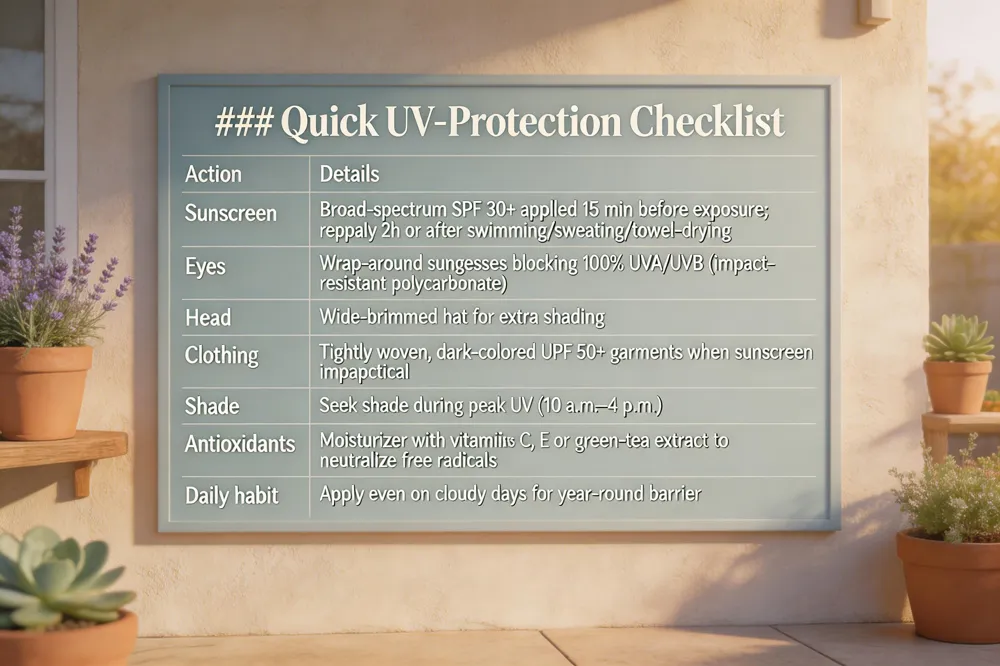 UV protection for skin means using a layered defense that blocks or limits exposure to UVA and UVB rays, which cause sunburn, premature aging, and skin cancer. Apply a broad‑spectrum sunscreen with SPF 30 or higher at least 15 minutes before going outdoors and reapply every two hours, or sooner after swimming, sweating, or towel‑drying. For the eyes, choose wrap‑around sunglasses that block 100 % of UVA and UVB rays, preferably with impact‑resistant polycarbonate lenses, and pair them with a wide‑brimmed hat for extra shielding. When sunscreen isn’t practical, wear tightly woven, dark‑colored clothing rated UPF 50 or higher, cover as much skin as possible, and seek shade during peak UV hours (10 a.m.–4 p.m.). Antioxidant‑rich moisturizers containing vitamins C, E, or green‑tea extract can help neutralize any residual UV‑induced free radicals. Consistent daily use of these measures, even on cloudy days creates a comprehensive, year‑round barrier that protects both skin and eyes from cumulative UV damage.
Winter Skin Barrier Maintenance
Winter Skin‑Care Essentials
| Step | Recommendation |
|---|---|
| Cleanser | Fragrance‑free, gentle, pH‑balanced cleanser |
| Moisturizer | Rich ceramide‑ or petrolatum‑based cream/ointment applied while skin is damp |
| Humidity | Indoor humidifier set to 40‑60 % RH (≈68 °F/20 °C) |
| Sunscreen | Broad‑spectrum SPF 30+ daily, even indoors or on cloudy days |
| Lips | SPF‑rated lip balm |
| Showers | 5‑10 min, lukewarm water; pat dry, seal moisture quickly |
| Natural hydration | Drink water, eat omega‑3 foods, use occlusive agents (shea butter, coconut oil, Vaseline) at night |
| Protection | Gloves, scarves, hats to shield from wind and cold |
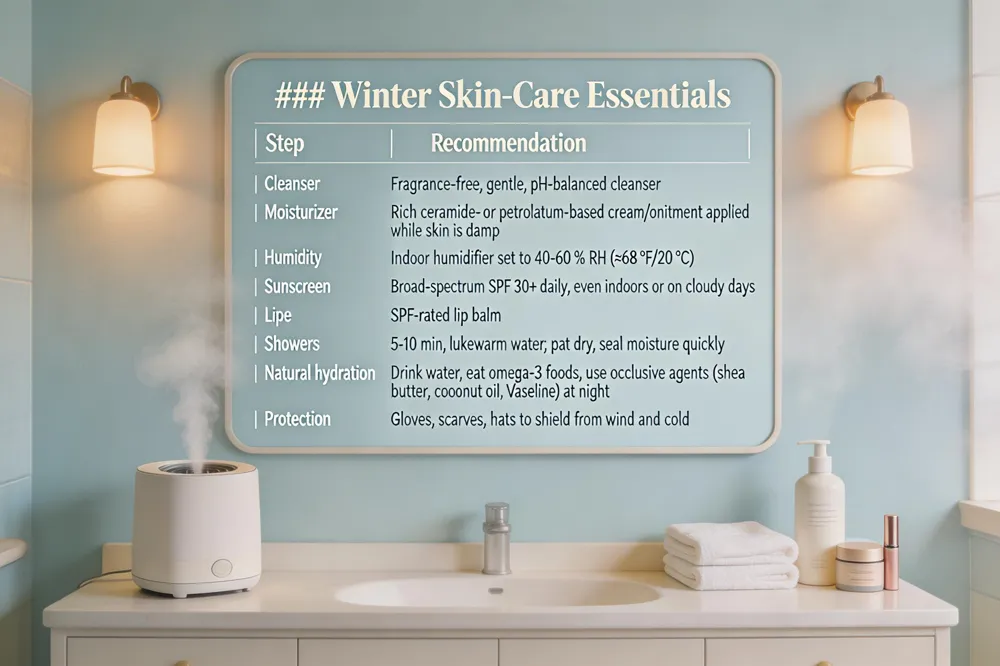 Winter skin care tips by dermatologists: Use a fragrance‑free, gentle cleanser and follow immediately with a rich, ceramide‑ or petrolatum‑based moisturizer while skin is still damp. Choose creams or ointments over lightweight lotions, especially for hands, feet and very dry areas. A home humidifier set to 40‑60 % humidity counteracts indoor heating and reduces transepidermal water loss. Apply broad‑spectrum SPF 30+ sunscreen daily, even on cloudy days, and protect lips with an SPF‑rated balm. Limit showers to 5‑10 minutes with lukewarm water; pat dry and seal moisture quickly.
How to avoid dry skin naturally: Drink plenty of water, eat omega‑3‑rich foods, and keep indoor air moist. Use occlusive agents such as shea butter, coconut oil, or Vaseline “slugging” at night to lock in hydration. Wear gloves, scarves and hats to shield skin from wind and cold.
Winter skin problems and solutions: Dryness, flakiness and irritation can aggravate eczema, psoriasis or rosacea. Restore barrier function with ceramide‑rich moisturizers, avoid harsh soaps, and consider prescription barrier‑repair creams under dermatologist guidance.
Summer Defense Strategies
Summer UV‑Defense Routine
| Action | Details |
|---|---|
| Sunscreen | Broad‑spectrum SPF 30+ applied 15 min before outdoors; reapply every 2 h or after water/sweat |
| Formula | Water‑resistant for active days |
| Clothing | UPF‑rated, tightly woven long‑sleeve shirts, wide‑brimmed hat, UV‑blocking sunglasses |
| Shade | Stay under shade, especially 10 a.m.–4 p.m. |
| Cleanser | Gentle, fragrance‑free cleanser |
| Moisturizer | Lightweight gel/cream with ceramides, glycerin, or hyaluronic acid |
| Hydration | Drink plenty of water; fruit/veg‑rich diet |
| Monitoring | Regular self‑exams and annual dermatologist visits |
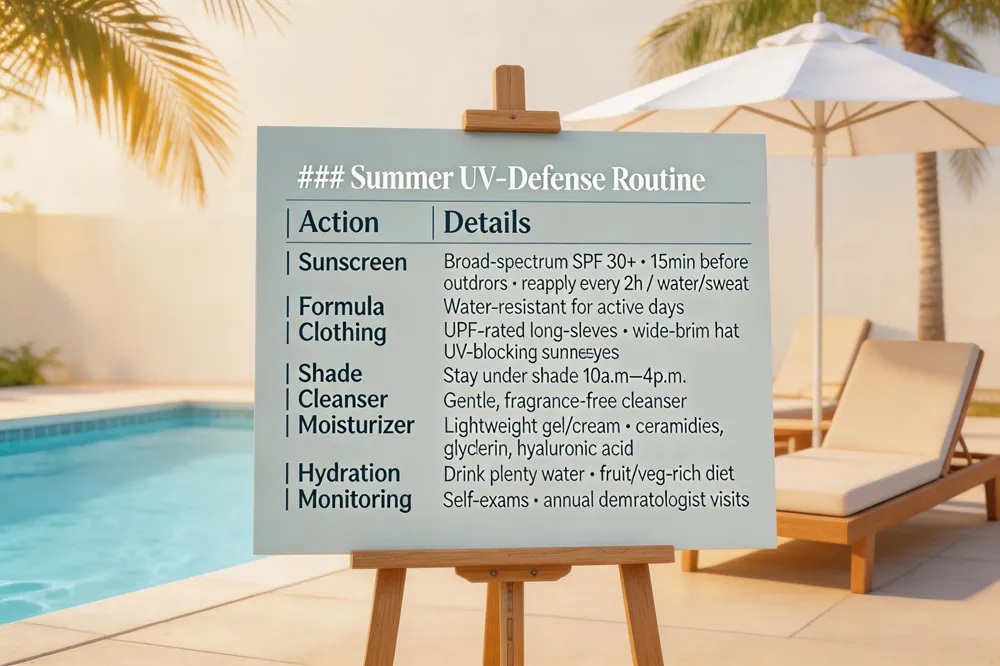 Protecting your skin in summer starts with diligent UV defense. Apply a broad‑spectrum sunscreen with SPF 30 or higher to every exposed area least 15 minutes before heading outdoors and reapply every two hours—or sooner after swimming, sweating, or toweling. Choose water‑resistant formulas for active days. Complement sunscreen with protective clothing: a wide‑brimmed hat, UV‑blocking sunglasses, and a tightly woven long‑sleeved shirts or UPF‑rated garments. Seek shade whenever possible, especially between 10 a.m. and 4 p.m., when UV intensity peaks; remember clouds do not block UV rays. Keep the skin barrier strong by using a gentle, fragrance‑free cleanser and a lightweight moisturizer containing barrier‑supporting ingredients such as ceramides, glycerin, or hyaluronic acid. Stay well‑hydrated and support skin from within with a diet rich in fruits, vegetables, and water. Regular self‑examinations and annual dermatologist visits are essential for early detection of sun‑related changes. Together, these steps—sunscreen, re‑application, protective apparel, shade, and antioxidant‑rich moisturizers—provide a comprehensive summer skin‑care plan.
Lifestyle & Seasonal Adjustments
Seasonal Lifestyle Adjustments
| Season | Skincare Focus |
|---|---|
| Spring | Gentle exfoliation, lighter water‑based moisturizers |
| Summer | Oil‑free hydration, frequent sunscreen re‑application |
| Fall | Antioxidant serums, richer creams with hyaluronic acid & ceramides |
| Winter | Ceramide‑rich moisturizers, barrier‑repair cleansers, continued SPF |
| All seasons | Mediterranean diet (tomatoes, olive oil, nuts, fatty fish, red wine) for internal antioxidant support |
| Product rotation | Switch moisturizer weight with humidity changes |
| Ingredient transparency | 1 % rule for ingredient listing in US/EU cosmetics |
| Cold‑weather 3 P’s | People: limit outdoor time; Pets: keep indoors, fresh water; Plants: protect frost |
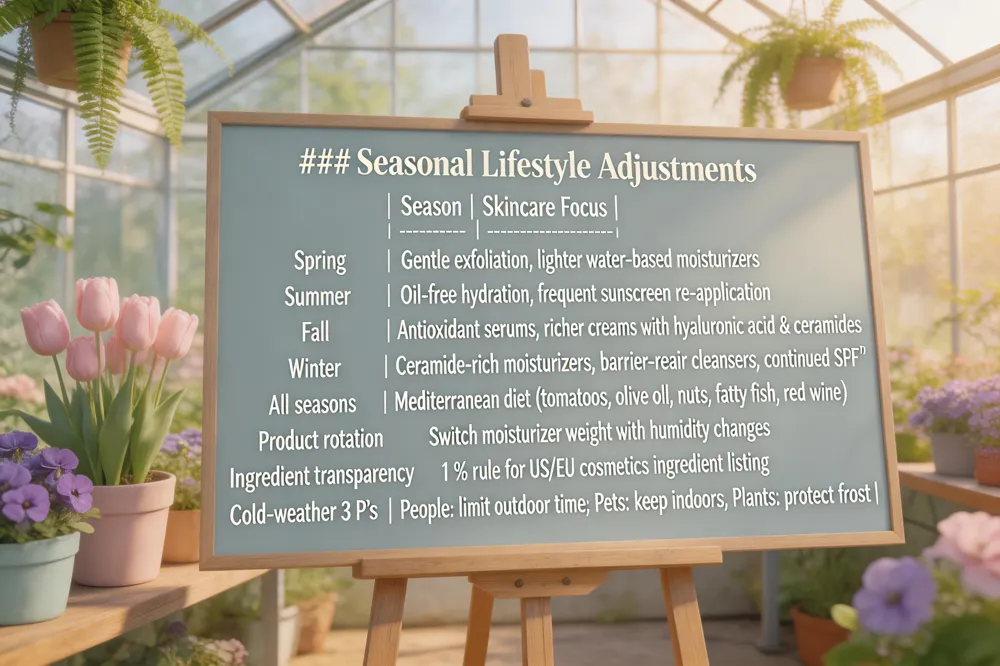 Mediterranean diet and clear skin – A diet rich in antioxidant‑packed tomatoes, olive oil, fresh vegetables, nuts, fatty fish and polyphenol‑laden red wine neutralizes free radicals and reduces inflammation, helping prevent breakouts and promote a radiant complexion from the inside out.
Seasonal product rotation – Switch to lighter, water‑based moisturizers and broad‑spectrum SPF 30+ in spring and summer, then transition back to richer, lipid‑rich creams with hyaluronic acid and ceramides in fall and winter to maintain barrier function as humidity drops.
Ingredient transparency (1 % rule) – In U.S. and EU cosmetics, any ingredient exceeding 1 % of the formula must appear in descending order; below that threshold manufacturers can list remaining components arbitrarily, allowing “good‑sounding” ingredients to be highlighted.
Cold‑weather 3 P’s – People: limit outdoor time, layer clothing, check vulnerable neighbors. Pets: keep indoors, provide fresh unfrozen water. Plants: protect frost by covering or moving potted specimens indoors.
Do you gotta change skincare during seasons? Yes; spring calls for gentle exfoliation and lighter moisturizers, summer for oil‑free hydration and frequent sunscreen re‑application, fall for antioxidant serums and richer creams, and winter for ceramide‑rich moisturizers, barrier‑repair cleansers and continued sunscreen use.
Targeted Skin Concerns & Treatments
Targeted Concerns & Treatment Tips
| Concern | Recommended Action |
|---|---|
| Winter barrier loss | SPF 30+ sunscreen each morning; fragrance‑free ceramide moisturizer on damp skin; occlusive petrolatum at night |
| Dry skin | pH‑balanced cleanser; hyaluronic‑acid serum + ceramide cream; petroleum jelly seal; gloves/scarf protection |
| Photo‑aging | Daily broad‑spectrum SPF 30+; protective clothing; antioxidant moisturizers |
| Skin cancer risk | SPF 30+ sunscreen, hats, UPF clothing, limit peak‑hour sun exposure |
| Rejuvenation | Laser resurfacing, blepharoplasty, fillers or fat transfer + diligent sun protection & antioxidants |
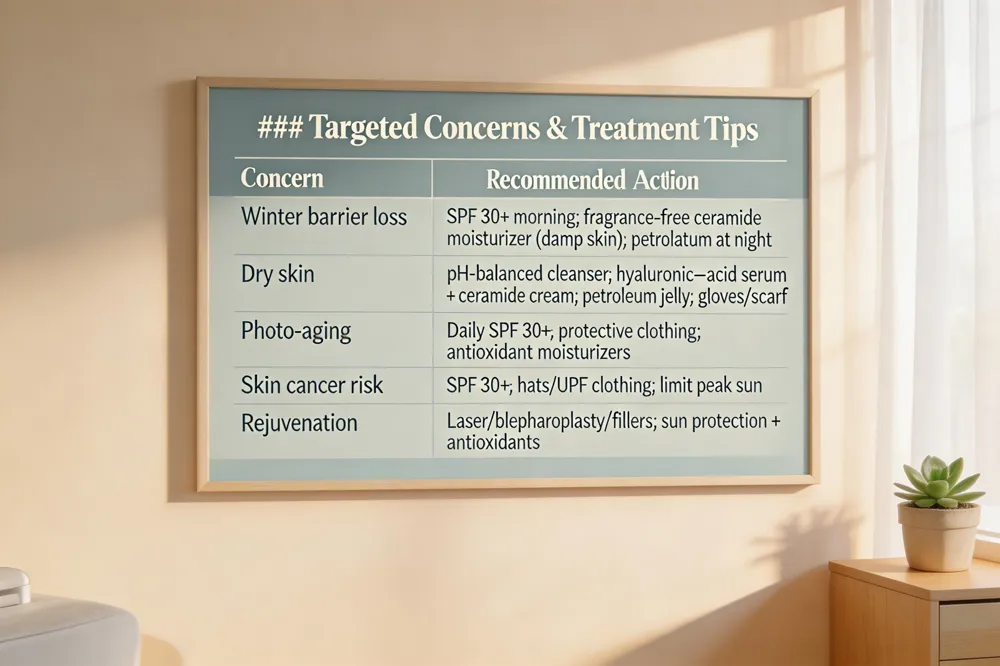 Winter can strip the facial barrier, so protect it by applying a broad‑spectrum SPF 30+ sunscreen each morning—even on cloudy days—to block UVA/UVB that penetrate clouds. While the skin is still damp, follow with a fragrance‑free, ceramide‑rich moisturizer or an occlusive ointment such as petrolatum, then seal the face with a soft, breathable scarf. Keep indoor humidity near 68 °F (20 °C) with a humidifier, limit showers to 5‑10 minutes of lukewarm water, and re‑apply sunscreen and moisturizer after sweating or wiping your face.
For dry winter skin, choose a gentle pH‑balanced cleanser, then layer a hyaluronic‑acid serum beneath a ceramide‑rich cream while the skin is damp. Add an occlusive layer of petroleum jelly at bedtime, wear gloves and a scarf outdoors, and avoid scented or alcohol‑based products.
Yes—up to 90 % of visible skin aging is photo‑induced. UV radiation degrades collagen and elastin, creates pigment irregularities, and accelerates wrinkles. Consistent broad‑spectrum SPF 30+ sunscreen use, protective clothing, and shade can dramatically reduce this effect.
More than 90 % of skin cancers arise from UV exposure. Sunlight and artificial sources such as tanning beds damage DNA, leading to basal cell, squamous cell, and melanoma cancers. Daily broad‑spectrum SPF 30+ sunscreen, clothing, hats, and limiting peak‑hour sun are essential preventive measures.
To take 20 years off your face, combine laser resurfacing for texture, blepharoplasty for eyelid laxity, and volume‑restoring fillers or facial fat transfer. Pair these procedures with diligent sun protection and antioxidant‑rich skincare for lasting, youthful results.
Additional Protective Measures & General Advice
General Protective Measures
| Measure | How to Implement |
|---|---|
| Sunscreen reapplication | Every 2 h outdoors; sooner after swimming, sweating, towel‑drying |
| Indoor humidity | Maintain ~68 °F (20 °C) and 30‑50 % RH with humidifier as needed |
| Hand & lip care | Gloves outdoors; SPF‑containing lip balm |
| Annual check‑up | Board‑certified dermatologist for skin cancer screening and personalized regimen |
| Windburn protection | Moisturize and cover exposed skin in windy conditions |
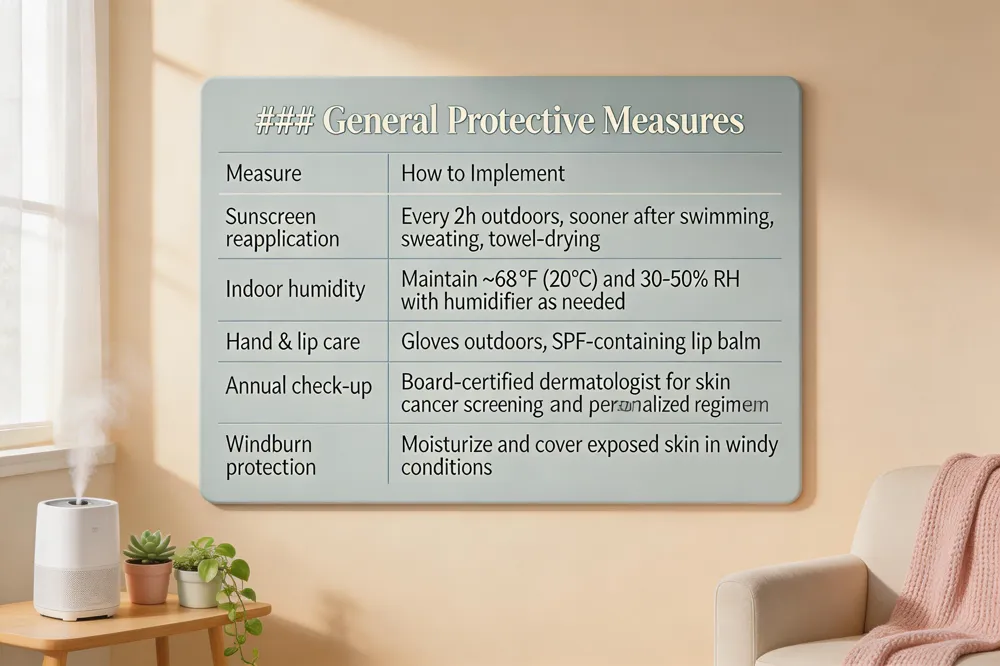 Sunscreen should be reapplied every two hours when outdoors, and more frequently after swimming, sweating, or towel‑drying, because its effectiveness wanes after about two hours. Maintaining indoor humidity around 68°F (20 °C) and 30‑50 % relative humidity—using a humidifier if needed—helps reduce transepidermal water loss, especially in heated winter environments. Protect hands and lips by wearing gloves outdoors and choosing balms that contain SPF; the thin skin of lips and hands is especially vulnerable to UV‑induced damage and windburn. Finally, schedule an annual skin examination with a board‑certified dermatologist: early detection of skin cancers, monitoring of chronic conditions, and personalized seasonal regimen recommendations are essential for long‑term skin health.
Conclusion
Year‑round consistency is the foundation of healthy skin: daily broad‑spectrum SPF, gentle cleansing, and appropriate moisturizers keep the barrier intact in every climate. At On The Spot Dermatology in Glenview, Illinois, clinicians tailor regimens to each patient’s skin type, seasonal challenges, and cosmetic goals, offering personalized medical and cosmetic treatments such as microneedling, BOTOX® and facial peels. Key takeaways: protect with sunscreen, adjust hydration and exfoliation to the season, and schedule regular dermatologist exams to maintain radiant, safe skin year‑round.