Introduction
Seasonal skincare matters because temperature, humidity, and UV intensity shift throughout the year, altering the skin’s barrier function, oil production, and moisture balance. In winter, low humidity and indoor heating increase transepidermal water loss, leading to dryness, itch, and barrier disruption; in summer, higher humidity and sweat boost sebum, raising the risk of clogged pores and sun‑induced damage. Consistent, year‑round sunscreen is the cornerstone of skin health—broad‑spectrum SPF 30+ protects against UVA and UVB rays even on cloudy or snowy days, preventing photo‑aging, hyperpigmentation, and skin cancer. Balancing hydration involves pairing lightweight, humectant serums (e.g., hyaluronic acid) with appropriate moisturizers: lighter gels or lotions in warm months, richer ceramide‑ or oil‑cream in cold months, and sealing in moisture immediately after cleansing. Tailoring these steps to each season helps maintain a resilient, radiant complexion and supports the effectiveness of both medical and cosmetic dermatology treatments.
Summer Essentials: Light, Hydrated, and Protected Skin
 During the hot months, a summer routine should prioritize gentle cleansing, limited exfoliation, lightweight hydration, sun protection, antioxidant support, oil control, and allergy‑friendly products. Use a mild, water‑based cleanser twice daily to remove sweat and sunscreen without stripping the skin barrier. Limit chemical exfoliation to 1–2 times per week with a low‑strength AHA (e.g., 5% glycolic or lactic acid) to keep pores clear while avoiding irritation on sun‑sensitive skin. Follow with a non‑comedogenic, oil‑free moisturizer containing hyaluronic acid or glycerin to lock in moisture without a greasy feel. Apply a broad‑spectrum SPF 30+ sunscreen each morning and reapply every two hours, especially after swimming or sweating. Incorporate a daily antioxidant serum—such as vitamin C—to neutralize UV‑induced free radicals and enhance glow. For oily skin, choose niacinamide‑rich cleansers and lightweight moisturizers reinforced with ceramides; these balance sebum production while preserving barrier integrity. Finally, select fragrance‑free, hypoallergenic formulations to reduce the risk of pollen‑related dermatitis and other seasonal allergies.
Best tips to get glowing skin in summer naturally
Start each day with a gentle facial cleanser—micellar water in the morning and an oil‑based cleanser at night—to remove sweat, oil, and sunscreen residue. Exfoliate 2–3 times a week with a mild chemical exfoliant (such as glycolic or lactic acid) to lift dead cells and reveal fresh, radiant skin. Keep your skin hydrated both inside and out by drinking plenty of water and eating water‑rich fruits, then seal in moisture with a lightweight, hyaluronic acid moisturizer. Apply a broad‑spectrum SPF 30+ sunscreen every morning and reapply every two hours, especially after swimming or sweating. Finally, boost your skin’s natural glow by consuming antioxidant‑rich foods like vitamin C-filled berries, leafy greens, avocado, and nuts.
Summer skin care routine for oily skin
Start your summer routine with a gentle, foaming cleanser—such as a niacinamide‑rich, non‑comedogenic gel—that removes excess oil without stripping the skin’s barrier. Follow with a lightweight, alcohol‑free toner containing niacinamide or antioxidants to balance sebum production and shrink pores. Apply a thin serum packed with niacinamide, hyaluronic acid, or prebiotics to keep the skin hydrated while controlling shine throughout the day. Choose a breathable, oil‑free moisturizer that reinforces the barrier with ceramides yet feels matte on the skin. Finish every morning with a broad‑spectrum SPF 30+ sunscreen to protect against UV‑induced damage without adding extra grease.
Skin care tips in summer at home
Stay hydrated by drinking plenty of water and eating water‑rich foods like watermelon and cucumber to keep your skin’s moisture from the inside out. Apply a broad‑spectrum SPF 30+ sunscreen each morning, even before you step outside, and reapply every two hours or after sweating or swimming. Switch to lightweight, oil‑free moisturizers and gentle, water‑based cleansers that won’t clog pores, and use a mild antioxidant serum—such as vitamin C—to protect against free‑radical damage. Exfoliate only 1‑2 times a week with a gentle chemical exfoliant to remove dead cells without irritating sun‑sensitive skin, and finish with an Aloe vera gel or after‑sun lotion to soothe any redness. Finally, stay cool by staying in the shade, using fans, and wearing protective clothing like wide‑brimmed hats and sunglasses to reduce heat‑related oil production and breakouts.
Top 10 skin care tips for summer
- Drink ample water and apply hyaluronic acid moisturizers.
- Use broad‑spectrum SPF 30+ sunscreen; reapply every 2 hours.
- Choose lightweight, oil‑free moisturizers and vitamin C serums.
- Cleanse gently twice daily.
- Exfoliate 2–3 times weekly with mild AHAs.
- Soothe post‑sun skin with aloe or after‑sun lotion.
- Wear protective clothing and wide‑brimmed hats.
- Eat a diet rich in fruits, vegetables, and omega‑3s.
- Stay cool in the shade to limit excess oil.
- Perform regular self‑checks and schedule dermatologist exams if new moles appear.
Beauty tips for summer
- Apply broad‑spectrum SPF 30+ 15–30 minutes before outdoor activity; reapply every two hours.
- Stay hydrated with water and a lightweight moisturizer containing hyaluronic acid.
- Keep routine simple: gentle cleanser twice daily, weekly mild exfoliation, soothing eye cream, and SPF lip balm.
- Perform routine mole checks; visit a dermatologist for a full‑body exam if you spend extensive time outdoors.
- Opt for breathable, tinted moisturizers or SPF‑infused makeup for a radiant yet breathable finish.
Summer care
Protect your skin from heightened UV exposure by applying broad‑spectrum SPF 30+ each morning and reapplying after swimming or sweating. Hydrate internally and with a non‑comedogenic, hyaluronic‑acid moisturizer. Wear wide‑brimmed hats, long‑sleeve shirts, and UV‑blocking sunglasses. Schedule a dermatologist check‑up for any new moles, persistent redness, or unusual changes to ensure early detection and treatment.
Science of Skincare: Ingredient Rules and Systemic Effects
 Seasonal skincare isn’t just about swapping moisturizers; understanding how ingredients work and how they affect the body is essential for optimal skin health.
What is the 1% rule in skincare? The 1 % rule, set by the International Nomenclature of Cosmetic Ingredients (INCI), requires manufacturers to list ingredients in descending order of concentration until the point where a component is present at 1 % or less. Below that threshold the remaining ingredients may be listed in any order because their percentages are too low to dominate the formula. This means that actives appearing later on the label can still be effective, while the first few ingredients (water, emulsifiers, thickeners) make up the bulk of the product.
What is the 3‑minute moisturizer rule? Dermatologists recommend applying a moisturizer within three minutes of stepping out of a shower while the skin is still damp. This timing helps lock in surface water, reduces transepidermal water loss, and supports the skin barrier. Although delayed application can still hydrate, the “3‑minute” window is the most practical way to ensure immediate barrier replenishment.
Can skincare affect the liver? Yes. Many topical chemicals are absorbed systemically and must be processed by the liver. Repeated exposure to potentially harmful ingredients—parabens, phthalates, heavy metals, and certain fragrances—can increase the liver’s detoxification workload, potentially contributing to metabolic stress or inflammation. Choosing fragrance‑free, paraben‑free products and limiting the number of active chemicals you apply each day can reduce this systemic burden, supporting both skin and liver health.
Seasonal Shifts: From Spring Renewal to Summer Allergies
 Spring: Gentle Exfoliation and Lighter Moisturizers
After winter dullness, a mild chemical exfoliant (5–10% glycolic or lactic acid) 1‑2 times per week removes dead cells and brightens the complexion. Pair this with a water‑based lotion or gel‑type moisturizer that supplies hyaluronic acid without clogging pores. Broad‑spectrum SPF 30+ should be reapplied daily to guard against rising UV exposure.
Spring: Gentle Exfoliation and Lighter Moisturizers
After winter dullness, a mild chemical exfoliant (5–10% glycolic or lactic acid) 1‑2 times per week removes dead cells and brightens the complexion. Pair this with a water‑based lotion or gel‑type moisturizer that supplies hyaluronic acid without clogging pores. Broad‑spectrum SPF 30+ should be reapplied daily to guard against rising UV exposure.
Summer: Allergy Triggers and Relief Strategies Heat, sweat, and sun amplify skin‑allergy flare‑ups such as hives, eczema, and contact dermatitis. Common culprits include pollen, mold, sun‑induced itching, insect bites, and plant irritants (e.g., poison‑oak). Stay cool, wear breathable fabrics, and apply a water‑resistant sunscreen every two hours. Use a fragrance‑free, oil‑free cleanser after sweating, followed by a lightweight moisturizer. Insect repellent, antihistamines, or prescription topical steroids can control itching; seek dermatologic care if the rash spreads, swells, or is accompanied by systemic symptoms.
Mediterranean Diet Influence on Clear Skin A Mediterranean diet rich in tomatoes, olive oil, fresh vegetables, nuts, fish, and modest red wine supplies antioxidants (vitamin C, polyphenols) and omega‑3 fatty acids that neutralize UV‑induced free radicals and reduce inflammation. Garlic’s antibacterial properties and olive oil’s occlusive fats support barrier health. Combined with consistent sunscreen use and occasional professional facials, these dietary habits promote a clear, radiant complexion year‑round.
FAQ
- Skin allergy during summer: Heat, sweat, and sun exposure trigger hives, eczema, and contact dermatitis. Keep cool, use breathable clothing, apply broad‑spectrum SPF, cleanse gently after sweating, and consider antihistamines or topical steroids as directed. Seek medical attention for worsening or systemic symptoms.
- Should you change your skincare seasonally?: Yes. Spring calls for gentle exfoliation, lighter moisturizers, and daily SPF; summer needs strong sunscreen, oil‑free hydration, and thorough cleansing; fall introduces antioxidant serums, richer moisturizers, and retinoids; winter requires a cream‑based cleanser, thick barrier‑building moisturizers, and continued sun protection.
- Why do Italians have such clear skin?: Their Mediterranean diet provides antioxidants, flavonoids, and omega‑3s that combat oxidative stress and inflammation. Topical uses of garlic and olive oil soothe breakouts, while regular sun protection and periodic spa facials further support a clear complexion.
Winter Defense: Deep Hydration and Barrier Repair
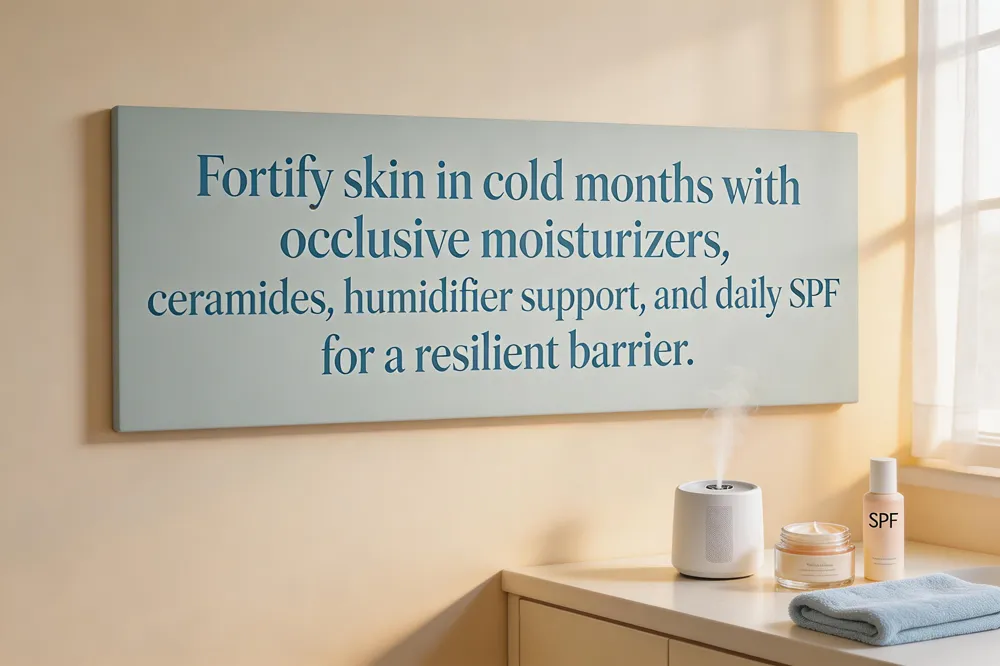 Cold, dry air and indoor heating increase transepidermal water loss, so winter skin needs richer, occlusive moisturizers, humidifier support, and diligent sunscreen use.
A dermatologist‑guided routine starts with a gentle, fragrance‑free cleanser that preserves the lipid barrier, followed by a hyaluronic‑acid serum to attract moisture.
Apply a thick cream or ointment containing ceramides, shea butter, or petrolatum while the skin is still damp to lock in water, then seal the barrier with a broad‑spectrum SPF 30+ sunscreen—even on cloudy days because snow reflects UV rays.
Humidifier the indoor humidity at 40‑60 % and wear soft gloves, scarves, and a wide‑brimmed hat to protect hands, lips, and exposed facial skin.
FAQ for
- How to treat dry skin in winter at home? Use a fragrance‑free, thick moisturizer or ointment (e.g., petroleum jelly, Eucerin) immediately after a short, lukewarm shower; keep showers ≤10 minutes, limit hot water, and use a humidifier. Protect hands and lips with gloves and SPF‑rated balms, and avoid harsh exfoliants and strong fragrances.
- Best skincare routine for dry skin in winter? Cleanse with a mild, non‑foaming cleanser → hyaluronic‑acid serum → ceramide‑rich cream moisturizer → SPF 30+ sunscreen. Add a facial oil at night if extra nourishment is needed.
- How to take care of skin in winter naturally? Apply natural oils (shea butter, jojoba) on damp skin, use glycerin‑based cleansers, limit hot showers, stay hydrated, wear protective clothing, and exfoliate gently once weekly with oatmeal or a sugar‑honey scrub.
- Winter skin care tips by dermatologists? Gentle cleansing, immediate post‑shower occlusive moisturization, indoor humidification, lip/hand protection, and daily broad‑spectrum sunscreen.
- What to use on skin during winter? Switch to richer creams/ointments with ceramides and hyaluronic acid, choose fragrance‑free cleansers, keep indoor humidity up, and continue SPF protection.
- Best moisturizer for face during winter? Products that blend occlusives (petrolatum, dimethicone) with humectants (hyaluronic acid](https://www.tru-skin.com/blog/seasonal-skin-care-tips-how-to-adjust-your-routine-throughout-the-year), glycerin) – e.g., Clinique Dramatically Different Moisturizing Cream or La Roche‑Posay Lipikar AP+.
- Best products for winter dry skin? La Roche‑Posay Toleriane Hydrating Cleanser, RoC Hydration+ Moisturizer, Eucerin Advanced Repair Creme, Aquaphor Lip Protectant + SPF 30, and Neutrogena Norwegian Formula Hand Cream.
These evidence‑based steps, personalized by a dermatologist such as those at The Spot Dermatology in Glenview, Illinois, keep the skin hydrated, protected, and radiant throughout the cold season.
Professional Guidance and Product Highlights
 At On The Spot Dermatology in Glenview, Illinois, each patient receives a personalized treatment plan that blends medical expertise with cosmetic dermatology to address individual skin types, seasonal challenges, and specific concerns such as acne, hyperpigmentation, or eczema. After an initial skin analysis, the dermatologist may recommend targeted procedures—brightening facials in spring, purifying peels in summer, advanced peels or microneedling in fall, and hydrating facials or nourishing masks in winter—while aligning home‑care products to seasonal needs.
Clinique skin care routine – Clinique follows a three‑step system that fits seamlessly into seasonal adjustments: 1) cleanse with All About Clean™ Liquid Facial Soap, 2) exfoliate lightly using Clarifying Lotion 1, and 3) moisturize with Dramatically Different Moisturizing Lotion+™. For added anti‑aging benefit, Smart Clinical Repair Wrinkle‑Correcting Serum can be applied after cleansing and before moisturizing, both morning and night. Consistent use supports a balanced, radiant complexion year‑round.
On The Spot Dermatology also offers customized product recommendations—ceramide‑rich moisturizers for winter barrier repair, hyaluronic‑acid serums for summer hydration, and antioxidant vitamin C serums for fall recovery—ensuring patients maintain optimal skin health through every season.
Everyday Lifestyle Practices for Skin Health
 Consistent daily habits are the backbone of a resilient skin barrier. Adequate hydration—aiming for 2.7 L for women and 3.7 L for men daily—supports the skin’s internal water balance, while a diet rich in antioxidant‑packed fruits, vegetables, omega‑3‑rich fish, flaxseed, and walnuts helps neutralize UV‑induced free radicals. Protective clothing such as wide‑brimmed hats, UPF‑rated shirts, and sunglasses reduces UV exposure, and broad‑spectrum SPF 30+ sunscreen should be applied every morning, even on cloudy days, and reapplied every two hours outdoors. Indoor humidity control is essential in winter; a humidifier set to 30‑50 % humidity prevents transepidermal water loss, preserving barrier lipids and reducing itch or eczema flares. Finally, regular skin monitoring—self‑exams for new moles, discoloration, or persistent rashes and annual dermatologist visits—enables early detection of dermatologic concerns and allows personalized adjustments to your seasonal skincare regimen.
Conclusion
Seasonal skincare is a dynamic process that matches product texture and routine to the climate’s impact on the skin barrier. In spring, gentle exfoliation and lighter moisturizers restore the dullness of winter; summer calls for broad‑spectrum SPF every two hours, oil‑free hydration, and thorough cleansing; fall emphasizes richer creams, antioxidant serums, and weekly exfoliation to repair sun damage; winter requires deep barrier repair with ceramide‑rich moisturizers, hyaluronic‑acid serums, and continued sunscreen despite cold, cloudy days. These adjustments keep skin hydrated, protected, and radiant throughout the year. For personalized guidance, On The Spot Dermatology in Glenview, Illinois offers tailored medical and cosmetic treatments—ranging from brightening facials in spring to hydrating masks in winter—ensuring each patient’s unique skin type and seasonal needs are met by board‑certified dermatologists.