Why Year‑Round Sun Protection Matters
UVA and UVB radiation reach the skin every day, even when clouds cover the sky or temperatures are low. UVA penetrates deep into the dermis, driving premature aging and DNA damage, while UVB causes sunburn and is the primary trigger for skin‑cancer formation. Because UV rays can also reflect off snow, sand, water and concrete, exposure can be significant in winter and on overcast days. The most reliable defense is a broad‑spectrum sunscreen with SPF 30 or higher, applied 15 minutes before going outdoors and reapplied at least every two hours (or after swimming, sweating, or towel‑drying). Consistent daily use dramatically lowers the risk of melanoma, basal‑cell and squamous‑cell carcinomas, reduces photo‑aging such as fine lines and hyperpigmentation, and helps preserve an even skin tone. Coupled with protective clothing, hats, and shade, year‑round sunscreen is a cornerstone of photoprotection and long‑term skin health.
Choosing the Right Sunscreen for Different Skin Needs
| Target Group | Recommended Product(s) | SPF Range | Filter Type |
|---|---|---|---|
| Skin‑cancer patients | EltaMD UV Sport SPF 50, Blue Lizard Sensitive Mineral Sunscreen | ≥50+ | Mineral (zinc oxide/titanium dioxide) |
| General body protection (dermatologist‑recommended) | Blue Lizard Sensitive, Vanicream SPF 50, Mad Hippie Ultra‑Sheer Body SPF 30 | 30‑50 | Mineral or Chemical |
| Healthy skin (drugstore) | EltaMD UV Clear SPF 46, Neutrogena Ultra Sheer Dry‑Touch SPF 100+, Eucerin Sun Advanced Hydration SPF 50 | 30‑100+ | Mix (mineral + chemical) |
| Clean facial sunscreen | Naked Sundays SPF 50 Mineral, Badger SPF 30 | 30‑50 | Non‑nano mineral |
| Solar keratosis prevention | Eucerin Sun Actinic Control MD SPF 100 | 100+ | Mineral (high‑SPF medical device) |
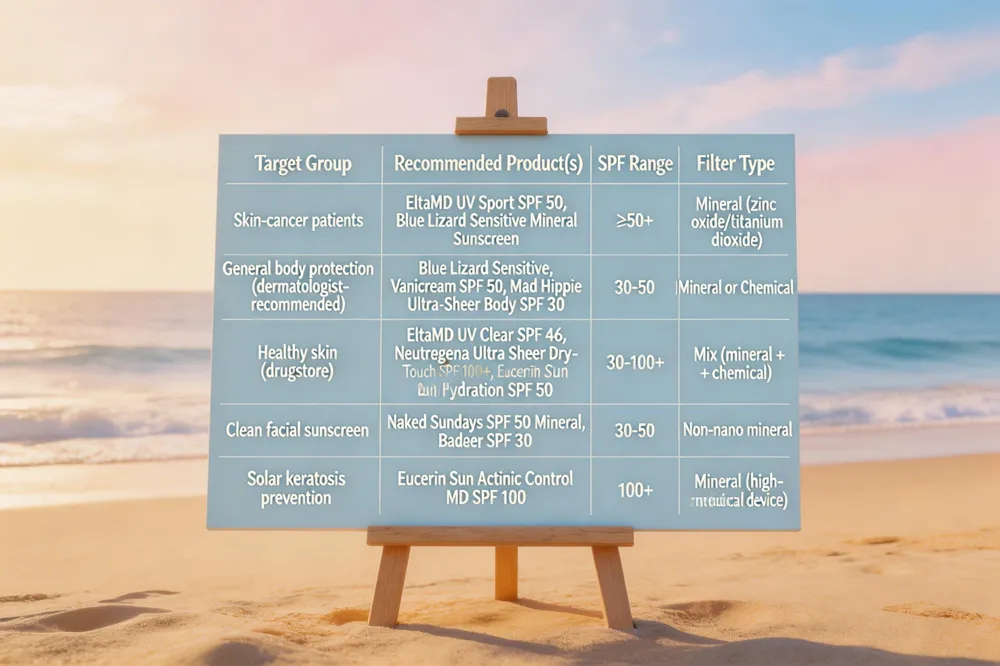 Broad‑spectrum protection (UVA + UVB) with SPF 30‑50+ is the cornerstone of daily photoprotection. Dermatologists favor mineral filters—zinc oxide and titanium dioxide—because they sit on the skin, provide stable coverage, and are less irritating for sensitive or acne‑prone patients. Chemical filters (avobenzone, octocrylene, homosalate, etc.) are FDA‑approved but may be absorbed systemically and can cause irritation in some users. For patients with a history of skin cancer, a high‑SPF (≥50) mineral sunscreen such as EltaMD UV Sport SPF 50 or Blue Lizard Sensitive Mineral Sunscreen offers the safest, most reliable barrier.
Best sunscreen for skin‑cancer patients Use a broad‑spectrum, medical‑grade formula with SPF 30‑50+, preferably mineral (zinc oxide/titanium dioxide). Options include EltaMD UV Sport SPF 50, EltaMD UV Daily SPF 40, Cetaphil Derma Control Oil Moisturizer SPF 30, and Avène Mineral Tinted Compact SPF 50+. Apply one ounce for the body, reapply every two hours or after water exposure.
FDA‑approved sunscreen list The FDA monograph recognizes nine GRASE ingredients: avobenzone, homosalate, octisalate, octocrylene, oxybenzone, octinoxate, ecamsule, zinc oxide, and titanium dioxide. No other filters are currently approved for OTC use.
Best sunscreen for body (dermatologist‑recommended) Mineral options like Blue Lizard Sensitive and Vanicream SPF 50 are top picks; chemical choices such as Mad Hippie Ultra‑Sheer Body SPF 30 also perform well. Look for water‑resistance and a shot‑glass‑size application.
Best sunscreen for healthy skin (drugstore) EltaMD UV Clear SPF 46, Neutrogena Ultra Sheer Dry‑Touch SPF 100+, and Eucerin Sun Advanced Hydration SPF 50 combine high SPF with skin‑care benefits and are widely available.
Best clean sunscreen for face Choose non‑nano zinc oxide/titanium dioxide formulas free of oxybenzone and octinoxate. Naked Sundays SPF 50 Mineral and Badger SPF 30 are EWG‑verified, reef‑safe, and suitable for daily makeup wear.
Best sunscreen for solar keratosis Eucerin Sun Actinic Control MD SPF 100 is a medical‑device sunscreen with very high SPF to help prevent actinic keratoses and non‑melanoma skin cancer.
Apply generously 15 minutes before exposure, reapply every two hours, and store out of heat and direct sunlight for optimal efficacy.
Application Techniques: Maximizing Efficacy
| Step | Details |
|---|---|
| Timing | Apply 15‑20 min before outdoor exposure |
| Face amount | Nickel‑sized (~1 tsp) for face + neck |
| Body amount | Shot‑glass (~1 oz) for full body |
| Missed spots | Ears, back of neck, tops of feet, lips |
| Moisturizer order | Apply moisturizer first, wait 1‑2 min, then sunscreen |
| Makeup order | Moisturizer → sunscreen (10‑15 min) → primer → foundation |
| Reapplication | Every 2 h, sooner after swimming, sweating, towel‑drying |
| Special formats | Sprays – spray liberally then rub in; Sticks – swipe and rub evenly |
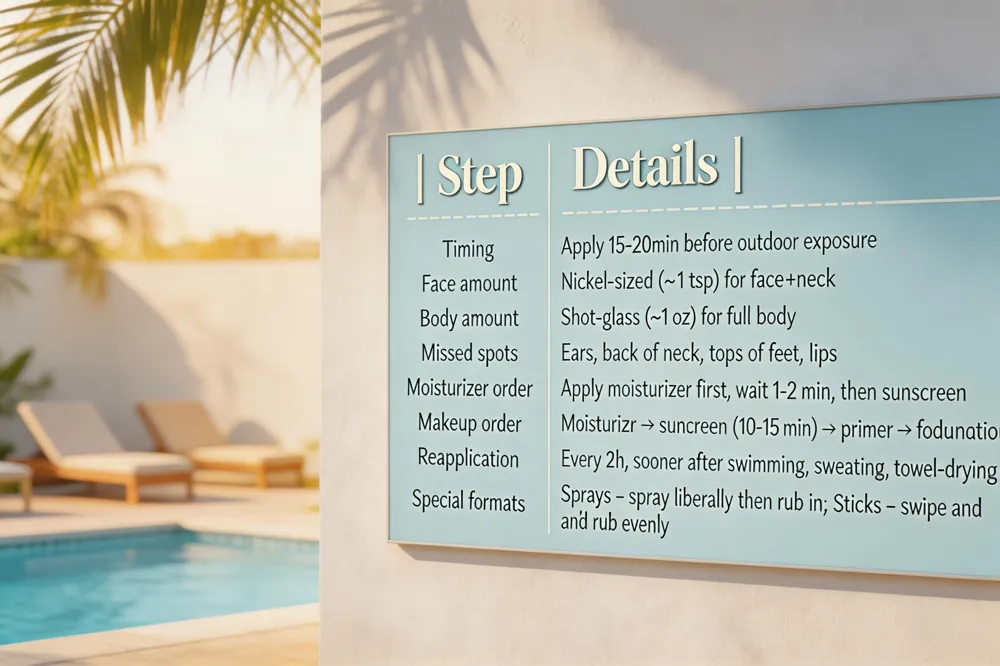 Applying sunscreen correctly is as important as choosing the right product. Apply 15–20 minutes before stepping outdoors, giving the active ingredients time to bind. For the face, use a nickel‑sized amount (≈ 1 teaspoon for face + neck) and a full‑shot‑glass (≈ 1 oz) for the body; pay special attention to often‑missed spots such as ears, back of the neck, tops of the feet, and lips. If you moisturize first, let the cream dry for 1–2 minutes, then apply sunscreen as the final layer; mineral formulas need completely dry skin, while chemical filters benefit from a brief waiting period to avoid dilution. When wearing makeup, apply sunscreen after moisturizer, allow it to set (10–15 minutes), then proceed with primer and foundation. Reapply every two hours, or sooner after swimming, sweating, or towel‑drying; water‑resistant labels (40 or 80 minutes) do not mean “waterproof.” Special formats—sprays, sticks, or tinted formulas—should be applied liberally and rubbed in evenly (sprays) or swiped (sticks) to ensure full coverage without inhalation of aerosol particles. Consistent, generous use combined with protective clothing, hats, and shade offers the most reliable defense against UV‑induced skin damage.
Special Populations and Sensitive Skin
| Population | Recommended Sunscreen | Key Features |
|---|---|---|
| Infants > 6 mo | Mineral, fragrance‑free (e.g., Blue Lizard Sensitive) | Gentle, no chemical filters |
| Photosensitizing meds | Broad‑spectrum SPF 30+ (mineral preferred) | Apply 15 min before, reapply often |
| Acne‑prone/rosacea | EltaMD UV Clear SPF 46, Blue Lizard Sensitive | Non‑comedogenic, zinc oxide, fragrance‑free |
| Darker skin tones | Tinted mineral with iron oxides (e.g., Avène Mineral Tinted Compact SPF 50+) | Visible‑light protection, reduces hyper‑pigmentation |
| Clean facial sunscreen | Naked Sundays SPF 50 Mineral, Badger SPF 30 | Non‑nano, reef‑safe, EWG‑verified |
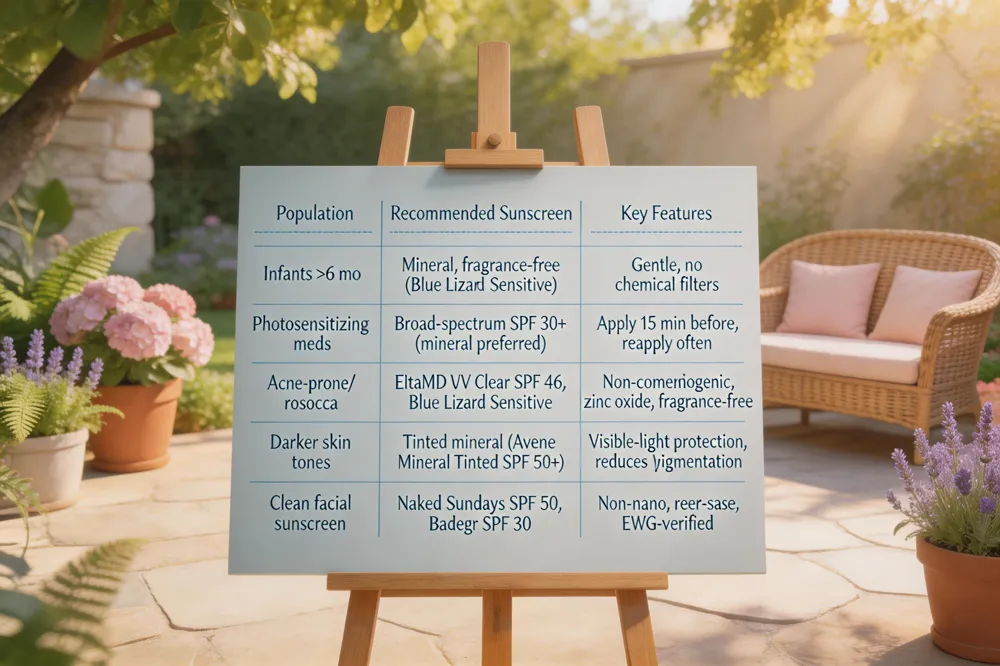 Infants younger than six months should be kept out of direct sun and protected with clothing; sunscreen is only recommended for older children and should be a broad‑spectrum, mineral‑based formula to minimize irritation. Patients on photosensitizing drugs (e.g., doxycycline, amiodarone) need extra protection—broad‑spectrum SPF 30+ applied 15 minutes before exposure and reapply every two hours. For eczema, rosacea, or acne‑prone skin, fragrance‑free, non‑comedogenic mineral sunscreens such as Blue Lizard Sensitive Mineral Sunscreen or EltaMD UV Clear SPF 46 are ideal because zinc oxide and titanium dioxide sit on the surface without stinging. Tinted sunscreens with iron oxides shield visible light, reducing hyperpigmentation for darker skin tones.
Best chemical‑free sunscreen for face: Blue Lizard Sensitive Mineral Sunscreen (zinc oxide, fragrance‑free) or Thinksport All‑Sheer Mineral Sunscreen Spray (zinc + titanium dioxide, SPF 50, water‑resistant).
Best clean sunscreen for face: Naked Sundays SPF 50 Mineral Sunscreen (non‑nano zinc oxide, reef‑friendly) or Badger Broad‑Spectrum SPF 30.
Benefits of not wearing sunscreen: Minimal increase in vitamin D, but risks of sunburn, premature aging, and skin cancer far outweigh any gain.
Benefits of wearing sunscreen daily on face: Prevents UVA/UVB damage, reduces skin‑cancer risk, preserves collagen, limits hyper‑pigmentation, and supports the efficacy of cosmetic treatments.
Dermatologist‑recommended sunscreen for healthy skin: Blue Lizard Sensitive Mineral Sunscreen; for acne‑prone or rosacea‑sensitive skin, EltaMD UV Clear SPF 46; for high‑SPF needs, La Roche‑Posay Anthelios Melt‑In Milk SPF 60. Apply generously (≈1 oz for body, 1 tsp for face) 15 minutes before outdoors, reapply every two hours, and store away from heat.
Seasonal and Environmental Considerations
| Condition | Adjusted Practice |
|---|---|
| Cloudy/indoor days | Still apply SPF 30‑50 daily (UVA penetrates clouds) |
| Snow, sand, water, concrete | Use higher SPF (≥50) and reapply more frequently |
| Winter sports | SPF 50+, water‑resistant, reapply each 40‑80 min of exposure |
| Storage | Cool, dry place away from direct sunlight; discard after 3 years or if texture changes |
| Vitamin D note | Minimal increase without sunscreen; risk of UV damage outweighs benefit |
 A broad‑spectrum sunscreen with SPF 30‑50 (or SPF 50+ for high‑risk skin) should be applied daily, even on cloudy or indoor days, at least 15 minutes before stepping outside. Use about one ounce (shot‑glass) for the whole body and a nickel‑sized amount for the face, covering missed spots such as ears, back of the neck, hands, feet, lips, and scalp. Reapply every two hours, and sooner after swimming, sweating, or towel‑drying; water‑resistant products are tested for 40 or 80 minutes of water exposure but are not waterproof. Snow, sand, water, and concrete can reflect up to 80 % of UV rays, so extra protection (higher SPF, more frequent reapplication) is needed in winter sports and beach settings. Store sunscreen in a cool, dry place away from direct sunlight; products lose efficacy after three years or when exposed to heat; check expiration dates. Skipping sunscreen only modestly raises vitamin D synthesis, but the long‑term risks—sunburn, photo‑aging, and increased skin‑cancer odds—far outweigh any perceived benefit.
Complementary Sun‑Safety Measures
| Measure | Recommendation |
|---|---|
| Clothing | UPF 50+ tightly woven fabrics (blocks >98 % UV) |
| Hat | Wide‑brimmed (≥3 in) covering face, ears, neck |
| Sunglasses | UV‑blocking (99‑100 % UVA/UVB) |
| Shade | Seek shade especially 10 a.m.–4 p.m. |
| Lip care | SPF 30+ lip balm |
| Combined strategy | SPF 30‑50 sunscreen + 1 oz body + 1 tsp face + protective gear |
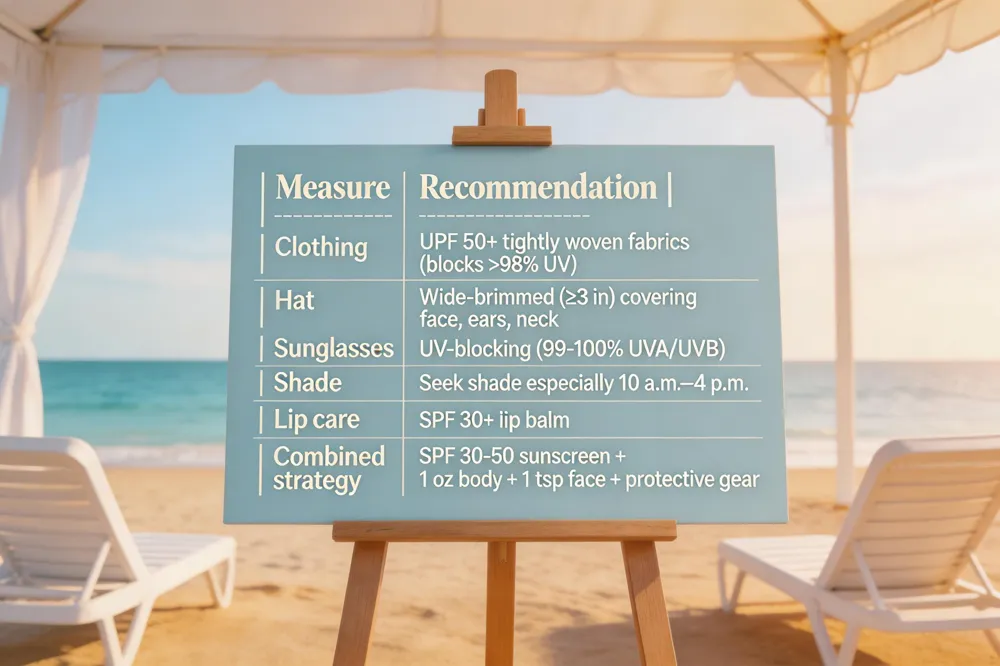 UPF‑rated clothing and wide‑brimmed hats, UV‑blocking sunglasses, shade, and lip balm with SPF are essential adjuncts to sunscreen. Tightly woven fabrics labeled UPF 50+ block over 98 % of UV radiation, while a hat with at least a 3‑inch brim shields the face, ears, and neck. UV‑blocking sunglasses filter 99‑100 % of UVA/UVB protect the eyes and delicate peri‑ocular skin. Seek shade whenever possible, especially between 10 a.m. and 4 p.m. when the UV Index peaks. Apply a lip balm containing SPF 30 or higher to prevent lip‑burn and chapping.
Best sunscreen strategies
Choose a broad‑spectrum sunscreen with SPF 30 – 50, apply 15–30 minutes before exposure, and use one ounce for the body and a nickel‑sized amount for the face. Reapply every two hours and after swimming, sweating, or towel‑drying. Pair with protective clothing, a hat, sunglasses, and shade.
Best sunscreen for healthy skin dermatologist recommended
Mineral formulas with zinc oxide or titanium dioxide are favored for sensitive skin. Blue Lizard Sensitive Mineral Sunscreen and EltaMD UV Clear SPF 46 are top dermatologist picks, offering broad‑spectrum coverage, soothing ingredients, and non‑comedogenic textures.
Best sunblock for face recommended by dermatologists
EltaMD UV Daily Broad‑Spectrum SPF 40 (tinted or untinted) provides photostable zinc oxide protection, lightweight feel, and is suitable for all skin types. CeraVe AM Facial Moisturizing Lotion SPF 50 adds hyaluronic acid for hydration.
Best sunscreen for everyday use for face
A daily facial sunscreen should be lightweight, non‑greasy, and SPF 30 or higher. EWG‑rated “Top‑Rated Daily‑Use SPF” list includes Coola Classic Face Sunscreen SPF 50 and Dr. Loretta Universal Glow Daily Defense Mineral Fluid SPF 40 both delivering strong UVA/UVB protection without clogging pores.
Best sunscreen for healthy skin drugstore
EltaMD UV Clear Face Sunscreen SPF 46 is a drugstore favorite for its non‑white‑cast, niacinamide‑enriched formula. Neutrogena Ultra Sheer Dry‑Touch SPF 100+ offers high SPF with a dry finish, while Eucerin Sun Advanced Hydration Face SPF 50 adds moisturizing agents for dry skin.
Monitoring, Maintenance, and Ongoing Care
| Aspect | Guidance |
|---|---|
| Expiration | Discard after 3 years or if color/odor changes |
| Storage | Cool, shaded drawer; avoid heat & direct sunlight |
| Reapplication reminders | Phone alarm or sunscreen‑tracker app every 2 h |
| Self‑exam | Monthly ABCDE check; focus on ears, neck, hands, feet |
| Professional check | Annual full‑body dermatologist visit (more often if high risk) |
| Medication interaction | For photosensitizers, choose SPF 30+ mineral, wear UPF clothing, limit midday exposure |
| Moisturizer vs. sunscreen order | Moisturizer first, let dry 1‑2 min; then sunscreen (mineral prefers dry skin) |
 Expiration dates and shelf life: FDA‑regulated OTC sunscreens retain their original strength for at least three years; products without a printed date are considered expired three years after purchase. An expired formula may lose SPF efficacy and safety, so discard any sunscreen older than three years or that shows color, texture, or odor changes.
Storage conditions (cool, shaded): Keep sunscreen away from direct sunlight and excessive heat, as UV and heat degrade active filters. Store in a cool, dry place—ideally a drawer or cabinet—away from windows and radiators.
Reapplication reminders: Apply at least 15 minutes before exposure, using about one ounce (a shot‑glass) for full‑body coverage and a teaspoon for the face. Reapply every two hours, and immediately after swimming, sweating, or towel‑drying. Set phone alarms or use a sunscreen‑tracker app to stay consistent.
Skin self‑exams and professional checks: Perform a monthly self‑exam using the ABCDE method, focusing on often‑missed sites such as ears, back of the neck, hands, and feet. Schedule annual dermatologist visits for a full‑body skin check, especially if you have a history of skin cancer or intense sunburns.
Photosensitizing medication considerations: Medications like doxycycline, amiodarone, and certain retinoids increase UV sensitivity. When taking these drugs, choose a broad‑spectrum SPF 30+ sunscreen, wear UPF‑rated clothing, and limit midday outdoor time.
How to apply sunscreen before or after moisturizer – Apply moisturizer first, let it absorb (1–2 minutes), then layer sunscreen. For mineral sunscreens, this order preserves the protective barrier; for chemical sunscreens, a dry skin surface maximizes absorption. If your moisturizer already contains SPF, you may skip a separate sunscreen but still reapply as needed.
Benefits of wearing sunscreen on face everyday – Daily broad‑spectrum SPF protects against UVA‑induced collagen breakdown and UVB‑induced sunburn, reducing skin‑cancer risk, preventing premature wrinkles, hyper‑pigmentation, and preserving an even tone.
Sunscreen effectiveness study – Recent research shows regular SPF 30+ use cuts melanoma incidence by up to 50 % and squamous‑cell carcinoma by 40 %. However, many U.S. products overstate SPF without adequate UVA protection; choose FDA‑approved broad‑spectrum formulas with proven ingredients.
Best sunscreen for skin‑cancer patients – Dermatologist‑recommended options include physical (mineral) sunscreens with zinc oxide or titanium dioxide, such as EltaMD UV Sport SPF 50, EltaMD UV Daily SPF 40, Cetaphil Derma Control Oil Moisturizer SPF 30, and Avène Mineral Tinted Compact SPF 50+. Apply generously and reapply every two hours or after water exposure.
Putting It All Together for Year‑Round Skin Health
Consistent, correct sunscreen use is the cornerstone of photoprotection. Apply a broad‑spectrum product with SPF 30 or higher to all exposed skin at least 15 minutes before heading outdoors, using roughly one ounce (a shot‑glass full) for the body and a nickel‑sized amount for the face. Reapply every two hours, and immediately after swimming, sweating, or towel‑drying. Pair sunscreen with physical barriers—UPF‑rated clothing, a wide‑brimmed hat, UV‑blocking sunglasses, and shade—to reduce cumulative UV dose, especially during peak hours (10 a.m.–4 p.m.) and on reflective surfaces like snow, sand, or water. Select formulations that match your skin type and sensitivities: mineral (zinc oxide/titanium dioxide) for sensitive or acne‑prone skin, fragrance‑free, non‑comedogenic options for daily wear, and tinted or antioxidant‑enhanced products if desired. Finally, stay vigilant about product integrity: store sunscreen in a cool, dark place, respect the three‑year post‑purchase shelf life, and discard any bottle past its expiration date or that shows color or texture changes.