Introduction
Consistent daily care is the cornerstone of healthy skin because the epidermis renews itself every 28–40 days; only regular product exposure can influence each new cell layer. Clinical studies from the American Academy of Dermatology and multiple dermatology journals show that a simple three‑step routine—gentle cleanser, barrier‑supporting moisturizer, and broad‑spectrum SPF 30+—improves hydration, reduces transepidermal water loss, and cuts photoaging risk by up to 50% when performed twice daily. This evidence underscores that adherence, not price or product count, drives measurable results. By establishing a repeatable ritual, patients lay a stable foundation for any additional actives, ensuring long‑term skin resilience and visible improvement.
The Science of Skin Renewal and Consistency
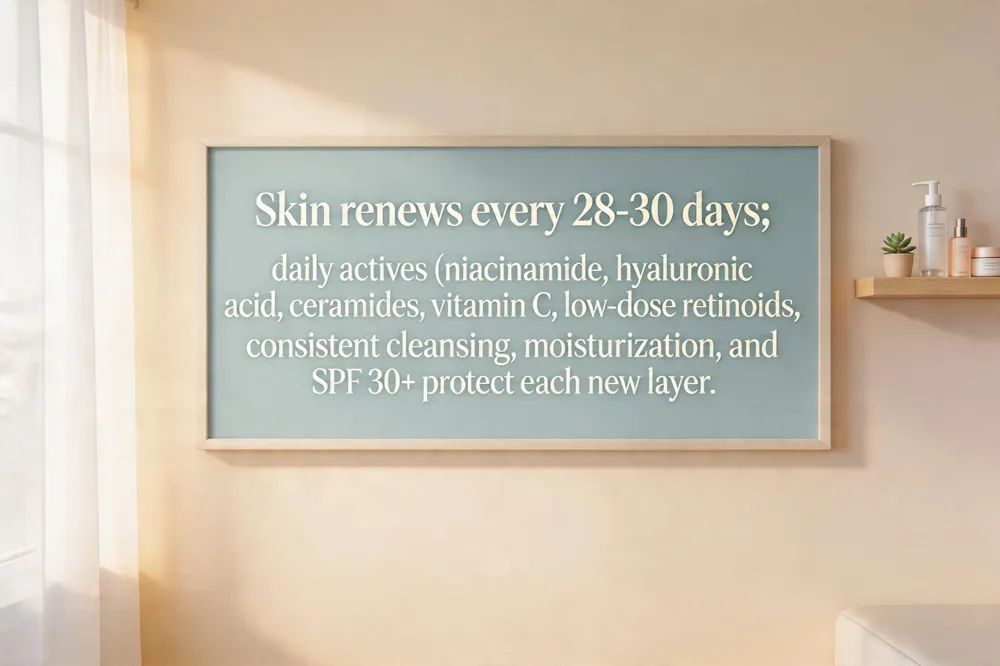 Human skin undergos a cellular turnover cycle of roughly 28‑30 days, during which new keratinocytes migrate outward to replace the stratum corneum. This natural rhythm means that active ingredients—such as niacinamide, hyaluronic acid, ceramides, vitamin C, and low‑dose retinoids—must be present on a daily basis to influence each new layer as it forms. Consistent cleansing prepares the barrier, while regular moisturization (ide with barrier‑supporting agents like squalane or ceramides restores lipid balance and reduces transepidermal water loss. Broad‑spectrum SPF 30+ sunscreen applied each morning shields the renewing epidermis from UV‑induced collagen breakdown and oxidative stress.
Does consistency matter in skincare?
Yes, consistency is essential for effective skincare. Your skin’s cellular turnover takes roughly 30 days, and active ingredients—especially those in medical‑grade products—need regular exposure to penetrate and work over time. Skipping days or stopping a regimen prematurely can halt progress and even reverse gains, while a steady routine allows collagen, elastin, and other skin‑repair processes to build up gradually. Pairing a simple, daily regimen with professional treatments such as microneedling or chemical peels maximizes results and prolongs the benefits of both at‑home care and cosmetic procedures. In short, treating skincare like a long‑term habit—much like regular exercise—delivers the radiant, healthy complexion you’re aiming for.
Core Routine: Cleanser, Moisturizer, Sunscreen
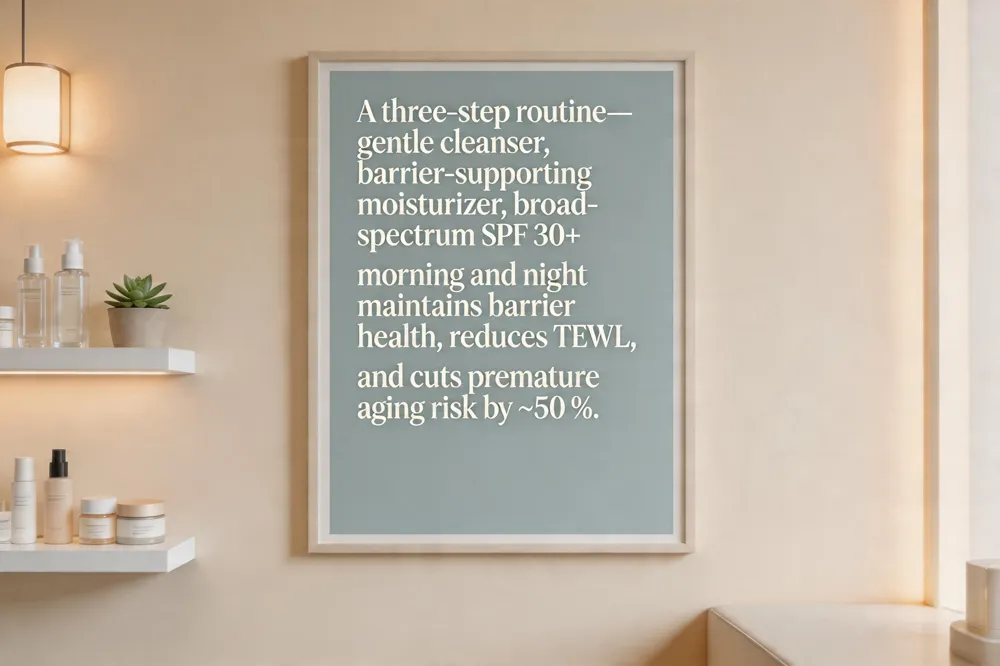 A simple three‑step routine—gentle cleanser, hydrating moisturizer, and broad‑spectrum sunscreen—forms the foundation of evidence‑based skin care. The American Academy of Dermatology (AAD) recommends using these three products both morning and night to maintain a healthy skin barrier, control oil, and protect against UV‑induced damage. Consistent cleansing removes dirt, oil, and pollutants without stripping the skin, while a moisturizer applied within minutes of washing locks in lipids and reduces transepidermal water loss, strengthening the barrier. Daily sunscreen (SPF 30 or higher) is the single most effective anti‑aging intervention, cutting the risk of premature aging and skin cancer by up to 50 % compared with intermittent use. By aligning product application with the skin’s 28‑day renewal cycle, this routine supports continuous repair, improves hydration, and reduces irritation—delivering measurable improvements in texture and tone without the need for expensive, multi‑step regimens.
Common Skin Disorders and How Simple Care Addresses Them
 The eight most common skin disorders are acne, eczema (atopic dermatitis), psoriasis, rosacea, seborrheic dermatitis, melasma, skin cancers—including basal‑cell carcinoma, squamous‑cell carcinoma, and melanoma—and age‑related sun‑damage spots. Acne appears as inflamed lesions from clogged pores; eczema presents as dry, itchy, inflamed patches; psoriasis is marked by red, scaly plaques; rosacea causes facial redness and visible blood vessels; seborrheik dermatitis shows oily, flaky patches on the scalp and face; melasma manifests as hyperpigmented patches, often on the cheeks; sun‑damage spots are pigmented lesions from chronic UV exposure; and skin cancers range from superficial basal‑cell lesions to aggressive melanomas.
A simple, evidence‑based routine—gentle twice‑daily cleansing, a barrier‑supporting moisturizer containing ingredients such as niacinamide, ceramides, or hyaluronic acid, and broad‑spectrum SPF 30+ sunscreen—directly addresses the underlying factors of these conditions.
Consistent cleansing removes excess sebum, pollutants, and dead cells, reducing pore‑clogging and inflammation.
Regular moisturizers restore lipid balance, lowers transepidermal water loss, and calms irritation, which benefits eczema, psoriasis, and rosacea.
Daily sunscreen protects against UV‑induced DNA damage, preventing melasma, sun‑damage spots, and the development of skin cancers.
When these core steps are performed reliably each morning and night, the skin barrier remains resilient, inflammation is minimized, and the skin’s natural renewal cycle (approximately 28‑30 days) can proceed unhindered, leading to clearer, healthier skin over time.
Luxury Products vs. Simple Formulations
 Luxury skincare often markets cutting‑edge actives, but evidence shows that consistent use of basic, barrier‑supporting ingredients—ceramides, niacinamide, hyaluronic acid, and squalane—delivers comparable long‑term results to high‑priced formulas. Clinical trials repeatedly demonstrate that a simple three‑step routine (gentle cleanser, moisturizer, SPF 30+ sunscreen) improves hydration, reduces transepidermal water loss, and lowers photo‑aging risk more reliably than sporadic use of luxury serums. The cost‑benefit analysis is clear: a basic regimen costs $15‑$25 per month and achieves barrier repair and antioxidant protection, whereas many luxury lines exceed $150 per month without proven superiority.
What are the most effective luxury skincare products? Brands such as La Mer’s Crème de la Mer, SkinCeuticals C E Ferulic, and Augustinus Bader’s The Rich Cream combine potent bio‑actives with advanced delivery systems, offering measurable gains in firmness and radiance. However, their benefits hinge on daily, disciplined application—mirroring the consistency required of any regimen.
What is the #1 skincare brand in the world? La Roche‑Posay consistently ranks top globally due to its clinically tested, barrier‑friendly formulas, broad‑spectrum SPF, and universal tolerability, making it the most trusted choice for both dermatologists and patients.
Patient Experience and Practice Highlights
 Patients consistently highlight the welcoming atmosphere and attentive staff at On The Spot Dermatology, noting that they feel genuinely cared for from the moment they walk in. Reviews praise the clinicians’ expertise, swift diagnoses, and effective treatment plans that quickly improve conditions such as acne, skin cancer screenings, and cosmetic concerns. The practice’s modern, clean facilities and seamless appointment scheduling receive frequent commendations. Many testimonials emphasize the valuable education provided on self‑detection and ongoing skin‑health maintenance. Overall, the combination of personalized care, professional expertise, and a friendly environment leads to high satisfaction and repeat visits.
Regional Dermatology Services

Dermatology and skin health Peabody
Peabody, Massachusetts is served by Dermatology & Skin Health (23 Centennial Dr.). Board‑certified providers—Dr. Gary Mendese, DO Robert Murgia III, PA‑C Michelle Ryder—treat acne, eczema, skin cancer, hair loss and vascular lesions. Services include Mohs micrographic surgery, cryotherapy, laser therapy and cosmetic procedures such as photodynamic treatment. Hours: Mon‑Fri 8 a.m.–4:30 p.m. (Wed 7:30 a.m. start). Appointments: (978) 525‑0100 or online portal.
NYC Dermatology
New York City hosts a wide range of dermatology practices offering medical and aesthetic care—from acne treatment to advanced laser and cosmetic procedures—catering to diverse patient needs.
Dermatology NYU
NYU Langone Health’s Department of Dermatology provides comprehensive medical, cosmetic, surgical and pediatric skin care. Board‑certified specialists manage acne, eczema, skin cancer, hair loss and pigment disorders, and deliver advanced aesthetics (laser, injectables). The department features a leading dermatopathology lab and clinical trials, with in‑person and virtual visits across NYC and Long Island.
Dermatology and skin health Derry, NH
Derry’s Dermatology & Skin Health (6 Tsienneto Rd., Suite 204) offers medical and cosmetic services. Board‑certified Dr. Stephen Moyer, DO, FAAD, PA‑C Brittany Smith and RN Brooke Comire treat acne, eczema, skin‑cancer screening, Mohs surgery and laser therapies. Focus on seasonal skin challenges and personalized preventive care. Appointments: (603) 742‑5556 or info@dermskinhealth.com.
Dermatology skin and Health Dover
Dover’s clinic (784 Central Ave) provides acne, eczema, psoriasis, skin‑cancer screening, Mohs surgery, cryotherapy, laser, and cosmetic injectables. The multidisciplinary team includes Dr. Gary Mendese and Dr. Stephen Moyer. Hours: Mon‑Fri 8 a.m.–5 p.m. (Fri 4 p.m.). Appointments: (603) 742‑5556 or info@dermskinhealth.com.
Dermatology and skin health Portsmouth, NH
Portsmouth office (2299 Woodbury Ave Suite 3) offers skin‑cancer screening, Mohs surgery, benign lesion removal, photodynamic therapy and aesthetic procedures. Board‑certified Dr. Molly Plovanich leads the team. Hours: Mon 8 a.m.–5 p.m., Tue‑Thu 8 a.m.–5 p.m., Fri 8 a.m.–4 p.m. Contact: (603) 742‑5556 or info@dermskinhealth.com.
Dermatology and skin health Newington
Newington’s location (2299 Woodbury Ave, Suite 3) provides medical and cosmetic services, acne, eczema, psoriasis, mole screening, Mohs surgery, laser hair removal, Botox, dermal fillers, cool‑sculpting and chemical peels. Board‑certified Dr. Gary Mendese and a multidisciplinary staff ensure comprehensive care. Hours: Mon‑Fri 8 a.m.–5 p.m.; appointments by referral.
Lifestyle, Exfoliation, and Supporting the Skin Barrier
 A healthy skin barrier is the foundation of clear, youthful skin, and its resilience is driven by both external care and internal habits. Consistent lifestyle factors—regular exercise, antioxidant‑rich nutrition, adequate sleep, and hydration—directly boost barrier function and reduce inflammation, complementing topical products. Exfoliation should be gentle and controlled: 1‑2 times per week with chemical exfoliants such as polyhydroxy acids (PHAs) or mild AHAs, avoiding over‑exfoliation that can strip lipids and impair the barrier. Barrier‑supporting ingredients like ceramides, squalane, niacinamide, and allantoin replenish lipids, lock in moisture, and calm irritation, making them ideal for daily moisturizers and night creams. Turning skincare into a ritual—morning cleanse, antioxidant serum, moisturizer, and sunscreen followed by nighttime cleanse, treatment, and barrier‑repair cream—creates habit strength, improves adherence, and aligns product application with the skin’s 28‑day renewal cycle. This simple, evidence‑based routine delivers measurable improvements in hydration, texture, and long‑term skin health without the need for expensive, high‑step regimens.
Conclusion
Key takeaways: Skin renews every 28‑40 days, so consistent daily care aligns with its natural cycle. A simple three‑step routine—gentle cleanser, barrier‑supporting moisturizer, and broad‑spectrum SPF 30+ sunscreen—provides the most reliable foundation for hydration, protection, and long‑term improvement. Practical steps: Cleanse twice daily, apply moisturizer within minutes of washing, use sunscreen every morning and reapply when outdoors, exfoliate 1‑2 times weekly with a gentle exfoliant, and add targeted actives (niacinamide, vitamin C, low‑dose retinoid) as needed. Keep lifestyle habits—adequate sleep, balanced nutrition, hydration—consistent. Encouragement: Treat your skin like a marathon, not a sprint; small, evidence‑based actions every day build lasting resilience, confidence, and radiant health. Stay consistent, celebrate small improvements, and know that disciplined care yields lasting, healthy skin for you today.