Why the Gut Matters for Your Skin
The gut‑skin axis is a two‑way communication pathway in which intestinal microbiota influence skin appearance by modulating immune responses, inflammation, and barrier integrity. A balanced gut microbiome produces short‑chain fatty acids, especially butyrate, that strengthen tight‑junction proteins in the gut and, via systemic circulation, help maintain skin‑tight barrier thesein reducing transepidermal water loss, redness, and irritation. Dysbiosis triggers low‑grade inflammation and leaky‑gut phenomena that can exacerbate acne, eczema, rosacea and premature aging. dermat dermatology, oral and topical probiotics are being used to restore microbial balance, lower oxidative stress, and up‑regulate ceramide and filaggrin production, offering a science‑backed, personalized approach to healthier, more resilient skin.
The Gut‑Skin Axis: Foundations and Everyday Impact
Gut‑Skin Axis Overview
| Mechanism | Gut‑derived factor | Skin effect |
|---|---|---|
| Immune signaling | SCFAs, cytokines | Reduces systemic inflammation, supports barrier proteins (claudin‑1, occludin, filaggrin) |
| Hormonal pathways | Serotonin, dopamine | Modulates skin stress responses and sebum production |
| Microbial metabolites | Vitamin‑like compounds (B‑vitamins, K2) | Enhances ceramide synthesis, protects collagen from UV‑induced degradation |
| Dysbiosis | Reduced SCFA‑producing microbes | ↑ Inflammatory cytokines, oxidative stress, impaired barrier → acne, eczema, psoriasis, rosacea, premature aging |
Key takeaway: A balanced gut microbiome underpins skin health by lowering systemic inflammation and strengthening barrier integrity.
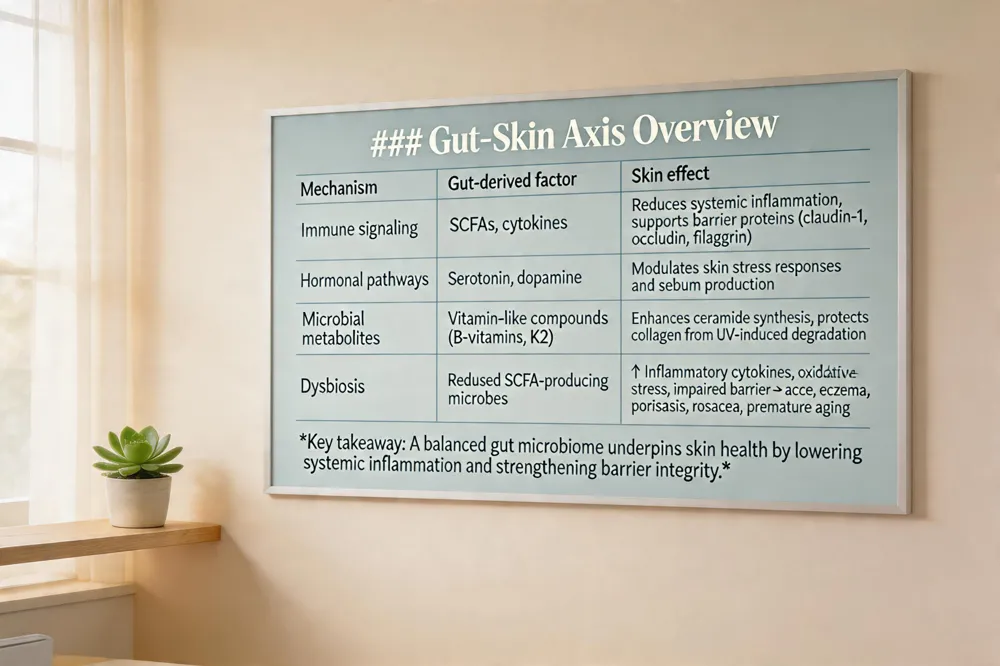 The gut‑skin axis is the bidirectional communication system linking the intestinal microbiome to the skin via immune signaling, hormonal pathways, and microbial metabolites such as short‑chain fatty acids (SCFAs). Beneficial gut bacteria produce SCFAs, neurotransmitters, and vitamin‑like compounds that travel through the bloodstream, regulate systemic inflammation, and reinforce skin barrier integrity. When the gut microbiota becomes imbalanced—dysbiosis—these protective signals wane, leading to heightened inflammatory cytokines, oxidative stress, and impaired barrier proteins (claudin‑1, occludin, filaggrin). Clinically, dysbiosis often manifests as acne, eczema (atopic dermatitis), psoriasis, rosacea and premature aging. In eczema, reduced SCFA‑producing microbes diminish immune regulation, prompting flare‑ups; restoring gut diversity through high‑fiber diets, fermented foods, and strain‑specific probiotic supplements can lower inflammation and improve barrier function. Overall, a balanced gut microbiome supports skin health by decreasing systemic inflammation, enhancing ceramide production, and protecting collagen from UV‑induced degradation. Addressing the gut‑skin axis alongside topical therapies offers a holistic, personalized approach for clearer, more resilient skin.
Optimizing the Gut‑Skin Connection: Lifestyle and Nutrition
Lifestyle & Nutrition Recommendations
| Lifestyle factor | Example | Skin benefit |
|---|---|---|
| High‑fiber diet | Vegetables, fruits, legumes, whole grains, nuts | ↑ SCFA production → ↓ inflammation, ↑ claudin‑1 & filaggrin |
| Fermented foods | Yogurt, kefir, kimchi, sauerkraut | Introduces live probiotics → restores microbiome balance |
| Probiotic supplementation | Lactobacillus plantarum HY7714, Bifidobacterium adolescentis (≥10⁹ CFU) | ↑ SCFA, ↓ systemic inflammation, improves barrier function |
| Sugar & refined carbs limit | Avoid sugary drinks, white‑flour products | Prevents dysbiosis & excess inflammatory metabolites |
| Hydration & sleep | 7‑9 h sleep, 2‑3 L water/day | Supports skin turnover & barrier repair |
| Stress management | Meditation, moderate exercise | Lowers cortisol → reduces skin inflammation |
| Polyphenol‑rich foods | Dark chocolate (≥70 % cocoa), berries, green tea | Antioxidant protection → better elasticity & reduced photo‑aging |
Implementing these habits synergistically boosts gut‑derived signals that protect and rejuvenate skin.
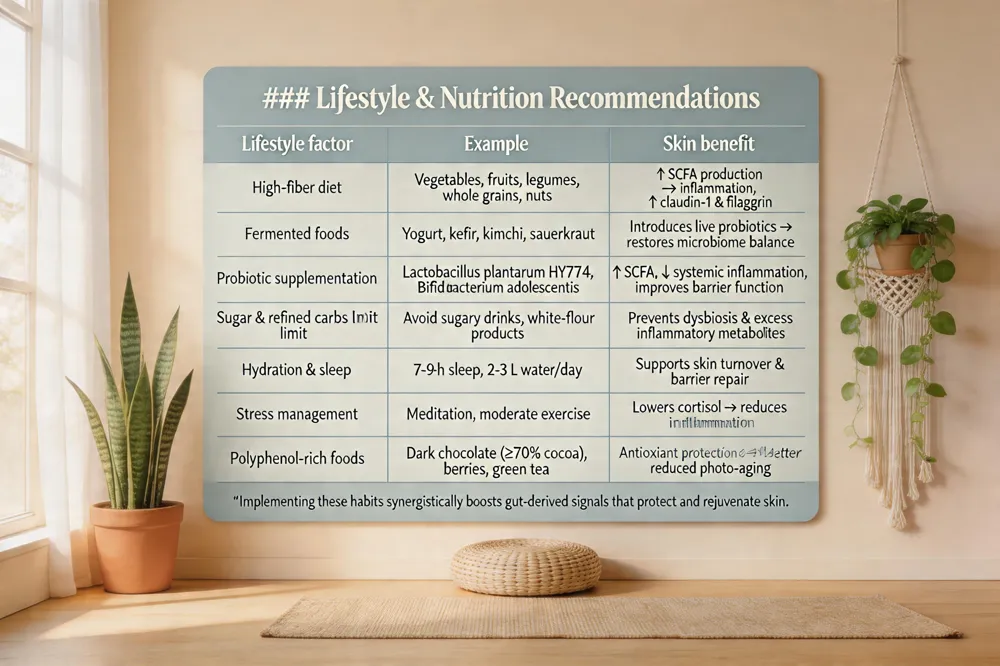
How to improve gut‑skin axis
Boost the gut‑skin axis by feeding beneficial microbes with a fiber‑rich diet—vegetables, fruits, legumes, whole grains, and nuts. Fermented foods such as yogurt, kefir, kimchi, and sauerkraut, or a high‑quality probiotic supplement (e.g., Lactobacillus plantarum HY7714, Bifidobacterium adolescentis), restore microbial balance and increase short‑chain fatty acid (SCFA) production, which reduces systemic inflammation and strengthens skin barrier proteins like claudin‑1 and filaggrin. Limit refined sugars, white‑flour products, and excessive dairy that promote dysbiosis. Hydration, 7‑9 hours of sleep, stress‑reduction techniques (meditation, moderate exercise), and polyphenol‑rich foods (dark chocolate, berries, green tea) further support gut health and improve skin elasticity.
What are the 7 signs of an unhealthy gut?
Persistent digestive complaints (bloating, gas, diarrhea, constipation, abdominal pain) are classic signs. Extra‑intestinal clues include fatigue, mood changes, skin irritation or breakout‑ups, frequent infections, and food intolerances, reflecting systemic inflammation driven by gut dysbiosis.
Can gut health cause seborrheic dermatitis?
Epidemiologic data link seborrheic dermatitis with gastrointestinal disorders such as celiac disease (OR 1.36), irritable bowel syndrome (OR 1.32), ocular allergy (OR 1.39), and dry eye (OR 1.48), suggesting gut‑derived immune dysregulation contributes to scalp inflammation.
Does gut health affect your looks?
The gut‑skin axis is a bidirectional communication pathway ; imbalanced gut bacteria (dysbiosis) can trigger acne, rosacea, eczema, and premature aging by increasing systemic inflammation, compromising barrier integrity, and altering ceramide synthesis. Restoring microbiome balance through diet, probiotics, and lifestyle changes can thus improve overall skin appearance.
Probiotic Power: Oral and Topical Strategies for Skin Health
Oral vs. Topical Probiotic Strategies
| Modality | Strain/example | Dose / duration | Primary skin benefit |
|---|---|---|---|
| Oral probiotic | Lactobacillus reuteri, L. rhamnosus, Bifidobacterium longum | 10⁹–10¹⁰ CFU daily for 8–12 weeks | ↓ systemic inflammation, ↑ ceramide production, ↓ acne lesions & eczema severity |
| Oral probiotic (high‑dose) | Lactobacillus plantarum HY7714 | ≥10⁹ CFU daily, 12 weeks | Boosts ceramides, protects collagen from UV‑induced MMPs |
| Topical probiotic | Live L. plantarum or Bif.obacterium in cream/serum | Applied 1–2×/day (dose per product) | ↑ tight‑junction proteins, ↓ local cytokines, ↑ ceramides, reduces redness |
| Postbiotic (topical) | SCFA‑rich extract, exopolysaccharides | Applied as serum/gel | Provides anti‑inflammatory metabolites without live cultures |
| Synbiotic (oral+topical) | Combined probiotic + prebiotic fiber (inulin) + topical probiotic | Oral 10⁹ CFU + fiber; topical twice daily | Synergistic ↓ TEWL, ↑ hydration, faster lesion resolution |
Combining oral and topical approaches yields the greatest improvements in barrier function and inflammation control.
 The gut‑skin axis](https://pmc.ncbi.nlm.nih.gov/articles/PMC10385652/) connects intestinal microbiota to skin health, so restoring microbial balance can improve complexion. Oral probiotics such as Lactobacillus reuteri, Lactobacillus rhamnosus, and Bifidobacterium longum rebalance the gut, lower systemic inflammation, and enhance ceramide production, leading to reduced acne lesions, milder eczema, and fewer wrinkles. A daily dose of 10⁹–10¹⁰ CFU taken for 8–12 weeks is typically required; safety is high but immunocompromised patients should consult a dermatologist at On The Spot Dermatology for personalized guidance.
Topical probiotic formulations deliver live Lactobacillus or Bifidobacterium strains, together with prebiotic carriers, directly to the epidermis. They boost tight‑junction proteins, suppress inflammatory cytokines, and increase ceramides, calming redness in acne, eczema, and rosacea while supporting barrier integrity.
Combining oral and topical approaches offers synergistic benefits: systemic immune modulation from gut‑derived [short‑chain fatty acids](https://pmc.bi
m.nih.gov/articles/PMC7916842/) complements local microbial balance on the skin. Clinical evidence shows that paired use reduces transepidermal water loss and improves hydration more than either method alone. For optimal results, choose multi‑strain, clinically validated products and maintain adequate sleep and stress‑management practices. These strategies are supported by peer‑reviewed studies in journals such as Nutrients and Frontiers in Microbiology, reinforcing their credibility for dermatology patients.
Skin‑Focused Nutrients and Supplement Strategies
Key Nutrients & Supplements for Skin
| Nutrient / Supplement | Primary role | Typical dose |
|---|---|---|
| Marine collagen peptides | Provides amino acids for fibrillin & collagen synthesis | 10‑15 g daily (powder/drink) |
| Vitamin C (ascorbic acid) | Cofactor for collagen hydroxylation, antioxidant | 500‑1000 mg daily |
| Zinc | Supports enzyme function for skin repair, anti‑inflammatory | 15‑30 mg daily (as zinc picolinate) |
| Hyaluronic acid | Moisture‑binding, improves dermal hydration | 50‑200 mg oral or topical 1‑2 % serum |
| Antioxidant botanicals (sea buckthorn, maqui berries) | Scavenge ROS, protect against UV damage | 300‑500 mg extract daily |
| Probiotic blend (L. plantarum HY7714, L. rhamnosus, B. adolescentis) | ↑ SCFA, ↓ systemic inflammation, reinforce barrier | 1‑10 billion CFU daily |
| Prebiotic fiber (inulin, resistant starch) | Feeds SCFA‑producing gut microbes | 5‑10 g daily |
| Omega‑3 fatty acids (EPA/DHA) | Anti‑inflammatory, supports skin lipid barrier | 1‑2 g daily |
| Digestive enzymes | Improves nutrient absorption for skin repair | 1‑2 capsules with meals |
These nutrients work together to strengthen the epidermal barrier, boost collagen, and reduce inflammation.
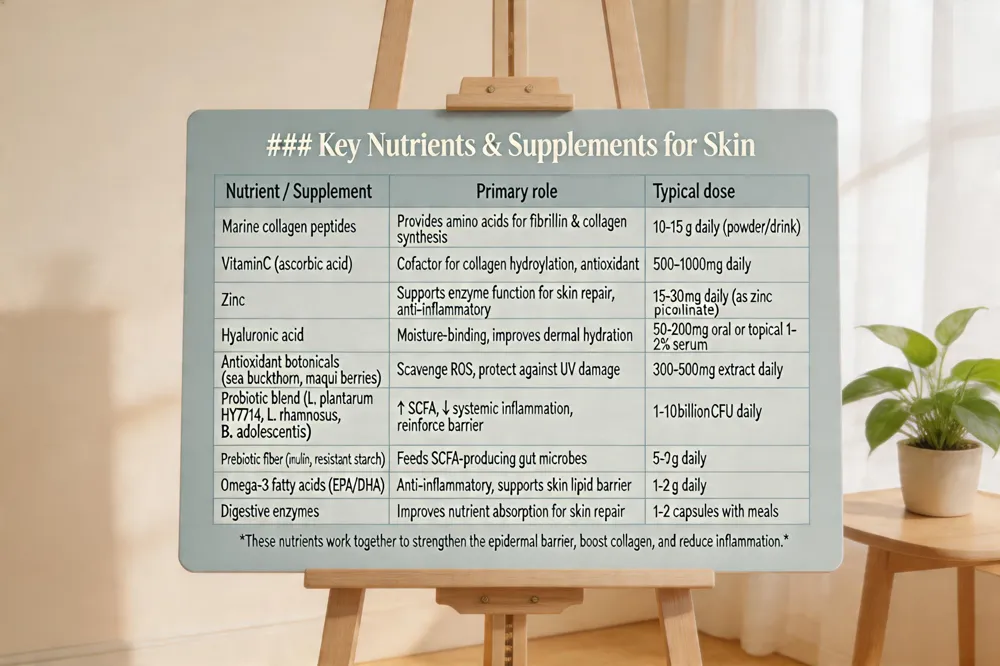 A modern “inside‑out” skin‑care plan starts with nutrients that directly reinforce the epidermal barrier and collagen matrix. Marine‑sourced collagen peptides, vitamin C, zinc, hyaluronic acid, and antioxidant‑rich botanicals such as sea buckthorn and maqui berries provide the amino acids, co‑factors, and moisture‑binding capacity needed for fibrillin synthesis, dermal hydration, and protection against oxidative stress.
Gut‑supporting supplements work in tandem. Probiotic strains (Lactobacillus plantarum HY7714, L. rhamnosus, Bifidobacterium adolescentis) and pre‑biotic fibers boost short‑chain fatty‑acid production, lower systemic inflammation, and improve tight‑junction integrity—effects that translate into reduced transepidermal water loss and calmer breakouts. Fermented foods, omega‑3 fatty acids, and digestive enzymes further balance the microbiome and support nutrient absorption critical for skin repair.
Practical regimen: take a daily probiotic blend (1–10 billion CFU) with a pre‑biotic fiber powder in the morning, followed by a collagen‑peptide drink enriched with vitamin C and hyaluronic acid at lunch. Evening meals should include Fermented foods, oily fish, and antioxidant berries. Consistent use—paired with a high‑fiber, low‑glycemic diet—helps diminish acne, eczema, and early signs of aging while promoting a resilient, radiant complexion.
Skin and gut supplements – Gut‑supporting probiotics, pre‑biotics, Fermented foods, omega‑3s, and digestive enzymes reduce inflammation and balance the microbiome, leading to clearer, more resilient skin. Collagen peptides, vitamin C, zinc, hyaluronic acid, and antioxidant botanicals directly support collagen synthesis, hydration, and barrier repair. Combining these elements in a daily powder or drink offers a convenient “inside‑out” approach.
Best foods for skin and gut health – Fiber‑rich vegetables and fruits (leafy greens, carrots, apples), Fermented foods, omega‑3‑rich fish (salmon, sardines), antioxidant berries (blueberries, strawberries), dark chocolate (≥70 % cocoa), and bone broth or protein‑rich legumes provide prebiotic fiber, live probiotics, essential fatty acids, vitamins, and amino acids that together support both gut microbiome balance and skin barrier integrity.
Targeted Skin Concerns and the Gut‑Skin Axis
Skin Conditions & Gut‑Related Strategies
| Skin condition | Gut‑related factor | Recommended probiotic strains |
|---|---|---|
| Acne | Dysbiosis → ↑ endotoxin, ↑ IGF‑1 | L. plantarum, L. rhamnosus, B. longum |
| Rosacea | Altered gut permeability, ↑ systemic inflammation | L. fermentum, B. coagulans |
| Atopic dermatitis (eczema) | Reduced SCFA‑producing microbes | L. plantarum HY7714, B. adolescentis |
| Psoriasis | Gut‑derived Th‑17 activation | L. rhamnosus, B. longum |
| Seborrheic dermatitis | Gut‑derived immune dysregulation (higher odds with celiac, IBS) | L. rhamnosus + Saccharomyces boulardii (antifungal) |
| Premature aging | Low ceramide synthesis due to dysbiosis | L. plantarum HY7714 (ceramide‑stimulating) |
Targeted probiotic regimens can address the underlying gut‑driven contributors to each skin issue.
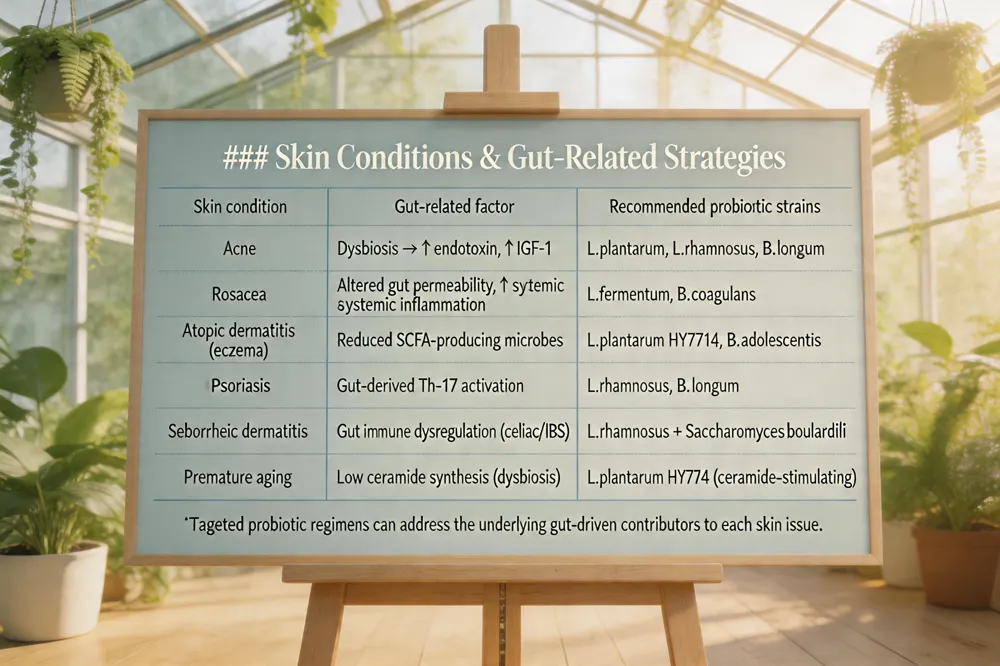 The gut‑skin axis connects intestinal microbiota balance with common dermatologic problems such as acne, rosacea, psoriasis, and seborrheic dermatitis. When dysbiosis increases gut permeability, inflammatory metabolites and endotoxins enter the bloodstream, often triggering the cutaneous signs listed under “Gut‑skin axis symptoms.” Typical skin manifestations include acne, rosacea flare‑ups, eczema, dry or flaky patches, and unexplained rashes, while patients may also experience bloating, gas, constipation, or abdominal pain.
Research shows that gut health can indeed influence seborrheic dermatitis, with higher odds of celiac disease and irritable bowel syndrome, ocular allergy, and dry eye in affected individuals. Modulating the gut microbiome with targeted probiotic strains offers a practical therapeutic avenue. The best‑studied anti‑inflammatory strains are Lactobacillus plantarum, Bifidobacterium longum, Lactobacillus fermentum, Bacillus coagulans, and Streptococcus thermophilus, all of which help reinforce barrier proteins, lower MMP activity, and reduce cytokine‑driven redness. For fungal‑related irritation, a multi‑strain formula that includes Lactobacillus rhamnosus, L. plantarum, and Saccharomyces boulardii shows the strongest antifungal activity against Malassezia.
Practical tips for patients at On The Spot Dermatology (Glenview, IL):
• Choose a probiotic supplement that lists the above strains and delivers ≥10 billion CFU with enteric coating.
• Incorporate fermented foods (yogurt, kefir, kimchi) and high‑fiber vegetables to boost SCFA production.
• Pair oral probiotics with a gentle, pH‑balanced topical regimen that includes ceramide‑supporting ingredients.
• Schedule a follow‑up visit to assess skin barrier metrics (TEWL, hydration) and adjust the probiotic regimen as needed.
Personalized Probiotic Care at On The Spot Dermatology
Personalized Assessment Workflow
| Assessment step | Method | Expected outcome |
|---|---|---|
| Medical & diet history | Structured questionnaire | Identify risk factors for dysbiosis (antibiotic use, diet, stress) |
| Stool analysis (optional) | Metagenomic sequencing or qPCR panel | Quantify key microbial taxa, SCFA‑producing abundance |
| Skin barrier metrics | TEWL measurement, corneometer hydration | Baseline barrier integrity for tracking |
| Serum inflammation markers | CRP, cytokine panel (optional) | Gauge systemic inflammatory load |
| Probiotic recommendation | Strain selection (e.g., L. plantarum HY7714) + dose ≥10 billion CFU | Tailored to restore specific deficits |
| Follow‑up (4‑6 weeks) | Repeat TEWL, patient‑reported symptom score | Adjust regimen based on objective & subjective response |
This protocol enables data‑driven, individualized probiotic‑skin care plans.
 At On The Spot Dermatology in Glenview, Illinois, our board‑certified dermatologists routinely include probiotic counseling as part of a comprehensive skin‑health assessment. During the initial visit we review the patient’s medical history, diet, stress levels, and any recent antibiotic use to identify signs of gut‑skin dysbiosis that may be driving acne, eczema, rosacea, or early photo‑aging. A targeted questionnaire, stool analysis when indicated, and an evaluation of skin barrier metrics such as transepidermal water loss (TEWL) allow us to pinpoint whether low short‑chain fatty‑ (SCFA) production, reduced ceramide synthesis, or altered tight‑junction protein expression is contributing to the skin’s concerns.
Based on these findings we design a personalized regimen that combines oral probiotic strains—such as Lactobacillus plantarum HY7714 to known to boost ceramides and reduce UV‑induced matrix metalloproteinases—with topical probiotic or postbiotic products that reinforce barrier proteins (claudin‑1, occludin, filaggrin) and calm inflammation. Nutrition recommendations emphasize high‑fiber, fermented foods to nurture SCFA‑producing gut microbes, while lifestyle guidance on sleep, stress management, and sun protection supports overall gut‑skin homeostasis. Follow‑up visits track skin outcomes, transepidermal water loss (TEWL), and patient‑reported symptom relief, allowing fine‑tuning of the probiotic‑skin protocol for optimal, lasting results.
Looking Ahead: Precision Microbiome Therapies
Emerging Precision Microbiome Approaches
| Therapy type | Mechanism | Current status |
|---|---|---|
| Postbiotic topical/oral | Deliver SCFAs, exopolysaccharides, ceramide‑stimulating peptides without live microbes | Early‑phase clinical trials – promising TEWL reduction |
| Synbiotic blends | Combine specific probiotic strains with prebiotic fibers for synergistic SCFA boost | Phase II trials show greater lesion improvement vs. probiotic alone |
| Designer bacterial consortia | Engineered multi‑strain mixes that secrete anti‑inflammatory enzymes or cytokine modulators | Pre‑clinical; first‑in‑human studies slated 2025‑2026 |
| Engineered strains (e.g., L. plantarum expressing ceramide‑stimulating peptide) | Live bacteria act as “living drug” delivering therapeutic peptides directly to gut/skin | IND‑enabling studies ongoing |
| Microbiome‑guided prescribing algorithms | AI‑driven matching of patient’s shotgun sequencing profile to strain‑specific formulations | Pilot programs in dermatology clinics, early efficacy data |
Precision microbiome medicine aims to move from generic probiotics to individualized, mechanism‑based therapies for lasting skin health.
 The gut‑skin axis is rapidly moving from basic research to clinical tools that can be tailored to each patient’s microbial profile. Emerging studies on post‑biotics—metabolic by‑products such as short‑chain fatty acids, exopolysaccharides, and ceramide‑stimulating peptides—show they can be formulated into stable topical or oral products that bypass the challenges of live‑culture stability while still delivering anti‑inflammatory, antioxidant, and barrier‑strengthening benefits. Parallel work on synbiotics, which combine specific probiotic strains with prebiotic fibers, demonstrates synergistic boosts in beneficial taxa and greater production of protective metabolites, translating into measurable reductions in transepidermal water loss and lesion severity in acne and atopic dermatitis trials.
Microbiome‑based drugs, including designer bacterial consortia and engineered strains that secrete targeted enzymes or cytokine modulators, are entering early‑phase dermatology studies, offering the prospect of disease‑modifying therapy rather than symptomatic relief. Personalized probiotic regimens are becoming feasible as affordable shotgun sequencing and targeted qPCR panels allow clinicians to map an individual’s gut and skin microbial composition, then match strain‑specific formulations—such as Lactobacillus plantarum HY7714 for ceramide support or Bifidobacterium adolescentis for tyrosinase inhibition—to the patient’s needs.
Future dermatology practice will likely integrate routine microbiome testing into skin‑health visits, use data‑driven algorithms to prescribe bespoke probiotic or synbiotic protocols, and combine these with conventional treatments to optimize barrier function, reduce inflammation, and slow photoaging. This precision‑microbiome approach promises more durable, holistic outcomes for patients seeking both therapeutic and aesthetic improvements.
Putting It All Together for Healthier Skin
The gut‑skin axis shows that a balanced intestinal microbiome reduces systemic inflammation, boosts ceramide production, and strengthens the skin barrier, leading to clearer, more hydrated skin and slower signs of aging. Key take‑aways for patients are: (1) a diverse, fiber‑rich diet and probiotic foods support skin health; (2) oral or topical probiotic formulations can lower transepidermal water loss, calm redness, and protect against UV‑induced damage; and (3) individual strain selection matters, so personalized guidance yields the best results. Schedule a consultation at On The Spot Dermatology in Glenview, Illinois, to receive a customized gut‑skin assessment and targeted probiotic‑based treatment plan.