Why Skin Confidence Matters
Skin confidence is the degree to which a person feels satisfied with the appearance and health of their skin, and it is tightly linked to overall self‑esteem and mental‑health outcomes. Evolutionary psychology suggests that clear, even skin tones signal health, youth, and genetic fitness, so humans have developed rapid, reward‑based brain responses to healthy skin (activation of the ventral striatum and nucleus accumbens within milliseconds). These ancient cues continue to shape modern social judgments: clear skin is associated with competence, trustworthiness, and leadership ability, influencing first‑impression ratings in both personal and professional contexts. Consequently, low skin confidence can trigger anxiety, depression, and social withdrawal, while heightened confidence improves social engagement, workplace performance, and willingness to pursue opportunities. Understanding this bidirectional link underscores the importance of personalized dermatologic care—both medical and cosmetic—to reinforce skin health and, in turn, boost confidence and quality of life.
The Two‑Way Street: Mental Health and Skin Conditions
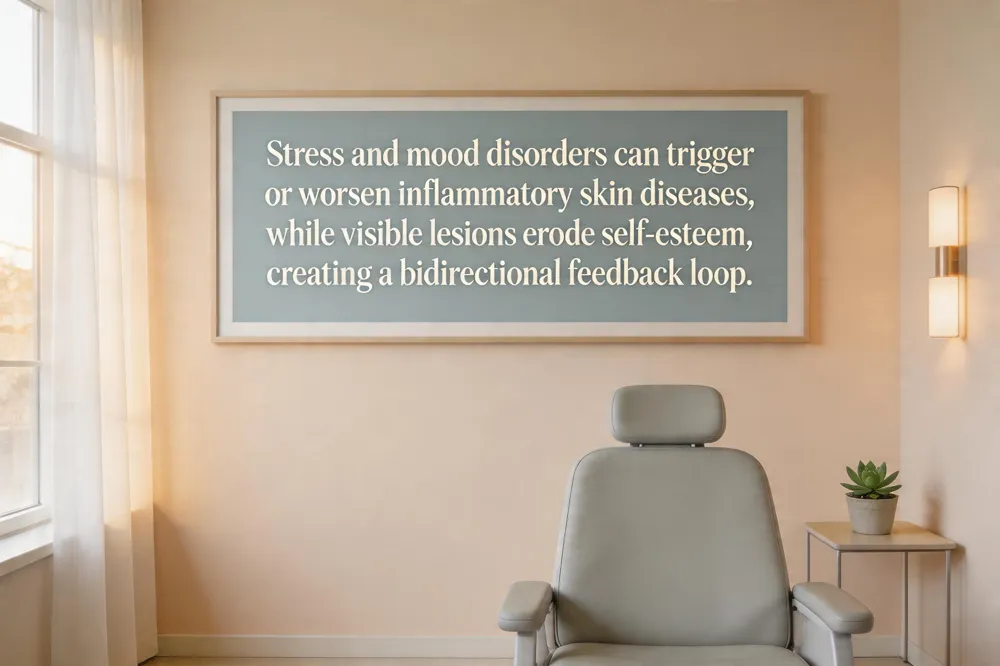 Bidirectional relationship – Stress, anxiety, and depression can trigger or worsen psoriasis, eczema, acne, and rosacea through hormonal (cortisol), immune (cytokine) and neuro‑vascular pathways. Conversely, visible lesions erode self‑esteem, body image and social confidence, leading to heightened anxiety, depressive symptoms and social withdrawal. This feedback loop is documented across psychodermatology studies, which show that patients with inflammatory skin disease have 2‑3× higher rates of depression and anxiety than the general population.
Psychodermatology’s multidisciplinary model – The subspecialty integrates dermatologic therapy with psychological care (cognitive‑behavioral therapy, mindfulness‑based stress reduction, biofeedback). Clinics that screen with DLQI or other psychosocial tools, provide patient education, and involve mental‑health professionals report up to 30% greater quality‑of‑life improvements and reduced treatment intensity. Collaborative care also lowers cortisol, improves barrier function and supports long‑term skin health.
Clinical evidence for mental‑health screening – Randomized trials demonstrate that patients receiving combined dermatologic‑psychological care achieve higher adherence, larger reductions in lesion severity and measurable boosts in confidence (e.g., 30% QoL increase after laser resurfacing). Routine psychosocial assessment thus predicts treatment satisfaction and sustains confidence.
Answers to key questions
- Mental health and skin conditions: Stress amplifies inflammation; visible disease fuels anxiety and low self‑esteem; integrated treatment restores both skin and mind.
- Dermatology and mental health: Chronic skin disease triggers emotional distress; psychodermatology offers combined therapeutic plans for holistic recovery.
- Psychodermatology: A field that studies the neuro‑immune‑cutaneous‑endocrine loop, applying multidisciplinary interventions to break the skin‑mind cycle.
At On The Spot Dermatology we screen for psychosocial distress, educate patients, and partner with mental‑health specialists to deliver personalized, evidence‑based care.
Perception, Self‑Esteem, and Social Support
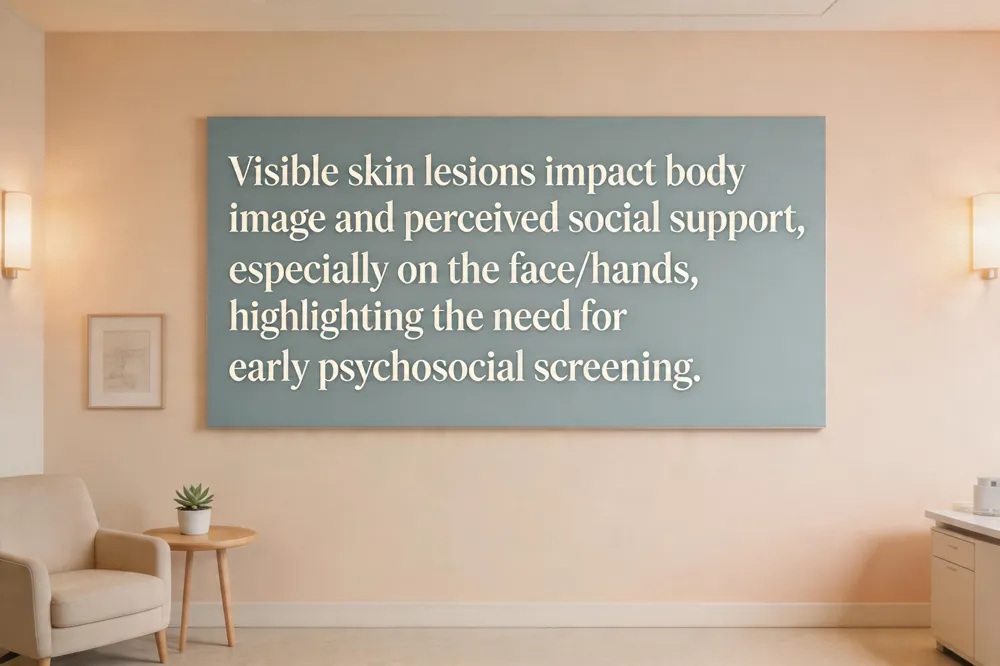 Visible skin cues—such as acne, eczema, or psoriasis—are powerful drivers of self‑image. When lesions are on the face or hands, patients often feel less attractive and anticipate negative judgments, a phenomenon supported by psychodermatology studies that link skin appearance to self‑esteem and perceived social support. A Cypriot study of 162 adults showed that severe facial acne produced the lowest self‑esteem and social‑support scores, even after six months of pharmacological treatment, whereas non‑visible psoriasis/eczema had a milder impact. These findings echo broader research on body image: media exposure, cultural norms, and gender expectations shape how individuals evaluate their skin and overall appearance. Women tend to experience greater pressure toward flawless skin, while men are more affected by perceived masculinity cues. The "looking‑glass self" and "self‑discrepancy" theories explain how internalized standards heighten anxiety when skin falls short of ideals. Integrating psychological screening (e.g., DLQI, Rosenberg Self‑Esteem Scale) before and after dermatologic care enables clinicians to identify distress early. Combined medical, cosmetic, and psychosocial interventions—such as mindfulness, CBT, and personalized education—can restore confidence, improve perceived support, and enhance quality of life for patients navigating skin‑related challenges.
Cognitive Biases, Media, and the Beauty Obsession
 Negative cognitive biases—especially negativity bias and spotlight effect—cause patients to over‑estimate how much others notice skin imperfections, while upward social comparison on platforms like Instagram amplifies that distress. Idealized skin images create a perpetual "beauty‑obsession" that drives anxiety, depression, and excessive spending on cosmetics.
Cultural norms further shape this dynamic. In the United States a clear, even complexion is linked to health, professionalism, and even competence through the halo effect, while other regions prioritize different attributes such as defined eyebrows or fuller lips. Media exposure to flawless skin therefore fuels a feedback loop: the more patients see unattainable standards, the stronger the internal pressure to conform, which can lower self‑esteem and increase cortisol‑driven inflammation.
Addressing the obsession requires a balanced approach:
- Mindful media consumption – limit exposure to heavily edited images and curate realistic skin‑care content.
- Education and positive reinforcement – dermatologists can provide personalized skin health education, setting realistic expectations and using psychosocial screening tools (e.g., DLQI) to identify patients at risk for low skin confidence.
- Integrated interventions – combine evidence‑based medical or cosmetic treatments (laser resurfacing, topical retinoids) with psychodermatology techniques such as CBT, mindfulness‑based stress reduction, and mirror‑exposure therapy to break the bias‑driven cycle.
By recognizing how bias, media, and cultural standards intersect, clinicians can help patients achieve authentic skin confidence that supports both dermatologic health and overall well‑being.
Behavioral Clues and Mind‑Skin Connection
 Skin‑related habits such as frequent scratching, picking, or face‑touching are often the first outward signs that a skin condition is active or worsening. Patients may develop compulsive habits—picking at pimples, scabs, or eczema plaques—that lead to scarring, secondary infection, and a visible cycle of distress. Stress‑driven behaviors like nail‑biting, hair‑pulling, or excessive rubbing can further irritate the skin barrier, while avoidance tactics—concealing clothing, heavy makeup, or social withdrawal—signal underlying dissatisfaction with skin appearance.
Mirror‑exposure therapy and structured self‑image exercises have been shown to reduce negative self‑perception and boost skin confidence over time. By repeatedly viewing one’s own face in a neutral, non‑judgmental manner, patients learn to re‑frame critical thoughts, diminish the "spotlight effect" that exaggerates perceived imperfections, and increase acceptance of natural skin texture.
The mind‑skin connection is rooted in neuro‑immune pathways: stress triggers cortisol and catecholamine release, which increase sebaceous activity, inflammation, and barrier disruption—exacerbating acne, rosacea, psoriasis, and eczema. Conversely, relaxation activates the parasympathetic system, lowering inflammatory cytokines and supporting collagen synthesis, which improves texture and tone. Neuroimaging studies reveal that viewing one’s healthy skin activates reward circuitry (ventral striatum), reinforcing positive self‑image, while perceived blemishes engage threat‑detection regions (amygdala).
Emotional triggers such as chronic anxiety, fear, or depressive moods elevate stress hormones, creating a feedback loop that worsens skin disease and deepens psychological distress. Addressing these drivers through mindfulness, cognitive‑behavioral therapy, and supportive counseling—combined with personalized medical or cosmetic treatments—breaks the cycle, restores barrier function, and ultimately enhances both skin health and overall well‑being.
Medical and Cosmetic Treatments as Confidence Boosters
 Medical and cosmetic dermatologic treatments—ranging from acne therapy and topical retinoids to laser resurfacing, chemical peels, and hyaluronic‑acid filler injections—have been shown to produce measurable improvements in both skin health and patients' subjective confidence. Randomized trials report that laser resurfacing can raise quality‑of‑life scores related to skin appearance by up to 30 % after 12 weeks, while aesthetic filler procedures enhance first‑impression ratings and perceived happiness in observers. Evidence suggests that combining medical modalities (e.g., retinoids) with cosmetic interventions (e.g., peels) yields greater gains in skin confidence than either approach alone, likely because the synergy addresses both underlying pathology and surface texture. Patients report the most sustainable confidence boosts when enhancements are incremental and subtle—such as light dermal fillers or neuromodulators—because these changes appear natural, reduce the risk of post‑treatment dissatisfaction, and align with realistic expectations set through shared decision‑making. Ultimately, skin confidence is rooted in personal perception of appearance; improving that perception through evidence‑based treatments directly shapes emotional wellbeing, fostering higher self‑esteem, reduced social anxiety, and a more positive outlook on daily interactions.
Lifestyle, Prevention, and the Inflammatory Loop
 A robust daily regimen that combines UV protection, moisturization, adequate sleep, and a balanced diet creates a physiological foundation for healthy skin and higher skin confidence. Broad‑spectrum sunscreen (SPF 15 or higher) applied consistently over years halts visible signs of photo‑aging and curtails skin‑derived inflammation. While the "Slip, Slop, Slap, Slide, Seek Shade" protocol—protective clothing, wide‑brimmed hats, and sunglasses—significantly reduces UV‑induced inflammatory cascades (https://www.bbc.com/future/article/20230823-the-curious-ways-your-skin-shapes-your-health). Twice‑daily topical moisturizers restore lipid barrier function, lower inflammatory biomarkers, and, in older adults, have been linked to preserved cognitive performance over three years. Mind‑body practices such as mindfulness meditation, stress‑reduction techniques, and sufficient sleep improve barrier integrity, lower cortisol, and diminish flare‑ups of acne, eczema, or psoriasis, indirectly boosting self‑esteem. The mind‑skin connection explains how psychological stressors directly exacerbate skin inflammation, creating a feedback loop that can be broken by regular mindfulness, adequate rest, and supportive lifestyle habits. Together, these preventive strategies not only protect skin health but also reinforce a positive self‑image, supporting both dermatologic outcomes and overall well‑being.
Personalized Care, Education, and Future Directions
 Shared decision‑making and realistic expectations are now cornerstones of dermatologic practice. When clinicians involve patients in choosing treatment pathways—balancing medical, cosmetic, and lifestyle options—satisfaction rises and confidence . Studies consistently show that personalized care plans that set realistic expectations and involve shared decision‑making improve treatment satisfaction and long‑term confidence .
Patient education and positive reinforcement from dermatologists also boost skin confidence independent of objective skin condition. Empathetic communication, clear explanations of disease mechanisms, and encouragement of incremental improvements help patients develop a compassionate self‑image, reducing the impact of cognitive biases such as negativity and spotlight effects.
Incorporating psychosocial screening tools, notably the Dermatology Life Quality Index (DLQI), allows clinics to identify individuals at risk for low skin confidence early. Routine screening uncovers hidden anxiety, depression, or social‑support deficits, enabling targeted interventions such as counseling, mindfulness programs, or peer‑support groups.
Emerging research gaps include longitudinal studies on how digital self‑care tools influence confidence and the role of cultural norms in shaping expectations. Empowering patients through education, shared decision‑making, and systematic psychosocial assessment promises a future where skin health and psychological well‑being advance together.
Putting It All Together: Confidence Starts With Perception
Research across psychodermatology shows that thoughts, stress, and mood directly alter skin barrier function, while visible skin changes feed back to the brain, heightening anxiety and lowering self‑esteem. This two‑way loop means that improving skin health can lift confidence, and cultivating confidence can reduce inflammation. At On The Spot Dermatology we combine medical treatments such as laser resurfacing, topical retinoids, and biologics with counseling, mindfulness‑based stress reduction, and personalized education. We use quality‑of‑life tools to identify patients who would benefit from psychosocial support. We encourage you to practice self‑compassion, follow an evidence‑based skincare routine, and view each visit as a step toward both healthier skin and a stronger sense of self. Your journey toward confidence begins today.