Understanding Urban Pollution and Your Skin
Living in a city means your skin constantly encounters airborne pollutants such as fine particulate matter (PM2.5 and PM10), volatile organic compounds (VOCs), polycyclic aromatic hydrocarbons (PAHs) and ground‑level ozone (O₃). These agents generate reactive oxygen species that overwhelm the skin’s natural antioxidant defenses, leading to oxidative stress. The resulting free radicals damage collagen and elastin, accelerate wrinkle formation, and trigger inflammation that worsens acne, eczema, and hyperpigmentation. At the same time, pollutants disrupt the stratum corneum, increasing transepidermal water loss and compromising the barrier that normally keeps irritants out. A weakened barrier allows more particles and chemicals to penetrate, amplifying dryness, redness, and sensitivity. Understanding these mechanisms is the first step toward a personalized regimen that reinforces the barrier, neutralizes radicals, and protects against the combined assault of UV radiation and urban pollutants.
Mechanisms of Pollution‑Induced Skin Damage
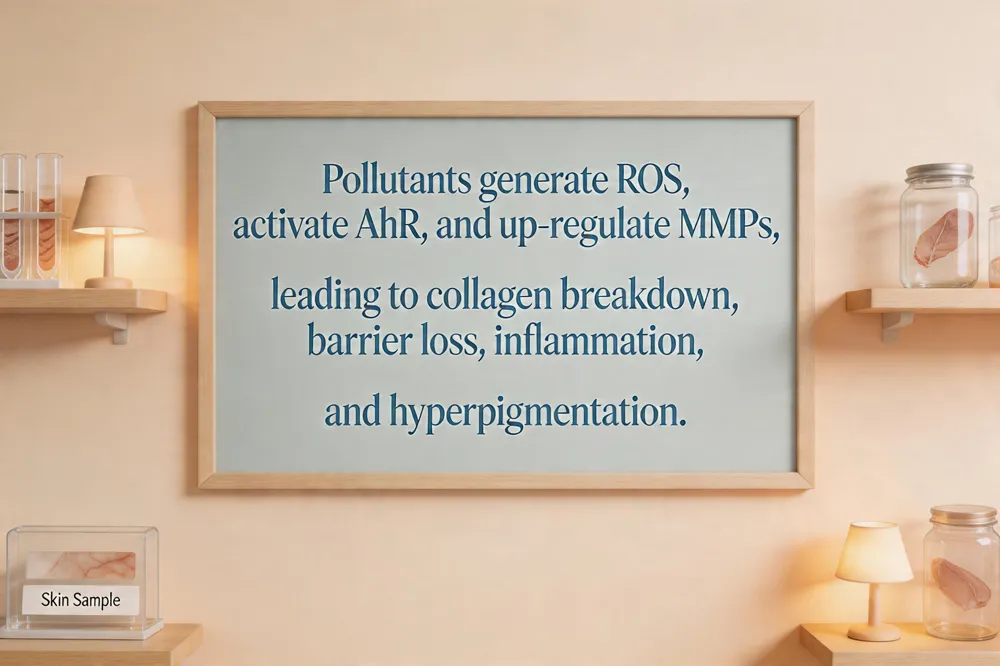 Air pollution brings particulate matter, VOCs, PAHs and ozone to the skin. These agents generate reactive oxygen species (ROS) that overwhelm antioxidants, causing lipid peroxidation, DNA damage and breakdown of collagen and elastin. ROS also up‑regulate matrix metalloproteinases (MMP‑1, MMP‑3) which degrade the dermal matrix and accelerate wrinkles. The aryl hydrocarbon receptor (AhR) senses PAHs and dioxins; its activation triggers CYP1A1 metabolism, NF‑κB signaling and pro‑inflammatory cytokines (IL‑6, IL‑8, IL‑1α). This cascade harms the stratum corneum, raising transepidermal water loss (TEWL) and permitting irritants to penetrate, leading to dryness, redness, hyperpigmentation and worsening of acne, eczema, psoriasis and rosacea. Because pollutants also diminish UVB‑driven vitamin D synthesis, skin repair processes are further compromised. In addition, topical niacinamide inhibits AhR‑mediated inflammation and stimulates ceramide synthesis, further reducing TEWL. Daily double‑cleansing removes deposited particles, while antioxidant‑rich diets (berries, leafy greens, omega‑3s) support systemic defenses. Emerging agents such as tapinarof (AhR/Nrf2 dual agonist) and melatonin provide both anti‑inflammatory and DNA‑repair benefits, representing anti‑pollution strategies. Thus, a comprehensive regimen is essential for urban skin health.
Daily Cleansing and Barrier Restoration
 Urban air pollutants settle on the skin, so a robust cleansing and barrier‑repair routine is essential. A double‑cleansing protocol—first an oil‑based cleanser to dissolve oil‑soluble grime, then a gentle water‑based cleanser—removes both makeup and particulate matter without stripping lipids. For oily skin, AHA/BHA‑based cleansers exfoliate dead cells and clear clogged pores, while soap‑free formulas enriched with hyaluronic acid keep the barrier intact for sensitive or dry types. After cleansing, apply a fragrance‑free moisturizer packed with ceramides and hyaluronic acid; these lipids and humectants rebuild the stratum corneum, reduce transepidermal water loss, and block pollutant penetration.
How to protect skin from air pollution? Cleanse nightly, follow with antioxidant serums (vitamin C, niacinamide, green‑tea), seal with ceramide‑rich moisturizer, and finish with SPF 30+ broad‑spectrum sunscreen.
How to remove pollution from skin? Use the double‑cleanse, then an antioxidant serum, and moisturize while skin is damp.
What pulls toxins out of skin? Toxins are eliminated internally; topical care supports appearance, not detoxification.
Antioxidant Strategies and Topical Defenses
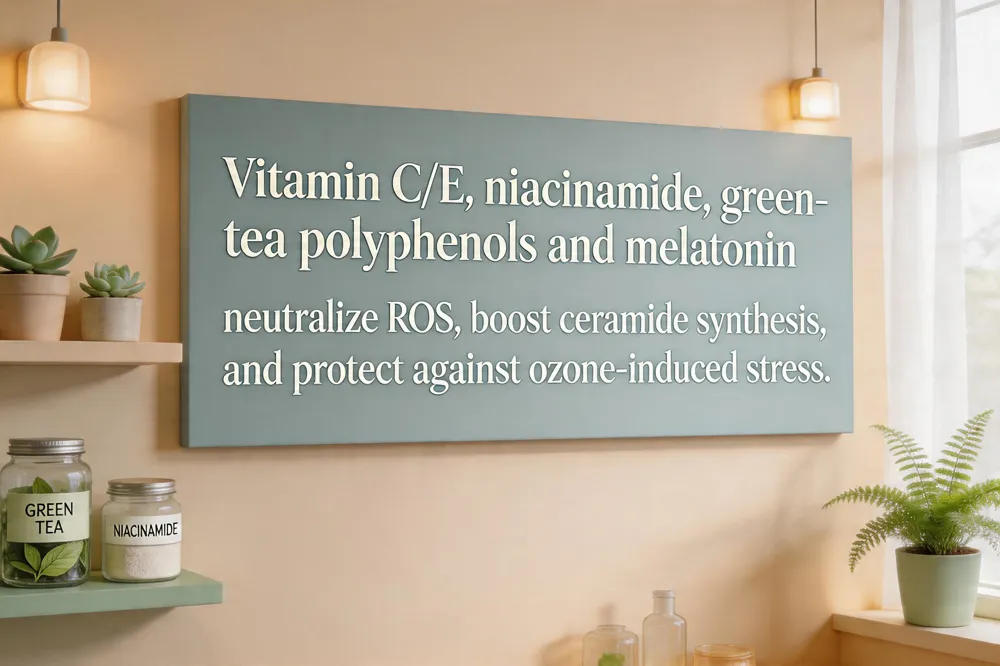 Urban air pollutants—PM2.5, ozone, VOCs, PAHs—generate free radicals that overwhelm the skin’s natural defense, degrade collagen, and impair the barrier, leading to premature aging, hyperpigmentation, and inflammation. A daily regimen that begins with a gentle, pollutant‑removing cleanser removes surface particles and prevents clogged pores. Follow with a leave‑on serum rich in vitamin C and vitamin E, which scavenge ROS and restore depleted antioxidants; niacinamide and green‑tea polyphenols further calm low‑grade inflammation and boost ceramide synthesis. Ferulic acid stabilizes vitamin C, while resveratrol and melatonin provide broad‑spectrum protection against ozone‑ and blue‑light‑induced oxidative stress. Combining water‑soluble and lipid‑soluble agents into a topical antioxidant blend maximizes skin penetration and neutralizes a wide range of radicals. Barrier‑repair moisturizers containing ceramides, hyaluronic acid, and fatty acids seal in moisture and limit pollutant penetration. Finally, a broad‑spectrum sunscreen (SPF 30‑50) shields against UV‑driven photo‑oxidation, but it does not replace antioxidant serums or barrier creams for pollution defense.
Sunscreen and UV‑Pollution Synergy
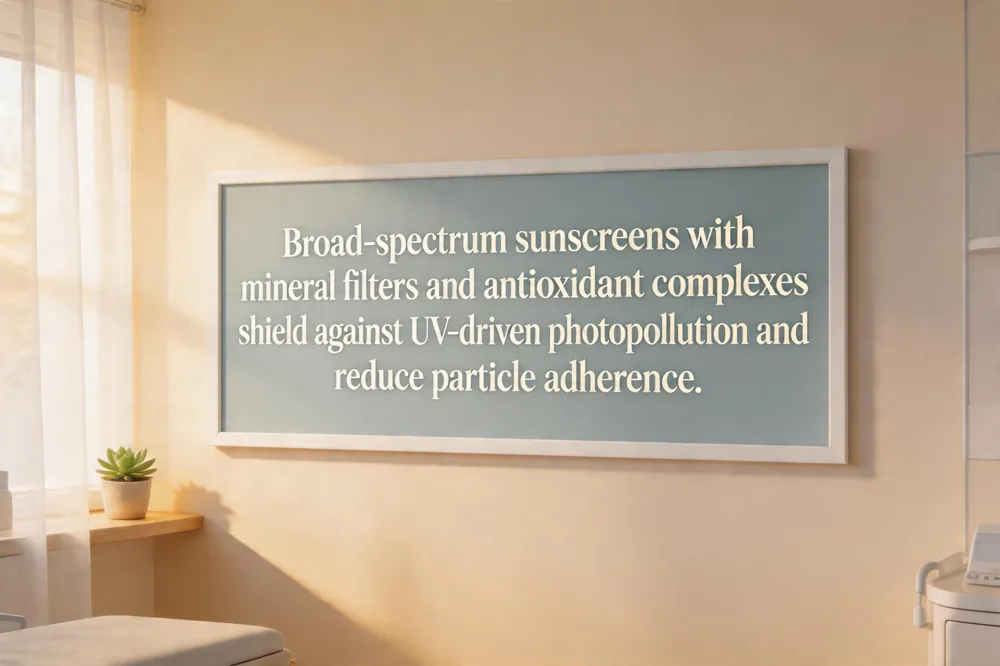 Broad‑spectrum sunscreens of SPF 30 or higher—especially those formulated with mineral filters such as zinc oxide or titanium dioxide—provide a physical shield against UVA and UVB rays while also reducing the adherence of airborne particles to the skin surface. Modern anti‑pollution sunscreen blends add antioxidant complexes (e.g., alpine sanicle, blackcurrant, green tea polyphenols) that scavenge free radicals generated by ozone and particulate matter, creating a dual‑defense against "photopollution"—the synergistic damage caused when UV radiation activates pollutants like PAHs.
Anti‑pollution sunscreen: These formulas combine UV filters with skin‑friendly antioxidants and barrier‑supporting ingredients (ceramides, niacinamide) to neutralize toxic radicals and limit pollutant penetration. They are oil‑free, lightweight, and can serve as a primer under makeup, making them ideal for daily use in urban environments such as Glenview.
Does sunscreen protect from pollution? Sunscreen’s primary role is UV protection; it does not block particles or gases. However, antioxidant‑enriched sunscreens can mitigate oxidative stress from pollutants, but cleansing and barrier‑repair products remain essential.
Effects of air pollution: Fine particles (PM2.5) and ozone generate reactive oxygen species that degrade collagen, increase transepidermal water loss, and trigger inflammation, accelerating wrinkles, hyperpigmentation, and acne. UV exposure amplifies these effects, underscoring the need for combined antioxidant, barrier, and sunscreen strategies.
Lifestyle, Nutrition, and Indoor Air Quality
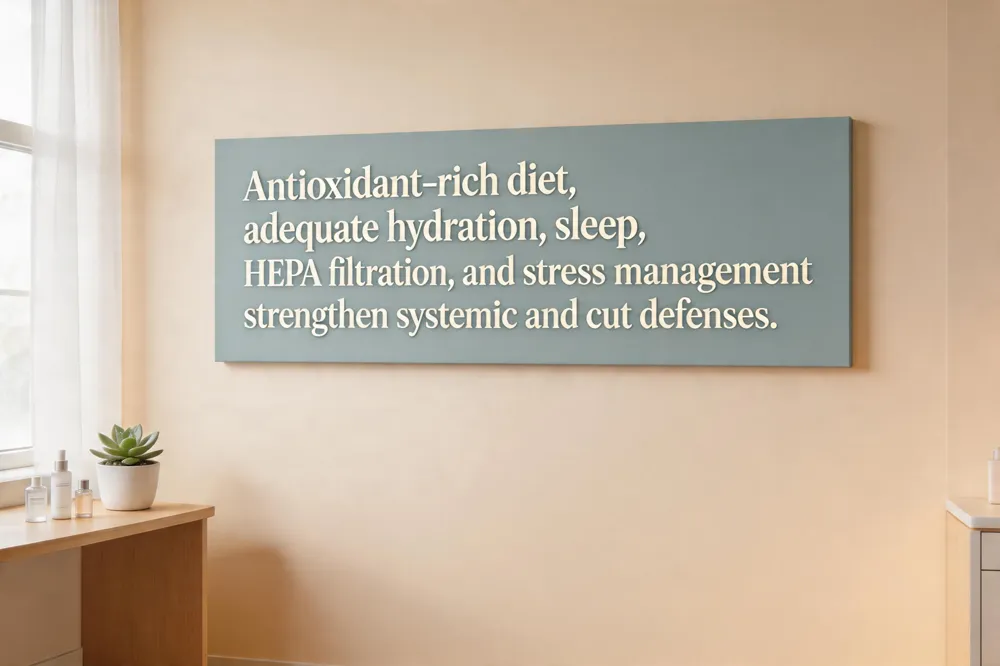 A diet rich in antioxidants—berries, leafy greens, nuts, and citrus—provides vitamins C and E, polyphenols, and omega‑3s that neutralize free radicals generated by urban pollutants and support collagen integrity. Adequate hydration and 6‑7 hours of quality sleep each night restore the skin barrier, reduce transepidermal water loss, and enhance cellular repair processes. Using HEPA‑rated air purifiers and humidifiers in home and office lowers airborne particulate matter and maintains optimal skin moisture, preventing dryness and irritation. Regular moderate exercise improves circulation and lung function, aiding systemic detoxification, while stress‑management techniques such as mindfulness, yoga, or adequate rest lower cortisol levels that can exacerbate barrier disruption and acne. To counter pollution‑related skin damage, cleanse the face nightly with a gentle, alcohol‑free cleanser, then apply an antioxidant serum (vitamin C, niacinamide, green‑tea extract) and a fragrance‑free, ceramide‑rich moisturizer while the skin is still damp. Finish with a broad‑spectrum sunscreen SPF 30 + to shield against UV‑induced oxidative stress. Protecting the skin also includes physical barriers: wide‑brimmed hats, UV‑blocking sunglasses, and breathable clothing that limit particulate deposition. Together, these lifestyle, nutritional, and indoor‑air strategies create a comprehensive defense against the cumulative assaults of urban pollution on skin health.
Professional Treatments and Long‑Term Care
 Urban pollutants accelerate oxidative stress, collagen breakdown and barrier disruption. Peels and microneedling remove pollutant‑laden dead cells, stimulate repair and boost collagen, while laser resurfacing targets pigment irregularities from PAH‑induced melanin overproduction. Prescription barrier‑repair creams with ceramides, fatty acids and niacinamide restore the stratum corneum, reduce transepidermal water loss and limit pollutant penetration. Clinical guidance recommends a regimen: cleanse, antioxidant serum (vitamin C, green tea), barrier‑repair moisturizer, SPF 30‑50, plus peels, microneedling or laser sessions needed.
Can air pollution cause skin problems? Yes; particles, VOCs and ozone generate ROS, activate AhR, and trigger inflammation, leading to acne, hyperpigmentation, premature aging, atopic dermatitis and psoriasis.
Air pollution and skin diseases: evaluation of associated mechanism—Reactive oxygen species, AhR‑mediated signaling, barrier breakdown and MMP activation drive oxidative damage, collagen loss and pigment changes.
Anti‑pollution mask—A fitted N95‑type mask filters PM2.5, pollen and gases, reducing skin exposure to irritants while supporting topical therapies.
Putting It All Together for Healthy Urban Skin
Living in a bustling city means your skin is constantly under attack from particulate matter, ozone, VOCs, and UV radiation. A personalized daily regimen starts with a gentle double‑cleanse—an oil‑based cleanser followed by a pH‑balanced, hydrating cleanser—to strip away settled grime without compromising the barrier. Follow with a antioxidant serum (vitamin C, niacinamide, or green‑tea extract) to neutralize free radicals, then seal in moisture with a ceramide‑rich moisturizer that restores lipid layers. Finish with a broad‑spectrum SPF 40+ sunscreen that also contains mineral filters to block UV and scatter airborne particles.
Air‑quality monitoring is the next pillar of protection. Use a reliable app or local air‑quality index to identify high‑PM2.5 or ozone days, and limit outdoor exposure during rush‑hour peaks. When pollution spikes, add a physical barrier—such as a silicone‑based primer or a mask with particulate filters—to reduce direct contact with irritants.
Finally, schedule regular dermatologist follow‑ups, ideally every six months, to assess barrier health, update your anti‑pollution protocol, and address early signs of acne, eczema, or hyperpigmentation. Tailored professional treatments—chemical peels, laser resurfacing, or targeted prescription creams—can reverse pollution‑induced damage and keep your skin resilient despite the urban exposome.