Introduction
After a laser, peel, microneedling, or surgical incision, the skin’s barrier is compromised and inflammation spikes, making it prone to prolonged erythema, swelling, and delayed healing. Effective post‑procedure care therefore hinges on two principles: restoring the lipid‑protein barrier and calming the inflammatory cascade. Evidence‑based ingredients act synergistically—niacinamide (up to 10 %) boosts ceramide synthesis and dampens cytokine release; panthenol and allantoin accelerate epidermal differentiation and soothe irritation; centella asiatica and madecassoside modulate TNF‑α/IL‑6 and stimulate collagen; azelaic acid (15 % gel) directly reduces erythema in rosacea‑type redness; ceramides (NP, AP, EOS) replenish the stratum corneum’s lipid matrix; and antioxidant‑ extracts (green tea EGCG, aloe vera) neutralize ROS from UV or procedural energy. When layered in the recommended order—cleanser → water‑based serum (niacinamide or centella) → targeted treatment (azelaic acid) → ceramide‑rich moisturizer → sunscreen—these actives reinforce barrier repair, limit vasodilation, and promote faster, calmer recovery.
Core Soothing Actives for Redness Control
 Redness after cosmetic procedures, rosacea, or acne flare‑ups is driven by inflammation, barrier disruption, and vascular dilation. Niacinamide (up to 10 %) strengthens the lipid barrier, suppresses inflammatory cytokines such as TNF‑α and IL‑6, and reduces transepidermal water loss, making it the top choice for calming sensitivity without stinging. Azelaic acid (15 % gel) offers dual benefits: it inhibits pro‑inflammatory pathways and provides mild exfoliation, which improves erythema in rosacea‑prone skin and accelerates post‑procedure recovery. Clinical trials show it outperforms metronidazole after 12 weeks. Centella asiatica (cica) delivers madecoside and asiaticoside that modulate cytokine release, stimulate fibroblast activity, and boost collagen synthesis, thereby reducing swelling and enhancing scar quality. Barrier‑supporting hydrators such as aloe vera, panthenol (5 %), and colloidal oatmeal replenish moisture, deliver anti‑inflammatory polysaccharides, and promote epidermal differentiation, which together soothe erythema and prevent scab formation.
Q: Azelaic acid – A naturally occurring dicarboxylic acid that works as an antioxidant and anti‑inflammatory agent; 10‑15 % gels calm rosacea, acne, and post‑procedure redness with minimal irritation.
Q: Most suitable for redness and sensitivity? – Niacinamide (vitamin B3) is the leading ingredient, reinforcing the barrier and inhibiting inflammatory mediators.
Q: Best ingredients for acne redness? – Azelaic acid, Niacinamide, tranexamic acid, and licorice‑root glycyrrhetinic acid together reduce inflammation while keeping pores clear.
Q: Best ingredients for rosacea? – Hyaluronic acid, ceramides, Azelaic acid, Niacinamide, and aloe vera provide hydration, barrier repair, and anti‑inflammatory effects; mineral sunscreen (zinc oxide/titanium dioxide) protects against UV‑triggered flushing.
Barrier‑Repair and Hydration Strategies
 Restoring the skin’s lipid matrix is the cornerstone of post‑procedure healing. Ceramides (NP, AP, EOS), cholesterol and fatty acids rebuild the stratum corneum, cut transepidermal water loss and prevent irritant‑induced erythema. Humectants such as hyaluronic acid, glycerin and panthenol draw water into the epidermis, keeping the wound moist and accelerating re‑epithelialization. Soothing agents—colloidal oatmeal and allantoin induce genes for epidermal differentiation and provide a protective film that calms inflammation. A recommended layering order is: Layering order: cleanse → water‑based serum → targeted treatment → ceramide moisturizer → sunscreen.
Best ingredients for post‑procedure healing and reducing redness – Ceramides, niacinamide, azelaic acid, aloe vera, centella asiatica, licorice root, bisabolol, peptides (e.g., palmitoyl‑tripeptide‑8) and anti‑inflammatory botanicals.
Skin‑care ingredients to avoid – Retinoids (generally avoided immediately after procedures), fragrance, alcohol, harsh surfactants, AHAs, and strong exfoliants for at least 7‑10 days after treatment.
Best ingredients for post‑procedure skin care at home – Aloe vera gel, panthenol‑rich moisturizers (panthenol, colloidal oatmeal, and a mineral sunscreen with zinc oxide or titanium dioxide (Broad‑spectrum mineral sunscreen).
How to reduce facial redness quickly – Apply a cool compress (chilled chamomile tea or water) for 5‑10 minutes, then a thin layer of a ceramide‑niacinamide moisturizer; finish with SPF 30+ sunscreen.
How to reduce facial redness quickly at home – Cool compress, pure aloe vera gel, fragrance‑free panthenol or allantoin moisturizer, and immediate sun protection.
Nutrition, Supplements, and Hydration for Faster Recovery
 Optimizing post‑operative healing begins with a nutrient‑dense diet that supplies the building blocks for tissue repair. High‑quality protein sources—lean meats, fish, eggs, tofu, beans, and nuts—provide the amino acids needed for collagen synthesis and new skin formation. Colorful fruits and vegetables such as citrus, bell peppers, berries, and leafy greens deliver vitamin C, vitamin A and antioxidants that boost collagen production, reduce inflammation, and protect cells from oxidative stress. Magnesium‑rich foods (avocado, almonds, leafy greens) and zinc‑rich options (pumpkin seeds, beef, lentils) support DNA synthesis, immune function, and barrier repair, all essential for faster wound closure.
For targeted supplementation, Juven® is commonly prescribed twice daily for roughly 14 days after surgery, mixed with 8‑10 fl oz of water and taken each morning and evening under medical supervision. The protocol can be extended if the incision remains incompletely healed.
Hydration is equally crucial: aim for at least 64 oz of plain water daily, supplemented with electrolyte‑rich beverages (coconut water, light sports drinks) and bone broth, which supplies collagen, glycine, and proline for scar remodeling. Anti‑inflammatory teas—ginger, turmeric (curcumin), chamomile, and peppermint—help soothe post‑surgical swelling and nausea. Avoid alcoholic, caffeinated, and sugary drinks, as they may dehydrate, exacerbate inflammation, and interfere with healing.
In summary, a balanced intake of protein, collagen‑rich foods, vitamin C, zinc, and magnesium, combined with a short‑term Juven® regimen and careful hydration, creates an optimal environment for rapid, comfortable recovery.
Wound Care, Healing Stages, and Visual Guidance
 Typical timelines for shave, punch, and mole biopsies are similar in that the inflammatory phase lasts the first 24‑48 hours, followed by a proliferative period of 3‑10 days and a remodeling phase that can extend 2‑4 weeks. A shave biopsy shows a raw surface that crusts within 1‑2 days, a thin scab that falls off by week 1‑3, and pink, minimally scarred skin after a month. A punch biopsy progresses from a raw red wound to a larger scab by days 3‑7, granulation tissue by day 10‑14, and a flat scar that fades after two weeks. Mole biopsy healing follows the same pattern: red and swollen at 24‑48 hours, a protective crust by day 3‑5, granulation tissue by the end of week 1, and remodeling to a smooth, faint scar by 4‑6 weeks.
Moisture‑rich ointments such as petrolatum, Aquaphor, or silicone‑gel sheets keep the wound moist, reduce transepidermal water loss, and support optimal scar formation.
Signs of infection include increasing redness, swelling, warmth, pain, or purulent discharge; any of these warrant prompt professional evaluation.
UV protection is essential once the wound is closed—apply a broad‑spectrum mineral sunscreen (zinc oxide or titanium dioxide, SPF 30+) daily and avoid direct sun for the first 2‑4 weeks to prevent hyperpigmentation and prolonged erythema.
Quickly reducing facial redness: cool a compress (e.g., chilled chamomile tea or water) for 5‑10 minutes, cleanse gently, then apply a fragrance‑free barrier‑repair moisturizer with ceramides, niacinamide, or aloe vera. Avoid known triggers (spicy foods, alcohol, extreme temperatures) and finish with SPF 30+ sunscreen.
Long‑Term Strategies, Lifestyle, and When to Seek Professional Help
 Sun protection as the cornerstone of post‑procedure care
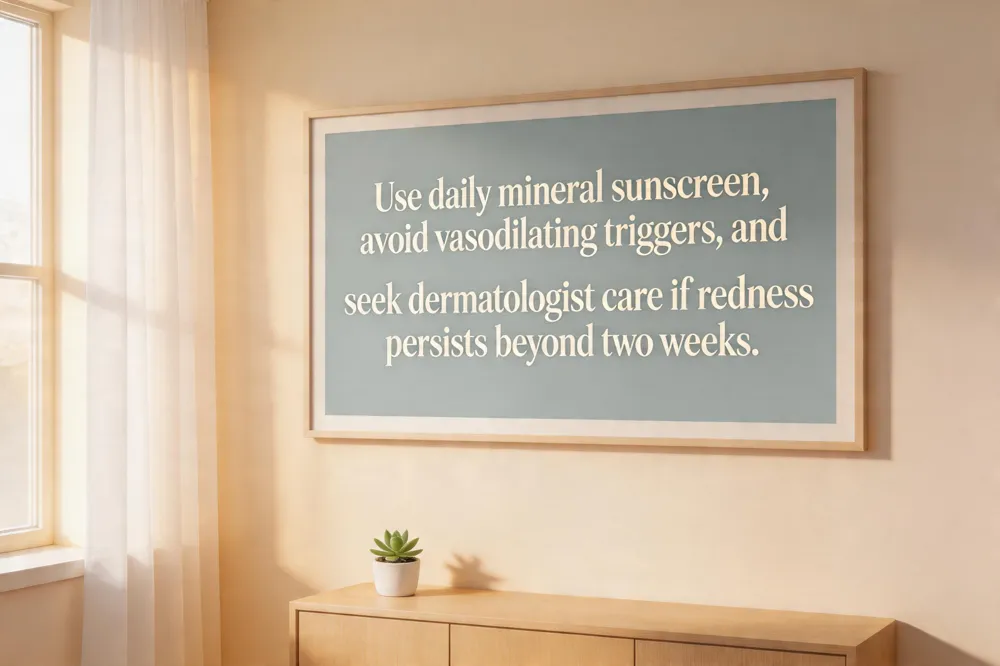
Broad‑spectrum mineral sunscreen (zinc oxide or titanium dioxide) SPF 30+ is recommended by >95 % of dermatologists to prevent UV‑induced erythema, delay re‑epithelialization, and reduce post‑inflammatory hyperpigmentation after laser, peel, microneedling or surgery.
Sun protection as the cornerstone of post‑procedure care
Broad‑spectrum mineral sunscreen (zinc oxide or titanium dioxide) SPF 30+ is recommended by >95 % of dermatologists to prevent UV‑induced erythema, delay re‑epithelialization, and reduce post‑inflammatory hyperpigmentation after laser, peel, microneedling or surgery.
Avoiding triggers (spicy foods, alcohol, extreme temperatures) Vasodilation from hot drinks, alcohol, spicy meals, or hot/cold weather can exacerbate facial flushing. An anti‑inflammatory diet rich in omega‑3s, vitamin C, zinc and hydration supports barrier repair and minimizes swelling.
When redness warrants dermatologist evaluation Persistent erythema beyond 2 weeks, swelling with pain, pus, or spreading redness suggests infection or a vascular disorder and should prompt a visit. Dermatologists may prescribe azelaic acid, metronidazole, brimonidine or laser therapy for rosacea‑prone skin.
Combining home care with clinical treatments for permanent improvement Use a gentle, fragrance‑free cleanser → niacinamide or centella serum → targeted azelaic acid → ceramide‑rich moisturizer → mineral sunscreen. Clinical options (IPL, laser, prescription topicals) complement this routine for lasting results.
How to reduce redness on face permanently
Identify the cause (rosacea, eczema, allergic reaction) and follow a personalized plan: fragrance‑free barrier repairs (niacinamide, panthenol, licorice), daily mineral SPF, trigger avoidance, and dermatologist‑directed procedures (laser, IPL, prescription topicals) for long‑term control.
Best skincare for redness‑sensitive skin
Start with a fragrance‑free, soothing cleanser; apply a calming moisturizer with niacinamide and thermal spring water; incorporate azelaic acid 10 % for anti‑inflammatory action; finish with a mineral sunscreen (zinc oxide/titanium dioxide).
What to avoid eating after surgery
Skip high‑fat processed meats, low‑fiber refined carbs, dairy if it irritates, alcohol and excessive caffeine; these can increase inflammation, delay healing and cause dehydration.
How to reduce redness on face quickly at home
Apply a cool compress (chamomile tea or chilled water) for 5‑10 min, then a thin layer of pure Aloe vera gel or panthenol‑rich moisturizer; avoid hot water, harsh exfoliants and known dietary triggers; finish with SPF 30+.
How to reduce redness on face quickly
Cool compress → gentle fragrance‑free cleanser → barrier‑repair moisturizer (ceramides, niacinamide, aloe vera) → optional OTC hydrocortisone for brief flare control; protect with broad‑spectrum SPF 30+ throughout the day.
Conclusion
Integrating ingredient science with proper wound care creates a synergistic healing environment. Evidence shows that topical agents such as niacinamide, panthenol, centella asiatica, ceramides, and aloe vera reinforce the lipid barrier, quell inflammation, and accelerate re‑epithelialization, while occlusive moisturizers (e.g., Aquaphor) keep incisions moist and prevent scab formation. Nutrition and lifestyle are equally pivotal: adequate protein, vitamin C, zinc, and omega‑3 fatty acids support collagen synthesis, while hydration, smoking cessation, and limited alcohol reduce vasodilation and swelling. Consistent use of broad‑spectrum mineral sunscreen protects fragile, from UV‑induced erythema and hyperpigmentation. Personalized guidance from On The Spot Dermatology in Glenview, Illinois, tailors these evidence‑based ingredients and post‑operative protocols to each patient’s skin type, procedural history, and healing timeline, ensuring optimal results and a smoother recovery.