Understanding Modern Facial Rejuvenation
HydraFacial, microneedling, and chemical peels are three cornerstone facial‑rejuvenation options that address fine lines, pores, acne scarring, and pigment irregularities. A HydraFacial uses a patented vortex‑fusion wand to cleanse, gently exfoliate with a mild acid peel, extract debris, and infuse antioxidant‑rich serums, delivering instant hydration and glow with zero downtime. Microneedling creates controlled micro‑injuries with fine sterile needles, triggering collagen and elastin remodeling for deeper scar reduction and texture improvement; mild redness may last one to three days. Chemical peels apply acid solutions—ranging from superficial glycolic to medium‑depth TCA—to accelerate cell turnover and stimulate collagen, with recovery varying by depth. All procedures require dermatologist oversight to assess skin type, contraindications, and appropriate intensity, ensuring safety. Personalized boosters, PRP, or specific acid blends can be added to tailor each treatment to an individual’s unique concerns.
Deep Dive into Chemical Peels
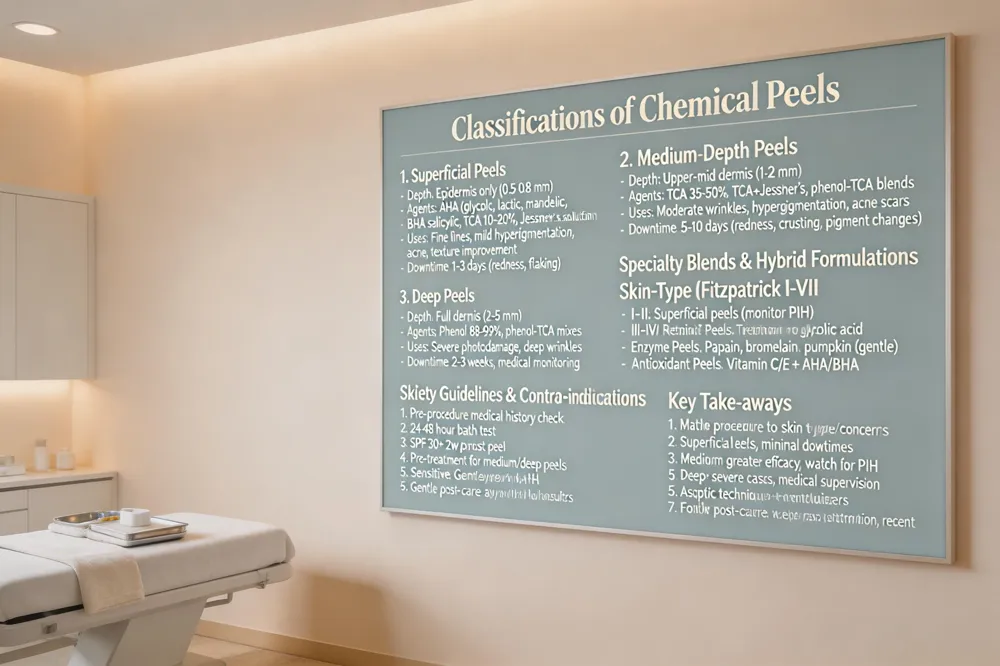 Chemical peels are classified by the depth of skin they affect, which determines both the results and the recovery time. Superficial (light) peels target only the epidermis and are typically formulated with alpha‑hydroxy acids (AHAs) or beta‑hydroxy acids (BHAs) such as glycolic, lactic, or salicylic acid. They improve mild discoloration, fine lines, and overall brightness with minimal downtime (1‑3 days). Medium‑depth peels penetrate into the papillary dermis, using higher concentrations of glycolic acid, trichloroacetic acid (TCA), or blended Jessner’s solutions. These address moderate wrinkles, deeper hyperpigmentation, and acne scarring, and require 5‑7 days of healing. Deep peels reach the mid‑reticular dermis (often with high‑strength TCA or phenol) and provide dramatic resurfacing for severe photo‑damage and deep scars, but they demand 2‑3 weeks of recovery and careful medical monitoring.
Specialty blends expand the toolbox for different skin needs. The PCA Advanced Skin Care System® offers light‑to‑medium peels with balanced AHA/BHA blends. PCA Peel® Hydroquinone‑Free and PCA Peel® with Hydroquinone target ethnic or sensitive skin and melasma. Sensi Peel® combines lactic acid, TCA, azelaic acid, and L‑ascorbic acid for brightening with low irritation risk. The Ultra Peel® series (I, Forte, II) varies acid strength and adds retinol or antioxidant boosters for mature or resilient skin.
Skin‑type and pigment considerations are critical. Patients with Fitzpatrick IV‑VI skin are more prone to post‑inflammatory hyperpigmentation after medium‑ or deep‑depth peels; therefore, milder formulations (e.g., Sensi Peel® or PCA Hydroquinone‑Free) are preferred. Active acne, eczema, rosacea, or recent isotretinoin use are contraindications for aggressive peels. A board‑certified dermatologist should assess each patient, customize the peel depth, and prescribe post‑procedure sun protection and gentle skincare to maximize safety and outcomes.
What are the different types of chemical peels? Chemical peels are grouped by depth of action: superficial (light) peels, medium‑depth peels, and deep peels. Superficial options include the PCA Advanced Skin Care System® Light‑to‑Medium series, which uses alpha‑ and beta‑hydroxy acids to gently exfoliate the skin’s surface. Medium‑depth peels are exemplified by Modified and Enhanced Jessner’s formulations, often combined with ingredients such as lactic, salicylic, and kojic acids for brighter texture and pigment correction. Deep peels, like the blended TCA peels, employ higher concentrations of trichloroacetic acid to address more pronounced sun damage, deep wrinkles, and scar tissue. Specialty blends—PCA Peel® Hydroquinone‑Free, PCA Peel® with Hydroquinone (with or without resorcinol), Sensi Peel®, Ultra Peel® I, and Ultra Peel® Forte—offer targeted options for sensitive, ethnic, or resilient skin types while addressing acne, hyperpigmentation, and signs of aging.
Best Facial for Mature Skin
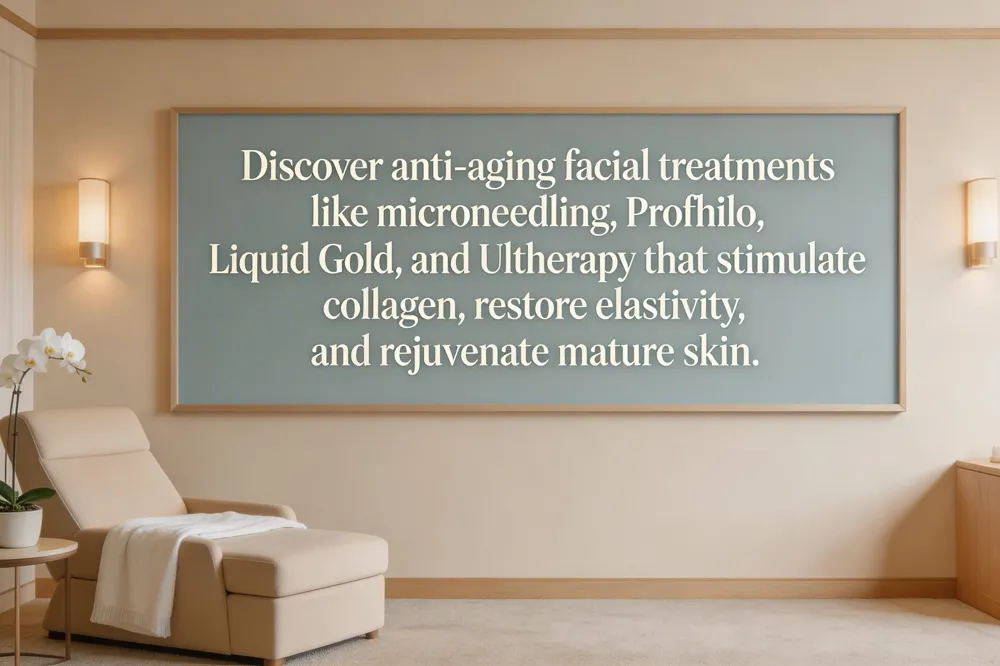 When it comes to rejuvenating mature skin, the goal is to stimulate new collagen, restore elastin, and replenish deep hydration. Collagen‑stimulating facials such as microneedling (collagen induction therapy) create controlled micro‑injuries that trigger the body’s natural wound‑healing cascade, leading to firmer, smoother skin over several weeks. While microneedling is powerful, many patients prefer a treatment that works beneath the surface without downtime.
Deep‑acting treatments such as Profhilo and Liquid Gold go a step further. Profhilo is a stabilized hyaluronic‑acid bio‑remodeller that spreads through the dermis, boosting elasticity and plumpness while encouraging collagen synthesis. Liquid Gold is an autologous growth‑factor serum that delivers high‑concentration peptides and antioxidants directly to the skin’s deeper layers, enhancing firmness and radiance. Both modalities are minimally invasive, safe for all skin types, and produce lasting anti‑aging benefits.
Combination with non‑invasive lifts like Ultherapy maximizes results. Ultherapy uses micro‑focused ultrasound to tighten the jawline, chin, and neck by stimulating collagen deep in the sub‑dermal tissue. When paired with Profhilo or Liquid Gold— and optionally a gentle microneedling session—the treatment plan addresses surface texture, deep structural support, and overall skin tone.
Answer to patient question: The most effective facial for aged skin is one that works deep beneath the surface to rebuild collagen, elastin, and hydration. Treatments such as Profhilo and Liquid Gold target deeper layers to restore firmness and radiance. When combined with a non‑invasive lift like Ultherapy—optionally a mild microneedling component—patients achieve a smoother, firmer complexion with fewer fine lines. This customized “anti‑aging facial” offers the best rejuvenation for mature skin.
Microneedling in Your 40s
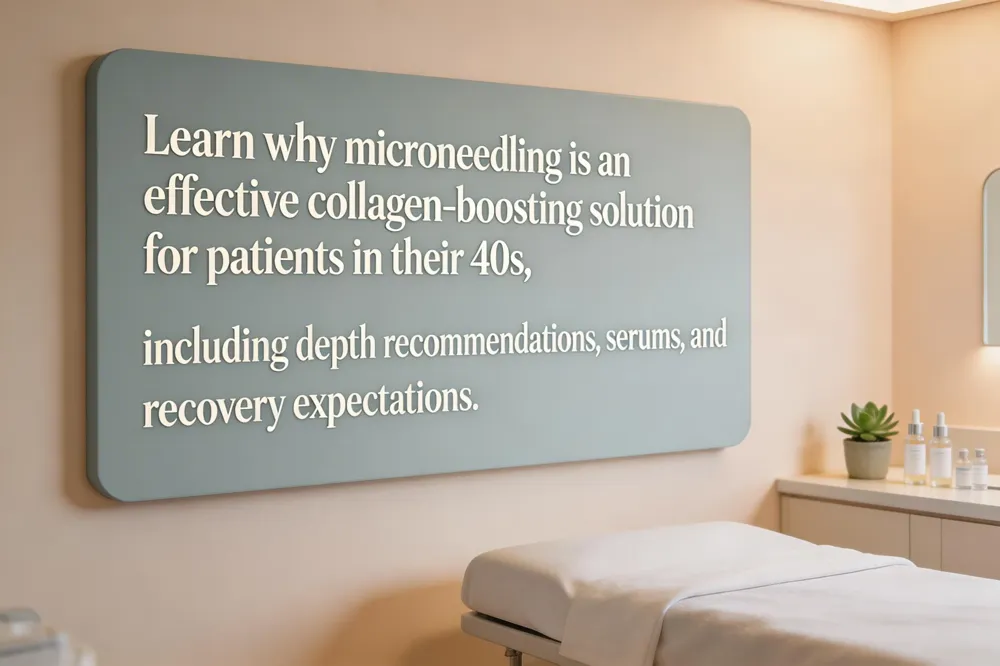 Age‑related collagen decline is a natural part of the 40s, when elastin and collagen production slows, leading to fine lines, uneven texture, mild hyperpigmentation, and early loss of firmness. Microneedling (collagen induction therapy) creates controlled micro‑injuries that activate the body’s wound‑healing cascade, stimulating fresh collagen and elastin fibers. This remodeling improves fine lines, smooths skin texture, and evens tone, making it an effective anti‑aging tool for mature skin. The procedure is safe for most healthy adults; a board‑certified dermatologist can adjust needle depth (typically 0.5‑1.0 mm for this age group) and add serums such as platelet‑rich plasma, antioxidants, or depigmenting agents to tailor results. Downtime is minimal—mild redness and swelling resolve within 24‑48 hours—so patients can resume normal activities quickly. In short, being in your 40s is not too old for microneedling; it can jump‑start skin renewal and provide lasting improvements when customized and supervised by a qualified professional.
Effective Chemical Peel Choices
 When deciding between at‑home and professional chemical peels, it’s important to balance safety, efficacy, and downtime.
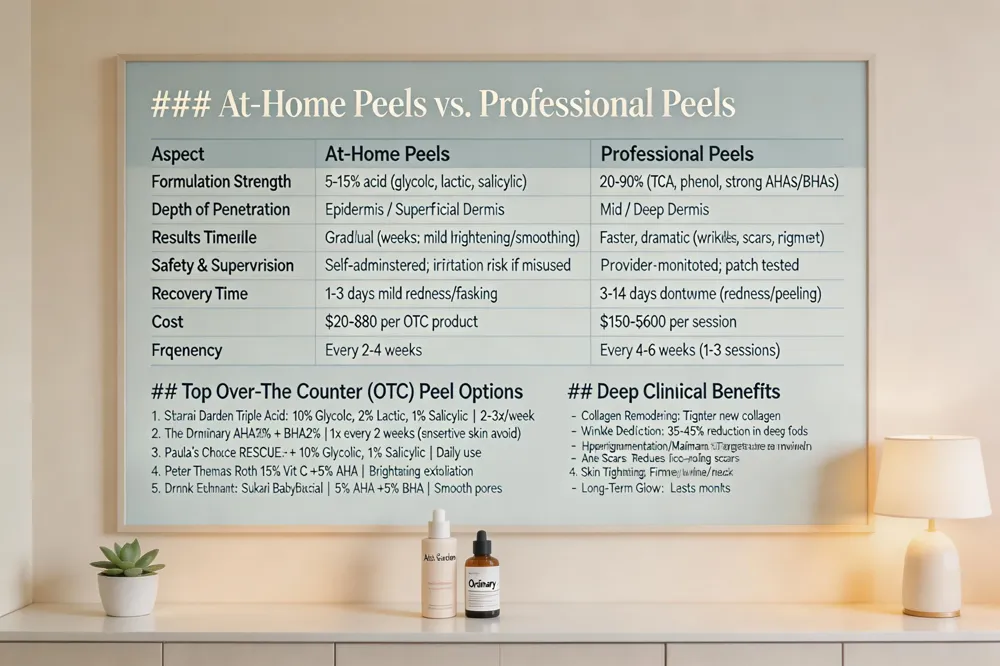
At‑home peels vs. professional peels Home‑use formulas are typically‑ in strength (5‑15% glycolic, lactic, or salicylic acid) and are designed for mild exfoliation, brightening, and gradual texture improvement. They are ideal for patients who want a low‑maintenance routine and can tolerate a short period of mild redness. Professional peels, administered by a board‑certified dermatologist, can range from superficial (20‑30% glycolic acid) to medium (35‑50% TCA) and deep (phenol) concentrations, delivering faster and more dramatic resurfacing but requiring varying recovery times.
Top‑rated over‑the‑counter options The most celebrated OTC peel is the Shani Darden Triple Acid Signature Peel, which blends glycolic, lactic, and mandelic acids with detoxifying clays and soothing botanicals. Dermatologists praise its ability to smooth fine lines, fade hyperpigmentation, and even skin texture without the irritation often seen with weaker single‑acid products. It earned the 2023 Best of Beauty award and is widely recommended for patients seeking noticeable results with zero downtime when used as directed.
Deep clinical peels for dramatic resurfacing For patients with more pronounced photo‑damage, deep acne scarring, or severe wrinkling, a dermatologist can apply higher‑strength peels such as 35‑50% TCA or phenol‑based formulations. These peels penetrate into the papillary or reticular dermis, stimulating robust collagen remodeling and delivering lasting rejuvenation, but they necessitate a recovery period ranging from several days to two weeks and must be paired with strict post‑procedure sun protection.
What is the most effective chemical peel? The most effective chemical peel for at‑home use is the Shani Darden Triple Acid Signature Peel, which combines glycolic, lactic, and mandelic acids with detoxifying clays and soothing botanical extracts to target fine lines, hyperpigmentation, and uneven texture. It has earned the 2023 Best of Beauty award and is consistently praised by dermatologists for delivering results comparable to a professional facial when used as directed. For deeper, clinic‑level peels, a licensed dermatologist can apply stronger formulations (such as phenol or high‑strength trichloroacetic acid) that penetrate further and produce more dramatic resurfacing. However, for most patients seeking safe, noticeable improvement without downtime, the Shani Darden Triple Acid Signature Peel remains the top recommendation. Always follow the product’s instructions, perform a patch test, and protect the skin with broad‑spectrum SPF after each peel.
Peel vs. HydraFacial: Decision Guide
 When choosing between a chemical peel and a HydraFacial, consider three key factors. First, immediate results versus long‑term resurfacing: a HydraFacial delivers instant radiance, plumping and pore‑clearing in a single 30‑45‑minute session, while a peel—especially medium‑depth—stimulates deeper cell turnover and collagen remodeling that become visible over weeks. Second, downtime and recovery: HydraFacial has zero downtime; you can apply makeup and resume activities right away. Superficial peels may cause mild redness for a day, whereas medium or deep peels can require 5‑14 days of peeling and sun‑avoidance. Third, customization and booster options: HydraFacial allows tailored serums (antioxidants, peptides, hyaluronic acid, brightening agents) to address specific concerns, whereas peels can be adjusted by acid type and concentration (glycolic, TCA, lactic) for targeted pigment or texture correction.
What is better, a peel or HydraFacial? A HydraFacial is ideal for instant, surface‑level glow with no downtime—perfect for busy schedules, sensitive skin, or a quick pre‑event boost. Chemical peels work deeper, improving texture, fine lines, sun damage, and acne scarring over a longer period. Choose based on your primary goal, tolerance for recovery, and desired speed of results.
TCA vs. Jessner: Which Peel Wins
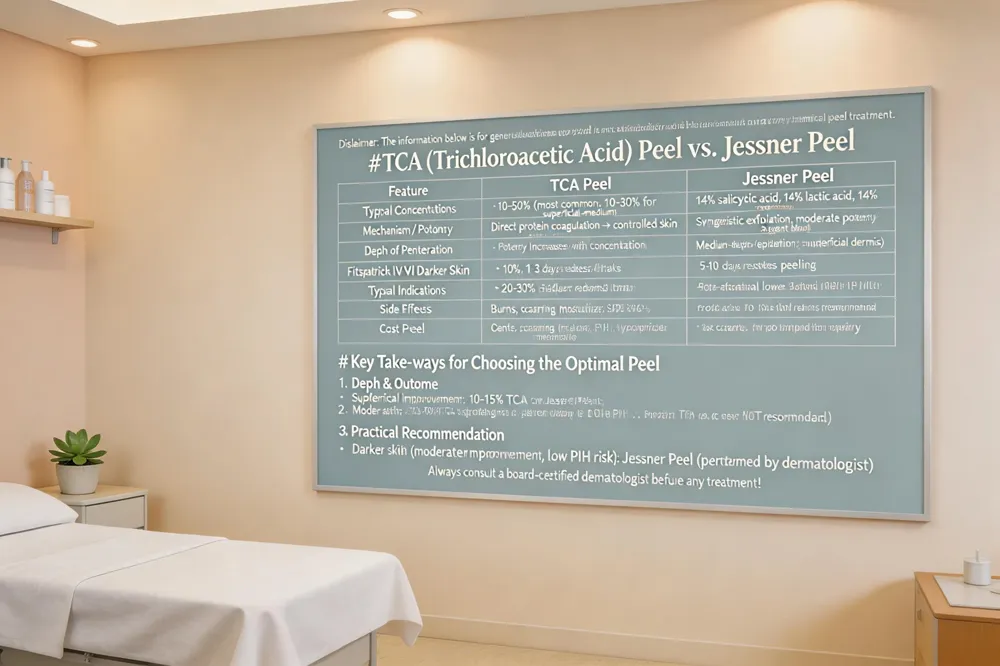 Both TCA peels are effective for fine lines, sun damage, and hyperpigmentation, but they differ in depth, potency, and safety for darker skin. TCA peels can be formulated from superficial (10‑20%) to deep (>50%) concentrations, allowing deeper dermal penetration and more dramatic resurfacing, yet they carry a higher risk of post‑inflammatory hyperpigmentation and scarring in Fitzpatrick IV‑VI skin. Jessner peels combine salicylic, lactic, and resorcinol acids, typically acting at a superficial‑to‑medium depth, making them gentler and better tolerated across all skin tones, especially for acne‑prone or darker complexions. Recovery timelines reflect this: TCA peels may require 5‑14 days of redness, flaking and and possible crusting, whereas Jessner peels usually heal within 2‑5 days with minimal downtime. The right choice depends on your skin type, concerns, and desired downtime; consult a board‑certified dermatologist at On The Spot Dermatology to personalize your peel plan.
Cost, Recovery, and Combining Treatments
 HydraFacial sessions cost $150‑$300 per treatment in the U.S. while microneedling ranges from $200‑$700 depending on needle depth and adjuncts such as PRP. Superficial chemical peels start around $100‑$200, medium‑depth peels $300‑$800, and deep peels can exceed $1,500. Recovery varies: HydraFacial has no downtime and mild redness; microneedling causes 1‑3 days of erythema and swelling; superficial peels heal in 1‑7 days, medium peels 7‑14 days, and deep peels 2‑3 weeks. A protocol often begins with a HydraFacial to cleanse and hydrate, followed by microneedling for collagen remodeling, and a peel to deepen exfoliation and pigment correction, spaced to allow skin healing between procedures.
Personalized Care at On The Spot Dermatology
At On The Spot Dermatology we begin every visit with a thorough skin assessment, examining medical history, Fitzpatrick type, current concerns, and lifestyle factors. Using this data, our board‑certified dermatologists develop a personalized protocol that may blend HydraFacial’s gentle vortex‑fusion cleansing and antioxidant infusion with microneedling’s collagen‑induction and, when appropriate, a targeted chemical peel for deeper pigment or texture correction. Each step is performed under strict medical supervision, and patients receive detailed after‑care instructions, sunscreen recommendations, and scheduled follow‑ups to monitor progress and adjust the regimen for optimal, long‑lasting results. We provide after‑care guides and ongoing support for lasting results.