Why Sun Protection Matters for Sensitive Skin
People with sensitive or reactive skin react more readily to many chemical UV filters such as oxybenzone, avobenzone, and octinoxate, which can cause stinging, redness, or delayed allergic eruptions. Therefore broad‑spectrum protection—blocking both UVA (aging, DNA damage) and UVB (sunburn)—remains essential, with the American Academy of Dermatology recommending a minimum SPF 30 and preferably SPF 50 for daily use. When choosing a skin‑friendly sunscreen, look for mineral filters (zinc oxide or titanium dioxide) that sit on the surface, fragrance‑free or dye‑free formulas, non‑comedogenic textures, and added soothing agents like bisabolol or ceramides. Water‑resistance, appropriate application amount, and regular re‑application complete the regimen for optimal skin health.
Understanding SPF, Broad‑Spectrum Protection, and Application Basics
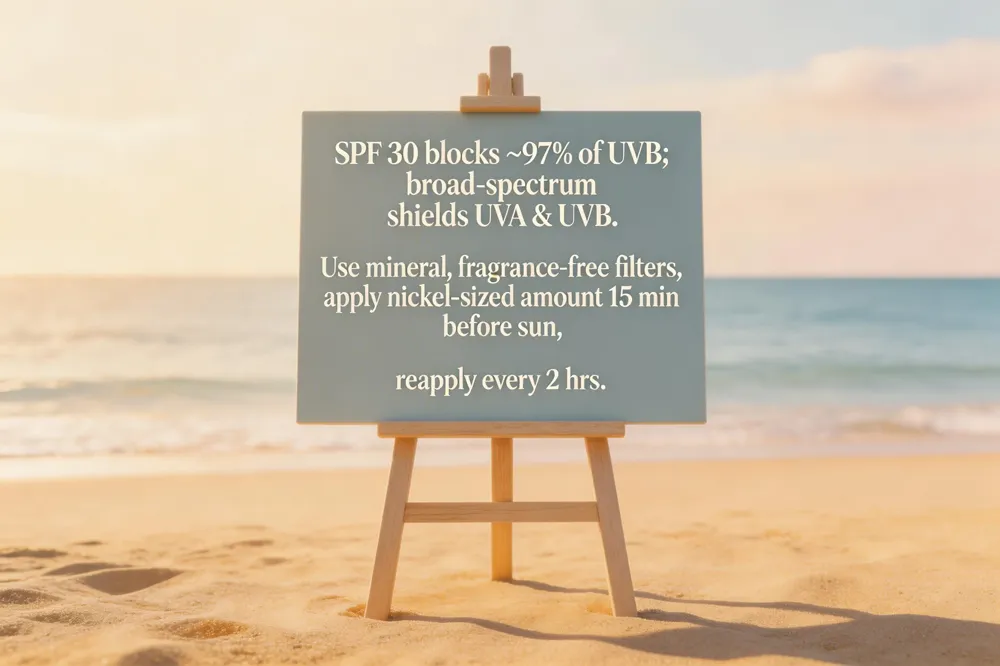 The American Academy of Dermatology recommends a minimum SPF of 30 for everyday use; SPF 30 blocks about 97 % of UVB rays, while SPF 50 adds only a marginal increase to roughly 98 %. Broad‑spectrum sunscreen protects against both UVA (aging, DNA damage) and UVB (sunburn) radiation, a prerequisite for preventing premature aging and skin cancer. For sensitive skin, mineral filters—non‑nano zinc oxide or titanium dioxide—are preferred because they sit on the skin’s surface and are far less likely to trigger irritation or allergic reactions. Look for fragrance‑free, dye‑free, and non‑comedogenic formulas to further reduce flare‑up risk. Apply a nickel‑sized amount (≈1 g) to the face and neck, and a shot‑glass‑sized amount (≈2 mg/cm²) for the entire body, at least 15 minutes before sun exposure. Reapply every two hours, and immediately after swimming, sweating, or towel‑drying, regardless of SPF. This regimen maximizes protection while respecting the delicate barrier of sensitive skin.
Mineral vs. Chemical Sunscreens: Which Is Safer for Sensitive Skin?
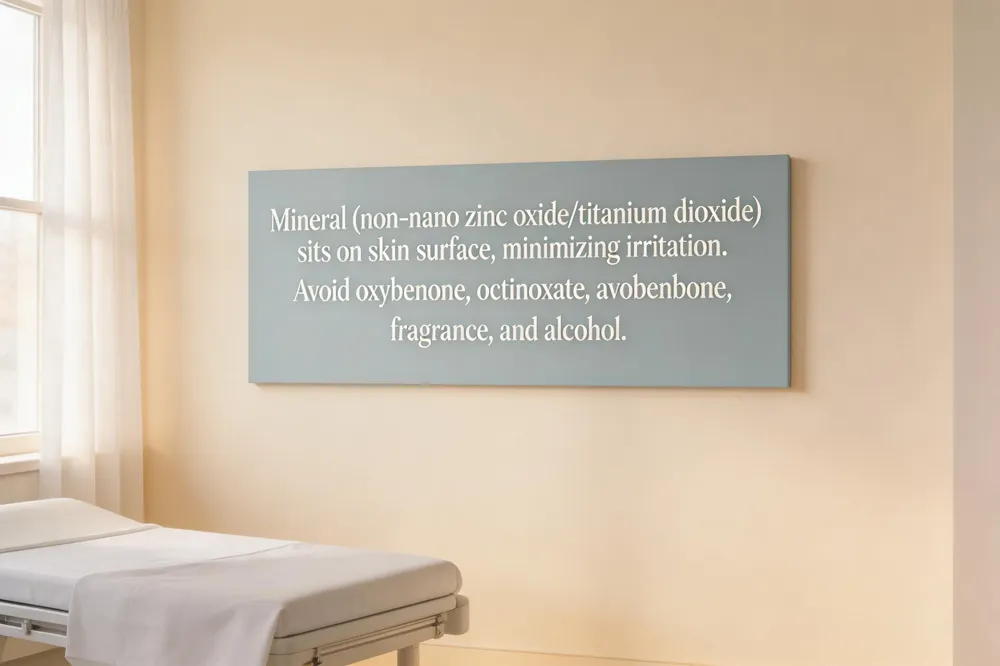 Sensitive skin tolerates mineral (physical) filters best because zinc oxide and titanium dioxide sit on the surface, reflect and scatter UV radiation, and rarely penetrate the barrier. Choose non‑nano zinc oxide or titanium dioxide, fragrance‑free, dye‑free, and non‑comedogenic formulas. Many dermatologists recommend added calming agents such as bisabolol, ceramides, centella asiatica, or licorice root to further reduce redness and support the skin barrier.
Conversely, several chemical filters are notorious irritants. Oxybenzone, octinoxate, avobenzone, homosalate, and octocrylene can cause stinging, allergic reactions, or photosensitivity in reactive skin. Fragrance, alcohol, parabens, and certain preservatives also increase the risk of flare‑ups.
Which type of sunscreen is best for sensitive skin? Mineral (or “physical”) sunscreens are the top choice because zinc oxide and titanium dioxide reflect UV light without penetrating the skin, reducing irritation, allergy, or stinging. Look for non‑nano particles, fragrance‑free, and added soothing agents such as bisabolol, ceramides, or centella asiatica.
Key sunscreen ingredients to avoid for sensitive skin Avoid chemical filters like Oxybenzone, octinoxate, avobenzone, and homosalate, as well as fragrance, alcohol, parabens, and other harsh preservatives. These can trigger redness, itching, or allergic reactions in reactive skin.
Fragrance‑Free, Non‑Comedogenic, and Soothing Facial Sunscreens
 Mineral‑friendly facial sunscreens use zinc oxide or titanium dioxide which sit on the skin surface and reflect UV radiation without penetrating the barrier. These particles are large enough to minimize irritation and make the formula suitable for eczema‑prone or rosacea‑sensitive skin. Non‑comedogenic, oil‑free options avoid heavy emollients and silicone blends that can clog pores; they often rely on gels, fluids or powders that melt into the skin. Fragrance‑free products eliminate perfume compounds that trigger redness, while calming botanicals such as bisabolol, green tea extract, centella asiatica, or niacinamide provide anti‑inflammatory and barrier‑supporting benefits.
What to look for in a facial sunscreen – Choose broad‑spectrum SPF 30 or higher, mineral filters, Fragrance‑free, oil‑free, and consider soothing agents. Formulas can hide any white cast while still delivering daily protection.
Dermatologist‑recommended sunscreen for the face – EltaMD UV Clear SPF 46, La Roche‑Posay Anthelios Fluid SPF 60, and Blue Lizard Face Mineral Sunscreen SPF 30+ are widely endorsed for their gentle, Non‑comedogenic mineral bases and calming ingredients.
Best facial sunscreen for skin (dermatologist‑recommended) – The three products above rank highest, each offering Fragrance‑free, Non‑comedogenic, mineral protection with botanical soothing.
Eczema‑Prone Skin: Calm, Hydrating, and Safe Sunscreen Choices
 Mineral sunscreen for eczema‑prone skin
Non‑nano zinc oxide or titanium dioxide mineral sunscreens are the safest option because they sit on the skin surface, reflect UV rays, and do not penetrate the barrier. Choose fragrance‑free, hypoallergenic formulas that add soothing actives such as oat extract, honey, aloe, ceramides, or Centella asiatica to reinforce the skin barrier and reduce redness.
Sun cream for adults with eczema
Adults should look for a mineral‑based sunscreen with SPF 30‑50, fragrance‑free, dye‑free, and labeled non‑comedogenic. Proven choices include Vanicream Facial Sunscreen SPF 30, EltaMD UV Clear SPF 46, and Mustela Sun‑Care Sensitive Skin SPF 40. Products bearing the National Eczema Association Seal of Acceptance meet strict irritant‑free criteria.
Is sunscreen safe for eczema‑prone skin?
Yes—provided the product avoids common irritants (fragrance, parabens, alcohol, and certain chemical filters like oxybenzone or avobenzone). Apply a thin, generous layer after your moisturizer, reapply every two hours, and conduct a 24‑48‑hour patch test on a small area before full‑face use.
Best sunscreen for eczema on the face
Top facial options are fragrance‑free mineral formulas such as Vanicream SPF 30, EltaMD UV Clear SPF 46, and Mustela Sun‑Care SPF 40. They contain zinc oxide, are non‑comedogenic, and often include barrier‑supporting ingredients (ceramides, oat extract) that calm reactive skin.
Best sunscreen for infants with eczema
For infants older than six months, select a hypoallergenic, fragrance‑free mineral sunscreen with non‑nano zinc oxide as the sole active ingredient and SPF 30‑50. The Uber‑Sensitive Mineral Sunscreen Lotion SPF 40 (NEA Seal) fulfills these standards. Apply 15 minutes before sun exposure and reapply every two hours, especially after swimming or sweating.
Acne‑Prone, Oily, and Sensitive Skin: Light, Matte, and Non‑Comedogenic Options
 For oily, sensitive skin the ideal sunscreen combines broad‑spectrum protection (SPF 30 +), a lightweight, oil‑free texture, and a non‑comedogenic base. Products such as La Roche‑Posay Anthelios Ultra‑Light Fluid SPF 50 and EltaMD UV Skin Recovery Red Color‑Correcting Tint SPF 50 meet these criteria. Both use zinc oxide (and titanium dioxide in the Anthelios formula) to reflect UV rays, sit on the surface without penetrating the skin, and are fragrance‑free, reducing irritation risk. The fluid or tinted gel finishes are matte, absorb quickly, and do not clog pores, making them suitable for acne‑prone individuals.
How to choose: Prioritize mineral filters (non‑nano zinc oxide/titanium dioxide) for their low irritancy, look for “non‑comedogenic” and “oil‑free” labeling, and select a matte or semi‑matte texture—gel, fluid, or water‑based. Avoid heavy emollients, petrolatum, and scented additives that can trigger breakouts or redness.
Best sunscreen for acne‑prone, sensitive skin: EltaMD UV Clear SPF 46 (zinc oxide + niacinamide) offers a soothing, oil‑free, non‑comedogenic formula, while Supergoop! Unseen Sunscreen SPF 50 provides a fragrance‑free, weightless mineral blend with calming bisabolol and licorice root. Both deliver broad‑spectrum protection without compromising a matte, clear finish.
Post‑Procedure and High‑Risk Skin: Sunscreens for Mohs Surgery, Solar Keratosis, and Hyperpigmentation
 Gentle mineral protection after surgery
For recent Mohs‑surgery patients, a fragrance‑free and non‑comedogenic mineral sunscreen is ideal. Zinc‑oxide or titanium‑dioxide filters sit on the skin surface and are less likely to irritate fresh sutures or a healing scar. The American Academy of Dermatology and the Skin Cancer Foundation both advise waiting until the wound is fully closed (usually 7–14 days) before applying a thin layer, then reapplying every two hours, especially after sweating or swimming.
High‑SPF options for actinic damage
Solar keratosis requires broad‑spectrum protection of SPF 50 or higher. Mineral formulas such as La Roche‑Posay Anthelios 100 KA+ MED Cream, Eucerin Actinic Control MD Fluid SPF 100, and Avène Sunsimed KA combine zinc oxide with photostable filters and often include repair enzymes (e.g., photolyase) that help reverse early actinic lesions while minimizing irritation.
Tinted formulas for visible‑light protection
Hyperpigmentation is driven by UVA and visible light. Tinted mineral sunscreens that contain iron oxides block visible light and reduce the white cast of traditional zinc‑oxide products. Dermatologist‑recommended choices include EltaMD UV Skin Recovery Red Color‑Correcting Tint SPF 50 and SkinCeuticals Physical Fusion UV Defense SPF 50, both of which add antioxidants such as niacinamide to further prevent new pigment formation. Apply after moisturizer, using a nickel‑sized amount for the face, and reapply every two hours for optimal protection.
Children and Babies: Safe Sun Protection for Young Sensitive Skin
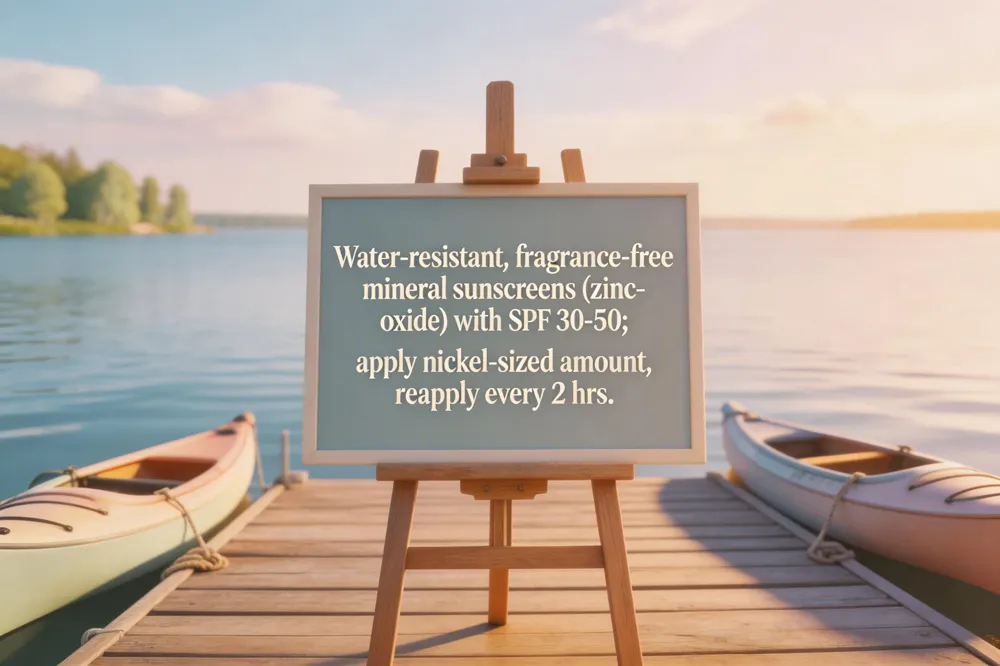 For kids with delicate skin, dermatologists recommend fragrance‑free, mineral‑based sunscreens that sit on the surface and minimise irritation. Broad‑spectrum zinc‑oxide (and optional titanium‑dioxide) formulas with SPF 30‑50 are ideal; they are non‑comedogenic, hypo‑allergenic and often include soothing agents such as bisabolol or centella asiatica. Choose products that are water‑resistant (40‑80 minutes) to stay effective during active play, swimming, or sports, and look for lightweight textures—gels, creams, or sticks—that dry quickly and won’t feel sticky on young faces.
Infants under six months should be kept out of direct sun and protected with clothing; for older babies, a gentle mineral sunscreen (e.g., Blue Lizard Kids Mineral Sunscreen, EltaMD UV Pure SPF 47 lotion or Baby Bum SPF 50 Mineral Stick) is safe and fragrance‑free. Apply a nickel‑sized amount to the face and neck, reapply every two hours or after water exposure, and perform a patch test before full use. This approach provides reliable UV protection while keeping reactive skin calm and healthy.
Skin‑Boosting Add‑Ins: Niacinamide, Antioxidants, and Vitamin C
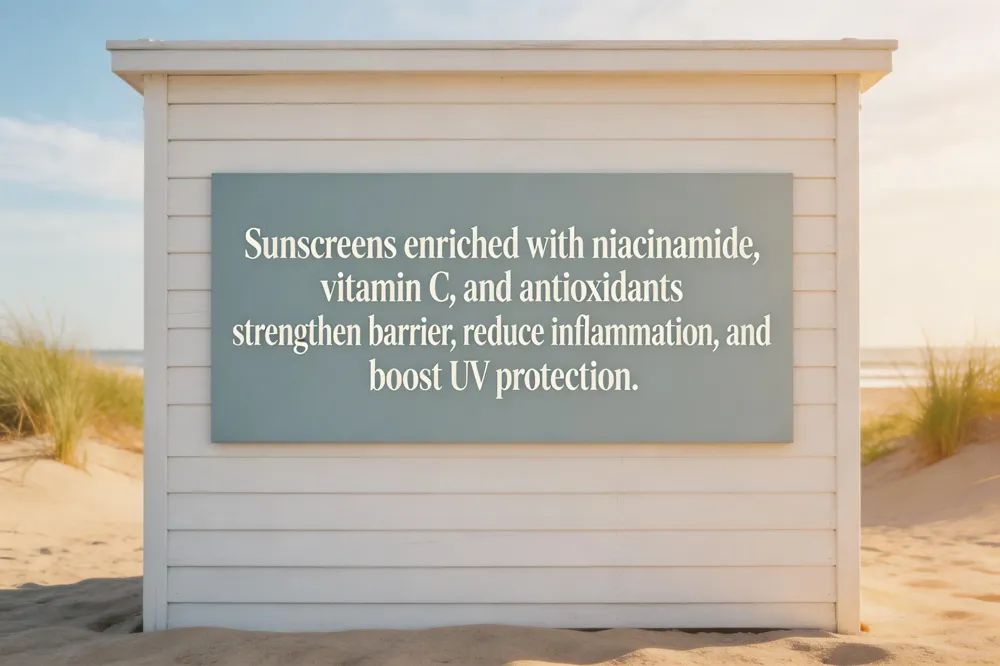 Niacinamide‑enriched sunscreens give sensitive skin a dual advantage. The vitamin B3 derivative boosts the barrier by increasing ceramide synthesis, improving moisture retention and soothing inflammation—key for eczema‑prone or rosacea‑sensitive patients. When paired with broad‑spectrum UV filters, it also supports antioxidant defenses, neutralizing free‑radical damage that UV exposure generates. Formulations that combine niacinamide with other barrier‑supporting actives such as hyaluronic acid, centella asiatica, or panthenol further reinforce skin resilience and reduce the risk of post‑sun irritation. Dermatologists note that the soothing properties of niacinamide can lessen the stinging sensation sometimes reported with mineral sunscreens, encouraging consistent use. In practice, a sunscreen containing niacinamide not only protects against UVA/UVB but also helps prevent premature aging, redness and hyperpigmentation, making it a valuable addition to a sun‑care regimen.
Common Myths and Environmental Concerns
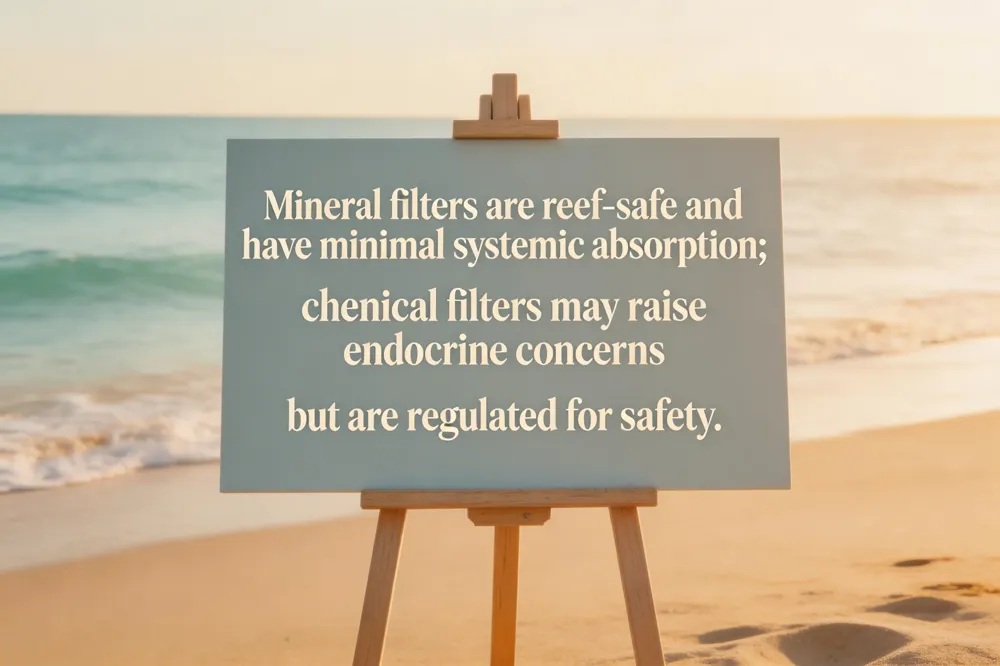 When choosing a sunscreen for sensitive skin, three issues often arise: hormonal health, reef safety, and regulatory oversight. The American Academy of Dermatology advises at least SPF 30 broad‑spectrum protection; mineral filters (zinc oxide, titanium dioxide) sit on the skin’s surface and are less likely to be absorbed, mitigating endocrine concerns. Current human studies have not shown a clinically significant impact of sunscreen on testosterone levels; while laboratory work notes endocrine activity for some chemical filters (e.g., oxybenzone), topical exposure is far below harmful thresholds and FDA‑approved products are deemed safe. Reef‑safe formulations avoid oxybenzone and octinoxate, protecting coral reefs. The FDA requires strict safety and efficacy testing, and the Skin Cancer Foundation’s Seal of Recommendation signals compliance with these standards.
Putting It All Together: A Sensitive‑Skin Sunscreen Routine
Start with a mineral sunscreen that relies on zinc oxide or titanium dioxide, because these particles sit on the surface and rarely trigger irritation. Choose a fragrance‑free, dye‑free formula that is also labeled non‑comedogenic to keep pores clear. Pick an SPF of at least 30 for everyday use; if you will be outdoors for extended periods, opt for SPF 50 or higher and look for a water‑resistant claim of 40 or 80 minutes. Apply a thin, even layer after your moisturizer, allowing it to absorb for 10‑15 minutes before makeup. Reapply every two hours, and immediately after swimming, sweating, or towel‑drying, to maintain protection effectively.