Why Choosing the Right Dermatologist Matters
Finding a dermatologist whose expertise matches your personal skin goals is essential for both health and aesthetics. Board‑certified providers—identified by FAAD, American Board of Dermatology, or equivalent credentials—have completed rigorous training and continue to meet high standards, which translates into higher diagnostic accuracy, safer procedures, and better long‑term outcomes. When you align a physician’s subspecialty (e.g., acne, psoriasis, Mohs surgery, or laser resurfacing) with your primary concern, you receive a treatment plan that addresses the medical condition while also incorporating any cosmetic aspirations, such as anti‑aging injectables or skin‑tone improvement. This balanced approach reduces unnecessary testing, minimizes out‑of‑pocket costs for covered medical services, and ensures that aesthetic interventions are performed by clinicians who understand skin biology and safety protocols. Ultimately, selecting a dermatologist who offers personalized care, transparent insurance policies, and a comprehensive menu of medical and cosmetic options empowers you to achieve healthier, more confident skin.
Understanding Credentials and Expertise
 When selecting a dermatologist, the first step is to verify board certification. A dermatologist who has earned the FAAD (Fellow of the American Academy of Dermatology) designation or certification from the American Board of Dermatology, the American Osteopathic Board of Dermatology, or the Royal College of Physicians and Surgeons of Canada has completed rigorous training and passed national exams. Specialized training further distinguishes expertise: Mohs micrographic surgery, performed by board‑certified surgeons, offers the highest cure rates for skin cancer while sparing healthy tissue, and cosmetic dermatology fellowships equip physicians with advanced skills in laser therapy, injectables, and aesthetic procedures.
How to tell if a dermatologist is good? Look for board certification, years of experience, positive patient reviews, and a practice that emphasizes personalized care. A good dermatologist listens attentively, explains options clearly, and tailors treatments to your skin type and goals.
Can dermatologists treat skin cancer? Yes. Board‑certified dermatologists diagnose and manage the full spectrum of skin cancers, performing biopsies, excisions, Mohs surgery, cryotherapy, and topical or immunologic therapies. Early detection and treatment by a dermatologist often prevents progression and improves outcomes. Practices such as On The Spot Dermatology provide comprehensive skin‑cancer care and coordinate referrals when needed.
Matching Services to Your Skin Goals
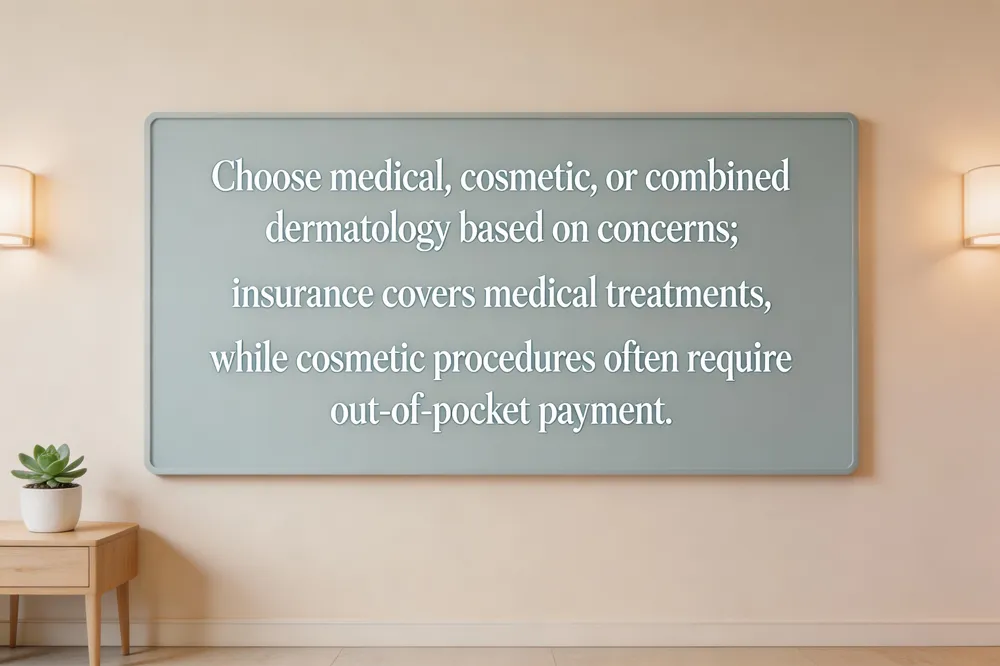 When you begin a skin‑care journey, the first decision is whether you need medical dermatology, cosmetic dermatology, or a blend of both. Medical dermatology addresses conditions such as acne, eczema, psoriasis, skin cancer, and hair loss, while cosmetic dermatology focuses on anti‑aging, pigment correction, and aesthetic enhancements. Modern practices—like On The Spot Dermatology in Glenview, Illinois, Vivida Dermatology in Las Vegas, and Forefront Dermatology in Virginia Beach—offer a full spectrum of services under one roof, including laser resurfacing, Mohs micrographic surgery, injectable fillers, and platelet‑rich plasma for hair regrowth.
Insurance and out‑of‑pocket costs Most medical treatments, including skin‑cancer screenings, prescription‑based acne therapy, and laser removal of precancerous lesions, are covered by health‑insurance plans. Cosmetic procedures—Botox, dermal fillers, chemical peels, and many laser treatments—are typically not covered, so patients should verify coverage and discuss financing options before scheduling.
Can a dermatologist help with hair loss? Yes—a board‑certified dermatologist can diagnose the cause of hair loss and design a personalized plan that may include topical minoxidil, oral finasteride, PRP injections, or referral for transplant surgery.
Do dermatologists recommend glycolic acid? Yes. They often prescribe 5‑7 % glycolic acid for routine exfoliation and reserve stronger 10 % formulations for professional use, emphasizing gradual introduction and sunscreen protection.
Do dermatologists take blood pressure? Routine skin exams usually omit blood‑pressure checks, but dermatologists may measure it when prescribing medications that affect cardiovascular health, such as isotretinoin.
Preparing for Your First Visit
 Scheduling and Wait‑List Strategies
When you call the office, ask about a wait‑list or same‑day slot for urgent concerns such as a changing mole. Many Glenview practices, including On The Spot Dermatology, prioritize patients who indicate urgency and can often secure an earlier appointment if you request to be placed on the list.
Documents and Medication Lists to Bring
Before your visit, write down every prescription, over‑the‑counter drug, vitamin, and supplement you take. Gather recent lab results, skin biopsies, and any imaging studies. Bring a brief family‑history note, especially for skin‑cancer‑prone conditions. Arriving without makeup, nail polish, or heavy moisturizers lets the dermatologist examine your skin and nails directly.
Appointment Length and What to Expect
A first dermatologist appointment typically lasts 30‑45 minutes. The clinician will review your medical history, perform a comprehensive skin exam, discuss your concerns, and outline a personalized treatment plan. Arriving a few minutes early for paperwork helps keep the schedule on track; set aside roughly an hour for check‑in and post‑visit instructions.
FAQs
- How long does a first dermatologist appointment take? About 30‑45 minutes, plus a few minutes for check‑in, so plan for an hour.
- How to see a dermatologist without insurance? Choose a self‑pay clinic like On The Spot Dermatology (fees $100‑$250), use tele‑dermatology platforms, or explore community health centers with sliding‑scale options.
- What do patients say about The Spot Dermatology in Glenview? Reviewers praise thorough examinations, personalized plans, friendly staff, flexible scheduling, and attentive follow‑up, noting high satisfaction with both medical and cosmetic care.
Patient Experience and Practice Accessibility
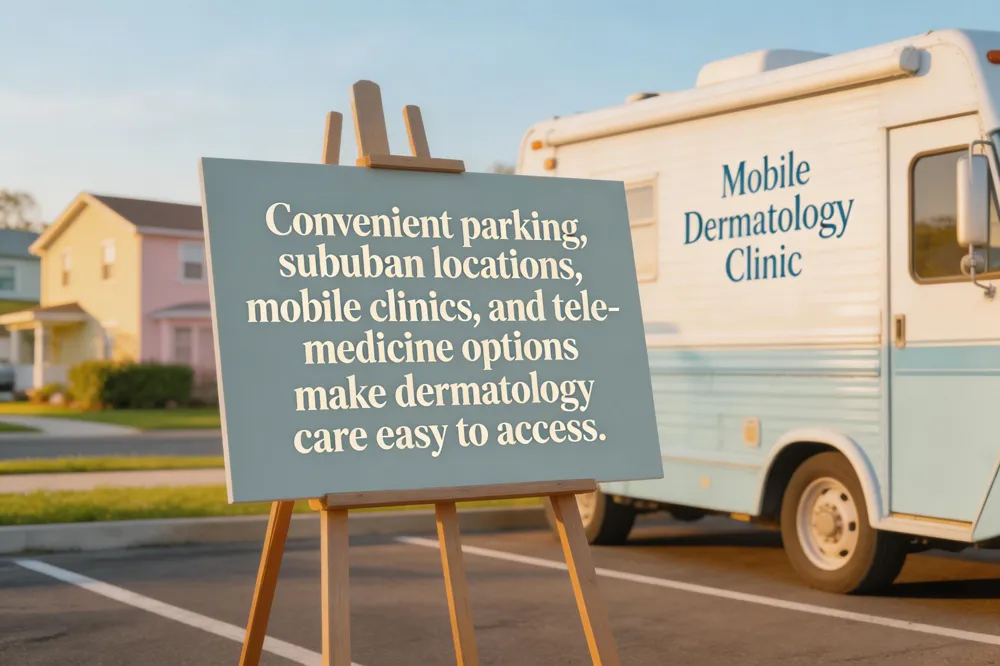 On The Spot Dermatology (OTD) prioritizes ease of access for patients throughout the Chicago metropolitan area. The flagship clinic at 2601 Compass Road in Glenview offers ample on‑site parking, making it simple for patients to arrive by car without the stress of finding a spot. OTD’s service footprint extends to nearby suburbs, including Park Ridge; the practice explicitly welcomes Park Ridge residents and provides the same comprehensive medical and cosmetic dermatology care as Glenview patients. This suburban reach is reinforced by a mobile dermatology model that can bring skin examinations and minor procedures directly to community locations when needed. For patients who prefer remote care, OTD offers telemedicine appointments and virtual follow‑up visits. Through a secure patient portal, individuals can upload photos of skin concerns, receive prescription refills, and discuss treatment plans without leaving home. The combination of convenient parking, suburban accessibility, and flexible telehealth options ensures that OTD delivers personalized, high‑quality dermatologic care while fitting seamlessly into patients’ busy lives.
Personalized Care and Follow‑Up
 Can dermatologists help with nail problems?
Board‑certified dermatologists are trained to evaluate and treat a wide range of nail disorders, from common fungal infections to complex conditions such as psoriasis or nail‑matrix dystrophy. They can differentiate harmless changes—like minor ridging or discoloration—from signs that require medical intervention, ensuring timely and appropriate care. Treatment options include prescription topical or oral antifungals, corticosteroid injections, laser therapy, and minor surgical procedures for ingrown nails or traumatic injuries. Personalized nail‑care advice and preventive measures are also provided to reduce future problems.
Tailored treatment plans
When you schedule a visit, the dermatologist reviews your medical history, current medications, and any genetic predispositions. A notebook of questions, medication lists, and prior lab results is encouraged to create a comprehensive picture of your skin health. This information guides a customized plan that may combine medical therapy, procedural interventions, and lifestyle recommendations, aligning with both health and aesthetic goals.
Membership programs and bundled services
Many practices, such as On The Spot Dermatology in Glenview, IL, offer membership or bundled‑service programs that provide cost‑effective access to routine skin exams, laser treatments, Botox, and other cosmetic procedures. These programs often include discounted pricing, priority scheduling, and tele‑medicine follow‑ups, making ongoing care convenient and affordable while maintaining the high standard of personalized attention.
Your Next Steps Toward Healthy, Radiant Skin
Begin by confirming that the dermatologist you are considering is board‑certified—look for FAAD, American Board of Dermatology, Osteopathic Board, or the Royal College designation. Check that the practice offers the specific medical (acne, eczema, psoriasis, skin‑cancer screening) or cosmetic (Botox, fillers, laser resurfacing, Mohs surgery) services you need. Before your first appointment, write a concise list of questions, bring a complete medication inventory, recent lab or biopsy reports, and a brief family‑history summary. Arrive without makeup, nail polish, or heavy moisturizers so the skin can be examined directly. Verify that your health‑insurance plan is accepted for medical treatments; many offices also provide transparent pricing or membership programs for self‑pay cosmetic care. Finally, choose a practice whose location, office hours, tele‑medicine options, and patient‑education resources match your lifestyle and long‑term skin‑health goals for optimal results and satisfaction, ensuring a personalized, seamless experience.