Introduction: The Power of Prevention
Preventive skin care is a proactive approach that protects the skin before visible concerns arise. Daily broad‑spectrum sunscreen, gentle cleansing, barrier‑supporting moisturizers, and antioxidant serums together shield against UV radiation, pollution, and blue‑light stressors that degrade collagen and elastin. By preserving the skin’s barrier and minimizing oxidative damage, these routines slow the 1.5% annual collagen loss that begins around age 25, reducing fine lines, loss of elasticity, and premature wrinkles. Consistent prevention also lowers the risk of skin cancer and maintains a youthful, resilient complexion over the long term.
Understanding the Basics of Skin Health
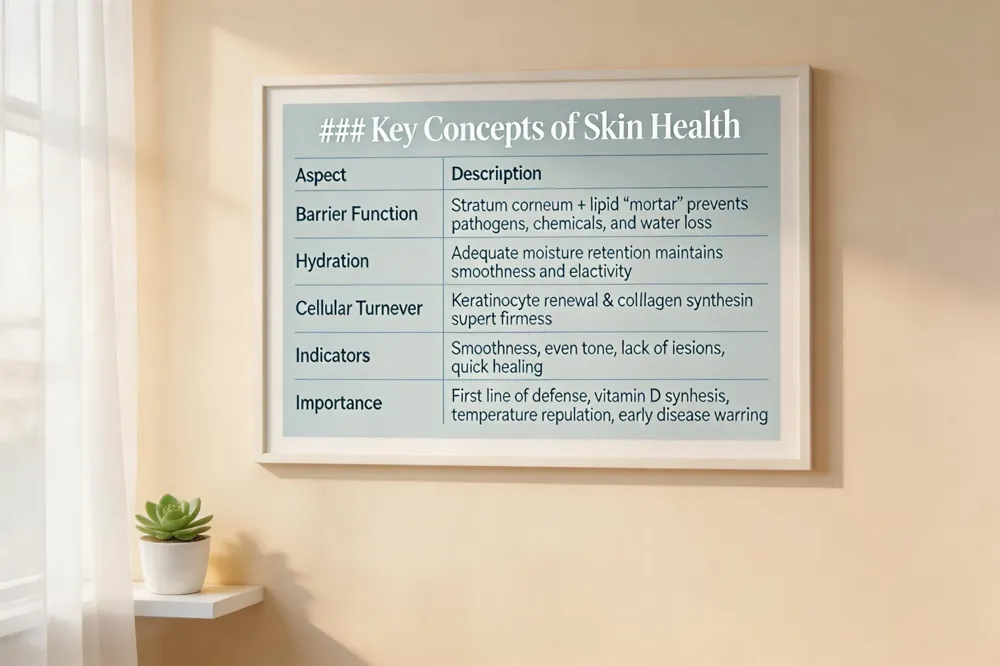
Key Concepts of Skin Health
| Aspect | Description |
|---|---|
| Barrier Function | Stratum corneum + lipid “mortar” prevents pathogens, chemicals, and water loss |
| Hydration | Adequate moisture retention maintains smoothness and elasticity |
| Cellular Turnover | Keratinocyte renewal & collagen synthesis support firmness |
| Indicators | Smoothness, even tone, lack of lesions, quick healing |
| Importance | First line of defense, vitamin D synthesis, temperature regulation, early disease warning |
 Skin health definition
Skin health is the state in which the skin can effectively serve as a protective barrier, retain moisture, heal quickly, and maintain an even tone and texture without disease or premature aging. It includes attributes such as smoothness, proper hydration, firmness, and freedom from disease, reflecting optimal cellular function and structural integrity. A well‑organized stratum corneum and balanced lipid “mortar” prevent pathogens, chemicals, and excess water loss, while adequate nutrition supports keratinocyte renewal and collagen synthesis.
Skin health definition
Skin health is the state in which the skin can effectively serve as a protective barrier, retain moisture, heal quickly, and maintain an even tone and texture without disease or premature aging. It includes attributes such as smoothness, proper hydration, firmness, and freedom from disease, reflecting optimal cellular function and structural integrity. A well‑organized stratum corneum and balanced lipid “mortar” prevent pathogens, chemicals, and excess water loss, while adequate nutrition supports keratinocyte renewal and collagen synthesis.
Why is skin health important? Skin is the body’s largest organ and the first line of defense against bacteria, viruses, chemicals, and UV radiation. Its barrier prevents fluid loss and infection, regulates temperature, and synthesizes vitamin D. Changes in appearance can signal underlying medical conditions, making skin health an early‑warning system. Maintaining healthy skin also supports self‑esteem and overall quality of life.
What is healthy skin? Healthy skin is well‑hydrated, smooth, evenly pigmented, and free of lesions or excessive inflammation. It functions as an effective barrier while allowing temperature regulation and sensation. Good health is supported by gentle cleansing, regular moisturizing, daily broad‑spectrum sunscreen, a balanced antioxidant‑rich diet, and lifestyle choices such as avoiding smoking, limiting alcohol, and managing stress.
Core Preventive Skincare Practices
Core Daily Routine Cheat‑Sheet
| Step | Morning | Evening |
|---|---|---|
| Cleanser | Gentle, pH‑balanced cleanser | Same gentle cleanser |
| Serum | Antioxidant (Vitamin C or niacinamide) | Retinol or niacinamide |
| Moisturizer | Apply on damp skin (lightweight) | Same lightweight or richer night cream |
| Sun Protection | Broad‑spectrum SPF 30+ (reapply every 2 h) | – |
| Extras | Pat dry, fragrance‑free products, stay hydrated | – |
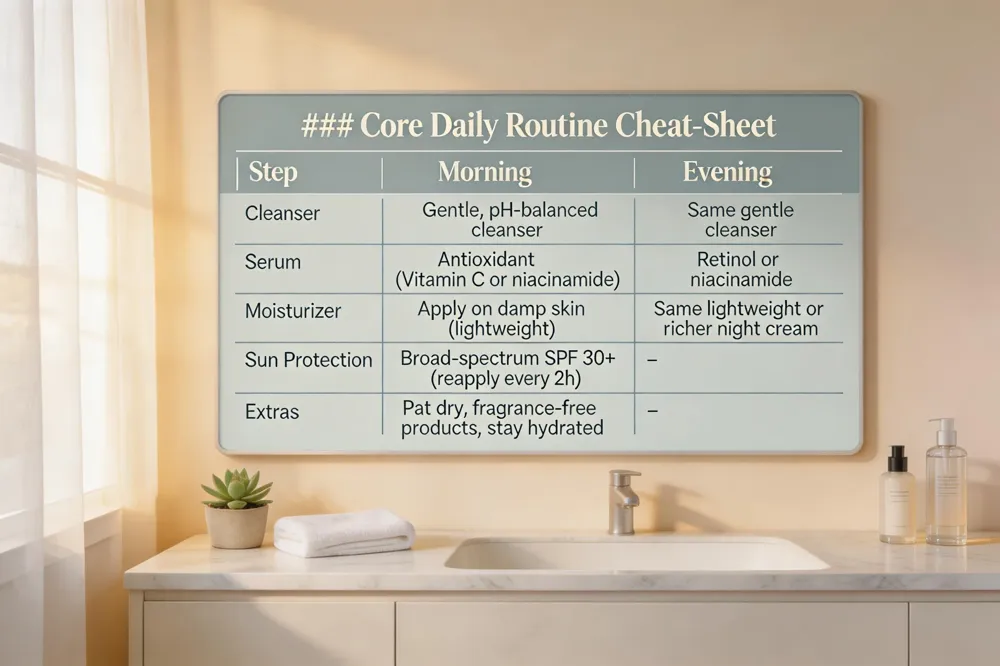 Healthy skin care routine – Use a gentle, pH‑balanced cleanser morning and night to remove dirt without stripping moisture. Follow with an antioxidant serum (vitamin C or niacinamide) in the AM and a retinol or niacinamide serum in the PM. Apply a lightweight moisturizer while skin is damp, then finish the morning with broad‑spectrum SPF 30+ sunscreen, re‑applying every two hours outdoors.
Skin care tips at home – Pat skin dry, use fragrance‑free moisturizers, stay hydrated (≈8 cups water), eat antioxidant‑rich foods, limit hot showers to five minutes, and avoid smoking.
Preventive skin care routine – Combine daily sunscreen, barrier‑supporting moisturizers (ceramides, hyaluronic acid) (Barrier‑protecting products), and weekly gentle chemical exfoliation. Schedule yearly dermatologist exams for early detection of cancer or chronic conditions.
Top 10 skin care tips – Sunscreen, gentle twice‑daily cleansing, consistent moisturization, antioxidant/retinol use, limited exfoliation, balanced diet, adequate sleep, stress management, avoid tobacco, and regular professional skin checks.
Lifestyle Factors That Boost Skin Vitality
Lifestyle Pillars for Radiant Skin
| Pillar | Action | Benefit |
|---|---|---|
| UV Protection | SPF 30+ daily, shade, protective clothing | Prevents DNA damage, collagen loss |
| Nutrition | Antioxidant‑rich fruits/veg, omega‑3, lean protein | Supports collagen synthesis, cell turnover |
| Hydration | ≥8 cups water/day | Maintains barrier moisture |
| Sleep | 7‑9 h/night | DNA repair, improved circulation |
| Stress Management | Mindfulness, exercise | Lowers cortisol, reduces inflammation |
| Smoking Cessation | Quit nicotine | Restores oxygen delivery, slows collagen breakdown |
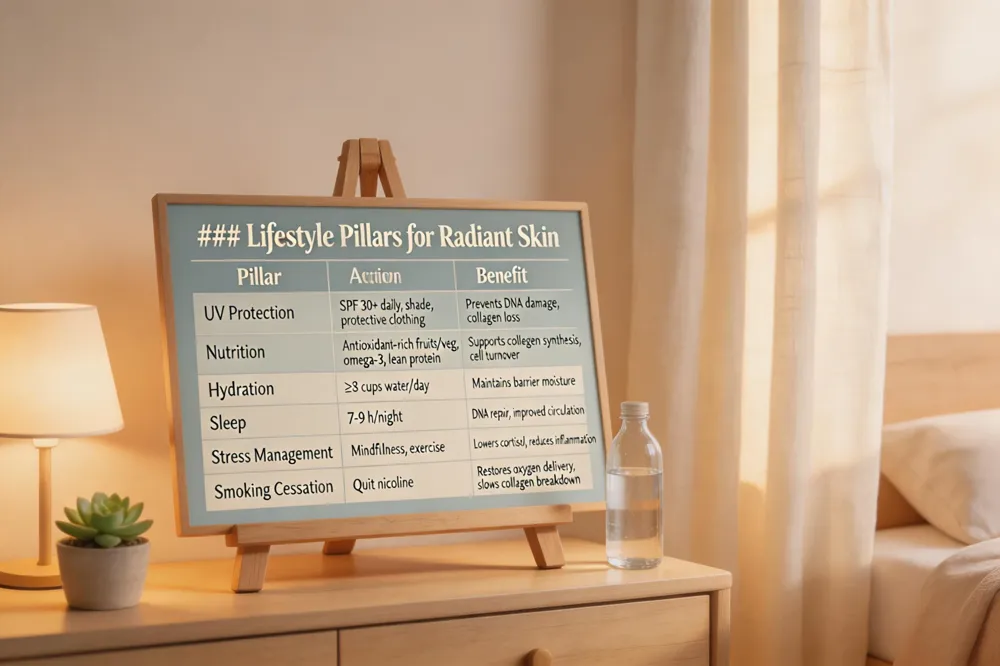 Protecting skin from UV damage is the cornerstone of any natural skin‑health plan—apply a broad‑spectrum SPF 30+ sunscreen daily, reapply every two hours, shade between 10 a.m. and 4 p.m. and wear protective clothing or hats. Nutrition and hydration are the next pillars: eat a diet rich in colorful fruits, vegetables, whole grains, lean protein, and omega‑3 fatty acids, and drink plenty of water to supply antioxidants and nutrients that support collagen synthesis and cell turnover. Adequate sleep (7‑9 hours) and stress‑management techniques such as mindfulness or regular exercise lower cortisol, promote DNA repair, and improve circulation, which delivers oxygen and nutrients to skin cells. Smoking cessation is essential—nicotine narrows blood vessels, depletes oxygen, and accelerates collagen breakdown, leading to premature wrinkles and increased skin‑cancer risk. Finally, gentle cleansing with a mild, fragrance‑free cleanser and pat‑drying preserves the skin barrier, while regular dermatologist exams enable early detection and personalized preventive care.
Professional Skin Cancer Screening & Prevention
Screening & Prevention Overview
| Screening Type | Recommended Frequency | Who Should Consider More Often |
|---|---|---|
| Full‑body dermatology exam | Annual for all adults | High‑risk (family history, many atypical moles, fair skin, heavy sun exposure) |
| Self‑exam (ABCDE rule) | Monthly | Everyone |
| Community free‑screenings | As available (health fairs, nonprofit events) | Anyone seeking low‑cost access |
| Medicare Part B coverage | When medical indication exists | Patients with documented risk or lesions |
| Private insurance | Varies; verify plan details | High‑risk patients may need prior authorization |
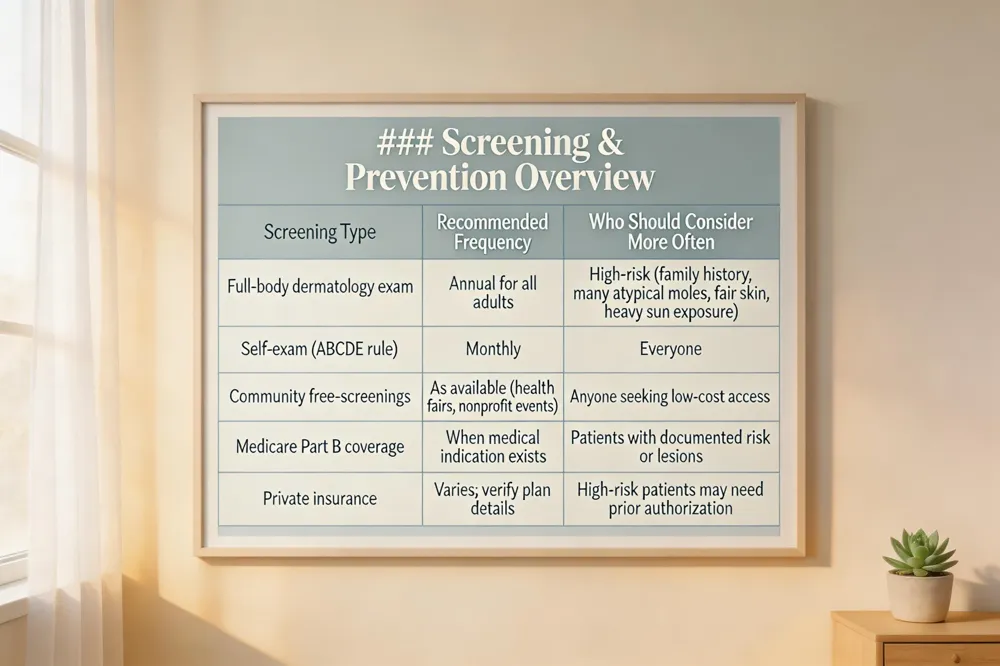 Skin cancer screening is a critical preventive strategy, yet insurance coverage and access can be confusing. The American Academy of Dermatology (AAD) recommends an annual full‑body exam for all adults, with more frequent visits for high‑risk individuals (family history, many atypical moles, fair skin, or extensive sun exposure). Monthly self‑exams using the ABCDE rule help catch new or changing lesions early. Free screenings are often offered at community health fairs, local health‑department clinics, and through nonprofit programs such as the American Cancer Society, the AAD’s free‑screening initiative, and the Skin Cancer Foundation’s events. Dermatology practices—including On The Spot Dermatology in Glenview, Illinois—periodically schedule free‑screening days. Medicare Part B covers skin‑cancer examinations when a medical indication exists, but routine preventive full‑body checks are not universally covered; coverage varies by private insurers and Medicare Advantage plans. Patients should verify their plan’s specifics and discuss any high‑risk factors with their dermatologist to ensure appropriate billing and reimbursement.
Practical At‑Home Skincare Strategies
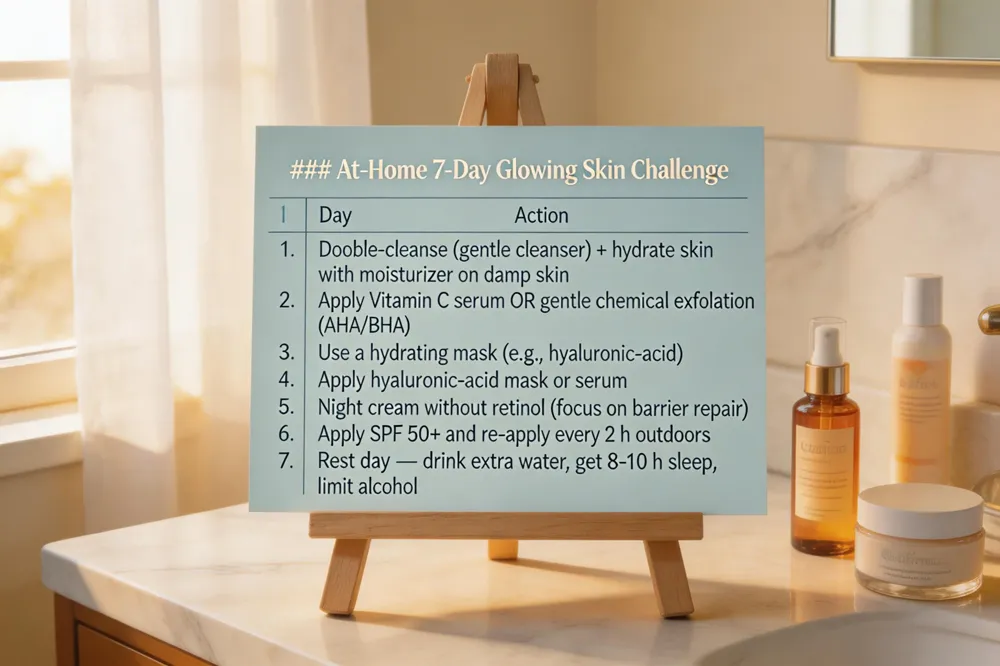
At‑Home 7‑Day Glowing Skin Challenge
| Day | Action |
|---|---|
| 1 | Double‑cleanse (gentle cleanser) + hydrate skin with moisturizer on damp skin |
| 2 | Apply Vitamin C serum OR gentle chemical exfoliation (AHA/BHA) |
| 3 | Use a hydrating mask (e.g., hyaluronic‑acid) |
| 4 | Apply hyaluronic‑acid mask or serum |
| 5 | Night cream without retinol (focus on barrier repair) |
| 6 | Apply SPF 50+ and re‑apply every 2 h outdoors |
| 7 | Rest day – drink extra water, get 8‑10 h sleep, limit alcohol |
 10 ways of caring for the skin: Apply SPF 30+ daily, reapply every 2–3 h; wear protective clothing; cleanse twice with gentle pH‑balanced cleanser; moisturize on damp skin with ceramide or hyaluronic acid; exfoliate 1–2 times weekly; drink 8 cups water; eat antioxidant‑rich diet; sleep 7–10 h; manage stress; avoid smoking and excess alcohol; keep tools clean; schedule dermatologist visits.
7‑day glowing skin challenge: Day 1 double‑cleanse & hydrate; Day 2 vitamin C serum or mild exfoliation; Day 3 hydrating mask; Day 4 hyaluronic‑acid mask; Day 5 retinol‑free night cream; Day 6 SPF 50 protection; Day 7 rest with water.
Healthy skin tips for face at home: gentle cleanser, moisturizer, SPF 30+, limit pore‑clogging makeup, weekly mask or exfoliation, hydration, balanced diet, no smoking.
How to make skin glow naturally at home: start with micellar water, follow with oil‑based cleanser, mild chemical exfoliant 2–3 times/week, apply vitamin C antioxidant serum or honey‑turmeric mask, lock in moisture with hyaluronic‑acid cream, finish with SPF 30+, stay hydrated, eat antioxidants, avoid smoking.
Advanced Preventive Products and Professional Guidance
Advanced Product Toolbox
| Product Type | Example | Primary Benefit |
|---|---|---|
| Sunscreen | La Roche‑Posay Anthelios Mineral SPF 50 | Broad‑spectrum UV protection, collagen preservation |
| Antioxidant Serum | SkinCeuticals C E Ferulic | Neutralizes free radicals, brightens skin |
| Hydrating Moisturizer | Augustinus Bader The Rich Cream (HA‑based) | Restores barrier moisture, improves elasticity |
| Niacinamide Serum | 2‑5 % niacinamide | Improves tone, reduces inflammation |
| Night Retinol | The Ordinary Retinol 0.5 % in Squalane | Promotes cell turnover, reduces fine lines |
| Chemical Exfoliant | Weekly AHA/BHA (1‑2 ×/week) | Smooths texture, enhances absorption |
 Daily prevention starts with broad‑spectrum SPF 30+ sunscreen—e.g., La Roche‑Posay Anthelios Mineral Ultralight Fluid SPF 50—to block UVA/UVB and slow collagen loss. Follow with an antioxidant serum such as SkinCeuticals C E Ferulic or a vitamin C L‑ascorbic acid formula to neutralize free radicals. Keep the barrier hydrated using a hyaluronic‑acid moisturizer (e.g., Augustinus Bader The Rich Cream) or a lightweight gel‑cream, and add a niacinamide serum (2–5 %) for tone and anti‑inflammation. At night, apply a low‑concentration retinol or bakuchiol product (The Ordinary Retinol 0.5 % in Squalane) to promote cell turnover. For clear skin at home, cleanse twice daily with a fragrance‑free, pH‑balanced cleanser, pat dry, and moisturize. Protect from UV daily, stay hydrated, eat antioxidant‑rich foods, get 8–10 h sleep, exercise, and manage stress. Prevent skin disease by maintaining hygiene, using gentle cleansers, avoiding shared personal items, and wearing protective clothing and sunscreen. Regular dermatologist visits enable early detection and personalized care, preserving a healthy, glowing complexion.
Conclusion: The Long‑Term Benefits of Preventive Dermatology
Preventive dermatology hinges on three pillars: daily sun protection, barrier‑supporting moisturization, and early detection of change. Broad‑spectrum SPF 30+ sunscreen applied each morning and reapplied every two hours blocks UV rays that cause up to 90 % of visible aging and skin‑cancer risk. Gentle, pH‑balanced cleansers followed by antioxidant‑rich serums and hyaluronic‑acid or ceramide moisturizers keep the skin’s barrier intact, reducing transepidermal water loss and inflammation. Regular self‑examinations and annual professional skin exams allow clinicians to spot precancerous lesions or early signs of aging before they become entrenched. At On The Spot Dermatology, personalized preventive plans combine these habits with microneedling, laser resurfacing, and AI‑assisted lesion analysis, ensuring each patient receives the most effective, optimal long‑term skin‑health strategy.