What Hormones Do to Your Skin
Hormones are the master regulators of skin oil. Androgens such as testosterone and dihydrotestosterone bind to receptors on sebaceous glands, prompting excess sebum that clogs pores and fuels acne. Estrogen normally counteracts this effect by reducing androgen activity and supporting collagen, while progesterone and cortisol can raise oil output during the luteal phase of the menstrual cycle or periods of stress. As we age, hormonal landscapes shift: puberty brings a surge of androgens, causing classic T‑zone breakouts in teens; adult women experience cyclic spikes of progesterone and drops in estrogen that trigger jaw‑line and chin flare‑ups; perimenopause and menopause reduce estrogen, leaving a relative androgen dominance that can provoke cystic lesions on the lower face. These stage‑specific hormonal changes explain why acne’s location and severity evolve from adolescence through adulthood.
Teen Hormonal Acne: Causes and First‑Line Care
 Androgen surge during puberty
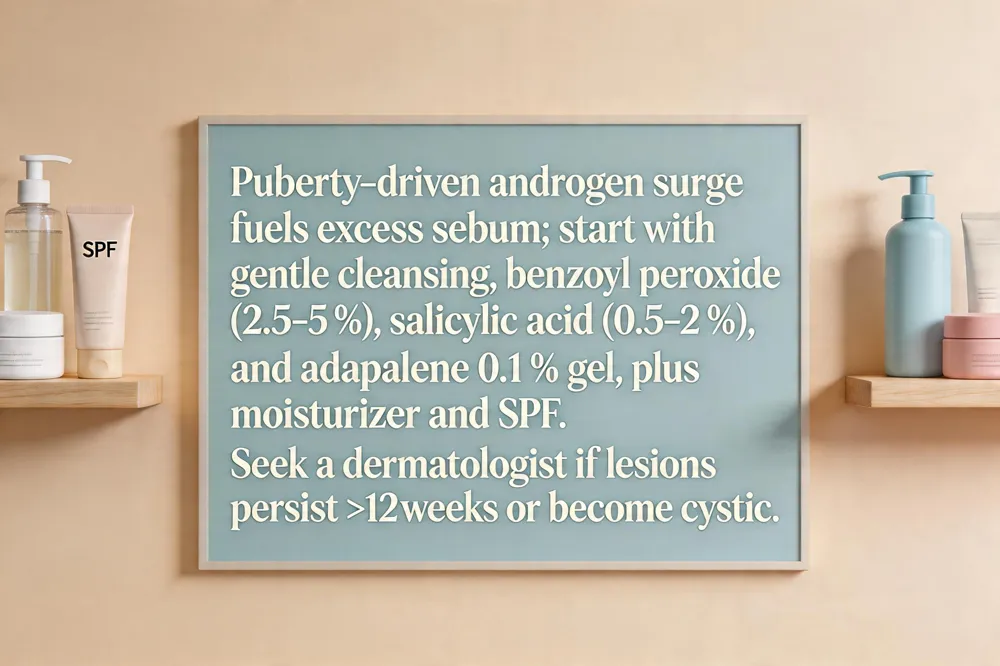
During puberty, rising androgen levels—especially testosterone—stimulate sebaceous glands, leading to excess sebum production. This oily environment clogs pores and sets the stage for acne lesions that affect both boys and girls.
Androgen surge during puberty
During puberty, rising androgen levels—especially testosterone—stimulate sebaceous glands, leading to excess sebum production. This oily environment clogs pores and sets the stage for acne lesions that affect both boys and girls.
Typical teenage lesion locations In adolescents, the T‑zone (forehead, nose, and chin) is most commonly affected, but acne can also appear on the cheeks, jawline, chest, shoulders, and back where oil glands are abundant. Blackheads, whiteheads, papules, and pustules are the usual presentations.
OTC actives that work for teens Gentle, non‑comedogenic cleansing twice daily is the foundation. Over‑the‑counter treatments that have the strongest evidence include:
- Benzoyl peroxide (2.5‑5 %) – antibacterial and oil‑reducing.
- Salicylic acid (0.5‑2 %) – exfoliates inside pores.
- Adapalene 0.1 % gel – a retinoid that normalizes skin cell turnover and prevents comedones. These ingredients can be used together (e.g., benzoyl peroxide in the morning, adapalene at night) with a light moisturizer and SPF 30+ sunscreen to protect the barrier.
When to see a dermatologist If breakouts persist after 8–12 weeks of consistent OTC use, become cystic or painful, cause scarring, or are accompanied by hormonal signs such as irregular periods or excess hair growth, a board‑certified dermatologist should be consulted. Professional evaluation can uncover underlying conditions (e.g., PCOS) and allow for prescription‑strength topicals, oral antibiotics, hormonal therapy (combined oral contraceptives, spironolactone), or in‑office procedures such as laser or light therapy.
Frequently asked questions
- Male hormonal acne treatment: Testosterone‑driven oil production responds to strong topicals (benzoyl peroxide, salicylic acid, prescription retinoids) and, when needed, oral antibiotics or short‑term isotretinoin. Anti‑androgens like spironolactone are rarely used in men but may be considered in select cases.
- Best over‑the‑counter acne treatment for adults: Benzoyl peroxide, adapalene 0.1 % gel, and salicylic acid remain the most effective OTC options, paired with gentle moisturizers and sunscreen.
- Best top 3 acne products: Differin Gel (0.1 % adapalene), La Roche‑Posay Effaclar Adapalene Gel (0.1 % adapalene), and Neutrogena Rapid Clear Spot Gel (10 % benzoyl peroxide).
- Hormonal acne medication options: Topical retinoids, benzoyl peroxide, azelaic acid, and topical antibiotics are first‑line. If insufficient, oral antibiotics, combined oral contraceptives, spironolactone, or isotretinoin may be prescribed. A personalized plan that includes lifestyle changes—low‑glycemic diet, stress management, adequate sleep—optimizes outcomes.
Adult Female Hormonal Acne: Patterns and Targeted Therapy
 Hormonal acne in adult women most often erupts on the jawline, chin, neck and lower cheeks—areas rich in androgen receptors.
Menstrual‑cycle flare‑ups – About 91 % of women notice a breakout a week before their period when progesterone rises and estrogen falls, boosting sebum production.
Pregnancy, PCOS and perimenopause impact – Pregnancy and PCOS raise androgens and progesterone, leading to increased oil output and deep cysts. In perimenopause and menopause, declining estrogen creates an androgen‑dominant state, causing late‑onset, often cystic, lesions.
Prescription options for adult women – First‑line therapy combines a gentle cleanser with a topical retinoid (adapalene or tretinoin) and benzoyl peroxide or azelaic acid to normalize turnover, kill Cutibacterium acnes and reduce inflammation. When lesions persist, oral antibiotics (doxycycline, minocycline) are used for several months. Hormonal control—combined oral contraceptives containing estrogen and anti‑androgenic progestins, or spironolactone—addresses the root androgen drive. Severe, resistant acne may require isotretinoin under close monitoring.
Balancing efficacy and safety – Sunscreen, non‑comedogenic moisturizers and a low‑glycemic diet support barrier health and limit irritation. Lifestyle measures—adequate sleep, stress‑reduction techniques and regular exercise—help stabilize cortisol and insulin‑like growth factor‑1, further reducing flare‑ups.
Key Q&A
- Best acne treatment for adults (dermatologist recommended): Gentle cleansing, topical retinoid + benzoyl peroxide or azelaic acid, oral antibiotics if needed, combined oral contraceptives or spironolactone for hormone‑driven disease, and isotretinoin for severe cases.
- Best hormonal acne treatment for adults: Topical retinoid/azelaic acid + benzoyl peroxide, followed by oral contraceptives or spironolactone; isotretinoin for recalcitrant cystic lesions.
- Which hormone primarily causes acne in females? Androgens—especially testosterone and its conversion to dihydrotestosterone (DHT)—drive excess sebum and follicular blockage.
- Hormonal skin problems on the face: Pre‑menstrual cystic papules, pregnancy‑related flare‑ups, melasma from estrogen/progesterone spikes, and perimenopausal oily skin; managed with targeted topicals, hormonal therapy, sun protection and lifestyle adjustments.
Adult Male Acne in the 40s: Triggers and Targeted Solutions
 Adult acne in men in their 40s is often driven by a resurgence of androgen activity. Although testosterone levels slowly decline after the 30s, the skin’s sebaceous glands may become more sensitive to circulating androgens, especially dihydrotestosterone, leading to excess sebum on the forehead, chest, back, and neck. Lifestyle contributors such as chronic stress‑induced cortisol spikes, high‑glycemic or fatty diets, and protein‑rich supplements can further boost oil production and inflammation. Improper shaving—using dull blades, aggressive pressure, or oily aftershave—causes micro‑abrasions that trap sebum and bacteria, especially on the jawline and neck. When lesions become persistent papules, pustules, or painful cysts, or when over‑the‑counter regimens fail after 8–12 weeks, a dermatologist should consider prescription options: topical retinoids, benzoyl peroxide, oral antibiotics, or anti‑androgen therapy such as spironolactone. Early, personalized treatment can prevent scarring and restore skin health.
Facial Hormonal Acne, Cheek‑Specific Tips
 Cheeks are a common hotspot for hormonal lesions because the skin in this area has a high density of androgen receptors and is exposed to the fluctuations of estrogen, progesterone and cortisol that drive excess sebum. When oil production spikes, pores become clogged, leading to whiteheads, papules or painful cysts.
Spot‑treatment strategy – Begin with a gentle, non‑comedogenic cleanser twice daily. Apply a nightly retinoid (adapalene or tretinoin) or azelaic acid to normalize cell turnover and reduce inflammation. For active lesions, use a targeted benzoyl peroxide or salicylic acid spot treatment to kill Cutibacterium acnes and dissolve debris. Layer a lightweight, oil‑free moisturizer and finish with SPF 30+ sunscreen to protect the barrier.
When to consider oral isotretinoin or steroids – If lesions are deep, persistent cysts or nodules that do not respond to topicals after 8–12 weeks, a dermatologist may prescribe oral isotretinoin to dramatically shrink sebaceous glands. For isolated, inflamed nodules, a single intralesional triamcinolone injection can provide rapid relief.
Hormonal acne on the cheeks – treatment tips Hormonal acne on the cheeks often appears as persistent whiteheads, papules or painful cysts due to excess sebum driven by hormonal fluctuations. Start with gentle, oil‑free, non‑comedogenic skin care and use a topical retinoid or azelaic acid nightly to unclog pores and reduce inflammation, and add a benzoyl peroxide or salicylic acid spot treatment for active lesions. If topicals are not enough, a dermatologist may prescribe oral hormonal therapy such as birth‑control pills or spironolactone, or a short course of oral antibiotics to control bacteria and inflammation. For severe, deep cystic acne, isotretinoin or cortisone injections can be considered under professional supervision. Complement medical treatment with lifestyle changes—adequate sleep, stress reduction, a low‑glycemic diet, and avoiding heavy, oily cosmetics—to keep cheek skin clear.
What does estrogen‑deficient skin look like? Estrogen‑deficient skin typically appears thinner and more translucent, with a noticeable loss of firmness and elasticity. It often feels drier and looks duller, showing fine lines and wrinkles that are more pronounced and less “plump.” The skin may become more sensitive, prone to irritation, and can develop a rough, uneven texture. Reduced collagen and elastin production leads to sagging or a loss of the youthful bounce that estrogen normally supports. Overall, the complexion looks aged, dehydrated, and less vibrant than skin that has healthy estrogen levels.
Skin hormones and their functions Skin hormones such as estrogen, testosterone, progesterone, cortisol, thyroid hormones, and growth hormone play key roles in maintaining skin health. Estrogen promotes collagen synthesis, skin thickness, moisture retention, and elasticity, while its decline leads to dryness and wrinkling. Testosterone and other androgens stimulate sebaceous glands, increasing sebum production that can cause oily skin and acne. Cortisol, the stress hormone, heightens inflammation and can exacerbate conditions like acne, eczema, and psoriasis. Thyroid hormones influence skin hydration and hair growth, and growth hormone supports collagen production and overall skin firmness.
Lifestyle, Diet, and Hormonal Balance: Supporting Clear Skin
 A balanced, low‑glycemic diet helps keep insulin and insulin‑like growth factor‑1 (IGF‑1) levels stable, reducing the androgen‑driven surge in sebum that fuels hormonal acne. Whole grains, legumes, non‑starchy vegetables, and omega‑3‑rich foods such as fatty fish or flaxseed can lower IGF‑1 spikes, while limiting refined sugars and dairy moderates insulin spikes that otherwise amplify androgen activity.
Stress‑reduction and adequate sleep are equally crucial. Chronic cortisol elevation from stress can amplify androgen production and inflammation, worsening breakouts across the face, jawline, and back. Incorporating mindfulness practices, regular exercise, and a consistent 7‑9‑hour sleep schedule helps normalize cortisol and supports skin‑barrier repair, making topical treatments more effective.
Identifying hormonal imbalance signs early can guide timely intervention. Look for irregular or absent menstrual cycles, sudden hair thinning or hirsutism, new‑onset acne or oily skin, unexplained weight changes, and mood disturbances such as anxiety or fatigue.
What hormone causes oily skin and hair? Testosterone (an androgen) stimulates sebaceous glands; its more potent form, dihydrotestosterone, has a similar effect.
What are the five signs of hormonal imbalance? 1) Irregular periods, 2) Hair thinning or excess facial hair, 3) Persistent skin changes (acne, oiliness, dry patches, hyperpigmentation), 4) Unexplained weight shifts, and 5) Mood‑related symptoms (anxiety, irritability, depression, fatigue).
How to cure hormonal acne? Begin with a dermatologist‑guided plan that blends topical retinoids, benzoyl peroxide, azelaic or salicylic acids with oral options such as antibiotics, combined oral contraceptives, or anti‑androgens like spironolactone. For severe cases, isotretinoin may be prescribed. Complement treatment with a low‑glycemic diet, stress‑management, adequate sleep, gentle cleansing, and non‑comedogenic moisturizers to maintain barrier health and achieve lasting clear skin.
Personalized, Advanced Care at On The Spot Dermatology
 At On the Spot Dermatology we begin every hormonal acne case with a thorough individual assessment of hormonal status. A detailed medical history, review of menstrual patterns, pregnancy or postpartum changes, and, when appropriate, laboratory testing for androgen, estrogen, progesterone, and insulin‑like growth factor‑1 allow us to pinpoint the driving hormone(s) and tailor therapy accordingly.
Combination therapy and in‑office procedures – Most patients start with a topical regimen that includes retinoids, benzoyl peroxide, azelaic acid, salicylic acid, or topical antibiotics to unclog pores and calm inflammation. When topicals alone are insufficient, we add oral medications such as antibiotics, combined oral contraceptives or the anti‑androgen spironolactone to reduce sebaceous gland activity. Severe or cystic lesions may merit a short course of isotretinoin or intralesional steroid injections. In‑office modalities—laser (AviClear™/CUTERA®), chemical peels, and light therapy—are combined with the medical regimen to accelerate clearance, improve texture, and minimize scarring.
Long‑term maintenance and monitoring – After active lesions are controlled, we transition patients to a maintenance plan that blends a gentle retinoid or azelaic acid with a non‑comedogenic moisturizer and daily SPF 30+. Regular follow‑up visits allow us to adjust dosages, monitor for side effects, and reinforce lifestyle modifications such as stress reduction, adequate sleep, and a low‑glycemic diet.
Hormonal acne medication options – Topicals (retinoids, benzoyl peroxide, azelaic, salicylic acids, antibiotics) form the first line. Oral antibiotics, combined oral contraceptives, spironolactone, and isotretinoin are added based on severity and hormonal profile.
Best hormonal acne treatment for adults – Begin with a topical retinoid or azelaic acid plus benzoyl peroxide; if needed, add combined oral contraceptives or spironolactone to lower androgen‑driven sebum. Persistent cystic lesions may require oral antibiotics or isotretinoin. Lifestyle tweaks support lasting results.
Your Path to Balanced, Clear Skin
Regular dermatologist visits are essential for identifying hormonal triggers and customizing treatment. A board‑certified dermatologist can evaluate skin, review medical history, and order labs when needed, ensuring early detection of conditions such as PCOS or perimenopausal changes. Tailored skincare routines combine gentle, non‑comedogenic cleansing with targeted actives—retinoids, salicylic acid, niacinamide—to control oil, exfoliate pores, and reduce inflammation. Consistent use of a balanced moisturizer and daily sunscreen supports the barrier while preventing post‑inflammatory hyperpigmentation. Long‑term hormonal health requires lifestyle balance: stress reduction, adequate sleep, low‑glycemic nutrition, and, when appropriate, hormonal therapy such as combined oral contraceptives or anti‑androgen medication. Ongoing follow‑up allows adjustments, keeping skin clear and resilient over time. Patient education and adherence to the plan enhance outcomes.