Why Evidence‑Based Ingredients Matter
The skincare market has moved from celebrity‑driven hype to a science‑first approach, driven by rigorous dermatologist surveys such as Northwestern’s 80‑expert study that identified 23 evidence‑backed actives. Dermatologists evaluate ingredients by reviewing peer‑reviewed trials, consensus percentages, and safety profiles, favoring mineral sunscreens, retinoids, vitamin C, hyaluronic acid, ceramides, and niacinamide while discarding poorly supported trends like peptides or green‑tea extracts. Their findings reinforce a simple three‑step routine—cleanse, moisturize with barrier‑repair actives, and protect with broad‑spectrum sunscreen—as the most effective, low‑irritation strategy for diverse skin concerns.
Understanding Dermatologist‑Approved Actives
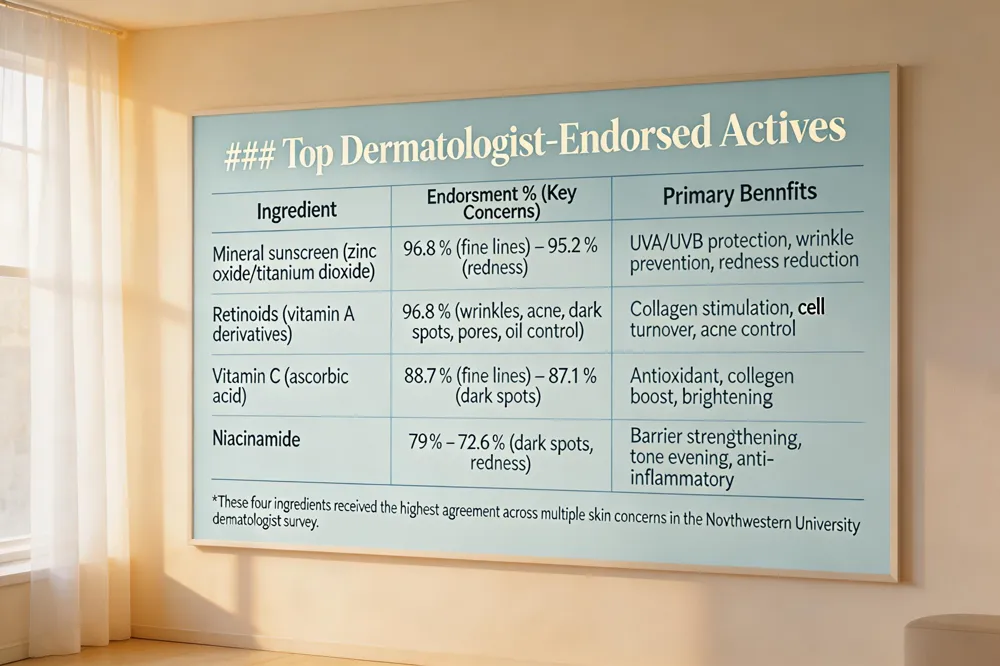
Top Dermatologist‑Endorsed Actives
| Ingredient | Endorsement % (Key Concerns) | Primary Benefits |
|---|---|---|
| Mineral sunscreen (zinc oxide/titanium dioxide) | 96.8 % (fine lines) – 95.2 % (redness) | UVA/UVB protection, wrinkle prevention, redness reduction |
| Retinoids (vitamin A derivatives) | 96.8 % (wrinkles, acne, dark spots, pores, oil control) | Collagen stimulation, cell turnover, acne control |
| Vitamin C (ascorbic acid) | 88.7 % (fine lines) – 87.1 % (dark spots) | Antioxidant, collagen boost, brightening |
| Niacinamide | 79 % – 72.6 % (dark spots, redness) | Barrier strengthening, tone evening, anti‑inflammatory |
These four ingredients received the highest agreement across multiple skin concerns in the Northwestern University dermatologist survey.
 What is the most effective skin‑care ingredient?
A Northwestern University study of 80 dermatologists identified retinoids—vitamin A derivatives—as the top performer for fine lines, acne, dark spots, large pores and oily skin. In the same survey, mineral sunscreen (zinc oxide or titanium dioxide) was also rated at the very top because it blocks UVA/UVB radiation, helps prevent wrinkles and reduces redness. Together they form the cornerstone of an evidence‑based routine.
What is the most effective skin‑care ingredient?
A Northwestern University study of 80 dermatologists identified retinoids—vitamin A derivatives—as the top performer for fine lines, acne, dark spots, large pores and oily skin. In the same survey, mineral sunscreen (zinc oxide or titanium dioxide) was also rated at the very top because it blocks UVA/UVB radiation, helps prevent wrinkles and reduces redness. Together they form the cornerstone of an evidence‑based routine.
Most effective skincare ingredients Dermatologists consistently endorse a core set of actives with strong clinical backing: mineral sunscreen, retinoids, vitamin C (a potent antioxidant that boosts collagen and brightens hyperpigmentation), alpha‑hydroxy acids such as glycolic acid (exfoliation, texture improvement, collagen stimulation), and beta‑hydroxy acid salicylic acid (pore‑penetrating exfoliation for oily, acne‑prone skin). These ingredients address both aging and acne more robustly than trendy options lacking solid evidence.
Four ingredients with the strongest scientific backing The study highlighted four ingredients that received the highest dermatologist agreement across multiple concerns:
- Mineral sunscreen (zinc oxide/titanium dioxide) – 96.8% endorsement for fine lines, 95.2% for redness.
- Retinoids – 96.8% endorsement for wrinkles, acne, dark spots, pores and oil control.
- Vitamin C – 88.7% endorsement for fine lines, 87.1% for dark spots.
- Niacinamide – 79%–72.6% endorsement for dark spots and redness, supporting barrier function and evening tone.
Why simplicity matters Researchers stress a three‑step routine—cleanse, moisturize, protect—with these evidence‑based actives. Over‑layering multiple actives can increase irritation, whereas targeted use of the four highly endorsed ingredients maximizes benefit while minimizing risk. Patients should consult a dermatologist before introducing retinoids, especially during pregnancy or breastfeeding.
Building a Simple, Evidence‑Based Routine
Recommended Daily Routine (Markdown)
| Time | Step | Product Type | Key Active(s) |
|---|---|---|---|
| Morning | 1 | Gentle cleanser | – |
| 2 | Antioxidant serum | Vitamin C or niacinamide | |
| 3 | Hydrating moisturizer | Hyaluronic acid | |
| 4 | Broad‑spectrum SPF 30+ (mineral) | Zinc oxide / titanium dioxide | |
| Evening | 1 | Cleanser | – |
| 2 | Treatment serum (optional) | Retinoid (night) or AHA/BHA (2‑3×/wk) | |
| 3 | Night cream | Ceramides‑rich formula |
Keep the routine to three pillars – cleanse, treat, protect – and introduce one new product at a time.
 A dermatologist‑backed routine focuses on three pillars—cleanse, treat, protect—while keeping the ingredient list short to minimise irritation.
Top 10 skin‑care tips
- Apply a broad‑spectrum SPF 30+ sunscreen every morning and reapply every two hours; mineral filters (zinc oxide or titanium dioxide) earned 96.8% dermatologist endorsement for wrinkle and redness prevention.
- Cleanse gently twice daily with a non‑stripping cleanser, then pat dry while the skin is still damp.
- Use a retinoid (vitamin A derivative) at night once you’re over 30; 96.8% of dermatologists support it for fine lines, acne, and large pores.
- Shield skin from direct sun by seeking shade, wearing protective clothing, and avoiding peak UV hours.
- Maintain a healthy lifestyle: stay hydrated, eat antioxidant‑rich foods, quit smoking, and limit processed sugars.
- Incorporate a hyaluronic‑acid serum for immediate hydration; it can hold up to 1,000 × its weight in water.
- Add niacinamide (2‑5%) to strengthen the barrier and reduce redness.
- Use a ceramides-rich moisturizer for dry or barrier‑compromised skin.
- Exfoliate with a mild AHA/BHA (2‑3 times weekly) to promote cell turnover without over‑irritating.
- Avoid over‑layering active ingredients and keep the routine simple.
Daily skin‑care routine at home Morning: gentle cleanser → antioxidant serum (vitamin C or niacinamide → hyaluronic‑acid moisturizer → SPF 30+ sunscreen. Evening: cleanse → optional serum (retinoid or gentle exfoliant 2‑3 ×/week) → ceramides-rich night cream.
Routine for the 40s Add a low‑concentration retinol 2‑3 times weekly, alternate with a richer ceramides night cream, and use a vitamin C serum each morning for brightening and collagen support.
Habits to avoid Skip multi‑step regimens, skip non‑essential antibiotics, avoid popping pimples at night, introduce one new product at a time, and never for sunscreen.
Following these evidence‑based steps yields balanced, hydrated skin while minimising irritation and long‑term damage.
Ingredient Tools and Resources
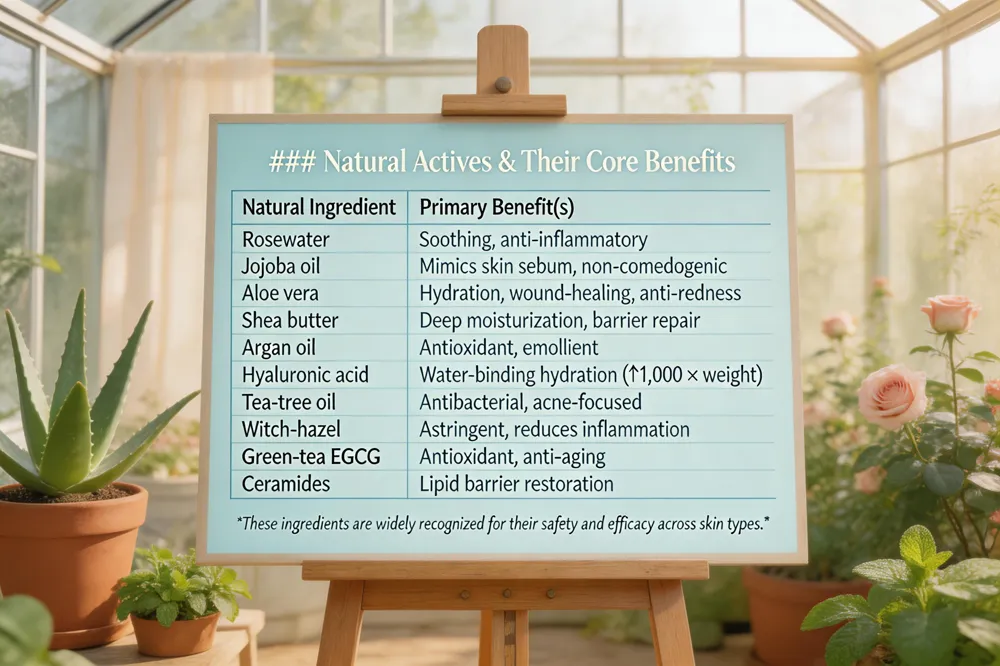
Natural Actives & Their Core Benefits
| Natural Ingredient | Primary Benefit(s) |
|---|---|
| Rosewater | Soothing, anti‑inflammatory |
| Jojoba oil | Mimics skin sebum, non‑comedogenic |
| Aloe vera | Hydration, wound‑healing, anti‑redness |
| Shea butter | Deep moisturization, barrier repair |
| Argan oil | Antioxidant, emollient |
| Hyaluronic acid | Water‑binding hydration (↑1,000 × weight) |
| Tea‑tree oil | Antibacterial, acne‑focused |
| Witch‑hazel | Astringent, reduces inflammation |
| Green‑tea EGCG | Antioxidant, anti‑aging |
| Ceramides | Lipid barrier restoration |
These ingredients are widely recognized for their safety and efficacy across skin types.
 The 1 % rule governs how ingredients are listed on U.S. and EU product labels. Ingredients are ordered by weight until a component falls below 1 % of the formula; thereafter, the order can be arbitrary. Thus, the first few ingredients reveal the product’s primary actives, while later entries may be rearranged to highlight “nice‑sounding” items and downplay less desirable ones.
A skincare ingredient checker app lets you scan a barcode or photo to receive a safety score derived from the latest dermatology research. The app highlights allergens, hormone disruptors, and irritants, and suggests safer alternatives tailored to your skin type and concerns, making label reading quick and evidence‑based.
Natural actives that consistently work include rosewater, jojoba oil, aloe vera, shea butter, argan oil, hyaluronic acid, tea‑tree oil, witch‑hazel, green‑tea EGCG, and ceramides. These provide anti‑inflammatory, antioxidant, moisturizing, and barrier‑support benefits across skin types.
Science‑backed ingredients endorsed by dermatologists include niacinamide, retinoids (retinol, adapalene), vitamin C, EGCG, hyaluronic acid, ceramides, squalane, and bakuchiol. Their efficacy is supported by peer‑reviewed studies for improving texture, reducing pigment, and enhancing barrier function.
Targeted Solutions for Specific Concerns
Ingredient‑Concern Matching
| Skin Concern | Recommended Active(s) |
|---|---|
| UV protection & wrinkle prevention | Mineral sunscreen (zinc oxide/titanium dioxide) |
| Fine lines & aging | Retinoids, Vitamin C, Glycolic acid |
| Acne & oily pores | Salicylic acid (BHA), Retinoids, Benzoyl peroxide |
| Hyperpigmentation | Vitamin C, Niacinamide, Hydroquinone (prescription) |
| Dryness / barrier dysfunction | Ceramides, Hyaluronic acid, Squalane |
| Redness / inflammation | Niacinamide, Azelaic acid, Green‑tea EGCG |
Targeted actives address the underlying pathology of each concern while minimizing irritation.
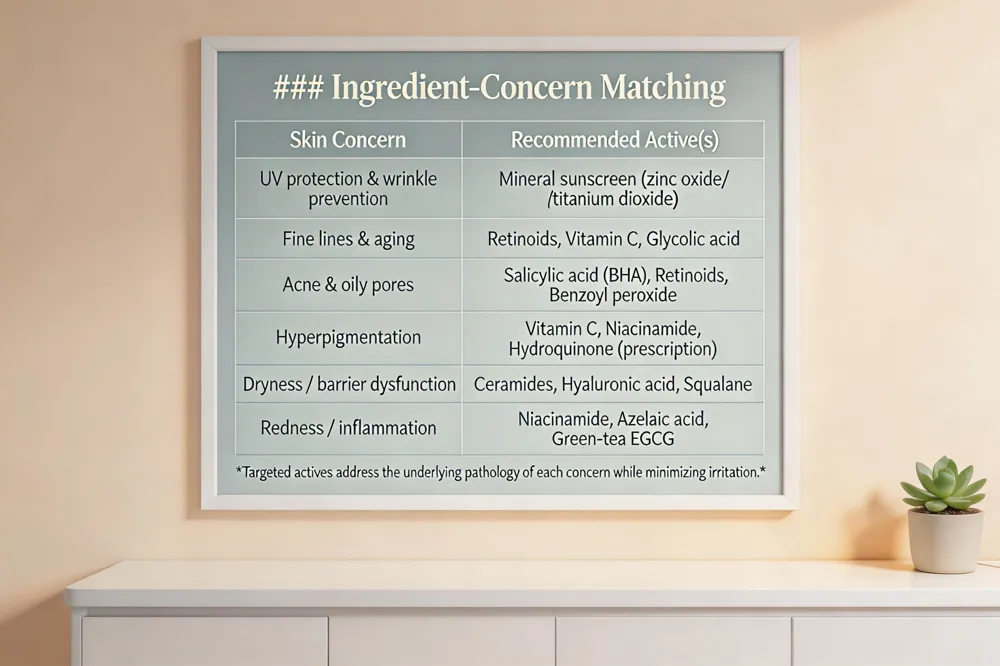 Most effective skincare ingredients you should know about Northwestern‑based dermatologist consensus highlights mineral sunscreen (zinc oxide or titanium dioxide) for UV protection and wrinkle prevention, and retinoids (vitamin A derivatives) for fine lines, pores, dark spots and acne. Salicylic acid (a BHA) penetrates pores to exfoliate and reduce oiliness, making it essential for acne‑prone skin. Vitamin C delivers antioxidant protection while stimulating collagen and fading hyperpigmentation. Hyaluronic acid holds up to 1,000 × its weight in water for deep hydration, and glycolic acid (an AHA) together with niacinamide improves texture, barrier strength and tone with low irritation risk.
Effective skincare ingredients list Key actives include mineral sunscreen (zinc oxide/titanium dioxide), retinoids (vitamin A derivatives), AHAs (glycolic, lactic), BHAs (salicylic), Vitamin C, niacinamide, Hyaluronic acid and ceramides. These agents target UV damage, aging, acne, pigmentation and barrier repair.
Best ingredients for skin repair Retinoids and mineral sunscreen drive collagen synthesis and protect against UV‑induced breakdown. Ceramides restore the lipid barrier, while niacinamide, cholesterol and panthenol soothe inflammation and lock in moisture.
Skincare ingredients and what they do AHAs dissolve dead‑cell bonds, smooth fine lines and boost collagen; BHAs clear oily pores and reduce acne; hydroquinone and related brighteners inhibit melanin production; antioxidants (vitamins C/E) neutralize free radicals, supporting barrier health.
Healthy skin tips for face Apply broad‑spectrum SPF 30+ daily, cleanse gently twice, moisturize with hyaluronic‑acid‑rich formulas, stay hydrated, eat antioxidant‑rich foods, get 7‑9 hours sleep, avoid smoking and keep pillowcases, brushes and phones clean.
Dermatologist‑recommended skin‑care products Look for products containing mineral sunscreen, retinoids, niacinamide, ceramides and hyaluronic acid. Acne regimens favor salicylic acid, benzoyl peroxide or adapalene; anti‑aging relies on retinoids and Vitamin C serums. Trusted OTC brands include CeraVe, Cetaphil, La Roche‑Posay, Neutrogena and Eucerin, always paired with daily SPF.
Avoiding Pitfalls and Harmful Ingredients
Ingredients to Avoid & Risks
| Ingredient | Reason to Avoid |
|---|---|
| Formaldehyde‑releasing preservatives (e.g., DMDM‑hydantoin, quaternium‑15) | Irritation, potential sensitization |
| Parabens | Hormone‑disrupting potential |
| Phthalates | Endocrine disruption |
| Benzophenone‑type UV filters (oxybenzone, octinoxate) | UV‑induced skin damage, allergy |
| PFAS & hidden fragrance chemicals | Persistent environmental pollutants, irritation |
| Aluminum salts | Possible skin irritation |
| Benzalkonium chloride | Barrier disruption, dryness |
| p‑Phenylenediamine (hair‑dye) | Strong sensitizer, allergic reactions |
Choosing fragrance‑free, fully disclosed formulas reduces the risk of adverse reactions.
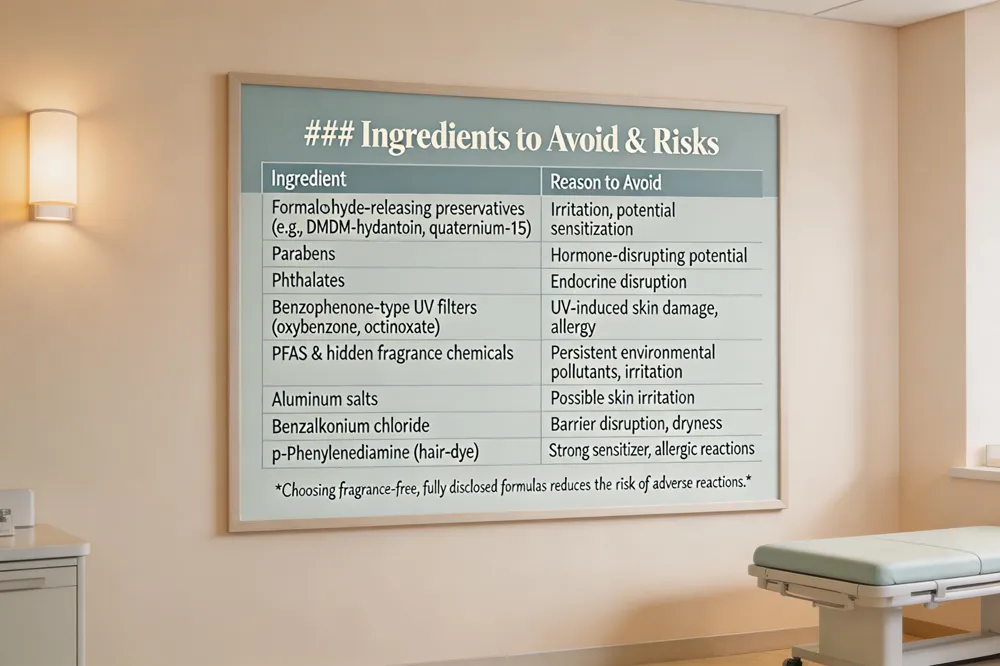 Choosing skin‑care products wisely protects both immediate appearance and long‑term health. Skincare ingredients to avoid – formaldehyde‑releasing preservatives (quaternium‑15, DMDM hydantoin, diazolidinyl urea), parabens, phthalates, benzophenone‑type UV filters (oxybenzone, octinoxate), fragrance‑masked chemicals (PFAS, hidden scent components), aluminum salts, benzalkonium chloride, and hair‑dye agents such as p‑phenylenediamine. These agents can cause irritation, hormonal disruption, or allergic reactions. Opt for fragrance‑free, fully disclosed formulas.
Pregnancy‑safe skincare – Retinoids are contraindicated during pregnancy and breastfeeding; instead use antioxidants (vitamin C, niacinamide), azelaic acid, and barrier‑repair ceramides. These ingredients are evidence‑based, gentle, and do not pose fetal risk.
Retinoid contraindications – Besides pregnancy, avoid retinoids on broken skin, severe rosacea, or when using other strong irritants without dermatologist guidance. Begin slowly, monitor tolerance, and always follow with a broad‑spectrum mineral sunscreen (zinc oxide or titanium dioxide).
Common habits that damage skin – Dermatologists warn against seven off‑limit habits: overly complex multi‑step routines, skipping sunscreen, using triple‑antibiotic creams, popping pimples (especially late at night), introducing multiple new products at once, and neglecting proper nail‑care (gel manicures). Simplify to clean, moisturize, protect and treat with proven actives for the best results.
Most effective ingredient – The Northwestern University study of 80 dermatologists identified retinoids as the top performer for wrinkles, acne, dark spots, large pores, and oily skin, with mineral sunscreen close behind for UV protection and wrinkle prevention.
Personalized Care at On The Spot Dermatology
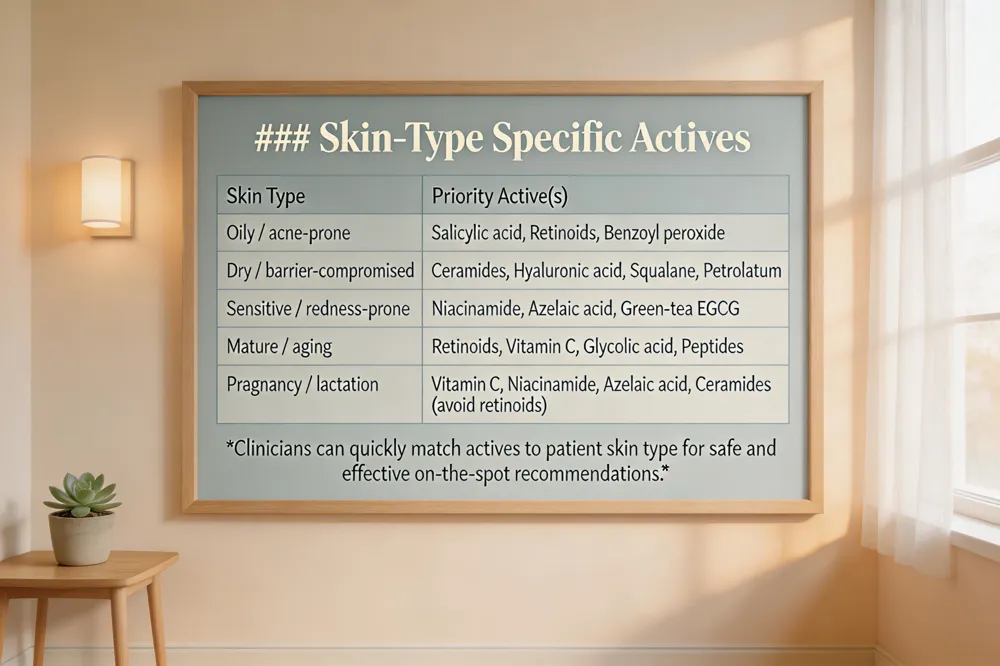
Skin‑Type Specific Actives
| Skin Type | Priority Active(s) |
|---|---|
| Oily / acne‑prone | Salicylic acid, Retinoids, Benzoyl peroxide |
| Dry / barrier‑compromised | Ceramides, Hyaluronic acid, Squalane, Petrolatum |
| Sensitive / redness‑prone | Niacinamide, Azelaic acid, Green‑tea EGCG |
| Mature / aging | Retinoids, Vitamin C, Glycolic acid, Peptides |
| Pregnancy / lactation | Vitamin C, Niacinamide, Azelaic acid, Ceramides (avoid retinoids) |
Clinicians can quickly match actives to patient skin type for safe and effective on‑the‑spot recommendations.
 Using an ingredient dictionary for patient consultations: Clinicians reference INCIdecoder to verify actives, their irritation scores, and percentages, ensuring only approved ingredients are recommended.
Customizing routines based on skin type: For oily, acne‑prone skin we prioritize benzoyl peroxide, salicylic acid and retinoids; for dry, barrier‑compromised skin we choose ceramides, hyaluronic acid, petrolatum and urea.
Integrating actives into treatment plans: The 23 ingredients identified by the Northwestern study—including mineral sunscreen, retinoids, vitamin C, hydroquinone, niacinamide—are layered in a three‑step regimen (cleanse, moisturize, protect) to address fine lines, hyperpigmentation, redness and acne.
Patient education and label reading: Patients are taught to scan INCI ingredients for actives, verify concentration, and avoid irritants such as fragrance or acids.
Putting It All Together for Healthier Skin
Evidence‑based actives—mineral sunscreen (zinc oxide/titanium dioxide), retinoids, vitamin C, niacinamide, hyaluronic acid, ceramides, benzoyl peroxide, salicylic acid, and hydroquinone—have received 70‑100% dermatologist endorsement for wrinkles, acne, hyperpigmentation, dryness, and redness. A three‑step regimen—cleanse, moisturize with barrier‑supporting humectants or lipids, then protect with broad‑spectrum sunscreen—delivers those ingredients without the irritation risk of multi‑step layering. On The Spot Dermatology can assess your skin type, prioritize the most appropriate actives, and customize concentrations, ensuring safe use (e.g., retinoids avoided in pregnancy) while monitoring results. This targeted, streamlined approach maximizes benefit and minimizes adverse reactions.