Why SPF Matters for Sensitive Skin
UV radiation is a major trigger for reactive skin, amplifying redness, inflammation, and barrier disruption that can lead to flare‑ups, hyperpigmentation, and even acne. Broad‑spectrum sunscreens, which block both UVA (aging and irritation) and UVB (burn) rays, are essential to prevent these effects; the American Academy of Dermatology recommends a minimum SPF 30 for daily use, with higher SPFs offering only modest extra UVB blockage. Sensitive skin is especially prone to irritation from common sunscreen additives—fragrance, oxybenzone, parabens, drying alcohols, and synthetic dyes—so selecting a formula that omits these irritants is crucial. Mineral filters such as zinc oxide and titanium dioxide are generally gentler, sitting on the skin surface without penetrating, while fragrance‑free, alcohol‑free, and non‑comedogenic options further reduce the risk of allergic reactions and breakouts. Consistent, proper application (about a nickel‑sized amount, reapplied every two hours) ensures the skin stays protected without provoking irritation.
Understanding SPF Basics for Sensitive Skin
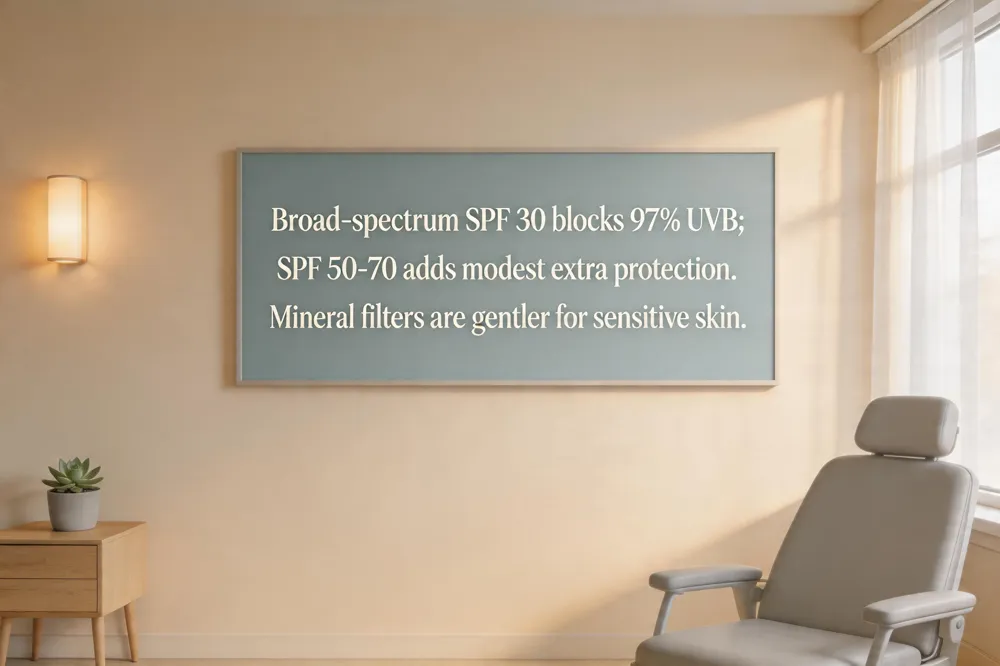 SPF (Sun Protection Factor) measures how much UVB radiation a sunscreen blocks; SPF 30 filters about 97 % of UVB, while SPF 50 blocks roughly 98 %. Dermatologists require broad‑spectrum protection meaning the product also shields against UVA rays that cause aging and inflammation. The American Academy of Dermatology recommends a minimum broad‑spectrum SPF 30 for daily use, with higher numbers (SPF 50‑70) offering modest extra UVB protection for very fair or photosensitive skin.
Best choosing SPF for sensitive skin without igniting breakouts – Opt for mineral (physical) filters—zinc oxide or titanium dioxide because they sit on the surface and are less irritating. Look for fragrance‑free and non‑comedogenic formulas without oxybenzone, parabens, or drying alcohols. SPF 30‑50 provides ample protection without the heaviness of higher numbers. Apply a nickel‑sized amount 15‑30 minutes before sun exposure and reapply every two hours; patch‑test on a small area for a week first.
Dermatologist‑recommended sunscreen for sensitive skin – Top picks include Vanicream Facial Moisturizer SPF 30 , EltaMD UV Skin Recovery Red Color‑Correcting SPF 50 , and Supergoop! Mineral Unseen SPF 40. All are fragrance‑free, mineral‑based and contain soothing agents such as ceramides or centella asiatica.
Best sunscreen for acne‑prone skin dermatologist recommended – EltaMD UV Clear Broad‑Spectrum SPF 46 (with niacinamide) and La Roche‑Posay Anthelios Light Fluid SPF 60 are oil‑free, non‑comedogenic, and provide a matte finish suitable for combination skin.
Mineral Sunscreens: The Gentle Choice
 Mineral (physical) sunscreens rely on zinc oxide and titanium dioxide to reflect and scatter UVA and UVB radiation. These filters sit on the skin surface, provide broad‑spectrum protection, and are far less likely to cause irritation or allergic contact dermatitis than many chemical absorbers. Because they are non‑comedogenic, they do not clog pores, making them ideal for acne‑prone and reactive skin. Fragrance‑free, dye‑free and paraben‑free formulations further reduce the risk of flare‑ups. Adding barrier‑support ingredients—ceramides, niacinamide, hyaluronic acid, centella asiatica, or panthenol—helps maintain hydration, calm redness, and protect the skin’s natural barrier against UV‑induced inflammation.
Best sunscreen for sensitive skin without irritation
For highly reactive skin, a mineral‑based sunscreen with a high zinc oxide content is safest. EltaMD UV Skin Recovery Red Color‑Correcting Green Tint SPF 50 (12.9 % zinc oxide, ceramides, centella) soothes redness while delivering broad‑spectrum protection without a white cast. A budget‑friendly alternative is Vanicream Facial Moisturizer SPF 30, a fragrance‑free, hypoallergenic, non‑comedogenic formula that feels like a light moisturizer and never irritates. Apply generously 15 minutes before exposure and reapply every two hours.
Best face sunscreen for sensitive skin dermatologist recommended
Dermatologists favor fragrance‑free, mineral sunscreens enriched with barrier‑support actives. Top picks include EltaMD UV Skin Recovery Red Color‑Correcting Face Sunscreen SPF 50, Eucerin Sensitive Mineral Lightweight Sunscreen SPF 50, Vanicream Facial Moisturizer SPF 30, Supergoop! Mineral Unseen SPF 40 (clear finish), and SkinCeuticals Physical Fusion UV Defense SPF 50 (antioxidant plankton extract). All are non‑comedogenic, water‑resistant, and free of common irritants.
Best sunscreen for acne‑prone skin dermatologist recommended
A lightweight, oil‑free, non‑comedogenic formula with niacinamide or zinc oxide works best. EltaMD UV Clear Broad‑Spectrum SPF 46 (5 % niacinamide, zinc oxide) calms blemishes, while Cetaphil Daily Facial Moisturizer SPF 35 offers a fragrance‑free, budget‑friendly option that won’t clog pores. Both provide broad‑spectrum protection and a matte finish suitable for daily use.
Best sunscreen for acne‑prone combination skin
Choose a fast‑absorbing, oil‑free sunscreen with at least SPF 30. La Roche‑Posay Anthelios Light Fluid Facial Sunscreen SPF 60 delivers a serum‑like, matte finish without pore blockage. EltaMD UV Clear SPF 46 (niacinamide) and Supergoop! Mineral Matte Screen SPF 40 (oil‑free, mattifying) are excellent alternatives, while the tinted EltaMD UV Clear adds sheer coverage for a natural look.
Spray and Mist Sunscreens for Reactive Skin
 For highly reactive skin, spray‑on and mist sunscreens that use non‑nano mineral particles—primarily zinc oxide and titanium dioxide—provide a physical barrier that stays on the surface and minimizes irritation. Formulations that are fragrance‑free, paraben‑free, and hypoallergenic further reduce the risk of contact dermatitis, while added soothing agents such as aloe vera, niacinamide, or hyaluronic acid help calm redness and support the skin barrier. Water‑resistance (40‑ or 80‑minute claims) offers travel‑friendly convenience, allowing re‑application after swimming, sweating, or towel‑drying without compromising protection.
Best spray sunscreen for sensitive skin: Babo Botanicals Sheer Zinc Sunscreen Spray (12% zinc oxide) is mineral, fragrance‑free, vegan, and reef‑friendly, with aloe vera and sunflower oil for extra calm. For a water‑resistant option, Thinksport All‑er Mineral Sunscreen Spray (15.7% zinc oxide + 3.4% titanium dioxide) delivers SPF 50, a clear finish, and a non‑aerosol base. EltaMD UV AOX Mist is a clinic‑grade mineral mist that meets dermatologist standards for delicate skin.
What sunscreen can I use in St. Thomas? Only non‑nano mineral sunscreens containing zinc oxide or titanium dioxide are permitted; avoid oxybenzone, octinoxate, and octocrylene. Suitable choices include Badger Kids Sunscreen Cream, Blue Lizard Australian Sunscreen (Baby or Sport), and RockBeauty Counter Mineral SPF 30‑50.
Which sunscreen is best for acne‑prone skin, mineral or chemical? Mineral sunscreens are generally safer because zinc oxide and titanium dioxide are non‑comedogenic and sit on the skin’s surface, reducing pore blockage and irritation. If a chemical option is preferred, select a fragrance‑free, oil‑free, non‑comedogenic formula and patch‑test before full use.
Which sunscreen is best for breakouts? A non‑comedogenic, oil‑free sunscreen with soothing actives—such as hyaluronic acid, niacinamide, or zinc oxide—offers broad‑spectrum protection without clogging pores. The 1% Hyaluronic Sunscreen Aqua Gel SPF 50 PA++++ provides an ultra‑light, water‑like finish, hydrates skin, and leaves no white cast, making it ideal for acne‑prone skin.
Acne‑Prone Skin and Sunscreen
 People with acne‑prone skin need a sunscreen that protects without clogging pores. Non‑comedogenic and oil‑free requirements are essential; look for labels that state “oil‑free,” “non‑comedogenic,” or “gel/ fluid.” These formulations stay on the surface, allowing the skin to breathe and reducing the chance of new breakouts.
Avoiding common acne‑triggering ingredients is equally important. Fragrances, parabens, drying alcohols, and chemical filters such as oxybenzone, avobenzone, and octocrylene are frequent irritants and can exacerbate acne. Instead, choose Mineral (physical) sunscreens that rely on zinc oxide or titanium dioxide, which sit on the skin and are less likely to cause inflammation or allergic reactions.
Supporting barrier health with niacinamide and zinc enhances tolerability. Niacinamide regulates oil production, calms redness, and reinforces the stratum corneum, while zinc oxide adds anti‑inflammatory benefits. Formulas that combine these actives (e.g., EltaMD UV Clear, La Roche‑Posay Anthelios Light Fluid) provide broad‑spectrum SPF 30+ without sacrificing skin comfort.
Does sunscreen make acne worse? No—when you select a gentle, mineral‑based, non‑comedogenic product, sunscreen protects against UV‑induced inflammation and hyperpigmentation rather than triggering breakouts.
How to get rid of acne from sunscreen? Stop the offending product, cleanse with a fragrance‑free non‑stripping cleanser, moisturize with a barrier‑supporting cream, and switch to a mineral sunscreen that is oil‑free and non‑comedogenic.
How to choose sunscreen for acne‑prone skin? Prioritize lightweight gels, fluids, or powders that are fragrance‑free, paraben‑free, and contain soothing ingredients like niacinamide or zinc. SPF 30 is the minimum; SPF 50‑60 offers modest extra UVB protection for longer outdoor exposure.
SPF for acne‑prone skin – Broad‑spectrum SPF 30–50 is sufficient for daily use; higher SPF may be useful for intense sun exposure but does not replace proper reapplication every two hours.
Best affordable sunscreen for acne‑prone skin – Options such as Supergoop! Unseen SPF 40 or Black Girl Sunscreen SPF 30 are oil‑free, non‑comedogenic, and budget‑friendly, delivering reliable protection without clogging pores.
Special Skin Concerns: Eczema, Rosacea, Lupus
 Best sunscreen for sensitive skin eczema
Patients with eczema should choose a mineral‑based, broad‑spectrum sunscreen that contains zinc oxide or titanium dioxide, is fragrance‑free, alcohol‑free, and ideally bears the National Eczema Association Seal of Acceptance. EltaMD UV Clear Broad‑Spectrum SPF 30 (or SPF 50) meets these criteria and is lightweight enough for daily facial use. Other dermatologist‑approved options include Babo Botanicals Super Shield SPF 50, Badger Unscented Active Mineral Stick SPF 35, and Blue Lizard Sport Mineral SPF 50—each formulated with only mineral filters and no known irritants. Apply a nickel‑sized amount to the face and neck, reapply every two hours or after swimming/sweating, and follow with a fragrance‑free moisturizer to support the skin barrier.
What is the best sunscreen for lupus patients?
Non‑nano zinc oxide sunscreens provide the safest protection for lupus‑related photosensitivity. Zinc oxide creates a physical barrier that reflects and scatters UVA and UVB rays without penetrating the skin, minimizing the risk of allergic or immune‑mediated reactions that can be triggered by chemical filters. Choose a broad‑spectrum, SPF 30‑50 product that is fragrance‑free and contains no oxybenzone, avobenzone, or other common irritants.
What sunscreen is best for Accutane?
Accutane (isotretinoin) dramatically increases photosensitivity, making diligent sun protection essential. Dermatologists frequently recommend EltaMD UV Clear Tinted Sunscreen, a mineral‑based, oil‑free, non‑comedogenic formula that includes soothing niacinamide and offers a subtle tint to even skin tone. Apply generously 15 minutes before exposure and re‑apply at least every two hours.
Tinted, Matte, and White‑Cast Solutions
 Tinted mineral sunscreens are ideal for people who want to neutralize redness while still protecting their skin. Formulas such as EltaMD UV Skin Recovery Red Color Correcting SPF 50 blend zinc oxide with centella asiatica and niacinamide, offering a subtle green tint that soothes irritation and evens tone without a heavy white cast. Micronized zinc oxide or titanium dioxide particles further reduce visibility; products like Supergoop! Unseen Sunscreen SPF 50 or Tatcha The Silk Sunscreen SPF 50 use ultrafine minerals that sit on the skin surface yet disappear on all skin tones, delivering broad‑spectrum protection without the chalky finish.
For oily or acne‑prone skin, matte and dry‑touch sunscreens provide a breathable barrier. Gel‑based or fluid formulas—e.g., Supergoop! Mineral Matte Screen SPF 40 or Biore UV Aqua Essence Essence SPF 50 PA++++—contain oil‑free, non‑comedogenic bases and often include silica or powder to absorb excess sebum while maintaining SPF 30‑50 protection.
Best face sunscreen for sensitive skin under makeup – EltaMD UV Clear Broad‑Spectrum SPF 46 (fragrance‑free, niacinamide) or Supergoop! Mineral Matte Screen SPF 40 (matte‑finish gel) work well under foundation and won’t pill. Apply 2 mg/cm² minutes two‑ before makeup and set with translucent powder.
Sunscreen for sensitive skin without white cast – Supergoop! Unseen Sunscreen SPF 50 (weightless, fragrance‑free) or Tatcha The Silk Sunscreen SPF 50 (micronized zinc oxide, hyaluronic acid) give invisible protection. Patch‑test before full use.
Best sunscreen for Indian skin – A broad‑spectrum, water‑resistant SPF 30‑50 with iron‑oxide tints, such as Biore UV Aqua Essence Essence SPF 50 PA++++ or UV Doux Silicone Sunscreen Gel SPF 50, blends seamlessly on medium‑to‑deep tones, resists humidity, and safeguards against UV and visible light.
Choosing Sunscreen for Outdoor Activities
 When you spend time outdoors, the sunscreen you pick must stay effective despite sweat, water, and long‑lasting UV exposure. Below are the key factors dermatologists stress for sensitive and acne‑prone skin, followed by concise answers to three common questions.
Water‑resistance ratings (40‑80 minutes) The FDA allows sunscreen to be labeled as water‑resistant for either 40 or 80 minutes. A 40‑minute claim means the product maintains its SPF after 40 minutes of swimming or heavy sweating; an 80‑minute claim doubles that durability. For beach days, hikes, or active sports, choose an 80‑minute water‑resistant formula, but remember that re‑application is still required after toweling off, swimming, or excessive perspiration.
Higher SPF for prolonged exposure Broad‑spectrum SPF 30 blocks about 97 % of UVB rays, while SPF 50 blocks roughly 98 %. The incremental gain is modest, but for extended outdoor activities—especially for fair, photosensitive, or rosacea‑prone skin—SPF 50 or higher offers an extra safety margin. Pair a higher SPF with a mineral filter (zinc oxide or titanium dioxide) to minimize irritation and avoid chemical irritants such as oxybenzone and octocrylene.
Reapplication timing and methods Sunscreen degrades with UV exposure, sweat, and rubbing. The gold‑standard is to reapply every two hours and immediately after swimming, sweating, or towel‑drying. For convenience, keep a travel‑size spray or powder on hand for quick touch‑ups, but ensure an even layer to avoid missed spots. Apply a generous amount—about a nickel‑sized dollop (≈2 mg/cm²) for the face and a shot‑glass‑size amount for the body—to achieve the labeled SPF.
Best body sunscreen for sensitive skin For sensitive skin, the top‑rated body sunscreen is Blue Lizard Sensitive Mineral Sunscreen SPF 50+. This fragrance‑free, zinc‑oxide formula provides broad‑spectrum protection while staying gentle on irritated or allergy‑prone skin. Its mineral base avoids the chemical filters that often trigger redness or stinging, and the lightweight lotion absorbs without leaving a noticeable white cast. Dermatologists recommend it for daily use because it’s non‑comedogenic, water‑resistant for up to 80 minutes, and free of oxybenzone and octinoxate. Apply generously to all exposed body areas and reapply every two hours or after swimming or sweating for optimal protection.
How to choose sunscreen for breakout‑prone skin (dermatologist guidance) When selecting a sunscreen for breakout‑prone skin, prioritize formulas labeled non‑comedogenic and oil‑free to avoid clogging pores. Choose a SPF 30 or higher product that is designed for the face, preferably with mineral filters (zinc oxide or titanium dioxide) or lightweight chemical filters that won’t leave a heavy residue. Look for added ingredients such as niacinamide, zinc oxide, squalane, or ceramides, which help regulate oil, reduce inflammation, and strengthen the skin barrier. Avoid sunscreens containing heavy occlusive agents (e.g., mineral oil, coconut oil, beeswax) or added fragrance, as these can trigger irritation and breakouts. Finally, apply and reapply daily, and cleanse gently each evening to remove any residue and keep pores clear.
Best SPF for acne For acne‑prone skin, the most effective SPF is one that offers broad‑spectrum protection of at least SPF 30 while remaining non‑comedogenic, lightweight, and oil‑free. Our top recommendation is La Roche‑Posay Anthelios Light Fluid Facial Sunscreen (SPF 60) – a dermatologist‑approved, feather‑weight serum that absorbs quickly, calms inflammation and won’t clog pores. If you’re looking for a budget‑friendly drugstore option, Neutrogena Ultra Sheer Dry‑Touch Sunscreen (SPF 30‑50) delivers a matte finish and stays clear of acne‑triggering ingredients. Aim for formulas that avoid heavy fragrances, lanolin, and oil‑based emulsifiers, and choose mineral or hybrid sunscreens with zinc oxide or titanium dioxide if you have especially sensitive skin. Applying a suitable SPF daily helps prevent post‑inflammatory hyperpigmentation and protects against future breakouts while keeping your skin healthy.
Patch Testing and Application Best Practices
 Patch‑testing a new sunscreen is essential for reactive skin. Apply a pea‑sized amount to a discreet area (e.g., behind the ear or inner forearm) twice daily for 7‑10 days; any redness, itching, or swelling indicates a potential irritant and the product should be avoided. For optimal protection, use a nickel‑sized dollop (≈2 mg/cm²) for the face and neck 15 minutes before sun exposure, then reapply every two hours or after swimming, sweating, or towel‑drying. Apply sunscreen as the final step of your routine, after a fragrance‑free moisturizer but before makeup, to lock in hydration and ensure an even barrier.
How does sunscreen help acne scars? It blocks UV‑induced inflammation and melanin production that darken post‑inflammatory hyperpigmentation, allowing collagen‑producing cells to repair scar tissue without extra damage.
SPF and acne scars UVA A broad‑spectrum SPF 30+ shields healing lesions from UV rays that can deepen dark spots and delay fading; mineral filters (zinc oxide/titanium dioxide) are non‑comedogenic and safe for acne‑prone skin.
Best sunscreen for sensitive and dry skin – Choose a fragrance‑free, broad‑spectrum formula with hydrating agents (hyaluronic acid, glycerin, ceramides, niacinamide. Clinical favorites include EltaMD UV Clear Face Sunscreen SPF 46 (niacinamide, non‑comedogenic) and Shiseido Ultimate Sun Protector Mineral SPF 60+ (zinc oxide, titanium dioxide, ceramides). Apply after moisturizer or select a dual‑function sunscreen that provides both hydration and UV protection.
Budget‑Friendly and Global Options
 When selecting a sunscreen on a budget, mineral formulas that rely on zinc oxide or titanium dioxide are often the most cost‑effective and gentle choice for sensitive or acne‑prone skin. These filters sit on the skin’s surface, reduce the risk of irritation, and are widely available in both domestic and international markets. Regulations differ by region: the U.S. FDA requires separate listing of active ingredients and strict broad‑spectrum testing, while the EU and many Asian countries allow a broader range of mineral‑only or hybrid filters and enforce lower limits on potential irritants such as oxybenzone. Choosing products that are fragrance‑free, dye‑free, and paraben‑free further minimizes the chance of allergic reactions and breakout‑triggering inflammation.
Best sunscreen for acne‑prone skin affordable – A budget‑friendly option is Black Girl Sunscreen SPF 30, oil‑free, non‑comedogenic and priced around $10. For a lightweight, invisible finish, Supergoop! Unseen Sunscreen SPF 40 (≈$22) works well, while EltaMD UV Clear offers premium protection with niacinamide and zinc oxide for those willing to spend a bit more.
Best sunscreen for Indian skin – Look for a broad‑spectrum, water‑resistant formula with SPF 30‑50 and PA++++. Tinted hybrid gels such as Biore UV Aqua Essence SPF 50 PA++++ or UV Doux Silicone Sunscreen Gel SPF 50 blend seamlessly with medium‑to‑deep tones and resist humidity.
Best Asian sunscreen for sensitive skin – Isntree Hyaluronic Acid Watery Sun Gel SPF 50+ PA++++ is fragrance‑ and alcohol‑free, delivering a hydrating, non‑irritating finish. Alternatives include Canmake Mermaid Skin Gel UV Clear SPF 50+ and Roundlab Birch Juice Moisturizing Sun Cream SPF 50+, both featuring soothing agents like niacinamide and allantoin.
Key Takeaways for Sensitive‑Skin Sun Safety
For sensitive or acne‑prone skin, the safest sunscreen choice is a mineral (physical) formula that relies on zinc oxide and/or titanium dioxide. These filters sit on the skin’s surface, are non‑comedogenic, and are far less likely to trigger irritation than many chemical UV absorbers such as oxybenzone or avobenzone. Opt for fragrance‑free, dye‑free, and paraben‑free products; added soothing agents like niacinamide, ceramides, hyaluronic acid, or centella asiatica further support the barrier and calm redness. Broad‑spectrum SPF 30‑50 is the dermatology‑recommended minimum; SPF 30 blocks ~97 % of UVB rays, while SPF 50 adds a modest boost to ~98 % and is useful for prolonged outdoor exposure. Apply a nickel‑sized amount (≈2 mg/cm²) 15–30 minutes before sun exposure, reapply every two hours or after water/sweat, and always patch‑test a new product on a small area for 24‑48 hours before full‑face use. This routine maximizes protection while minimizing the risk of breakouts or flare‑ups.