Introduction
The purpose of this article is to help patients understand the options available for skin resurfacing and to make informed decisions about safety and outcomes. A central focus is the safety of peel treatments – from pre‑procedure skin priming and patch testing to post‑procedure sun protection and gentle moisturization – because proper care minimizes complications such as irritation, pigment changes, or infection. We will compare chemical peels, which rely on acids (glycolic, lactic, salicylic, TCA, phenol) to dissolve bonds between skin cells and can reach the epidermis or deeper dermal layers, with enzyme peels that use fruit‑derived proteolytic enzymes (papain, bromelain, pumpkin enzymes) to selectively digest keratin in the stratum corneum. Understanding the depth, downtime, side‑effect profile, and cost of each approach enables personalized treatment plans that match a patient’s skin type, concerns, and lifestyle.
How Peels Work: Chemistry and Enzymes
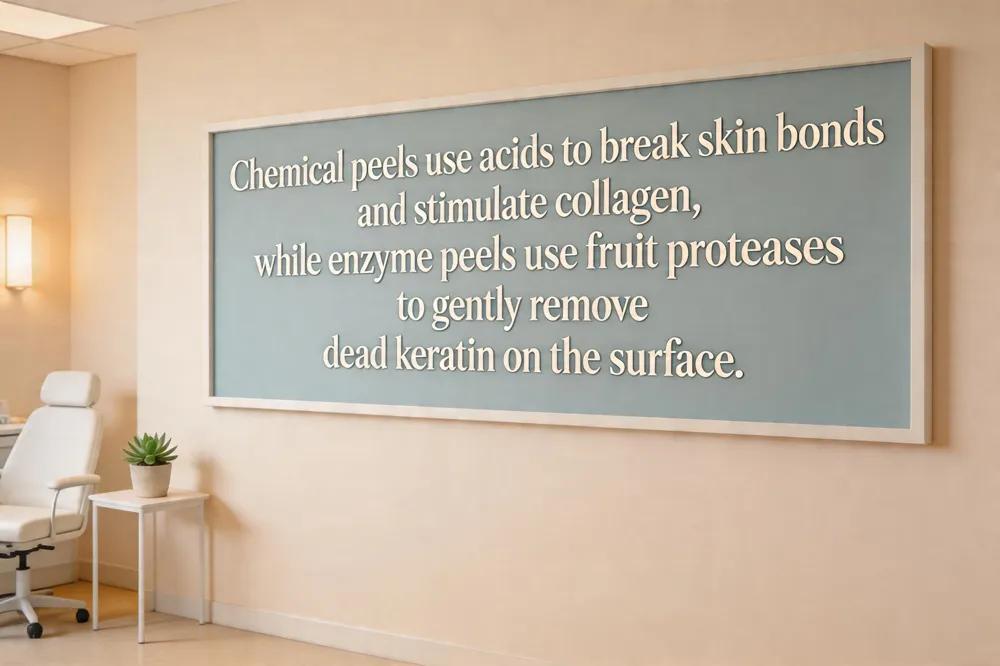 Chemical peels use acids to dissolve bonds between dead skin cells by lowering skin pH and breaking inter‑cellular lipids and proteins. Common acids—glycolic, lactic, salicylic, trichloroacetic (TCA), and phenol—penetrate from the superficial epidermis (10‑25 µm) to the deep dermis (400‑600 µm) depending on concentration, allowing controlled injury that stimulates collagen and elastin production. In contrast, Enzyme peels use fruit‑derived proteolytic enzymes such as papain, bromelain, and pumpkin enzymes. These enzymes selectively cleave keratin in the stratum corneum (≤20 µm), removing dead cells without affecting living tissue. Because they act only on the outermost layer, enzyme peels cause minimal redness, no visible peeling, and minimal downtime.
Enzyme peel vs chemical peel: enzyme peels provide a gentle, “lunchtime” refresh suitable for sensitive or reactive skin, while chemical peels offer deeper exfoliation for fine lines, acne scars, and hyper‑pigmentation.
Choosing between chemical peels and enzyme peels: which is safer? Enzyme peels are generally safer—they work superficially and rarely cause irritation or pigment changes. Chemical peels can be safe in the hands of a qualified dermatologist, but they carry higher risks of redness, burning, and downtime, especially at medium‑ or deep‑strength levels.
Depth, Recovery Times, and Downtime
 Light, Medium, and Deep Chemical Peels
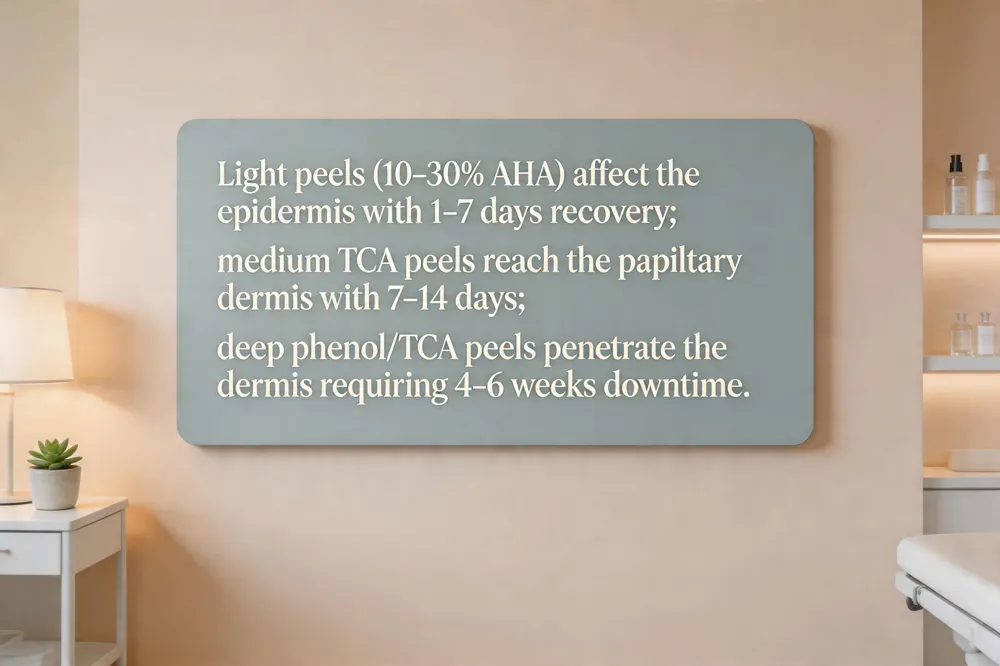
Light (superficial) peels use 10‑30 % glycolic or lactic acid and affect only the epidermis (10‑25 µm). Medium peels (15‑35 % TCA) reach the papillary dermis (45‑100 µm). Deep peels (≥50 % TCA or phenol) penetrate the reticular dermis (400‑600 µm) and require medical supervision.
Recovery Timelines
- Light peels: mild redness and tingling for 1‑7 days; normal activities resume immediately.
- Medium peels: 7‑14 days of visible peeling, with full skin remodeling taking 2‑4 weeks.
- Deep peels: 4‑6 weeks of swelling, redness, and strict sun protection; complete healing may extend to 6 weeks.
Pain and Discomfort Levels
Light peels usually feel like a brief, low‑grade sting.
Medium peels can cause a stronger burning sensation and several hours of redness.
Deep peels are the most intense and are often performed with topical anesthetic or sedation to keep pain manageable.
Can a chemical peel go wrong?
Yes—a peel can go wrong, especially with deeper agents or mismatched skin type. Complications range from mild redness and swelling to hyper‑ or hypopigmentation, scarring, or rare systemic effects (e.g., heart rhythm changes with phenol). Proper screening, an experienced dermatologist, and diligent after‑care dramatically reduce these risks. Contact your provider if unexpected pain, discoloration, or prolonged redness occurs.
Side effects of chemical peel on face
Common effects include redness, swelling, peeling, and temporary pigment changes. Rarely, infection, scarring, or allergic reactions occur. Deep peels add systemic risks such as liver or kidney stress. Gentle moisturizers, SPF 30+ sunscreen, and avoidance of harsh actives help manage side effects.
Is a chemical peel painful?
A tingling or mild burning is typical; severity correlates with peel depth. Light peels are often painless,
Medium peels cause moderate discomfort, and Deep peels require anesthesia. Discomfort subsides quickly after the solution is removed.
Skin looks worse after chemical peel
Initial redness, dryness, and flaking are normal as the skin sheds its outer layer. Light peels improve within 5‑7 days, medium peels up to two weeks, and deep peels may take 3‑4 weeks for a glow. Persistent severe burning, open wounds, or lasting dark patches warrant prompt dermatologist contact.
Safety Guidelines and Contraindications
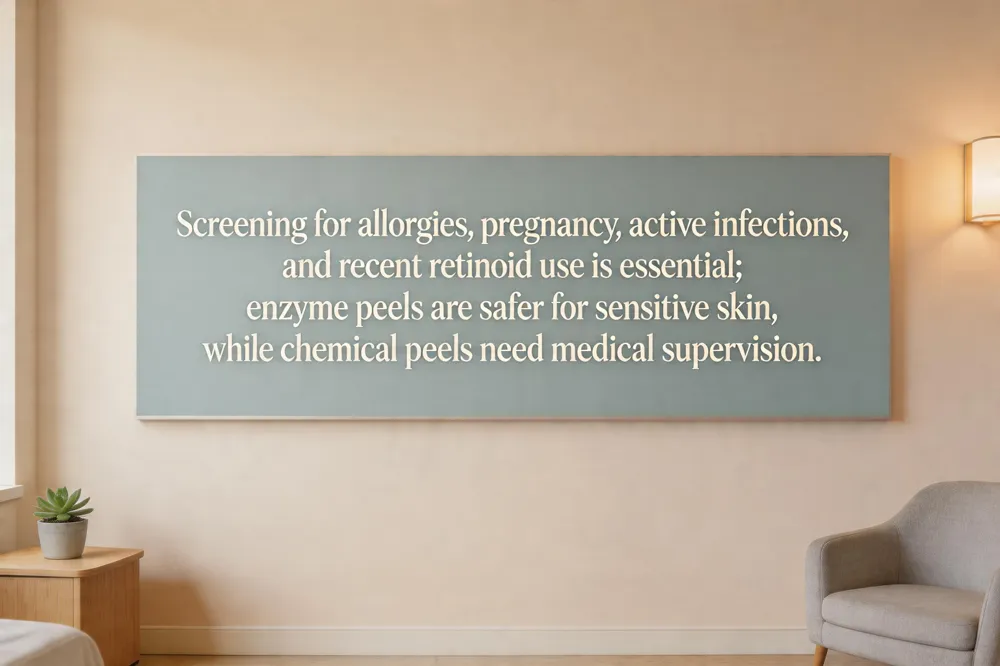 When considering any exfoliation treatment, a thorough pre‑procedure screening is essential. The clinician should review the patient’s medical history, current medications (e.g., retinoids, isotretinoin, photosensitizing drugs), skin type, and any history of allergic reactions to fruit enzymes or acids. A patch test is recommended for enzyme peels, while chemical peel candidates must discontinue strong actives (AHAs, BHAs, vitamin A) 3–7 days before treatment and wait longer after oral retinoids (3–6 months).
Enzyme peels are generally safer for sensitive or darker skin, but they are still contraindicated in patients with fruit allergies, active eczema, or compromised skin barriers.
Professional supervision is crucial: a board‑certified dermatologist or licensed aesthetician can select the appropriate peel depth (light, medium, deep) and concentration, monitor the reaction in real time, and provide emergency supplies (neutralizers, antiseptics). Post‑procedure care—gentle moisturizers, daily SPF 30+, and avoidance of heat or vigorous activity—must be reinforced to minimize redness, hyper‑ or hypo‑pigmentation, and infection.
In summary, careful screening, awareness of contraindications, and expert oversight ensure that both chemical and enzyme peels are performed safely and yield optimal, lasting results.
Cost and Value Considerations
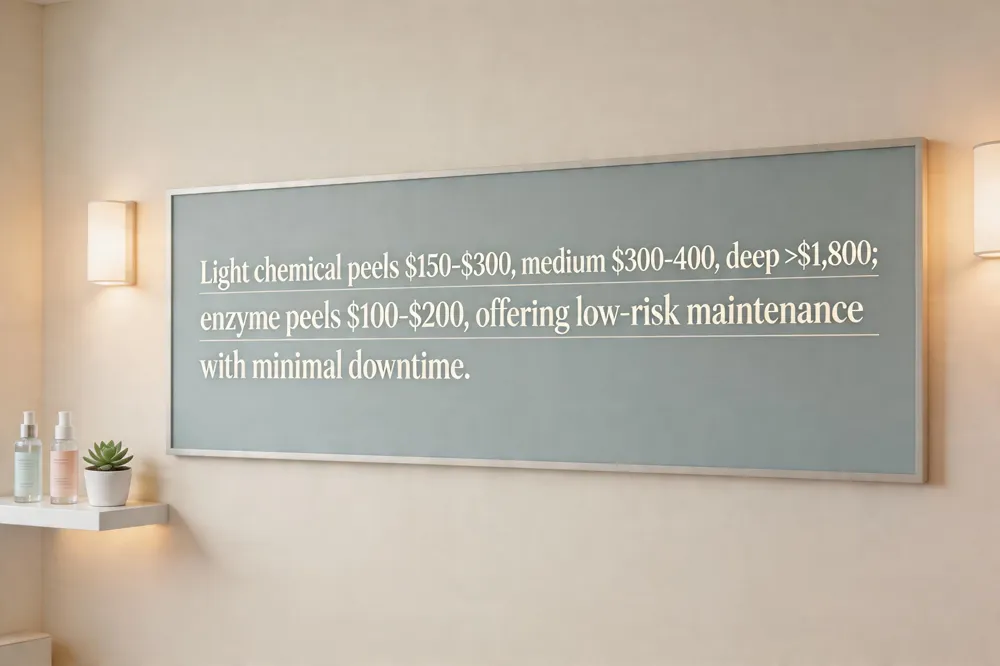 When planning a resurfacing treatment, cost is a key factor. Light, superficial chemical peels typically run $150‑$300 per session, medium‑depth peels $300‑$400, while deep peels—using phenol or high‑strength TCA—can exceed $1,800 and may require anesthesia and facility fees. Professional enzyme peels are priced $100‑$200 per visit, offering a gentle alternative for sensitive, acne‑prone, or mature skin with little to no downtime.
Value for different skin concerns – Chemical peels deliver rapid improvement for fine lines, moderate wrinkles, and deeper pigmentation, but they carry higher risks of redness, swelling, infection, and pigment changes, especially with deeper formulations. Enzyme peels, by contrast, dissolve dead‑skin keratin only on the stratum corneum, providing modest brightening, smoother texture, and hydration without the irritation of strong acids. Their low‑risk profile makes them worth considering for regular maintenance between stronger chemical peel,.
At‑home enzyme peels – Over‑the‑counter options use papain, bromelain, or pumpkin enzymes to gently exfoliate. Apply a thin layer after cleansing, leave 5‑10 minutes, rinse, then moisturize and use SPF daily. A patch test is advised.
In summary, choose a peel based on the depth of concern, tolerance for downtime, and budget; a board‑certified dermatologist can tailor the optimal, and plan.
Targeted Skin Concerns and Peel Types
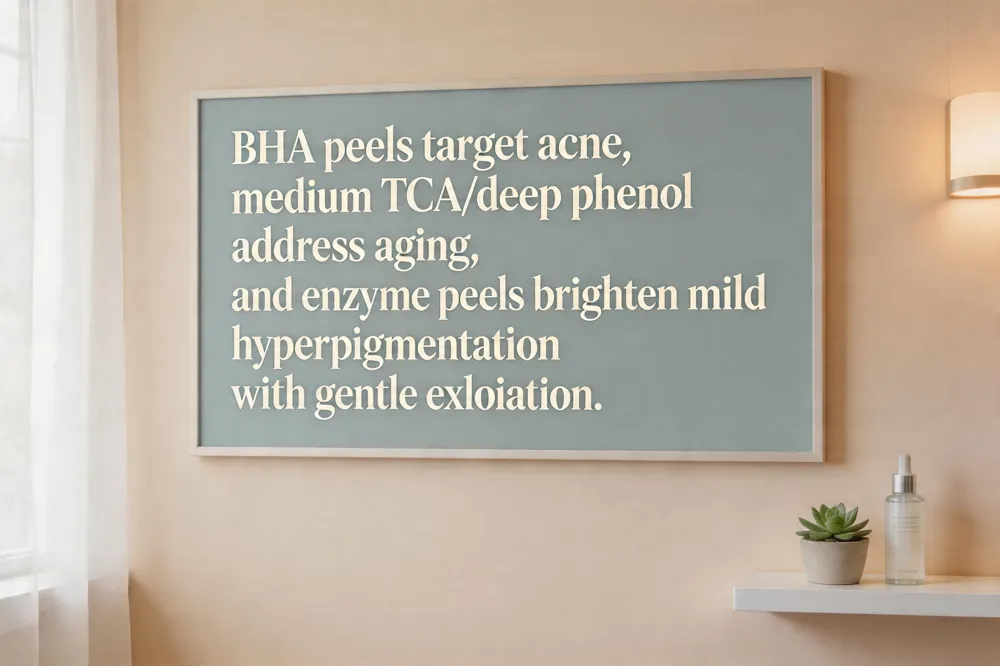 Acne‑prone skin benefits most from BHA peels, which use salicylic acid to dissolve excess sebum and clear clogged pores. The oil‑soluble acid penetrates the pore lining, reducing inflammatory lesions, blackheads, and comedones while also fading post‑acne hyperpigmentation through accelerated cell turnover. For aging skin, deeper chemical peels—medium TCA (15‑35 % TCA) or deep phenol/high‑strength TCA—reach the papillary to the dermis, stimulating collagen and elastin production to smooth fine lines, deep wrinkles, and extensive sun damage. Recovery ranges from 7‑14 days for medium peels to 4‑6 weeks for deep peels, with strict sun protection and moisturization required. Hyperpigmentation can be addressed with enzyme peels, which Enzyme peels use fruit‑derived proteolytic enzymes (papain, bromelain, pumpkin enzymes) to gently dissolve keratin in the stratum corneum (≤20 µm). Enzyme peels cause minimal irritation, no visible peeling, and can be used frequently for maintenance, brightening dull skin and reducing mild pigment irregularities.
What skin conditions benefit most from BHA peels? Active acne, oily skin, and mild post‑acne discoloration respond well because BHA penetrates pores and exfoliates dead cells.
Should a 60‑year‑old get a chemical peel? Yes—after a personalized dermatologic assessment, a mild AHA, medium TCA, or even a deep peel can safely improve fine lines and texture, provided medical history and skin sensitivity are considered.
Enzyme peel benefits include gentle exfoliation, brightening, reduced redness, and enhanced collagen synthesis, making them safe for sensitive or dry skin.
When is an enzyme peel a good choice for a client? For sensitive, reactive, or post‑procedure skin needing mild brightening and pore unclogging without downtime; also ideal for regular maintenance 1‑2 times weekly.
Practical Before‑and‑After Care
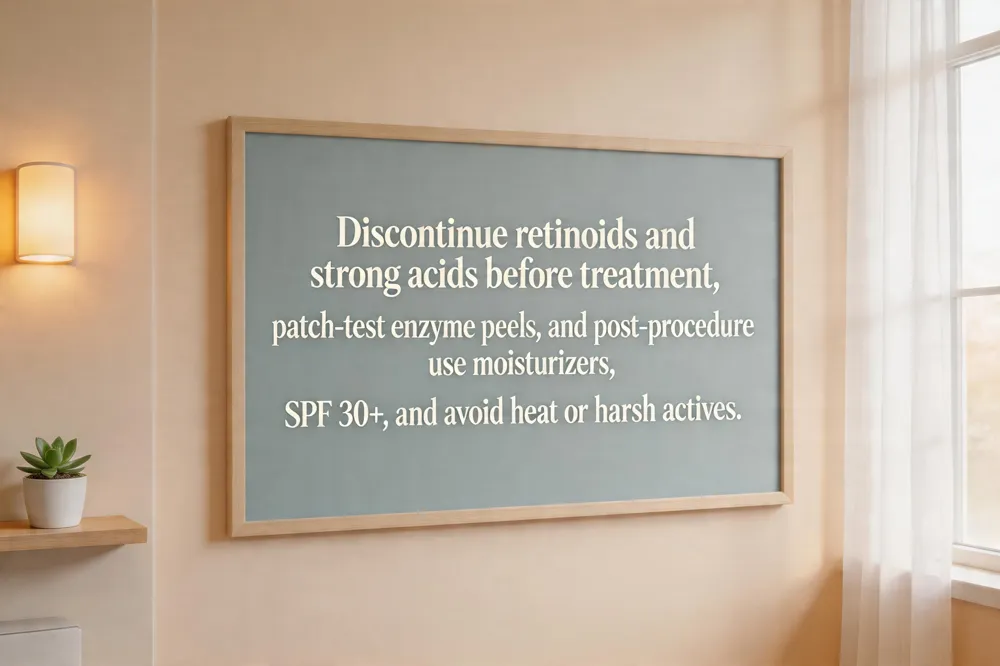 Before any peel, a board‑certified dermatologist or licensed aesthetician conducts a skin assessment, asks you to stop retinoids, glycolic or salicylic acids at least 3‑5 days in advance, and recommends avoiding sun exposure, tanning beds, and waxing for two weeks. For enzyme peels, a simple patch test checks fruit‑enzyme allergy; for chemical peels, a 2‑4‑week priming regimen (hydroquinone or gentle moisturizers) may be advised, especially for darker Fitzpatrick skin.
Post‑peel routine centers on hydration and strict sun protection. Apply a fragrance‑free moisturizer, non‑comedogenic, immediately after the procedure and continue 2‑3 times daily for the first week. Use a broad‑spectrum SPF 30+ sunscreen every two hours when outdoors; avoid heat, strenuous exercise, and harsh actives (retinoids, AHAs/BHAs) for at least 7‑14 days.
Managing side effects: light chemical peels may cause mild redness, swelling, and peeling that resolve within 1‑7 days; medium peels need 7‑14 days of recovery; deep peels require 4‑6 weeks. Enzyme peels rarely irritate, but occasional tingling or mild redness can occur and usually subsides within hours. If excessive burning, blistering, or unexpected pigment changes appear, contact your provider promptly for targeted soothing creams or antiviral prophylaxis when indicated.
Making the Right Choice for Your Skin
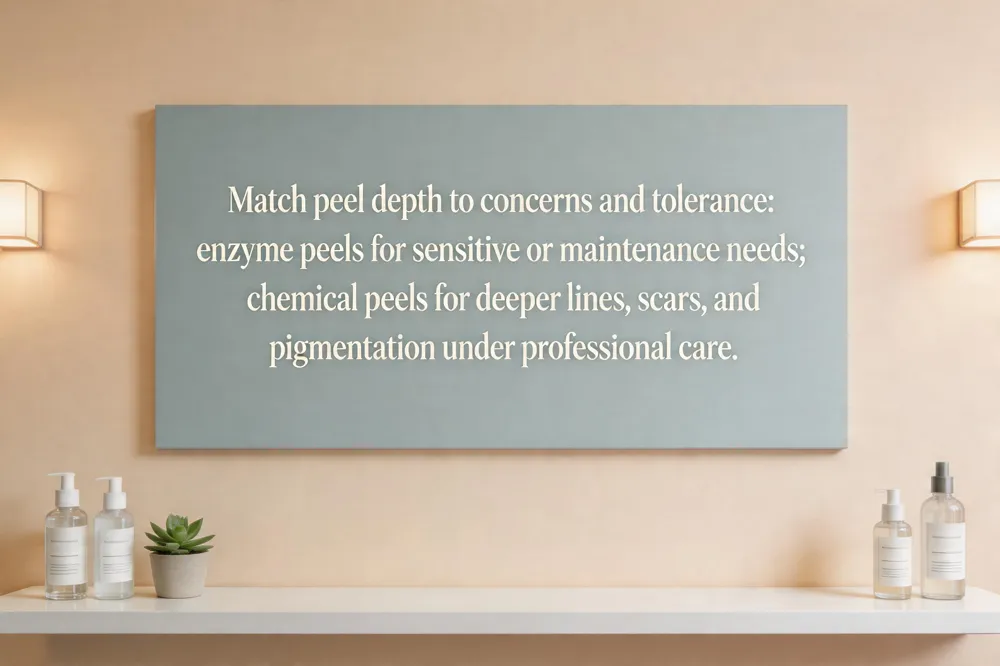 Choosing the optimal peel begins with a clear decision framework. First, assess skin type, sensitivity, and specific concerns—whether you need superficial brightening, moderate texture improvement, or deep wrinkle reduction. Light (superficial) chemical peels (10‑30% glycolic/lactic) act on the epidermis, removing 10‑25 µm of skin, and typically require 1‑7 days of recovery. Medium peels (15‑35% TCA) reach the papillary dermis, demanding a 7‑14‑day healing phase, deep peels (phenol or >50% TCA) penetrate 400‑600 µm, need anesthesia, and involve 4‑6 weeks of downtime. Enzyme peels, by contrast, employ fruit‑derived proteolytic enzymes (papain, bromelain, pumpkin) that dissolve keratin only in the stratum corneum (≤20 µm). They cause minimal irritation, no visible peeling, and allow immediate return to daily activities.
Choosing between chemical peels and enzyme peels: which is safer? Enzyme peels are generally safer because they work gently on the surface without deep tissue injury, making them ideal for sensitive, rosacea‑prone, or compromised skin. Chemical peels can be safe when performed by a qualified dermatologist with appropriate strength, but they carry a higher risk of redness, burning, hyper‑ or hypopigmentation, and longer downtime.
Enzyme peel vs chemical peel Enzyme peels use natural fruit enzymes to dissolve dead skin cells, offering a “lunchtime” refresh with virtually no downtime. Chemical peels rely on acids (glycolic, salicylic, TCA, phenol) to achieve deeper exfoliation, addressing fine lines, acne scars, and pronounced hyperpigmentation. Many clinics combine the two—using enzyme peels for maintenance between deeper chemical peel sessions—to sustain results while minimizing irritation.
Chemical peeling advantages and disadvantages Advantages include rapid improvement in texture, fine lines, and discoloration, with customizable formulations for various skin concerns. Disadvantages involve potential side effects—redness, swelling, infection, pigment changes—especially with medium‑ or deep‑strength peels. Contraindications include keloid history, recent isotretinoin use, pregnancy, or active herpes simplex infection. Proper pre‑treatment preparation, patch testing, and diligent post‑peel sun protection are essential for safety and optimal outcomes.
Conclusion
Key safety takeaways: Both chemical and enzyme peels require a thorough skin assessment, patch testing, and strict post‑procedure sun protection (SPF 30+). Chemical peels can cause redness, peeling, pigment changes, and, for deeper peels, systemic effects; enzyme peels are gentler, with minimal irritation and no downtime, but may still trigger mild redness or rare allergic reactions. How to decide: Choose a chemical peel when deeper resurfacing is needed—moderate to severe wrinkles, acne scarring, or pronounced hyperpigmentation—and when you can accommodate the required recovery period. Opt for an enzyme peel if you have sensitive, reactive, or pregnant skin, or when you seek a low‑risk, “lunchtime” treatment for texture and brightness. In all cases, personalized care is essential. Consult a board‑certified dermatologist or licensed aesthetic professional to evaluate your skin type, medical history, and aesthetic goals, ensuring the safest, most effective peel for you.