Understanding Acne Scarring and Modern Solutions
Acne scarring falls into three main atrophic patterns—ice‑pick, boxcar and rolling—and a pigmentary component known as post‑inflammatory hyperpigmentation (PIH). Each pattern reflects a different depth and tissue loss, guiding the clinician toward specific modalities: deep ice‑pick pits often need high‑strength TCA “CROSS” peels or punch excision, boxcar depressions respond well to fractional CO₂ or Er:YAG lasers, while rolling scars benefit from subcision, fillers, or microneedling. Pigmented or erythematous scars are best treated with vascular lasers or IPL. Because scar morphology, skin tone, and individual healing capacity vary, a personalized plan—often combining laser, PRP, fillers, and peels—delivers the most consistent, safe outcomes. Tailored care maximizes collagen remodeling while minimizing downtime and the risk of hyperpigmentation.
Professional Treatment Hierarchy
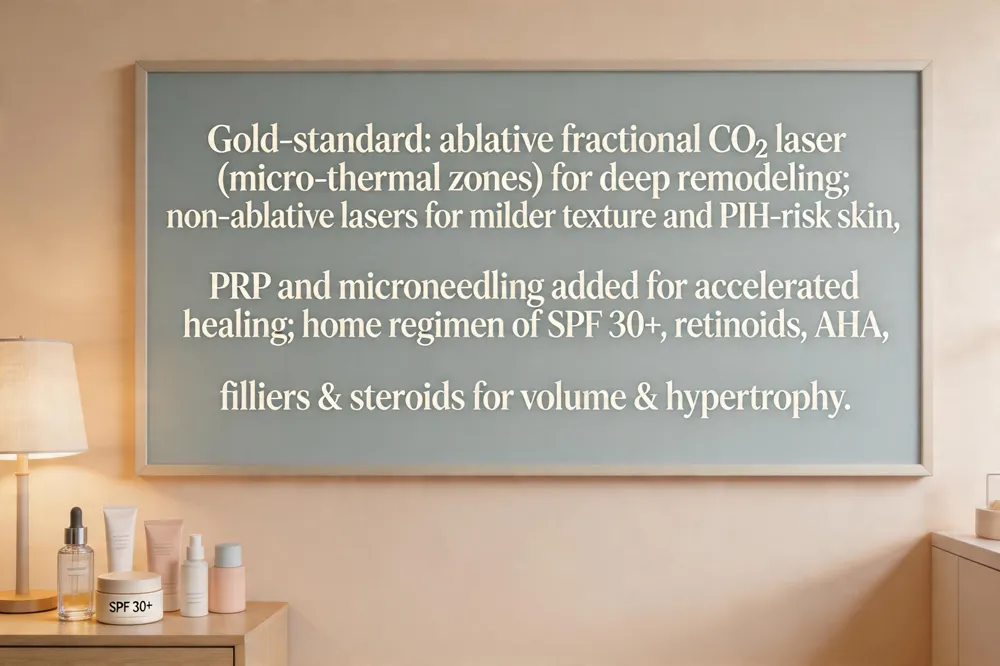 For most patients the gold‑standard is fractional laser resurfacing , especially ablative CO₂ systems (e.g., Lumenis UltraPulse) that create micro‑thermal zones, stimulate deep collagen remodeling, and lift boxcar, rolling and ice‑pick scars.
Non‑ablative fractional lasers (1927 nm thulium or Fraxel® Dual) are preferred for post‑inflammatory hyperpigmentation and milder texture changes because they spare the epidermis and carry less risk of PIH in darker skin.
Platelet‑rich plasma (PRP) is added after laser or microneedling to deliver autologous growth factors, accelerating healing, reducing erythema, and modestly enhancing collagen deposition.
At home, daily broad‑spectrum SPF 30+ sunscreen, a retinoid (adapalene or tretinoin), and an AHA exfoliant (8‑15 % glycolic acid) improve turnover and fade superficial marks; a rolling dermaroller (0.25‑0.5 mm) can stimulate collagen between professional visits.
For large volumes, hyaluronic‑acid fillers temporarily raise depressed scars, while steroid injections flatten hypertrophic tissue.
A personalized, multimodal plan—laser + PRP + topicals—delivers the most consistent improvement for acne scars and dark spots.
Combination and Adjunct Therapies
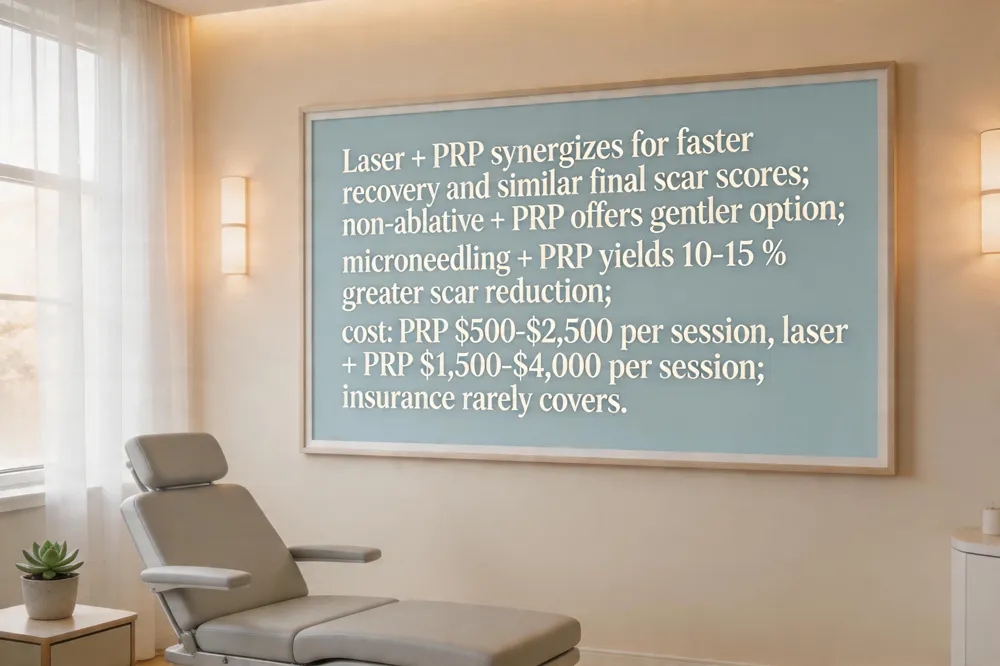 Synergy of laser and PRP has become a cornerstone of modern acne‑scar revision. Fractional CO₂ laser creates micro‑thermal zones that stimulate deep collagen remodeling; when PRP is added, the growth‑factor‑rich plasma accelerates healing, reduces post‑laser erythema and edema, and shortens downtime, though final scar scores are similar to laser alone. For patients seeking minimal recovery, non‑ablative lasers (e.g., 1550 nmEr:glass) combined with PRP offer a gentler alternative with comparable texture improvement. Microneedling plus PRP consistently outperforms microneedling alone, delivering 10‑15 % greater scar‑reduction and higher satisfaction.
Can PRP get rid of acne scars? PRP markedly improves atrophic scars by boosting collagen and elastin, giving smoother skin but not complete erasure; best results come when paired with laser or microneedling.
Cost considerations: PRP sessions range $500‑$2,500 each, with a typical 3‑4‑treatment series totaling $2,000‑$4,000. Fractional CO₂ + PRP can cost $1,500‑$4,000 per session, meaning a full course may exceed $10,000. Insurance rarely covers these cosmetic procedures, though many clinics offer financing.
In practice, dermatologists tailor a multi‑modal plan—laser, PRP, fillers, or subcision—based on scar type, skin tone, and patient tolerance, achieving the most consistent and lasting improvements.
Cost, Accessibility, and Local Options
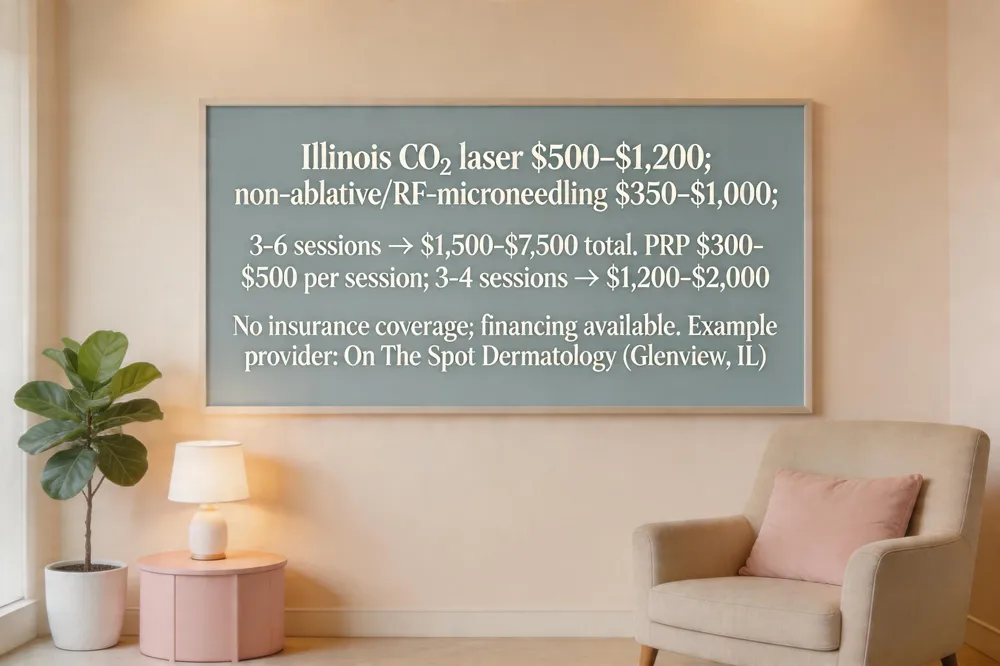 When planning acne‑scar revision, the two most common procedural expenses are laser resurfacing and platelet‑rich plasma (PRP). In Illinois, a typical ablative fractional CO₂ laser session ranges from $500 to $1,200, while non‑ablative or RF‑microneedling treatments fall between $350 and $1,000. Most clinicians recommend a series of 3‑6 sessions spaced 4‑6 weeks apart, so total out‑of‑pocket costs can reach $1,500 to $7,500. PRP adds roughly $300‑$500 per session; a standard protocol of 3‑4 injectable spaced 4‑6 weeks apart adds $1,200 to $2,000. Because these procedures are classified as cosmetic, insurance rarely covers them, though many offices offer financing plans or bundled pricing to ease the burden.
Patients seeking a qualified provider near them should look for board‑certified dermatologists or licensed aesthetic physicians who specialize in scar revision. In the Chicago suburbs, On The Spot Dermatology in Glenview, IL, offers fractional CO₂, PicoSure, and RF‑microneedling combined with PRP, and provides personalized treatment plans after an in‑person evaluation. To verify expertise, ask about the clinician’s training, review before‑and‑after photos, and confirm that the practice follows standard U.S. dermatologic protocols. Scheduling a consultation at (847) 555‑1234 or visiting onthesportdermatology.com will give a detailed cost estimate and clarify any financing options.
Safety, Side Effects, and Skin Type Considerations
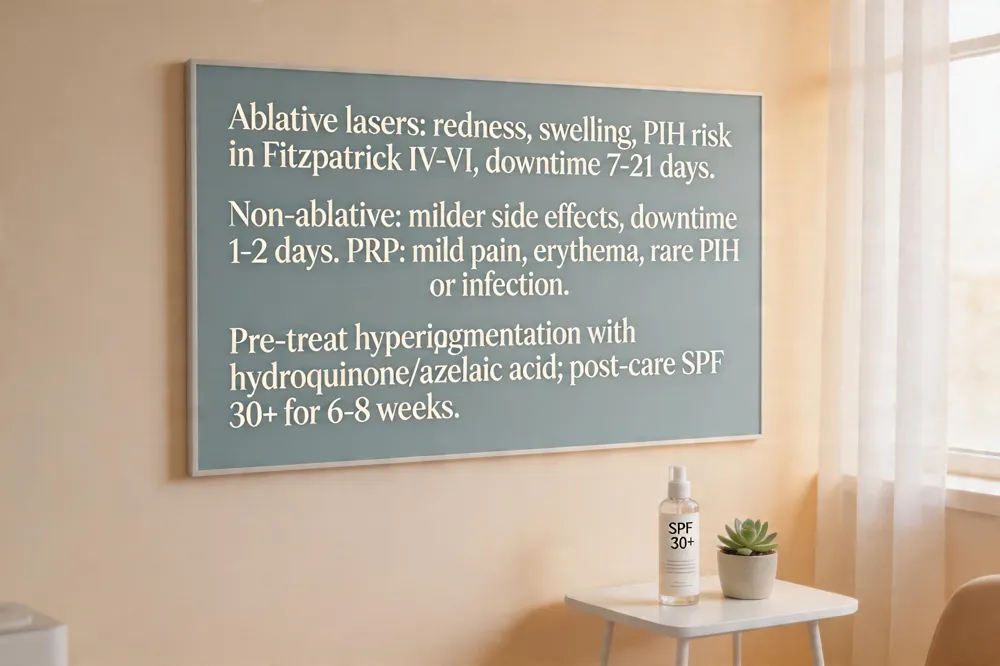 Laser resurfacing can cause temporary redness, swelling, bruising and, in some patients, post‑inflammatory hyperpigmentation (PIH) or hypopigmentation—especially in Fitzpatrick IV‑VI skin. Ablative CO₂ or Er:YAG lasers tend to have longer downtime (up to 10‑21 days) and higher pigment‑change risk, while non‑ablative fractional lasers (1550 nm Er:glass, Nd:YAG) usually resolve within a few days and are safer for darker tones. Platelet‑rich plasma (PRP) is well tolerated; most people notice mild pain, erythema, swelling, bruising or itching that fades within 1‑3 days. Rarely, PRP can trigger PIH in darker skin or cause infection if aseptic technique is breached. To manage hyperpigmentation, pre‑treat with topical hydroquinone or azelaic acid for 4‑6 weeks and choose non‑ablative or low‑fluence settings. Post‑procedure care includes gentle cleansing, fragrance‑free moisturizers, and broad‑spectrum SPF 30+ applied daily for at least 6‑8 weeks. Downtime varies: ablative lasers need 7‑14 days of redness and peeling; non‑ablative lasers and PRP require only 1‑2 days. Follow your dermatologist’s protocol to minimize complications and promote optimal collagen remodeling.
Home Care, Natural Remedies, and Short‑Term Boosts
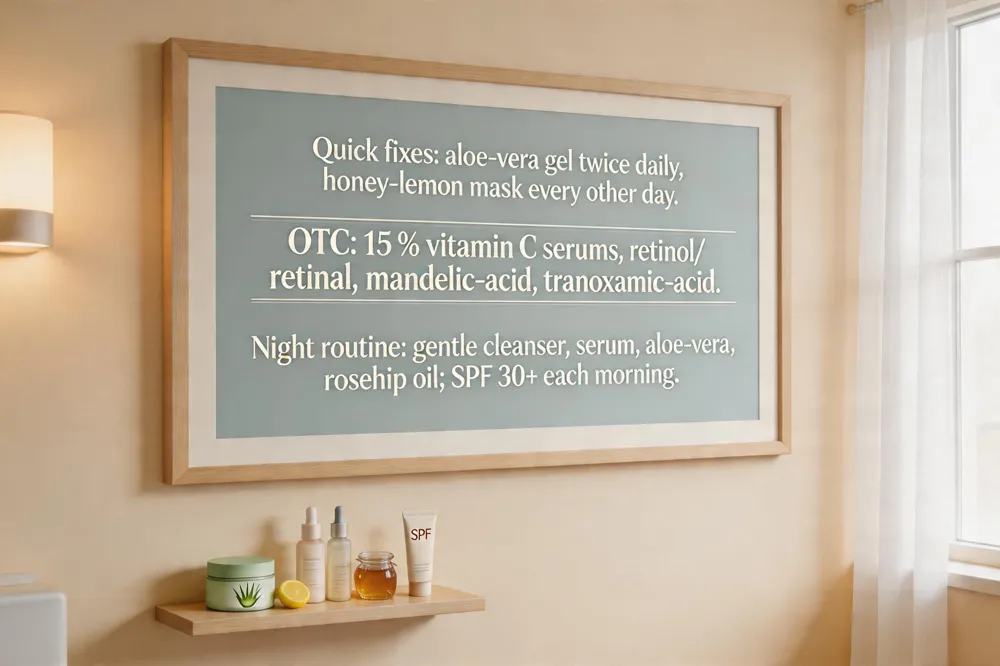 For patients seeking an immediate lift while waiting for procedural work, a disciplined home‑care routine can soften the visual impact of acne scarring. Quick‑fix home treatments include applying pure aloe‑vera gel twice daily to calm inflammation and promote collagen synthesis, and using a honey‑based mask (honey mixed with a few drops of diluted lemon juice) 10‑15 minutes once every other day to brighten post‑inflammatory hyperpigmentation. Mild chemical exfoliation—such as a salicylic‑acid cleanser or a low‑strength glycolic‑acid toner—2– 233 times weekly removes dead cells and accelerates turnover without irritating deeper scars.
Over‑the‑counter products that have the most evidence‑based benefit are high‑concentration vitamin C serums (e.g., 15 % Vitamin C + EGF) for pigment fading, retinol or retinal creams for texture improvement, mandelic‑acid treatments for gentle resurfacing, and tranexamic‑acid serums for stubborn dark spots.
Nighttime routines for rapid improvement combine a gentle cleanser, a targeted serum (vitamin C or retinol), a thin layer of aloe‑vera, and a final seal with a nourishing oil such as rosehip seed oil to supply vitamins A, C, and E. Broad‑spectrum SPF 30+ sunscreen each morning protects newly regenerated skin from re‑pigmentation.
How to remove acne scars naturally in a week – Visible softening is possible for superficial marks using the aloe‑vera and honey‑lemon protocol above, but deeper ice‑pick or boxcar scars still require professional interventions.
Remove acne scars in 1 week – While complete erasure is unrealistic, consistent application of the described home regimen can noticeably brighten post‑inflammatory discoloration within seven days.
Best acne scar removal products – Vitamin C serums (15 % or higher), retinol/retinal creams, mandelic‑ or glycolic‑acid exfoliants, and tranexamic‑acid serums are top choices.
How to remove acne scars naturally overnight – A nightly aloe‑vera layer, followed by a short honey mask and a light rub of rosehip seed oil, can reduce redness and initiate collagen remodeling, though true fading typically requires several weeks of sustained use.
Long‑Term Results, Maintenance, and Future Directions
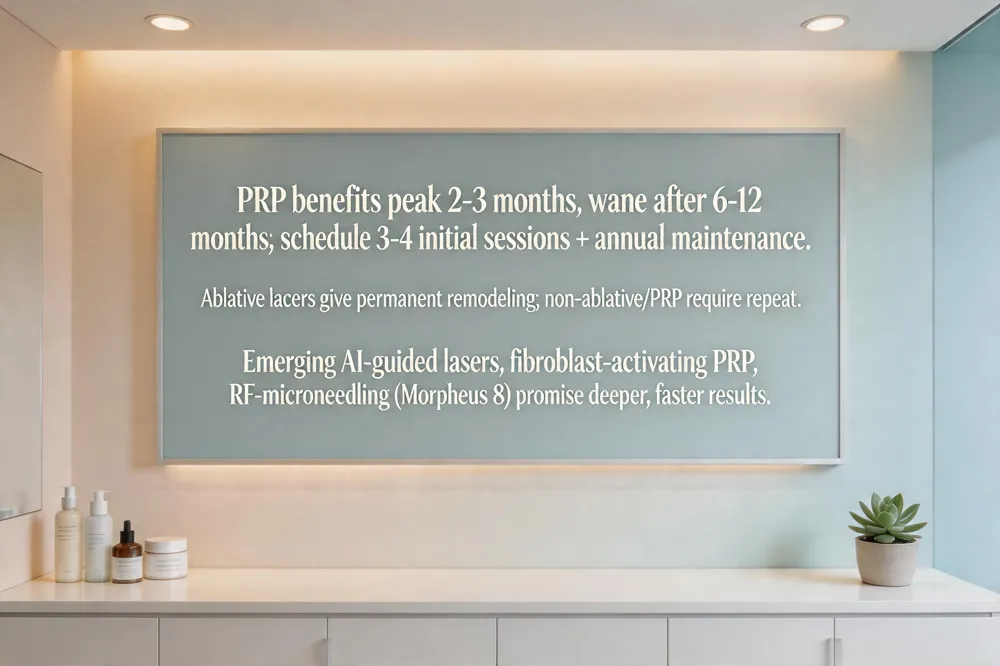 Acne‑scar therapy is a multi‑step journey that balances lasting improvement with realistic expectations. Platelet‑rich plasma (PRP) stimulates collagen remodeling, but its visible benefits peak at 2–3 months and typically wane after 6–12 months; most clinicians schedule 3–4 initial sessions spaced 4–6 weeks apart and recommend annual maintenance to preserve smoother skin. Unlike ablative laser resurfacing which can produce permanent tissue changes once collagen is fully remodeled, PRP and non‑ablative lasers offer temporary gains that depend on ongoing care and repeat treatment. In 2026, the most exciting advances combine AI‑guided fractional lasers that map each scar in real time with biologic‑rich topicals and a single‑session regenerative injectable (e.g., fibroblast‑activating PRP or stem‑cell‑derived serum). A parallel breakthrough is radio‑frequency‑enhanced microneedling (e.g., Morpheus 8), which delivers deeper collagen stimulation with minimal downtime and is now a first‑line option for rolling and boxcar scars. While no modality can guarantee 100 % scar removal, an individualized plan that layers laser, PRP, microneedling, and vigilant sun protection offers the best chance at near‑permanent, natural‑looking results.
Putting It All Together for Radiant Skin
Achieving smooth, radiant skin after acne requires a blend of in‑office procedures and diligent at‑home care. Dermatologists may start with laser resurfacing, microneedling, or chemical peels to remodel scar tissue, then enhance healing with platelet‑rich plasma (PRP) and hyaluronic‑acid fillers for immediate volume. At home, daily sunscreen, gentle moisturizers, and topical retinoids or azelaic acid maintain collagen turnover and prevent post‑inflammatory hyperpigmentation. Because scar type (ice‑pick, boxcar, rolling) and skin tone vary, a personalized, multi‑modal plan—often combining laser, PRP, subcision, and fillers—delivers the most consistent improvement. Long‑term results depend on consistent skin‑health habits, regular follow‑up, and prompt treatment of new acne lesions, ensuring the skin stays resilient and scar‑free for years to come.