Why a Year‑Round Routine Matters
A consistent daily regimen—gentle cleanser, appropriate moisturizer, and broad‑spectrum sunscreen—creates a resilient skin barrier that protects against irritation, transepidermal water loss, and UV‑induced damage. Seasonal shifts demand subtle tweaks: richer, lipid‑rich creams in winter offset low humidity, while lighter, oil‑controlling formulas in summer prevent clogged pores. Hydration, sleep (7–9 hours), and balanced nutrition further support cellular repair and collagen synthesis, reducing fine lines and dullness. By aligning cleansing, moisturizing, and sun protection with both the calendar and personal lifestyle, patients maintain barrier integrity year‑round, minimize premature aging, and promote overall skin vitality.
Foundations: Cleanse, Moisturize, and Shield with SPF
 A solid daily routine rests on three pillars—gentle, pH‑balanced cleansing, barrier‑supporting moisturization, and broad‑spectrum sunscreen of at least SPF 30 (SPF 15‑30 is minimal, SPF 30‑50 preferred) every morning to all exposed areas—face, neck, hands, and décolletage—and reapply every two hours or after swimming/sweating. This daily habit reduces squamous cell carcinoma risk by ~40 % and melanoma by ~50 %.
Answers to common questions:
- Healthy skin tips for face: Cleanse gently, moisturize with a skin‑type‑appropriate product, protect with SPF, stay hydrated, sleep 7‑9 hrs(https://www.foreo.com/mysa/are-you-making-these-9-common-skincare-mistakes-heres-how-to-avoid-them?srsltid=AfmBOoqybvs0URo0VdYO2T0m5yoS37ae5MhNIngyCDXPBGTZPQZyMa0T), and keep contact items clean.
- Dermatologist‑recommended routine for 20s: Gentle cleanser, lightweight moisturizer with ceramides/hyaluronic acid, daily SPF 30+(https://www.skinsanityco.com/post/10-common-skincare-mistakes-and-how-to-avoid-them), antioxidant serum (vitamin C), occasional benzoyl peroxide or low‑strength retinol.
- Daily skin‑care at home: Cleanse → serum → moisturizer → sunscreen; consistency is key.
- Best dermatology advice: Protect with SPF, cleanse twice daily, moisturize, incorporate retinoids/antioxidants, perform monthly self‑exams, and see a dermatologist regularly.
- Best products for 20s: Gentle soap‑free cleanser, BHA toner or niacinamide serum, oil‑free moisturizer, SPF 30‑50 sunscreen, occasional vitamin C serum.
- Dermatologist‑recommended routine: Cleanser → sunscreen (and optional antioxidant serum) in the morning; evening cleanse → retinoid → moisturizer.
Following these steps in the correct order maximizes ingredient absorption, preserves the skin barrier, and provides year‑round protection against premature aging and disease.
Common Mistakes that Undermine Oily and Combination Skin
 People with oily or combination skin often over‑cleanse with harsh, alcohol‑based surfactants, stripping natural lipids and prompting the glands to over‑produce oil.
Skipping makeup removal or a double‑cleanse at night leaves sebum, sunscreen, and pollutants trapped in pores, leading to breakouts and blackheads.
A frequent myth is that oily skin doesn’t need hydration; neglecting a lightweight, non‑comedogenic moisturizer deprives the barrier of essential moisture and can actually increase shine.
Over‑exfoliating — using strong acids or abrasive scrubs more than two to three times a week — damages the protective barrier, causing irritation, redness, and rebound oiliness.
Finally, dirty makeup brushes and sponges harbor bacteria that clog pores and worsen acne.
A balanced daily routine should include a gentle pH‑balanced cleanser, a hydrating toner or essence, a lightweight antioxidant or hyaluronic‑acid serum, a non‑comedogenic moisturizer, and broad‑spectrum SPF 30+ applied every morning.
Exfoliate only 1–2 times weekly, clean tools weekly, and always double‑cleanse at night to keep oily and combination skin clear, comfortable, and radiant.
Seasonal Shifts & Often‑Overlooked Areas
 Winter calls for richer, barrier‑repair moisturizers—ceramides, shea butter, and hyaluronic acid—to offset low humidity and transepidermal water loss. In contrast, summer benefits from lightweight, oil‑free formulas with gel‑based textures that control sebum without clogging pores. The delicate periorbital area needs dedicated eye creams or gels containing peptides or hyaluronic acid to keep fine lines, puffiness, and dark circles at bay. Neck, décolletage, hands, and lips are often missed; a non‑comedogenic moisturizer and broad‑spectrum SPF 30+ should be applied to these zones every day, even on cloudy days. Seasonal pH shifts also matter—move to milder, pH‑balanced cleansers in winter and avoid overly acidic serums when the skin barrier is compromised.
Skincare routine for a 27‑year‑old female: Use a gentle, pH‑balanced cleanser morning and night, follow with a vitamin C serum, a lightweight hyaluronic‑acid moisturizer, and broad‑spectrum SPF 30+ daily. Introduce a retinol or niacinamide treatment a few nights weekly and exfoliate chemically 1–2 times per week.
Skincare routine for a 23‑year‑old woman: Cleanse with a gentle, pH‑balanced cleanser morning, follow with vitamin C, hyaluronic‑acid moisturizer, and broad‑spectrum SPF 30+. Evening double‑cleanse, apply niacinamide or low‑strength retinol, and moisturize. Exfoliate 1–2 times weekly.
Best products for a 25‑year‑old woman: Gentle cleanser (e.g., INKEY List Salicylic Acid Acne Cleanser), BHA/niacinamide serum (Paula’s Choice 2 % BHA or The Ordinary Niacinamide 10 %+ Zinc), oil‑free moisturizer (Youth To The People Superfood Air‑Whip), and broad‑spectrum SPF 30+ (EltaMD UV Daily).
Active Ingredients, Order of Application, and Insider Rules
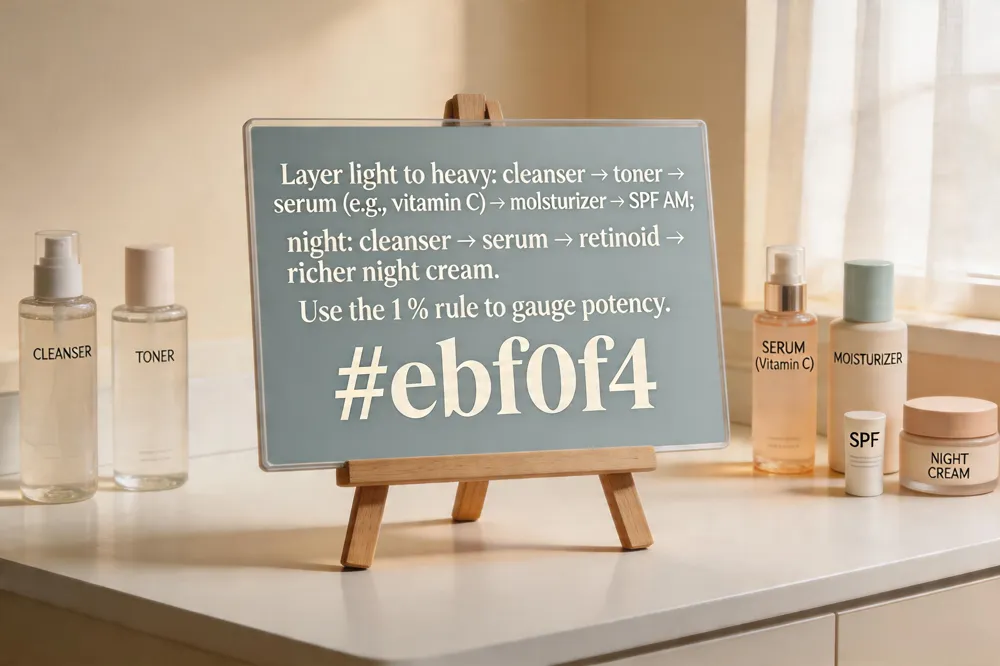 A proper skincare routine follows a light‑to‑heavy layering order: cleanser → toner → serum → moisturizer → sunscreen (e.g., vitamin C antioxidant) → lightweight moisturizer → richer night cream or retinoid, then sunscreen in the morning. Vitamin C serums are best applied after cleansing and before sunscreen because they neutralize free radicals and boost UV protection, while retinoids should be reserved for night use to avoid photosensitivity and to allow the skin’s barrier to repair. The “1 % rule” helps you spot truly active ingredients—ingredients listed before the 1 % line are present at concentrations likely to be effective, whereas those after it are mostly supporting agents. Dermatologist‑recommended products typically include a gentle, fragrance‑free cleanser (e.g., CeraVe Hydrating Cleanser), a ceramide‑rich moisturizer, a broad‑spectrum SPF 30+ sunscreen, and targeted actives such as a vitamin C serum (SkinCeuticals CE Ferulic) and a retinoid (Differin Gel) introduced gradually. The Korean 7‑Skin Method amplifies hydration by patting toner onto the skin up to seven times, building a cumulative “moisture wall” that enhances texture and gives a dewy glow. Common mistakes—skipping sunscreen, sleeping with makeup, over‑exfoliating, or using products mismatched to skin type—undermine barrier health and can cause irritation, breakouts, and premature aging. Consistent, evidence‑based steps and seasonal adjustments (richer creams in winter, lighter formulas in summer) keep the skin resilient, protected, and radiant.
Lifestyle Pillars that Amplify Skin Health
 A resilient complexion rests on five daily pillars. Sleep & Quality – 7–9 hours of uninterrupted rest fuels nocturnal collagen synthesis and reduces fine‑line formation, as shown in clinical dermatology research. Hydration & Antioxidant‑Rich Diet – Drinking at least eight 8‑oz glasses of water daily supports the skin barrier, while foods high in vitamin C, E, omega‑3s, and polyphenols neutralize free radicals that accelerate aging. Exercise & Stress Management – Regular movement improves circulation and lymphatic drainage; stress‑reduction techniques (mind‑body practices, adequate sleep) lower cortisol‑driven inflammation that can worsen acne and rosacea. Cleanliness of Tools & Pillowcases – Weekly washing of makeup brushes, sponges, and pillowcases prevents bacterial buildup that leads to breakouts and dermatitis. Broad‑spectrum SPF 30+ should be applied each morning and reapplied every two hours, especially after swimming, sweating, or when near windows, because UVA rays penetrate glass and contribute to photo‑aging.
Best dermatology advice for skincare – Use a gentle pH‑balanced cleanser twice daily, moisturize with a fragrance‑free barrier‑repair cream, and protect with SPF 30+ sunscreen re‑applied every two hours. Incorporate a nightly retinoid 1–2 times/week and antioxidant serums after cleansing for enhanced protection.
Best products for 20s – Gentle cleanser, BHA or niacinamide toner, oil‑free moisturizer, SPF 30‑50 daily, and a vitamin C serum a few times weekly.
60‑second wrinkle ritual – Cleanse, then massage upward circularly for one minute before rinsing; follow with vitamin C in the morning and peptide/retinol at night.
Dermatology routine advice (2022) – Holistic approach: daily SPF, anti‑inflammatory diet, adequate hydration, 7–9 h sleep, post‑exercise cleansing, and consistent product layering from lightest to heaviest.
Final Takeaways
Consistent, simple routines outperform complicated regimens—cleansing, moisturising and broad‑spectrum SPF daily yields measurable barrier repair and UV protection. Tailor every product to your skin type (oily, dry, combination, sensitive) and adjust textures seasonally: lighter, oil‑controlling formulas in humid summer and richer, ceramide‑rich moisturisers in dry winter. Finally, partner with a board‑certified dermatologist. A dermatologist can interpret your skin’s unique needs, guide safe active‑ingredient layering, and recommend professional treatments (retinoids, peels, laser) that complement your at‑home regimen, ensuring optimal, long‑term results.