Understanding Sunscreen Myths
Skin cancer is the most common cancer in the United States, with roughly 3.5 million new cases each year, underscoring the need for reliable sun protection. UV radiation is present from sunrise to sunset; up to 80 % penetrates clouds and reflective surfaces such as snow, water, and sand amplify exposure, making daily sunscreen use essential even on overcast days. Myths persist because of mixed messages in cosmetics (e.g., SPF‑infused makeup that falls far short of the amount needed for true SPF), marketing terms like “water‑proof,” and the belief that a tan offers safety. Misunderstandings about SPF numbers, re‑application timing, and the notion that darker skin is immune further fuel misinformation, leading many to underestimate their personal UV risk.
Myth 1 – Sunscreen Is Only Needed on Sunny Days
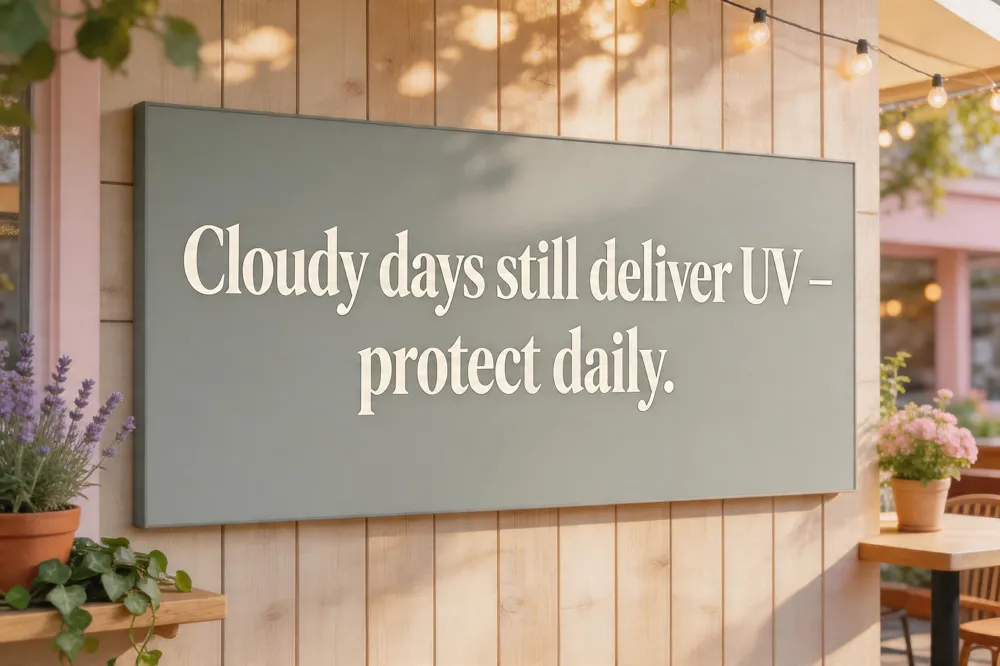 UV radiation reaches the skin on overcast days; 80 % of UVB and UVA penetrate thin clouds, so sunscreen is needed. Snow, sand, water and concrete reflect 80 % of UV light, increasing exposure in winter. Because UV exists, apply SPF 30+ sunscreen morning and reapply two hours.
Myth 1: “Sunscreen is only needed on sunny days.” Fact: Cloud cover blocks only a fraction of UV; protection is required on cloudy, rainy, and snowy days.
Myth 2: “Higher SPF means proportionally more protection.” Fact: SPF 30 blocks ~97 % of UVB, SPF 50 ~98 %, SPF 100 ~99 %; benefit diminishes beyond SPF 30.
Myth 3: “All sunscreens work the same way.” Fact: Chemical filters absorb UV; mineral filters (zinc oxide, titanium dioxide) reflect it; can be used.
Myth 4: “People with dark skin don’t need sunscreen.” Fact: Darker skin still suffers sunburn, photoaging, and skin‑cancer risk, so application is recommended for all tones.
Myth 5: “Sunscreen is unsafe.” Fact: FDA‑approved ingredients are safe when used as directed; sunscreen remains a cornerstone of skin‑cancer prevention.
Myth 2 – Higher SPF Gives Unlimited Protection
 How SPF is measured – SPF (Sun Protection Factor) quantifies only UVB protection. It represents the ratio of time needed for sunburn to occur on protected skin versus unprotected skin. SPF 30 blocks roughly 97 % of UVB rays, SPF 50 about 98 %, and SPF 100 about 99 %; the increase in protection diminishes sharply after SPF 30, so “higher SPF = unlimited protection” is a myth.
Diminishing returns after SPF 30 – Because SPF numbers are not linear, moving from SPF 30 to SPF 50 adds only about 1 % more UVB blockage. The modest gain does not extend the safe exposure window, and users often apply less product than required, which can drop effective protection from SPF 30 down to SPF 10.
Need for re‑application – Sunscreen films wear off from sweat, water, and friction. Regardless of SPF, protection declines after roughly two hours and must be reapplied, especially after swimming, towel‑drying or heavy activity.
Does sunscreen cause cancer? – Extensive research from Harvard, Mayo Clinic and Stanford dermatologists shows sunscreen does not cause cancer; it protects DNA from UV‑induced damage that leads to skin cancer.
Is sunscreen harmful for skin? – For most people it is safe. Rare irritation or allergic reactions can occur with certain chemical filters; mineral formulas (zinc oxide, titanium dioxide) are well‑tolerated.
Long‑term side effects – Long‑term use is generally safe. Minor skin irritation and low‑level systemic absorption of some chemicals are documented, but large studies have not confirmed clinically significant toxicity. Choosing reputable, FDA‑approved products and reapplying as directed maximizes benefits while minimizing risk.
Myth 3 – Sunscreen Stops Tanning and UV Damage
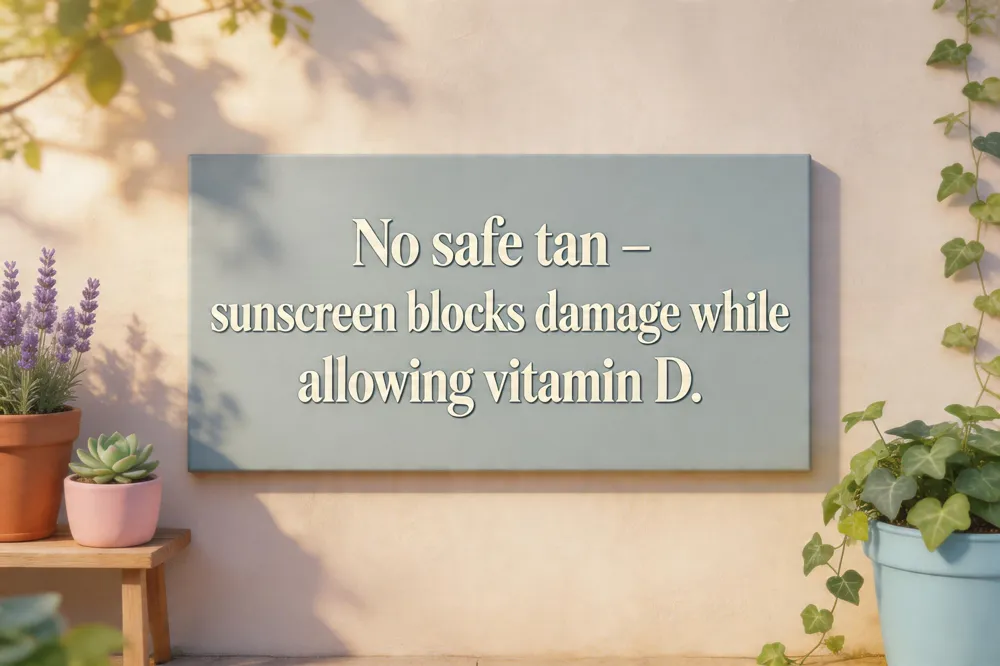 Tanning is not a protective response; it is a visible sign of DNA damage caused by ultraviolet (UV) radiation. Both UVA (aging, deep‑skin injury) and UVB (burn, direct DNA lesions) contribute to this damage, and a “safe tan” does not exist—any increase in melanin still leaves the skin vulnerable to mutations that can lead to melanoma, basal‑cell, and squamous‑cell carcinoma. Skipping sunscreen offers no genuine health advantage. While brief, unprotected exposure can supply enough UVB for vitamin D synthesis, regular sunscreen use still permits sufficient UVB for this purpose while blocking the bulk of harmful rays that trigger premature aging, hyperpigmentation, and cancer. Dermatologists agree that the only “benefit” of not wearing sunscreen is a myth; broad‑spectrum SPF 30+ protection is essential for long‑term skin health.
Myth 4 – All Sunscreens Are One‑Size‑Fits‑All
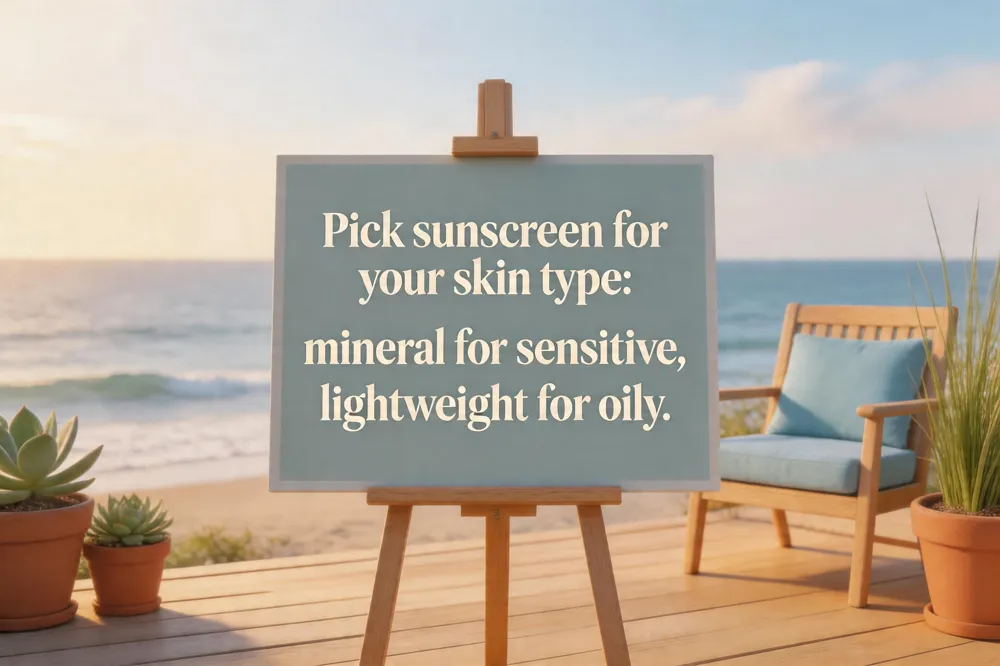 Sunscreens fall into two main families: chemical filters that absorb UV photons (e.g., avobenzone, octocrylene) and mineral (physical) filters—zinc oxide or titanium dioxide—that reflect and scatter UV light. Both can be broad‑spectrum, but their skin‑type compatibility differs.
Rosacea‑prone skin: Choose a mineral‑based, fragrance‑free, non‑comedogenic formula with SPF 30 or higher. Zinc oxide or titanium dioxide cause minimal irritation; look for “rosacea‑friendly” or tinted options that calm redness while protecting against UVA/UVB.
Oily or acne‑prone skin: Opt for lightweight, oil‑free, matte‑finish sunscreens that combine mineral filters with oil‑absorbing agents (silica, dimethicone) and anti‑inflammatory ingredients like niacinamide.
Dry or sensitive skin: A gentle mineral sunscreen with added hyaluronic acid or ceramides restores barrier function without stinging.
Malassezia‑susceptible skin: Avoid heavy occlusive creams; a mineral sunscreen with a breathable base reduces yeast overgrowth risk.
Regardless of type, apply a shot‑glass amount (≈1 oz) for the body, a nickel‑size amount for the face, and reapply every two hours or after swimming, sweating, or toweling.
Myth 5 – One Product Works for Every Situation
 Many people assume that a single product—whether a tinted foundation, a spray, or a lotion—can protect them in every setting. In reality, dedicated sunscreen offers the amount of product needed to achieve the labeled SPF, whereas SPF‑infused makeup usually contains far less UV filter and often lacks broad‑spectrum coverage; a separate sunscreen layer is still required.
When choosing a texture, sprays provide quick, even coverage but must be applied liberally to form a uniform sheen and re‑applied every two hours or after water exposure. Lotions and creams allow precise dosing (≈1 oz for the body, a nickel‑size amount for the face) and are less likely to miss missed‑missedensure as
question facial formula should be broad‑spectrum SPF 30+ and match skin type: mineral‑based options (zinc oxide/titanium dioxide) are ideal for sensitive or acne‑prone skin, while lightweight chemical sunscreens with added antioxidants work well under makeup.
Dermatologist‑recommended sunscreen spray: Choose a spray with SPF 30‑50, broad‑spectrum protection, and mineral or well‑studied chemical filters. Top picks include EltaMD UV AOX Mist, Coppertone Every Tone SPF 50, and Supergoop! Play Antioxidant Body Mist. Apply until a light sheen appears and reapply every two hours or after swimming, sweating, or towel‑drying.
Dermatologist‑recommended sunscreen for face: Use a broad‑spectrum SPF 30+ facial SPF 30+ daily. Excellent options are EltaMD UV Clear SPF 46 (non‑comedogenic, niacinamide), La Roche‑Posay Anthelios Melt‑In Milk SPF 100 (high‑UV protection), Supergoop! Unseen Sunscreen SPF 40 (invisible finish), EltaMD UV Sport SPF 50 (active use), Cetaphil Derma Control Oil Control SPF 30, and Avène Mineral Tinted Compact SPF 50 for tint and coverage.
Choosing the Right Sunscreen for Your Skin Type
 Identify your skin type first. Sensitive or rosacea‑prone skin benefits from mineral sunscreens (zinc oxide or titanium dioxide) that are fragrance‑free and non‑irritating. Acne‑prone or oily skin should use lightweight, oil‑free, non‑comedogenic formulas labeled “matte,” “dry‑touch,” or “fluid,” often containing silica or zinc oxide to absorb sebum. Dry or mature skin needs a moisturizing texture with humectants such as hyaluronic acid, glycerin, or ceramides; a creamy mineral sunscreen provides both hydration and broad‑spectrum SPF 30‑50. Apply about a nickel‑sized amount for the face and one shot‑glass for the body, and reapply every two hours or after swimming, sweating, or towel‑drying. Broad‑spectrum protection against UVA and UVB, SPF 30 or higher, and water‑resistance are essential for all skin tones year‑round. People with darker skin tones need sunscreen because melanin gives UV protection; a mineral formula reduces discoloration while delivering SPF 30‑50.
Special‑Case Concerns and Forgetting Sunscreen
 Malassezia‑prone skin benefits oil‑free, fragrance‑free, non‑comedogenic mineral sunscreens that avoid fatty esters. Zinc‑oxide or titanium‑dioxide formulas such as EltaMD UV Clear SPF 46, La Roche‑Posay Anthelios Mineral SPF 50, Vanicream SPF 30, Paula’s Choice Ultra‑Light Daily SPF 30/50, and Cetaphil Sheer Mineral SPF 50 are safe choices; patch‑test before use.
Forgetting sunscreen, even for a day, leaves skin exposed to UVA and UVB, increasing sunburn, dark spots, premature aging, and skin‑cancer risk. Apply a broad‑spectrum SPF 30+ each morning, reapply every two hours, and cover often‑missed areas like ears, scalp, feet tops, and lips. If a missed day occurs, limit sun exposure, seek shade, and resume proper use promptly.
Hyperpigmentation requires diligent UVA/UVB protection. Broad‑spectrum SPF 50+ mineral sunscreens—especially tinted versions with iron oxides—block visible light that worsens melasma. Dermatologist‑favored options include EltaMD UV Clear SPF 46, La Roche‑Posay Anthelios Shaka Fluid SPF 50+, and SkinCeuticals Physical Fusion SPF 50. Apply generously each morning and reapply every two hours or after swimming or sweating.
Bottom Line: Consistent Protection Wins
Sunscreen is a daily essential for every skin tone because UV radiation penetrates clouds, windows and reflective surfaces; up to 80%% UV rays can reach the skin even on overcast days. Applying a broad‑spectrum SPF 30+ product generously—about one ounce for the entire body or a nickel‑sized amount for the face—creates the first line of defense against both UVB (burn) and UVA (aging) damage that lead to premature wrinkles and skin cancer. However, sunscreen alone is not enough. Pair it with shade, UV‑blocking clothing, wide‑brimmed hats and sunglasses for maximal protection. Reapply every two hours, and immediately after swimming, sweating, or toweling, because water and friction remove the protective film. Consistent, layered protection—sunscreen plus physical barriers and timely reapplication—offers the most reliable strategy to preserve skin health and reduce cancer risk.