Why Year‑Round Protection Matters
UVA and UVB rays reach the skin daily, contributing to aging and skin‑cancer risk. Skin cancer is the most common cancer in the United States, with one in five Americans expected to develop it by age 70. Reflective surfaces such as snow, water, sand, or concrete can boost UV exposure by up to 80 %. Individuals on photosensitizing medications, or those with fair skin, light hair, light eyes, or a history of sunburn, need vigilance with sunscreen, clothing, and shade.
Mastering Sun Protection Across Seasons
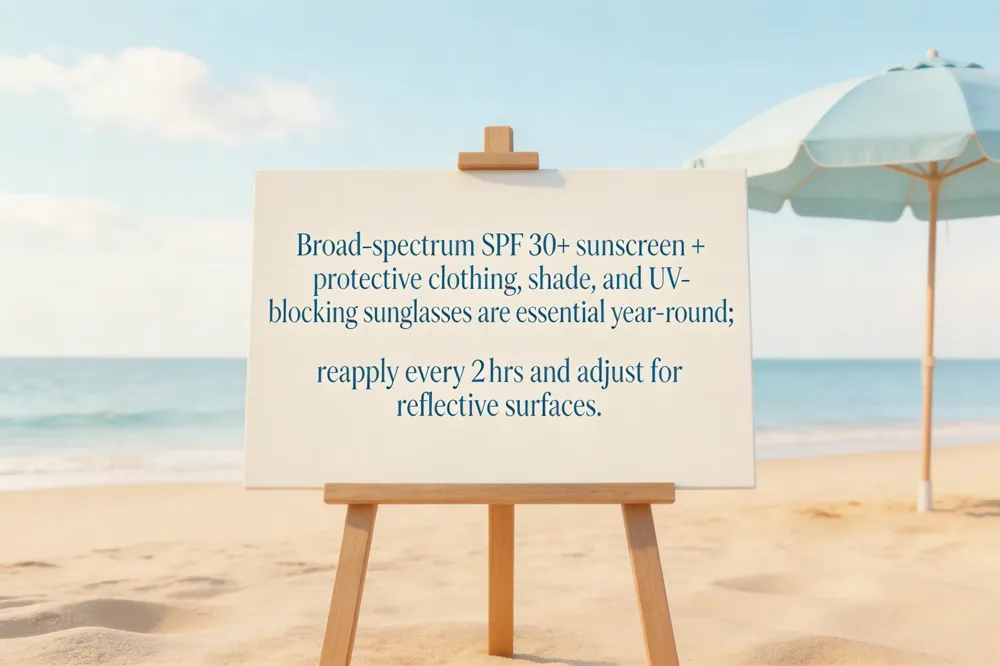 Broad‑spectrum sunscreen with SPF 30 + is the foundation of year‑round skin safety.
Apply a shot‑glass amount (≈1 oz.) to the entire body 15 minutes before stepping outdoors and reapply every two hours, or after swimming, sweating, or toweling off.
The UV Index tells you when protection is essential: values ≥ 3 call for SPF 30, shade and a hat; values ≥ 8 require additional clothing and limited exposure between 10 a.m.–4 p.m.
Tightly woven, dark‑colored fabrics, UPF‑rated shirts, wide‑brimmed hats, and UV‑blocking sunglasses physically block UV radiation, while reflective surfaces—snow, water, sand—can boost exposure by up to 80 %, making protection crucial during winter sports and beach days.
Dermatologist‑recommended skin‑care routine: gentle pH‑balanced cleanser → ceramide‑rich moisturizer → broad‑spectrum SPF 30+ sunscreen each morning; evening cleanse → targeted serum or retinoid 2‑3×/week → richer night cream.
Natural sun protection: seek shade during peak hours, wear UPF clothing, hats, sunglasses, use umbrellas or trees, eat antioxidant‑rich foods, stay hydrated, and moisturize to keep the skin barrier strong.
5 S’s of sun protection: Slip (covering clothing), Slop (apply SPF 30+ sunscreen), Slap (wide‑brimmed hat), Seek (shade), Slide (UV‑blocking sunglasses).
5 ways to protect skin: 1) Apply and reapply SPF 30+ sunscreen; 2) Wear protective clothing, hat, sunglasses; 3) Seek shade, beware reflective surfaces; 4) Use SPF lip balm and mineral sunscreen on sensitive areas; 5) Perform monthly self‑exams and schedule annual dermatologist visits.
Best overall protection: combine coverage (clothing, hats, sunglasses), sunscreen, shade, and regular skin examinations to reduce premature aging and skin‑cancer risk.
Building a Daily Skincare Routine
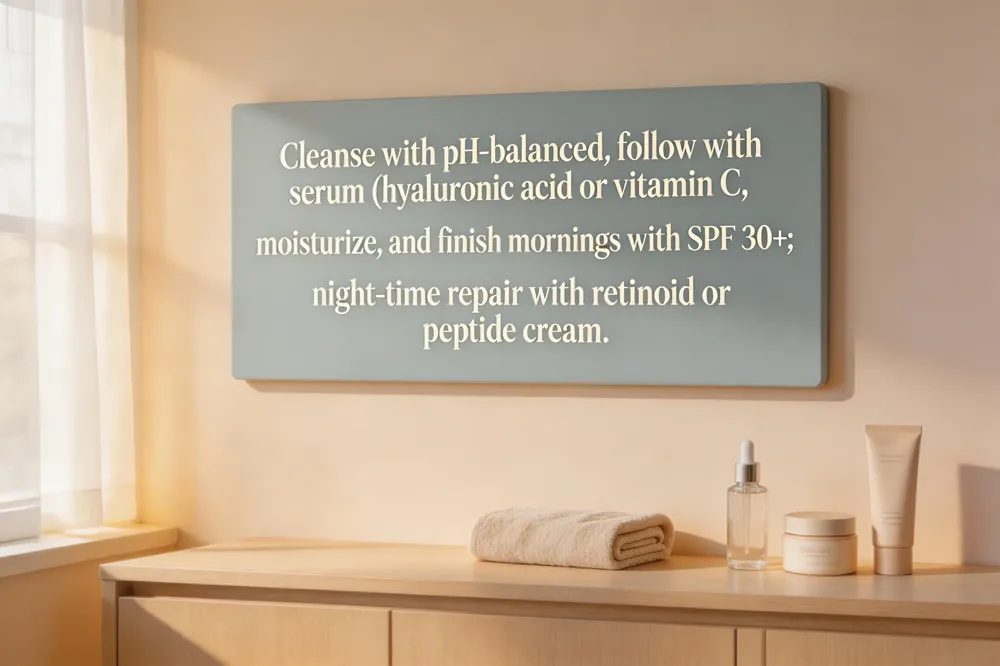 A solid routine begins with gentle cleansing using a pH‑balanced, fragrance‑free cleanser to remove dirt, oil and pollutants without stripping the skin barrier. Follow the cleanse with a targeted serum—hyaluronic acid for hydration or vitamin C for antioxidant protection—to deliver actives deep into the skin. Next, apply a moisturizer that matches your skin type: lightweight, gel‑based formulas in humid summer months and richer, lipid‑rich creams in dry winter to lock in moisture and reinforce the barrier. Finish the morning steps with a broad‑spectrum sunscreen of at least SPF 30; apply about a shot‑glass amount to the entire body and reapply every two hours, especially after swimming or sweating. In the evening, repeat the cleanse and serum steps, then use a night‑time repair product such as a retinoid or peptide‑rich cream to stimulate cell turnover and collagen production while you sleep. Consistency, proper product layering, and year‑round UV protection are key to maintaining healthy, resilient skin.
Glowing Skin Naturally
 How to make your skin glow naturally at home
Start with a gentle, pH‑balanced cleanser and follow with a mild chemical exfoliant (glycolic‑acid serum) 2–3 times weekly to remove dead cells. Apply an antioxidant‑rich serum such as vitamin C (or a natural blend of honey and lemon) to protect from free‑radical damage and brighten tone. Seal in moisture with a hyaluronic‑acid moisturizer and drink plenty of water. Finish every morning with a broad‑spectrum SPF 30+ sunscreen to guard against UVA‑induced aging and UVB‑driven cancer risk.
Skin care tips at home
Cleanse twice daily, pat skin dry, and use a fragrance‑free moisturizer that matches your skin type. Limit showers to five minutes and use lukewarm water to preserve natural oils. Avoid smoking and limit alcohol, both of which impair collagen and increase skin‑cancer risk. Use a mineral sunscreen on lips and eyelids for extra protection.
Dermatologist tips for glowing skin
In addition to daily SPF, incorporate a gentle exfoliation routine 1–2 times per week, a nightly moisturizer with ceramides or hyaluronic acid, and antioxidant serums. Maintain a balanced diet rich in fruits, vegetables, and omega‑3s, stay well‑hydrated, and manage stress. Annual skin exams and monthly self‑checks help catch early signs of skin cancer.
Top 10 skin‑care tips
- SPF 30+ broad‑spectrum sunscreen, reapply every 2 hrs.
- Gentle twice‑daily cleansing.
- Daily antioxidant serum (vitamin C).
- Consistent moisturization.
- Limited exfoliation 1–2 × /week.
- Protective clothing, hats, UV‑blocking sunglasses.
- Adequate hydration and balanced diet.
- Avoid smoking and excessive alcohol.
- Prioritize sleep (7–9 hrs).
- Monthly self‑exam and yearly dermatologist visit.
Seasonal Adjustments & Barrier Support
 Winter moisturizers and barrier repair: In cold, low‑humidity months the skin loses transepidermal water quickly. Apply a rich, lipid‑rich cream or ointment containing ceramides, hyaluronic acid, or petroleum‑based occlusives immediately after showering to lock in moisture and restore the barrier.
Summer lightweight products: Hot, humid weather calls for gel‑based or water‑based moisturizers that hydrate without feeling heavy. Pair them with broad‑spectrum SPF 30+ sunscreen that is water‑resistant; reapply every two hours, especially after swimming or sweating.
Gloves, hats and UPF clothing: Tightly woven, dark‑colored fabrics, wide‑brimmed hats, and UV‑blocking sunglasses dramatically cut UV exposure. In winter, insulated gloves protect hands from cold, dry air and prevent eczema flares. UPF‑rated clothing can block up to 98 % of UV rays year‑round.
Humidity and indoor heating: Indoor heating lowers ambient humidity, increasing skin dryness. Use a humidifier and keep indoor temperature around 68 °F (20 °C). In summer, stay well‑hydrated and opt for lighter serums to avoid clogged pores.
What are 5 tips to care for your skin? 1. Daily broad‑spectrum SPF 30+ sunscreen, shade, and protective clothing. 2. Avoid smoking to preserve collagen and blood flow. 3. Gentle cleansing—short, lukewarm showers, mild fragrance‑free cleansers, shave with a sharp razor, pat dry. 4. Hydrate the barrier with a suitable moisturizer while skin is damp. 5. Eat a balanced diet rich in fruits, vegetables, whole grains, stay hydrated, and limit processed sugars.
Skin care routine steps: Cleanse gently, tone to rebalance pH, apply a targeted serum (e.g., hyaluronic acid or vitamin C), seal with a moisturizer, then finish the morning with sunscreen; skip SPF at night and let the skin repair.
Top 10 skin care tips: 1. SPF 30+ sunscreen daily, reapply every two hours. 2. Gentle twice‑daily cleansing and lightweight moisturizing. 3. Daily antioxidant serum (vitamin C). 4. Monthly self‑exam and annual dermatologist visit. 5. Balanced diet, hydration, adequate sleep, avoid smoking. 6. Use fragrance‑free, barrier‑repair moisturizers. 7. Wear UPF clothing, hats, sunglasses. 8. Limit hot showers; use lukewarm water. 9. Adjust product texture to season (richer in winter, lighter in summer). 10. Protect lips with SPF‑rated balm.
Professional Care & Lifestyle Integration
 Annual skin examinations are a cornerstone of preventive dermatology; a full‑body check by a board‑certified dermatologist once a year can detect early melanomas, basal‑cell or squamous‑cell cancers, and other skin disorders before they become serious. The American Academy of Dermatology and the Skin Cancer Foundation both stress that early detection dramatically improves treatment outcomes, especially since skin cancer is the most common cancer in the United States.
Stress and smoking accelerate skin aging and increase cancer risk. Chronic stress elevates cortisol, which can inflame skin and trigger acne, while smoking narrows dermal blood vessels, depletes oxygen and nutrients, and degrades collagen and elastin, raising the likelihood of squamous‑cell carcinoma, particularly on the lips. Managing stress through adequate sleep, regular exercise, meditation, or yoga, and quitting smoking are essential lifestyle measures that complement topical skin care.
Proper hydration and adequate vitamin D support the skin barrier and overall health. Drinking enough water and using barrier‑repair moisturizers (ceramides, hyaluronic acid) prevent transepidermal water loss, while vitamin D can be obtained safely from diet or supplements, eliminating the need for intentional unprotected sun exposure.
Local resources in Glenview, Illinois, include The Spot Dermatology, which offers personalized skin‑cancer screenings, mole assessments, and cosmetic treatments tailored to each patient’s skin type and risk profile. Scheduling an annual exam with a Glenview dermatologist ensures continuous professional oversight and timely intervention throughout the year.
Putting It All Together for Lifelong Skin Health
Consistent skin care year‑round is the foundation of lasting health. Use broad‑spectrum SPF 30+ sunscreen daily, reapply every two hours, and pair it with tightly woven clothing, a wide‑brimmed hat, and UV‑blocking sunglasses. Follow each morning and evening with a moisturizer tailored to the season—lighter gels in summer, richer creams in winter—to lock in hydration and support the barrier. Complement these steps with a diet, adequate hydration, stress‑reduction, and exercise. Schedule a dermatologist visit for new or changing lesions, irritation, or if you plan treatments.